

Business
Paramount Skydance launches hostile bid for WBD ‘to finish what we started,’ CEO Ellison tells CNBC


Paramount Skydance is launching a hostile bid to buy Warner Bros. Discovery after it lost out to Netflix in a monthslong bidding war for the legacy assets, the company said Monday.
Paramount will go straight to WBD shareholders with an all-cash, $30 per share offer. That’s the same bid WBD rejected last week and equates to an enterprise value of $108.4 billion.
The offer is backstopped with equity financing from the Ellison family and the private equity firm RedBird Capital as well as $54 billion in debt commitments from Bank of America, Citi and Apollo Global Management, Paramount said in a news release.
A portion of the equity financing comes from outside Middle Eastern financing partners including Saudi Arabia’s Public Investment Fund, Abu Dhabi’s L’imad Holding Company PJSC, and the Qatar Investment Authority. Another portion derives from Jared Kushner’s Affinity Partners. Kushner is U.S. President Donald Trump‘s son-in-law.
Those partners have agreed to “forgo any governance rights,” including board seats, as part of their non-voting equity investment, according to a Paramount filing. The modifications allow the deal to be outside of the jurisdiction of the Committee on Foreign Investment in the U.S., or CFIUS.
Shares of Paramount gained 9% Monday. Warner Bros. Discovery’s shares rose about 4% while Netflix was down 3%.
“We’re really here to finish what we started,” Paramount Skydance CEO David Ellison told CNBC’s “Squawk on the Street” on Monday. “We put the company in play.”
Paramount Skydance began its hunt for Warner Bros. Discovery in September, submitting three bids before WBD launched a formal sale process that ultimately brought in other suitors.
On Friday, Netflix announced a deal to acquire WBD’s studio and streaming assets for a combination of cash and stock, valued at $27.75 per WBD share, or $72 billion. Paramount had been bidding for the entirety of Warner Bros. Discovery, including those assets and the company’s TV networks like CNN and TNT Sports.
“We’re sitting on Wall Street, where cash is still king. We are offering shareholders $17.6 billion more cash than the deal they currently have signed up with Netflix, and we believe when they see what it is currently in our offer that that’s what they’ll vote for,” Ellison said.
Ellison said Monday he places a value of $1 per share on the linear cable assets, which are set to trade as a separate public entity called Discovery Global in mid-2026. WBD executives have privately valued the assets closer to $3 per share.
Paramount has repeatedly argued to the WBD board of directors that keeping Warner Bros. Discovery whole is in the best interest of its shareholders.
Paramount made a bid on Dec. 1 and heard back from WBD that it needed to make certain alterations to the offer, Ellison said Monday. When Paramount made the changes and upped its bid to $30 per share, Ellison never heard back from WBD CEO David Zaslav, he said.
Ellison said he told Zaslav via text message that $30 per share wasn’t the company’s best and final offer, suggesting the company is willing to bid higher still.
Ellison argued Paramount’s deal will have a shorter regulatory approval process given the company’s smaller size and friendly relationship with the Trump administration. He called Trump a believer “in competition” and said Paramount’s combination with WBD will be “a real competitor to Netflix, a real competitor to Amazon.”
Ellison also threw cold water on Netflix’s chances of regulatory approval.
“Allowing the No. 1 streaming service to combine with the No. 3 streaming service is anticompetitive,” Ellison said.
CNBC reported Friday that the Trump administration was viewing the deal with “heavy skepticism,” and Trump said Sunday that the market share considerations could pose a “problem.”
Netflix agreed to pay Warner Bros. Discovery $5.8 billion if the deal is not approved, according to a Securities and Exchange Commission filing Friday. Warner Bros. Discovery said it would pay a $2.8 billion breakup fee if it decides to call off the deal to pursue a different merger.
Netflix, for its part, once again championed the deal as positive for shareholders, consumers and the media industry as a whole when its top leadership spoke at the UBS Global Media and Communications Conference on Monday.
Co-CEO Greg Peters said they recognize the Netflix deal came as a shock but called the Warner Bros. studio and HBO Max content complementary to Netflix’s business.
Co-CEO Ted Sarandos said the acquisition would protect jobs at a time when layoffs have been rampant across media: “In the offer that Paramount was talking about today, they also were talking about $6 billion of synergies. Where do you think synergies come from? Cutting jobs. So we’re not cutting jobs, we’re making jobs.”
— CNBC’s Lillian Rizzo contributed to this report.






Business
‘Crisis worse than two 1970s oil shocks put together’: IEA chief’s big warning on Strait of Hormuz – The Times of India
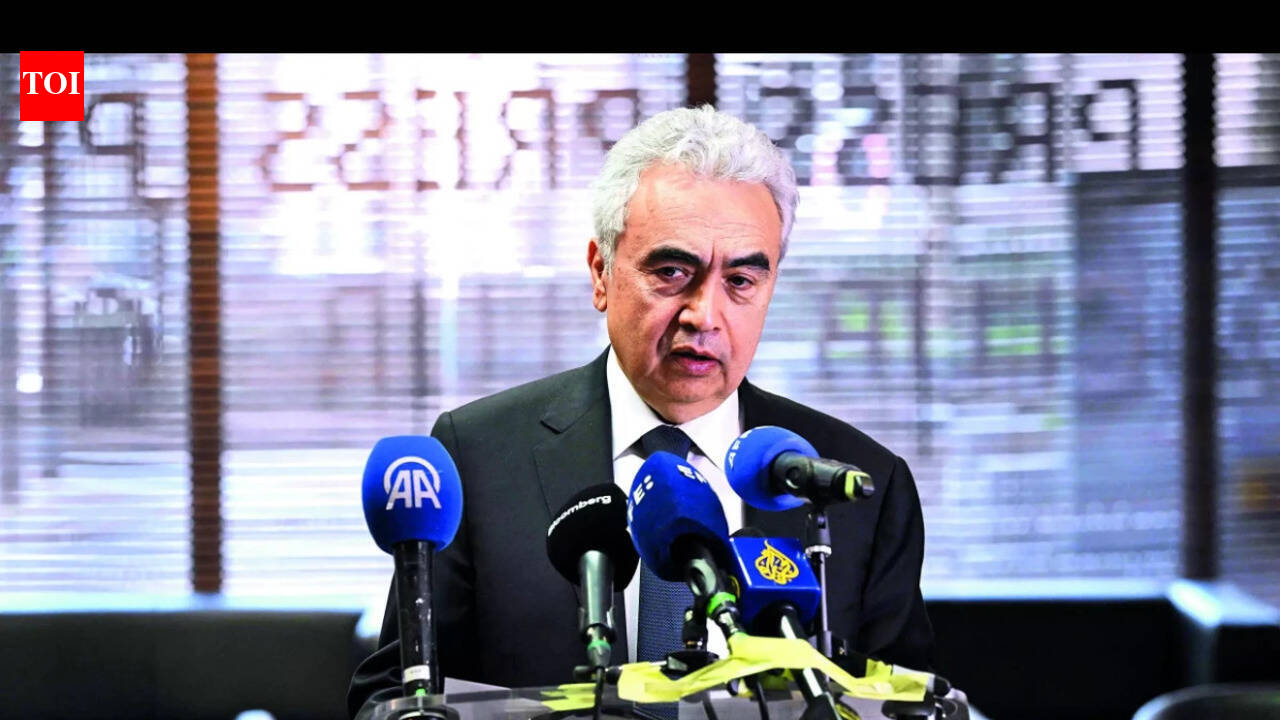
The ongoing war in the Middle East has triggered an energy crisis for the world and “no country is immune” to its shockwaves, the International Energy Agency (IEA) warned on Monday. Addressing the National Press Club in Australia’s capital, Birol said the current situation has evolved into an unprecedented disruption, combining multiple shocks to oil and gas supplies.“This crisis as things stand is now two oil crises and one gas crash put all together,” he said. He also drew comparisons with the oil shocks of the 1970s and the fallout from Russia’s 2022 invasion of Ukraine.Highlighting the broader economic risks, Birol said, “The global economy is facing a major, major threat today, and I very much hope that this issue will be resolved as soon as possible.”Commenting on the fallout of the energy crisis, Fatih Birol said, “no country will be immune to the effects of this crisis if it continues to go in this direction,” adding, “so there is a need for global efforts.”The conflict has already caused extensive damage to energy infrastructure, with Birol noting that at least forty facilities across nine countries in the region have been “severely or very severely damaged”.“At least forty… energy assets in the region are severely or very severely damaged across nine countries,” he said.The disruption was intensified by the near shutdown of the Strait of Hormuz, a key transit route for roughly one-fifth of global oil and gas shipments. The standoff has deepened as the war entered its fourth week, with Donald Trump and Tehran issuing repeated threats, including Washington’s demand for the reopening of the waterway.Birol identified the reopening of the Strait of Hormuz as the most critical step towards stabilising the situation, while also flagging rising fuel shortages in Asia as a growing concern. Oil markets reflected the strain, with US benchmark crude briefly touching the $100-per-barrel mark early on Monday. As fuel prices continue to rise, he added that there would not be any specific crude level to trigger another release.He added that the agency is currently consulting governments worldwide and remains prepared to release additional oil from emergency reserves if needed, though he clarified that no specific price level would automatically trigger such a move. Meanwhile, US President Donald Trump issued an ultimatum to Iran to reopen the strategically critical Strait of Hormuz within 48 hours, warning of military consequences if it failed to comply. He said, “If Iran doesn’t fully open, without threat, the Strait of Hormuz, within 48 hours from this exact point in time, the United States of America will hit and obliterate their various power plants, starting with the biggest one first! Thank you for your attention to this matter.” In response, Tehran warned, signalling that any attack on its energy infrastructure would prompt retaliation beyond conventional military targets. The message was conveyed by Ebrahim Zolfaghari and carried by Islamic Republic of Iran Broadcasting. He said any strike on Iran’s fuel and energy sector would trigger action against a broader range of targets linked to the United States and its regional allies.Earlier this month, 32 member nations of the IEA agreed to release 400 million barrels of oil from their emergency reserves to the market, to deal with the ongoing energy supply disruption.
Business
PM Shehbaz bans high-octane fuel in govt vehicles as petroleum levy jumps to Rs305 | The Express Tribune
HOBC price hits Rs535 after Rs200 per litre levy hike; officials told to foot bill if they insist on premium fuel
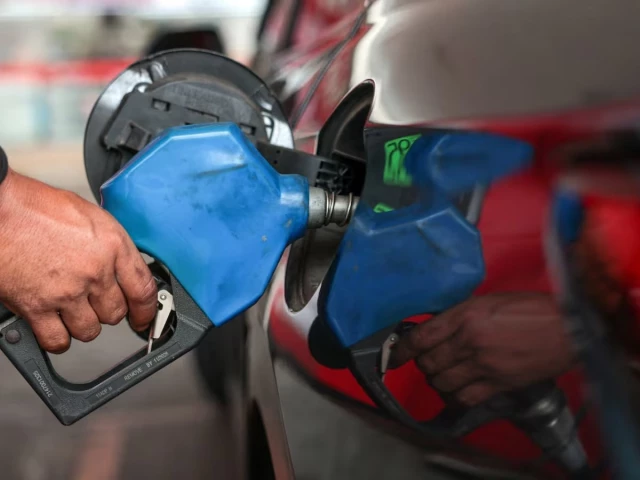
A worker fills a car’s tank at a fuel station amid concerns about rising fuel prices linked to the U.S.-Israel conflict with Iran, in Nonthaburi province on the outskirts of Bangkok, Thailand, March 15, 2026. PHOTO: REUTERS
Prime Minister Shehbaz Sharif has banned the use of high-octane fuel in all government vehicles, with the decision taking effect immediately, the Prime Minister’s Office announced on Monday.
لاہور: 23 مارچ 2026
ہائی اوکٹین فیول پر پیٹرولیم لیوی میں اضافے کے فیصلے کے تسلسل میں وزیر اعظم نے ایک اور اہم فیصلہ کیا ہے.
وزیرِ اعظم نے کہا کہ سرکاری گاڑیوں میں ہائی اوکٹین ایندھن کے استعمال پر پابندی عائد کر دی گئی ہے۔
اس پابندی کا اطلاق فی الفور ہو گا۔ اگر کسی بھی سرکاری…
— Prime Minister’s Office (@PakPMO) March 23, 2026
The ban comes with the decision to increase the petroleum levy on high-octane fuel.
Under a notification issued for this purpose, the levy on high-octane has been raised by Rs200 per litre to Rs305.37 per litre, pushing the new price of High Octane Blending Component (HOBC) in the country to Rs535. The decision to increase the levy from Rs100 to Rs300 per litre was taken in a meeting chaired by the prime minister.
Under the new ban, if the use of high-octane fuel in any government department’s vehicle is unavoidable, the user may do so at their own personal expense. A strict ban has been imposed on its use at government expense.
Read: Govt increases Rs200 levy on high-octane fuel for luxury cars to ease crisis
The purpose of the decision, according to the Prime Minister’s Office, is to ensure the efficient and responsible use of national resources.
PM Shehbaz directed all federal departments, authorities, and subordinate institutions to ensure immediate and full implementation of the ban. He also directed the relevant authorities to devise an effective system to monitor compliance and to take strict action in case of violations.
Read More: PM Shehbaz says rejected advice to further raise fuel prices, govt to absorb burden
Earlier, a 50% reduction in fuel for government vehicles had already been implemented, along with the grounding of 60% of government vehicles. The savings achieved through these measures have been utilised to provide relief to the public and to supply cheaper fuel.
The prime minister said that strict implementation of the austerity policy and the reduction of unnecessary expenditures are the need of the hour, adding that this step will reduce government spending and enable better use of public resources.
The government on Sunday approved a significant Rs200 per litre increase in the fuel levy on high-octane used in luxury vehicles, in a move to cope with the fuel crisis amid Middle East tensions.
According to a statement issued by the PMO, Shehbaz, chairing a video-link meeting, announced that the levy of Rs100 per litre on high-octane fuel would be raised by an additional Rs200, bringing the total levy to Rs300 per litre.
The government expects the measure to save Rs9 billion per month, with the savings earmarked to provide relief to the general public.
The statement further clarified that the increase applies only to high-octane fuel used in luxury cars. Petrol prices for ordinary vehicles, as well as fares for public transport and air travel, will remain unchanged.
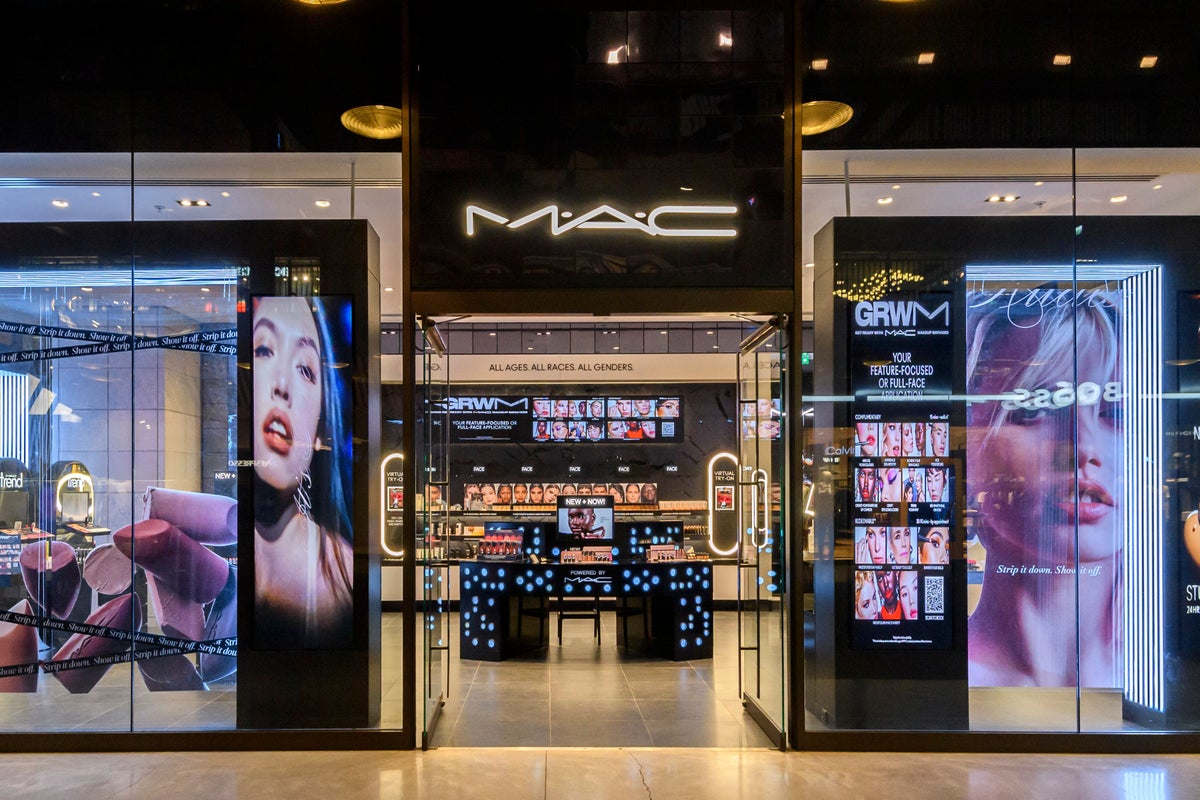
A major beauty brand is enticing all its UK employees to earn a cut of any sales they drive on TikTok Shop in a bid to cash in on the rapid rise of the influencer-led beauty market.
MAC Cosmetics is kitting out shops with mini studios for its makeup artists to host live shopping shows when it launches on TikTok Shop on April 2.
It says it is the first major beauty brand in the UK to give every member of staff the opportunity to opt in as an affiliate and sell on the social media platform.
Those who become faces of the live channel will be offered a percentage of any sale that they drive on TikTok Shop.
The makeup artists will be encouraged to host tutorials and product demonstrations, with items available to buy directly through the app.
MAC, which is part of the Estee Lauder group of beauty brands, said the first live shopping show will stream from its Carnaby Street store in London.
It is hoping that tapping into social media shoppers will also bring more people into its more than 230 standalone shops and concessions.
TikTok Shop burst onto the UK’s retail scene in 2021 and, in recent years, has become a significant force in the world of e-commerce, reaching millions of people who use the video-sharing app and converting many into shoppers with a few taps.
Many content creators can earn a commission on products that they sell through the app when they co-operate with a brand or retailer.
Major retailers like Marks & Spencer and Sainsbury’s are now selling products on the marketplace alongside thousands of smaller businesses and brands.
The app has particularly been part of a boom for the beauty market, with beauty sales on the platform soaring by 60% year-on-year in 2025, fuelled by trends such as Korean skincare.
But the spread of in-app shopping has also prompted concerns about so-called impulse buying, particularly among younger consumers who are often targeted by influencer-led marketing.
Sara Staniford, the vice president and general manager of MAC in the UK and Ireland, said: “MAC has always been driven by our artists and the communities they create.
“TikTok Shop gives us an exciting new way to celebrate that creativity and connect with beauty lovers in real time.
“It puts our artists exactly where they belong, at the centre of the conversation.”


Thailand’s apparel exports rise 5.6% to $2.3 bn in 2025

North Korea’s Kim reappointed as president of state affairs

Cuba restores power grid after latest blackout

Tips and Advice for Buying Used or Refurbished Electronics

UAE savings strategies 2026 explained: Best apps, tools, budget rules and smart money hacks to beat rising cost of living in emirates – The Times of India

Meet one of the last true paparazzi

-
 Tech1 week ago
Tips and Advice for Buying Used or Refurbished Electronics
-
Business1 week ago
UAE savings strategies 2026 explained: Best apps, tools, budget rules and smart money hacks to beat rising cost of living in emirates – The Times of India
-

 Sports1 week ago
College Basketball Invitational abruptly cancels 2026 tournament
-

 Sports1 week ago
Japan suffers shocking collapse to Venezuela in World Baseball Classic
-
 Entertainment1 week ago
Meet one of the last true paparazzi
-
 Entertainment1 week ago
Strategic oil stocks to be released ‘immediately’ in Asia and Oceania: IEA
-
 Entertainment1 week ago
Iran at war
-
 Business1 week ago
‘Gruesome’ war bets fuel calls for Kalshi Polymarket crackdown