

Entertainment
Phil Rosenthal serves up comfort food and memories at Max and Helen’s

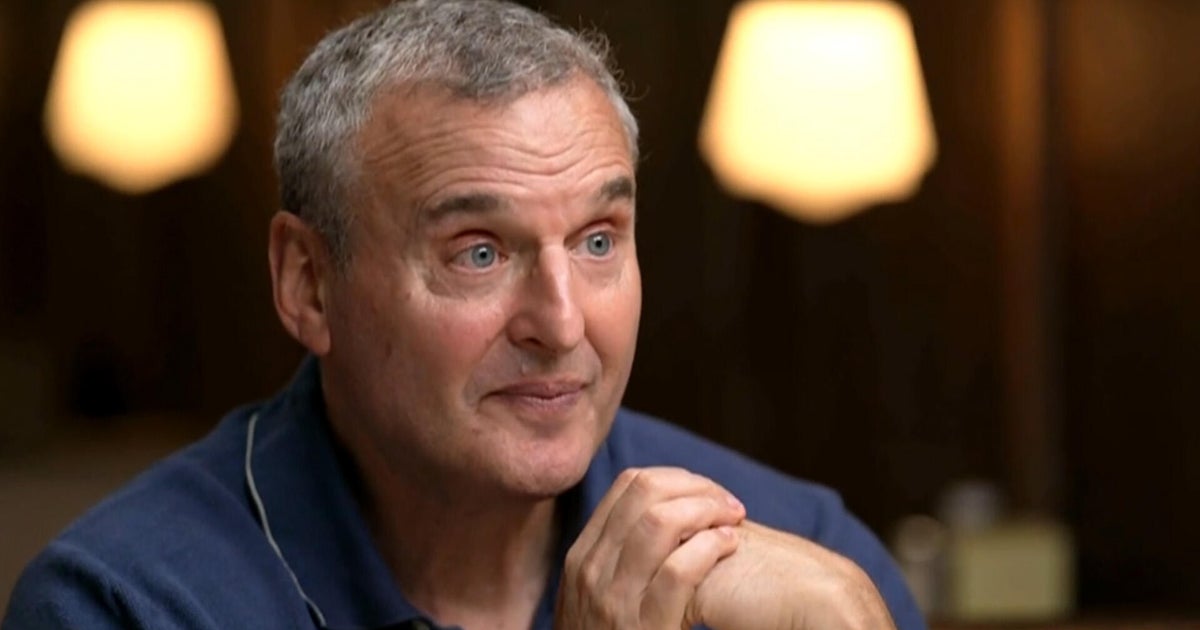
After eight seasons traveling the world for his Netflix series “Somebody Feed Phil,” Phil Rosenthal’s next food adventure is keeping him much closer to home. The 65-year-old producer is opening a neighborhood spot in Los Angeles called Max and Helen’s.
“This is a hundred-year-old neighborhood,” Rosenthal said. “I want it to look like we found a hundred-year-old diner and it’s been here for a hundred years.”
The diner, set to open later this month in Larchmont, is named for Rosenthal’s late parents, who were regulars on his travel show and inspired characters in “Everybody Loves Raymond,” the CBS sitcom he co-created nearly 30 years ago.
The menu will lean on comfort food: Powdered donut holes, sourdough waffles with maple butter and fluffy scrambled eggs, a nod to his father’s favorite dish.
“My dad loved fluffy eggs so much on his tombstone, it says, ‘Are my eggs fluffy?'” Rosenthal said. “The lesson for me is, if you can find a simple joy in your life, maybe you’ll be happy every day.”
Rosenthal grew reflective when speaking about his father’s absence.
“I’m getting a little emotional that he can’t be here for this perfect rendition of the thing he loved the most,” he said.
Building the world of “Everybody Loves Raymond”
Simplicity, Rosenthal said, has always been key to his work. “Everybody Loves Raymond” ran for nine years by avoiding topical humor.
“You don’t put in Bill Clinton jokes in the ’90s,” he said. “You do the things that seem to be everlasting.”
After struggling to find a follow-up to the sitcom, Rosenthal pitched his Netflix show with one line: “I’m exactly like Anthony Bourdain if he was afraid of everything.” The food-and-travel series grew into a surprise hit, even drawing sold-out crowds when Rosenthal spoke about it on tour. “Ray [Romano] came out on stage with me and couldn’t believe the size of the crowd,” he said.
Rosenthal has enlisted acclaimed chef Nancy Silverton as executive chef, while his soon-to-be son-in-law Mason Royal will run the kitchen. Beyond the food, he hopes the diner will anchor his neighborhood.
“Diners are disappearing from America,” he said. “These become centers of communities…. If the center of the community disappears, maybe you lose the sense of community and then maybe you lose the country. So I’m gonna fix everything with my diner.”
His production company is called Lucky Bastards, a label that still fits as he finds new joy in simple pleasures and fresh projects at 65.
But Rosenthal brushed off any suggestion of retirement.
“I could. That’s not fun,” he said. “If you think you’ve got something to say or a point to make, or feel like your work is impacting on one guy or one little kid even, who wants to stop?”
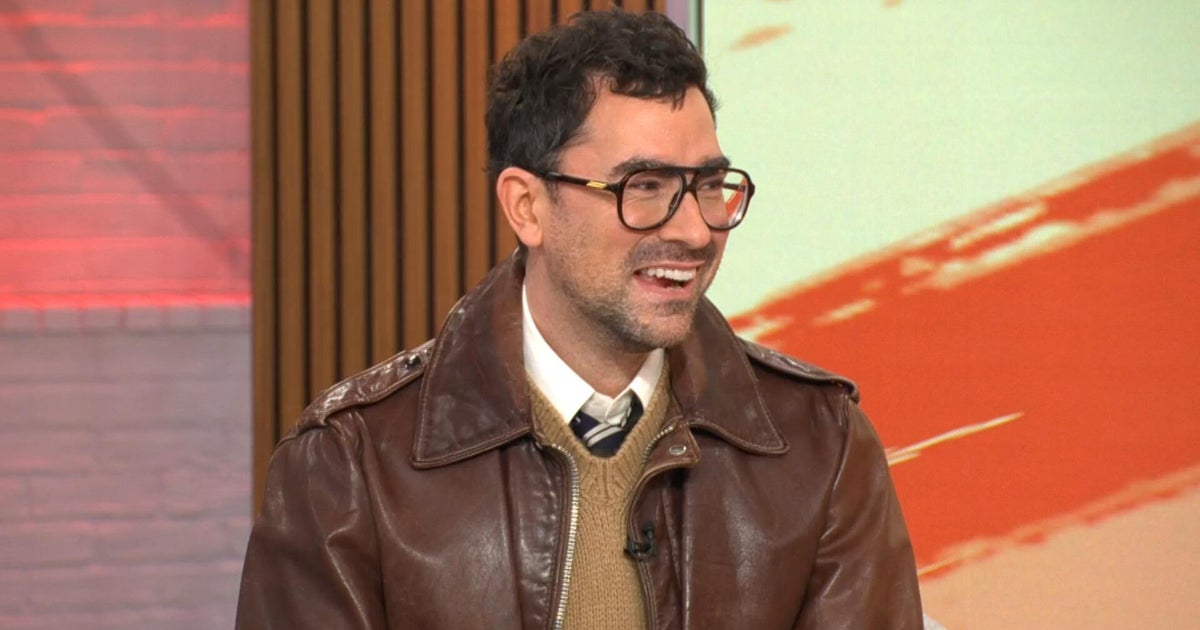
Dan Levy talks to “CBS Mornings” about the comedy series “Big Mistakes,” which is about organized crime. Levy explains how he used his own life to help shape his character’s relationships and reflects on the beloved series “Schitt’s Creek.”
Source link
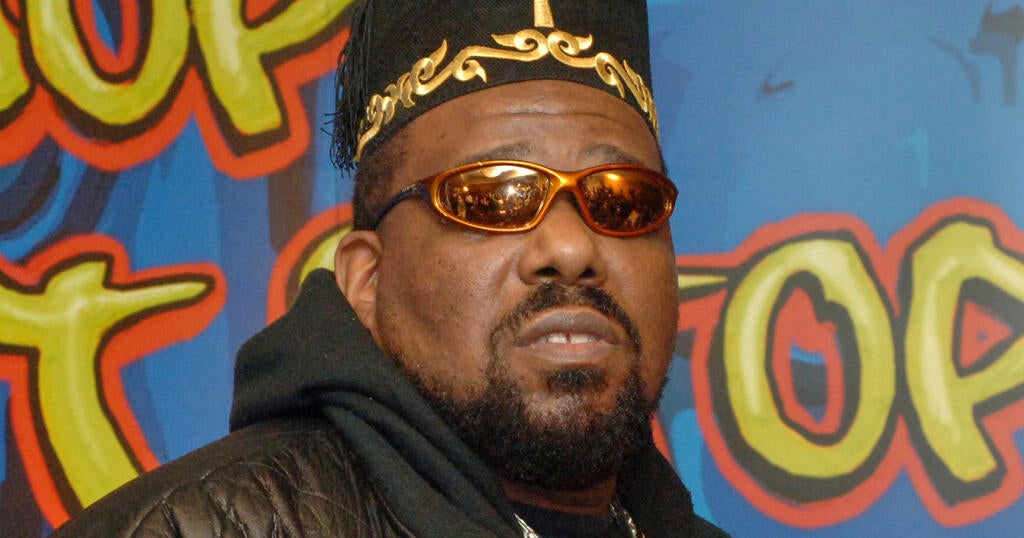
Afrika Bambaataa, a man widely considered one of the main pioneers of hip-hop, died in Pennsylvania of prostate cancer on Thursday, according to his lawyer. He was 68.
Bambaataa’s sudden death was met with an outpouring of condolences from friends, family and fans across the world, who paid tribute to his profound and unmistakable impact on one of the world’s most popular and politically influential music genres. But others have said that his impact was overshadowed in recent years after numerous men who knew Bambaataa when they were boys accused him of sexual abuse.
The rapper and producer is best known for breakthrough tracks like 1982’s “Planet Rock” and for founding the Universal Zulu Nation art collective.
“Hip Hop will never be the same without him — but everything hip hop is today, it is because of him. His spirit lives in every beat, every cypher and every corner of this globe he touched,” his talent agency, Naf Management Entertainment, wrote in an emailed statement on Tuesday.
Henny Ray Abrams / AP
Bambaataa was born Lance Taylor in 1957 in the South Bronx, and he came of age at a time when the New York City neighborhood was rapidly deteriorating after intensifying segregation and years of economic neglect. By the 1970s and 1980s, landlords were burning apartment buildings to collect insurance money instead of investing in repairs, leaving low-income, mostly Puerto Rican and Black families without socioeconomic opportunity.
Bambaataa had Jamaican and Barbadian heritage, and he was raised in a low-income public housing complex by his mother, according to an interview he gave Frank Broughton in 1998. He was exposed to music at an early age through his mother’s vinyl record collection.
The ability to repurpose and mix old hits became one of his signatures at the parties he began to throw in community centers across the neighborhood in the early 1970s, Bambaataa said in the interview. He was deeply inspired by the work of Kool Herc, who is often deemed the father of hip-hop.
Bambaataa and the parties where he DJ’ed swelled in popularity throughout the decade and well into the 1980s, when he released a series of electro tracks that helped shape the burgeoning hip-hop and electro-funk music movements. He was also one of the first DJs to use beat breaks, incorporating the iconic Roland TR-808 drum machine.
“We was playin’ everything, everything that was funky,” he said. He later added that what set his parties apart was that “other DJs would play they great records for fifteen, twenty minutes. We was changing ours every minute or two. I couldn’t have no breakbeat go longer than a minute or two.”
At that time, Bambaataa said in previous interviews that he was able to leverage his affiliation with the local street gang the Black Spades to form a group he called the Zulu Nation, a nod to a South African ethnic group that he drew inspiration from. His slogan eventually became known as “peace, love, unity and having fun,” and he said that he sought to use hip-hop’s ballooning popularity to resolve local gang conflicts.
Later, Bambaataa changed the name to the Universal Zulu Nation to signal the inclusion of “all people from the planet earth.”
“At the core our music made people feel like they belong to a movement and not a moment, our music offered Hope something positive to believe in, it gave people identity, unity, and a way out,” Ellis Williams, a producer known as Mr. Biggs, wrote in an email to the AP. Mr. Biggs was a member of the group Afrika Bambaataa and Soulsonic Force that included Bambaataa.
In recent years, numerous people have accused Bambaataa of sexual abuse.
In 2016, Bronx political activist and former music industry executive Ronald Savage accused Bambaataa of abusing him in 1980, when he was Savage was a young teen.
“I was scared, but at the same time I was like, ‘This is Afrika Bambaataa,’ ” Savage told the AP in 2016. At the time he recalled, in detail, that encounter and four others that he said followed.
Bambaataa has vehemently denied those allegations.
After Savage went public with his claims, numerous other men came forward to share similar experiences about Bambaataa. In June 2016, the Universal Zulu Nation released a public letter apologizing to “the survivors of apparent sexual molestation by Bambaataa,” saying that some members of the group knew about the abuse but “chose not to disclose” it.
“We extend our deepest and most sincere apologies to the many people who have been hurt,” the organization wrote.
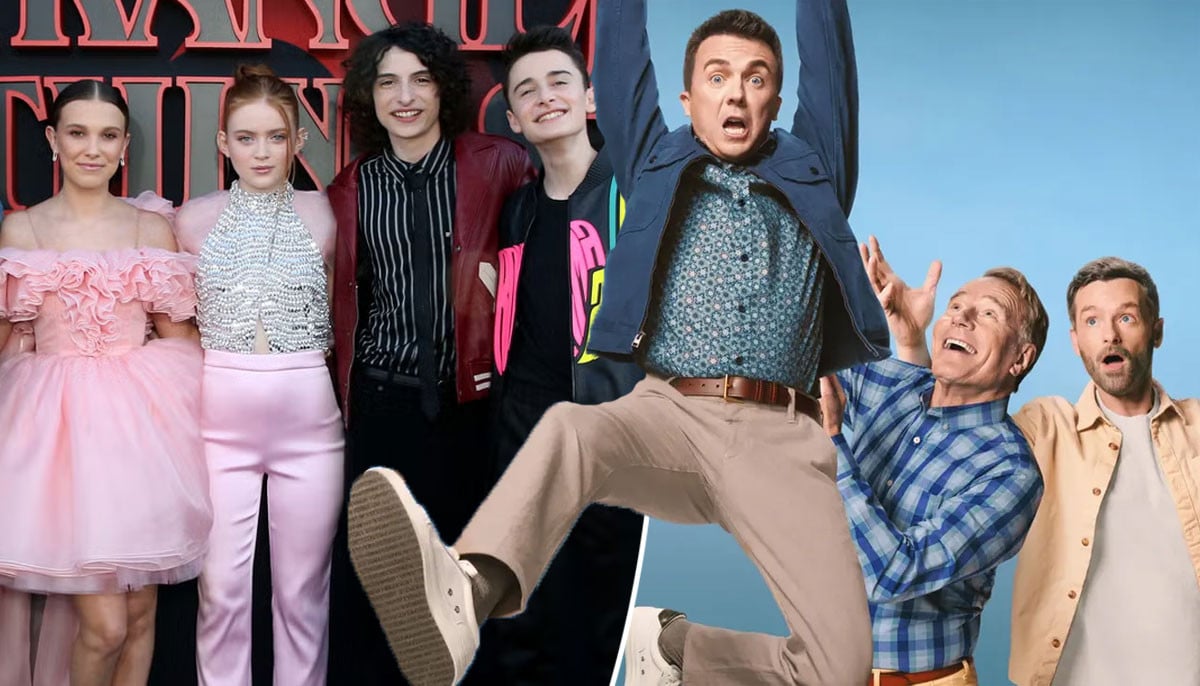
Fans of Malcolm in the Middle might have to do a double take at a major cameo in the finale of the show’s four-part revival.
While discussing Malcolm in the Middle: Life’s Still Unfair, all episodes of which are now available to stream on Hulu, creator Linwood Boomer revealed how “big fan” Finn Wolfhard‘s cameo happened.
“His agent called us and said, ‘Can Finn visit the set?’ We go, ‘Shit, yeah,’” recalled Boomer.
“He loves the show, he’s such a big fan of the show, and we’re like, ‘Well, there’s a part we haven’t cast yet. Does he wanna do that? I mean, it’s a small part.’ And he said, ‘F— yeah, he wants to do it.’ And we were like, ‘F— yeah, we want you to come, that’d be awesome.’”
In Malcolm in the Middle: Life’s Still Unfair, Frankie Muniz reprises his once-angsty teenage character, who is now a father of his own.
When his parents Hal (Bryan Cranston) and Lois (Jane Kaczmarek) demand his presence at their anniversary party, Malcolm is forced to stop avoiding his dysfunctional family while attempting to protect his daughter Leah (Keeley Karsten) from their chaotic dynamic.


Pacers fans go viral after animated conversation caught on camera during Nets game in Brooklyn

Kiyan Anthony returning to Syracuse for sophomore season

Dan Levy talks series "Big Mistakes" and reflects on "Schitt's Creek"

-
 Business1 week ago
Jaguar Land Rover sees sales recover after cyber attack
-
Uncategorized1 week ago
[CinePlex360] Please moderate: “Trump signals p
-
 Entertainment7 days ago
Joe Jonas shares candid glimpse into parenthood with Sophie Turner
-

 Tech7 days ago
Our Favorite iPad Is $50 Off
-
 Sports7 days ago
UConn Final Four run could trigger a $50M furniture giveaway for Massachusetts-based Jordan’s Furniture
-
 Business1 week ago
Video: Why Is the Labor Market Stuck?
-

 Entertainment7 days ago
Blake Lively reacts to harassment claims dismissal against Justin Baldoni
-

 Politics1 week ago
Iran can sustain Strait of Hormuz closure for years, will cut US military logistics: Official