

Politics
Pope Leo blasts ‘neocolonial’ conflicts after Trump criticism

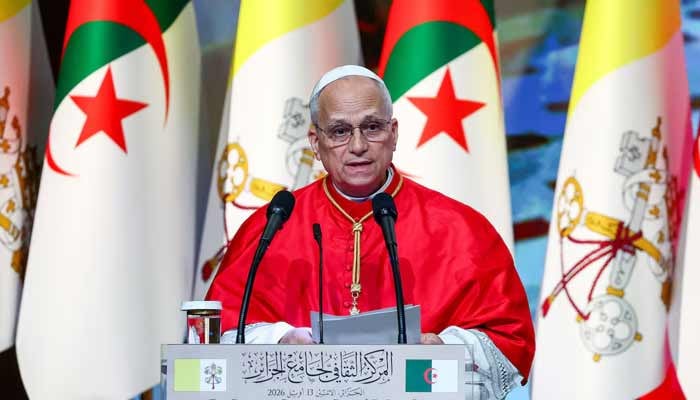
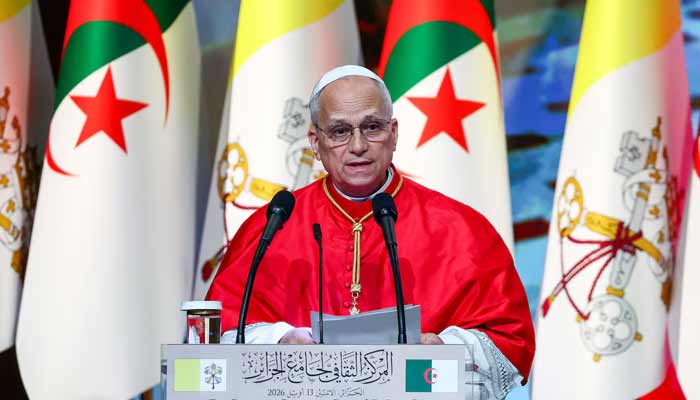
- Leo to visit Great Mosque of Algiers.
- Pope urges peace in forceful first speech.
- Algeria hosts Catholic Pope for first time.
Pope Leo blasted violations of international law by “neocolonial” world powers in a forceful speech on Monday during an Africa tour, hours after US President Donald Trump’s direct attack on the leader of the 1.4-billion-member Church.
Leo is travelling to Africa “as a witness to the peace and hope that the world so ardently desires,” he told political leaders in Algeria, his first stop on a whirlwind four-nation trip.
“The future belongs (to) those who do not allow themselves to be blinded by power or wealth,” the first US pope said. “Africa knows all too well that people and organisations that dominate others destroy the world.”
Leo, originally from Chicago, did not single out specific countries for criticism, but he has emerged as an outspoken critic of the Iran war in recent weeks and decried the “madness of war” in a peace appeal on Saturday.
Trump, in an apparent response to the pope’s statements about the conflict and the White House’s hard-line immigration policies, said late on Sunday that Leo was “terrible”, in remarks that drew immediate rebuke from US believers.
Leo told Reuters on the papal flight from Rome to Algiers on Monday morning that he planned to continue speaking out against war, despite Trump’s comments.
“I don’t want to get into a debate with him,” said the pope. “I will continue to speak out loudly against war, looking to promote peace, promoting dialogue and multilateral relationships.”
Pope decries violations of international law
Leo, aged 70, relatively young and in good health for a pope, is undertaking one of the most complicated papal trips arranged in decades.
It will take him to 11 cities and towns across Algeria, Cameroon, Angola and Equatorial Guinea, traversing nearly 18,000 km (11,185 miles) over 18 flights.
On Monday in Algeria, the pope urged leaders in the country to build a society based on principles of justice and solidarity.
“Today, this is more urgent than ever in the face of continuous violations of international law and neocolonial tendencies,” he said.
Leo is making the multi-nation tour “to help turn the world’s attention to Africa”, Cardinal Michael Czerny, a senior Vatican official and close adviser to Leo, told Reuters.
More than 20% of the world’s Catholics live in Africa, according to Vatican statistics. The three sub-Saharan nations the pope is visiting have populations where more than half identify as Catholic.
Algeria, though, is an overwhelmingly Muslim country with under 10,000 Catholics among its population of some 48 million people. This is the first time it will host a Catholic pope.
Pope to give 25 speeches on multitude of topics
Leo’s tour is the 24th by a pope to Africa since the late 1960s.
He is expected to touch on many topics in 25 planned speeches over 10 days, Vatican spokesperson Matteo Bruni told journalists on Friday, given that the four nations face diverse issues.
Likely topics include exploitation of natural resources, Catholic-Muslim dialogue and the dangers of political corruption, said Bruni.
Cameroon and Equatorial Guinea have presidents who have been in power for decades and have been accused of human rights abuses, which they deny.
The biggest event of the itinerary will likely come in Cameroon on Friday, when the Vatican said some 600,000 people are expected for a Mass in the coastal city of Douala.
Comfortable in several languages, Leo is expected to speak Italian, English, French, Portuguese and Spanish during the trip.
After speaking to Algeria’s political leaders on Monday, Leo will visit the Great Mosque of Algiers in only his second visit to a mosque as pope.
He will travel on Tuesday to Annaba on Algeria’s northeast coast, for a visit to the ruins of the ancient town of Hippo.
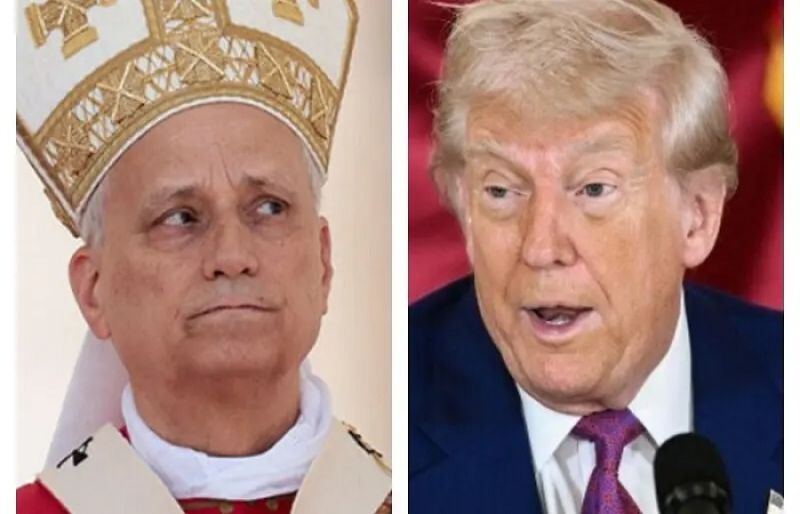
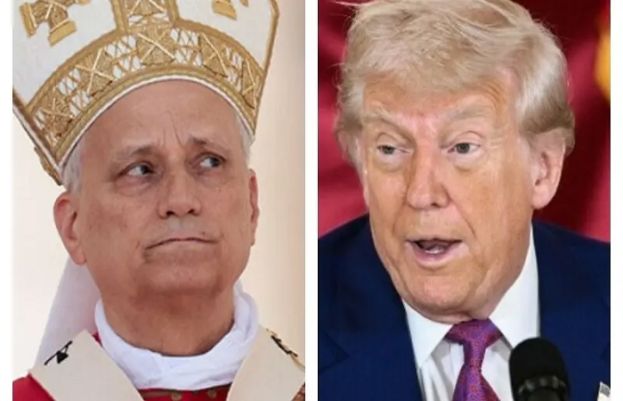
The president’s comments came after the pope had spoken out, with growing force, against the US-Israeli war on Iran and the Trump administration’s immigration policies.
“Pope Leo is WEAK on Crime, and terrible for Foreign Policy,” Trump wrote in a post on Truth Social late on Sunday.
Trump later posted an AI-generated image depicting himself as Jesus, with the US flag and the Statue of Liberty in the background.’
‘Someone has to stand up’, Pope says
Pope Leo, the first pontiff from the US, responded on Monday by saying he would keep raising his voice against conflict, adding that the Christian message, rooted in the primacy of peace, was being “abused”.
It is extremely unusual for a pope, who leads Catholics around the world, to answer a foreign leader publicly.
“I will continue to speak out loudly against war, looking to promote peace, promoting dialogue and multilateral relationships among the states to look for just solutions to problems,” Leo told Reuters aboard a papal flight to Algiers, where he is embarking on a 10-day tour to four African countries.
“Too many people are suffering in the world today,” he said. “Too many innocent people are being killed. And I think someone has to stand up and say there’s a better way.”
Speaking to other reporters, the pope said: “I have no fear of the Trump administration, or speaking out loudly.”
Catholics defend pope
Catholics on social media lambasted Trump for attacking the leader of the 1.4-billion-member Catholic Church, who they believe is the successor of St. Peter, one of Jesus’ 12 apostles.
“There is no ambiguity about the situation now,” Massimo Faggioli, an expert on the papacy, told Reuters.
He compared the comments to efforts by the leaders of Germany and Italy during World War Two to draw the late Pope Pius XII to support their causes.
“Not even Hitler or Mussolini attacked the pope so directly and publicly,” said Faggioli.
Archbishop Paul S. Coakley, president of the US Conference of Catholic Bishops, said he was disheartened by Trump’s comments.
“Pope Leo is not his rival; nor is the Pope a politician. He is the Vicar of Christ who speaks from the truth of the Gospel and for the care of souls, he said in a statement.
Trump says Leo should ‘get his act together’
Leo, originally from Chicago, is known for choosing his words carefully.
He has emerged as an outspoken critic of the conflict with Iran in recent weeks and decried the “madness of war” in a peace appeal on Saturday.
Last year, he questioned whether the Trump administration’s hardline immigration policies were in line with the Church’s pro-life teachings, and called for a “deep reflection” about the way migrants are being treated in the United States.
“Someone who says, ‘I am against abortion but I am in agreement with the inhuman treatment of immigrants in the United States’, I don’t know if that’s pro-life,” the pontiff said in September.
Trump wrote in his post on Sunday that “Leo should get his act together as Pope” and “focus on being a Great Pope, not a Politician”.
Trump’s broadside against Leo also accused him of being “weak on nuclear weapons”, several days after the pope said the US president’s threat to destroy Iranian civilisation was “truly unacceptable”.
Pope says he is not a politician
In a speech on Palm Sunday last month in St. Peter’s Square in the Vatican, the pope said God rejected the prayers of leaders who start wars and have their “hands full of blood”, calling the conflict in Iran “atrocious”.
Leo has also called on Trump to find an “off-ramp” to end the conflict and “decrease the amount of violence”.
In his post, Trump suggested that Leo was only elected to lead the Catholic Church last year “because he was an American, and they thought that would be the best way to deal with President Donald J. Trump”.
Leo said on Monday that he was not a politician and did not want to be drawn into a debate with Trump.
“The message of the Church, my message, the message of the Gospel: Blessed are the Peacemakers. I do not look at my role as being political, a politician,” he said.
Trump also had a rocky relationship with Leo’s predecessor, Pope Francis, who criticised Trump’s immigration policy proposals when he first ran for president and suggested Trump was “not a Christian”.
Trump had called Francis “disgraceful” in early 2016.
Rejecting a rift
Washington and the Vatican have rejected reports of a rift.
On Friday, a Vatican official denied reports that a top Pentagon official gave the church’s envoy to the United States a “bitter lecture” over Pope Leo’s criticisms of the Trump administration.
The story in the Free Press —which the Pentagon had already dismissed as “distorted” — reported that Cardinal Christophe Pierre was summoned in January to the Pentagon, where he was given a dressing-down by US Under Secretary of Defence for Policy Elbridge Colby.
The military official reportedly told the cardinal that the US “has the military power to do whatever it wants — and that the Church had better take its side”.
Vatican spokesman Matteo Bruni said in a statement that “the account presented by certain media outlets regarding this meeting does not correspond to the truth in any way.”
While both parties insist the meeting was cordial, the Holy See and the White House have openly been at odds over the Trump administration’s hardline mass deportation campaign — which the pope called “inhuman” — and the use of military force in the Middle East and Venezuela.
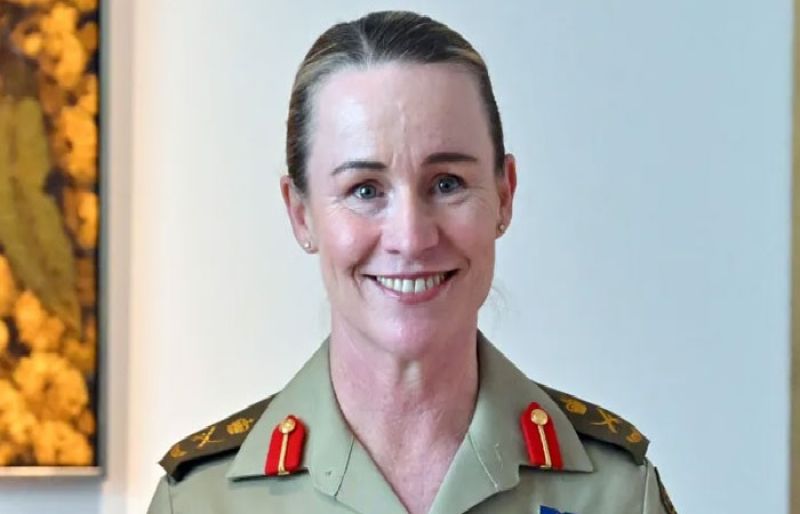
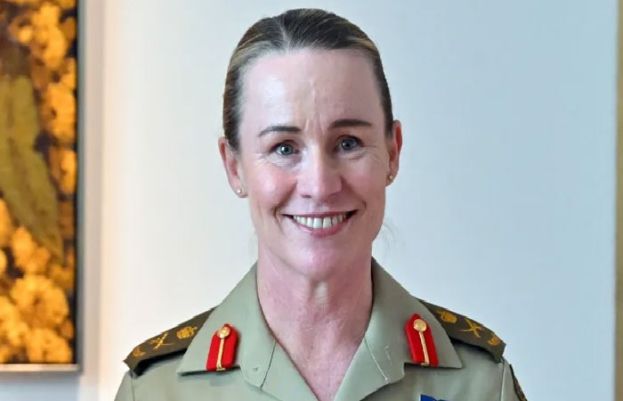
Australia on Monday said a woman would lead its army for the first time in history, as part of a reshuffle of the country’s defence force leadership.
Lieutenant General Susan Coyle, the current chief of joint capabilities, will become chief of army in July, the government said in a statement. She will replace Lieutenant General Simon Stuart.
Coyle’s appointment comes as Australia’s military seeks to boost the number of female officers in its ranks. It faces a wave of allegations of systematic sexual harassment and discrimination.
“From July, we will have the first ever female chief of army in the Australian Army’s 125-year history,” Prime Minister Anthony Albanese said in a statement.
Defence Minister Richard Marles called Coyle’s appointment a “deeply historic moment”. “As Susan said to me, you cannot be what you cannot see,” he said.
“Susan’s achievement will be deeply significant to women who are serving in the Australian Defence Force today and women who are thinking about serving in the Australian Defence Force in the future.”
Coyle, 55, enlisted in the military in 1987 and has held a number of senior command roles. She will be the first woman to lead any service branch of the military, Marles said.
Women currently make up around 21 per cent of the Australian Defence Force (ADF) and 18.5pc of senior leadership roles. The ADF has set a target of 25pc of overall participation for women by 2030.
Last October, a class action lawsuit was filed against the ADF alleging it failed to protect thousands of female officers from systematic sexual assault, harassment and discrimination.
The government on Monday also appointed Vice Admiral Mark Hammond, the current chief of the navy, as the head of the ADF, succeeding Admiral David Johnston.
The current deputy chief of navy, Rear Admiral Matthew Buckley, will replace Hammond as head of the branch.
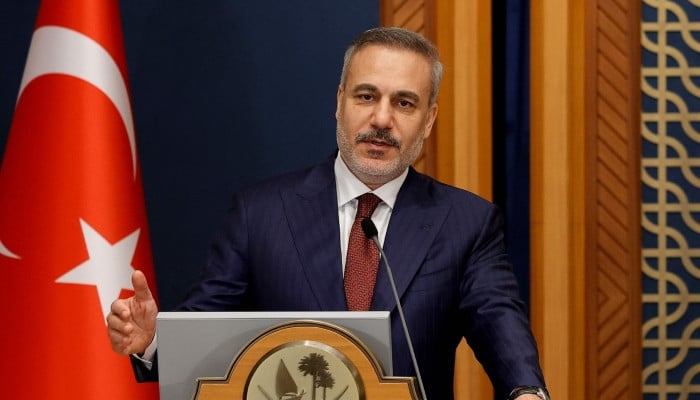
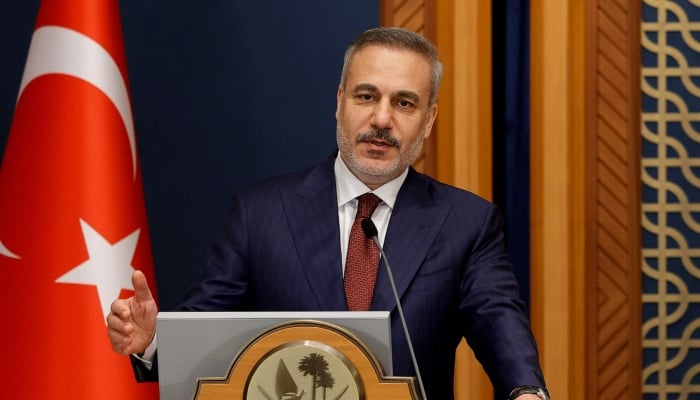
- Israel “cannot live without an enemy”: Hakan Fidan.
- Fidan says move turning into state strategy in Israel.
- Urges Nato to reset ties with Trump in Ankara summit.
Israel “cannot live without an enemy” and its government is now trying to portray Turkiye as one, Turkish Foreign Minister Hakan Fidan said on Monday.
“After Iran, Israel cannot live without an enemy,” Fidan said in a televised interview with the state-run Anadolu news agency.
“We see that not only Netanyahu’s administration but also some figures in the opposition — though not all — are seeking to declare Turkiye the new enemy,” he said.
“This is a new development in Israel… turning into a state strategy,” he added.
Tensions between Turkiye and Israel have steadily escalated since the Gaza war erupted following Hamas’s October 7, 2023, attack in Israel.
The dispute entered a new phase over the weekend after President Recep Tayyip Erdogan warned his US counterpart Donald Trump of “possible provocations and sabotage” that could jeopardise an initial ceasefire arrangement in the US-Israeli war on Iran.
Prime Minister Shehbaz Sharif announced the two-week ceasefire between Tehran and Washington on April 8, ending the six-week war that began on February 28, when the US launched a joint bombing campaign with Israel against Iran.
Following President Erdogan’s warning about possible sabotage of the ceasefire, Israeli Prime Minister Benjamin Netanyahu vowed that Israel would continue to confront Tehran and its regional allies.
In response, Turkiye said that Netanyahu’s current objective was “to undermine ongoing peace negotiations and continue his expansionist policies in the region”.
In a statement on April 11, the ministry said that the Israeli prime minister risked being tried in his own country and is likely to be sentenced to imprisonment on corruption charges.
“Netanyahu, who has been described as the Hitler of our time due to the crimes he has committed, is a well-known figure with a clear track record,” the Turkish foreign ministry added.
The ministry also noted the arrest warrant issued by the International Criminal Court against the Israeli prime minister on charges of war crimes and crimes against humanity.
Nato urged to reset ties with Trump
During the same interview, the Turkish foreign minister said that North Atlantic Treaty Organisation (Nato) allies should use their July summit in Ankara to reset ties with US President Donald Trump and prepare for a potential reduction of US involvement in the alliance.
Fidan said that Turkiye believed Trump would attend the Nato leaders’ summit on July 7-8 due to his “personal respect” for President Erdogan, but added he understood Trump was otherwise reluctant to come to the meeting.
Trump has criticised Nato for years and last week threatened to pull the United States out of the alliance over European members’ refusal to send ships to unblock the Strait of Hormuz near Iran. That compounded friction within the bloc over his earlier plans to acquire Greenland.
Fidan said that allies had long considered Trump’s criticisms to be rhetoric, but were now planning around the possibility of reduced US involvement and ramping up their own defensive capacities.
“Nato countries need to turn this Ankara Summit into an opportunity to put ties with the United States on a systematic basis,” he said.
“If there will be a US withdrawal from some Nato mechanisms, there needs to be a plan and programme to phase this out so nobody is left in the open,” he added.
Nato Secretary General Mark Rutte has said he understood Trump’s frustrations with the alliance, but that the “large majority of European nations” had been helpful to Washington’s war effort in Iran.
A senior White House official told Reuters last week that Trump, as part of his frustration with Nato, had also considered the option of removing some US troops from Europe.

FTSE 100 edges lower amid new US-Iran uncertainty

Prince Edward, Anne stand by Andrew after King Charles’ blow: ‘Threat’ to monarchy

Meta Is Warned That Facial Recognition Glasses Will Arm Sexual Predators

-

 Fashion6 days ago
India’s exports face reset as EU links trade to carbon metrics: EY
-
 Politics1 week ago
Trump confirms rescue of airman whose F-15 was downed in Iran
-
 Entertainment5 days ago
Queen Elizabeth II emotional message for Archie, Lilibet sparks speculation
-
 Tech5 days ago
As the Strait of Hormuz Reopens, Global Shipping Will Take Months to Recover
-

 Tech5 days ago
Azure customers up in arms over ‘full’ UK South region | Computer Weekly
-

 Entertainment6 days ago
Lamar Odom shocking response to Khloé Kardashian account of his overdose
-

 Tech4 days ago
This AI Button Wearable From Ex-Apple Engineers Looks Like an iPod Shuffle
-

 Tech7 days ago
A Single Strike Won’t Shut Off the Gulf’s Desalination System