

Sports
Potential fatal flaws that could sink 26 playoff contenders

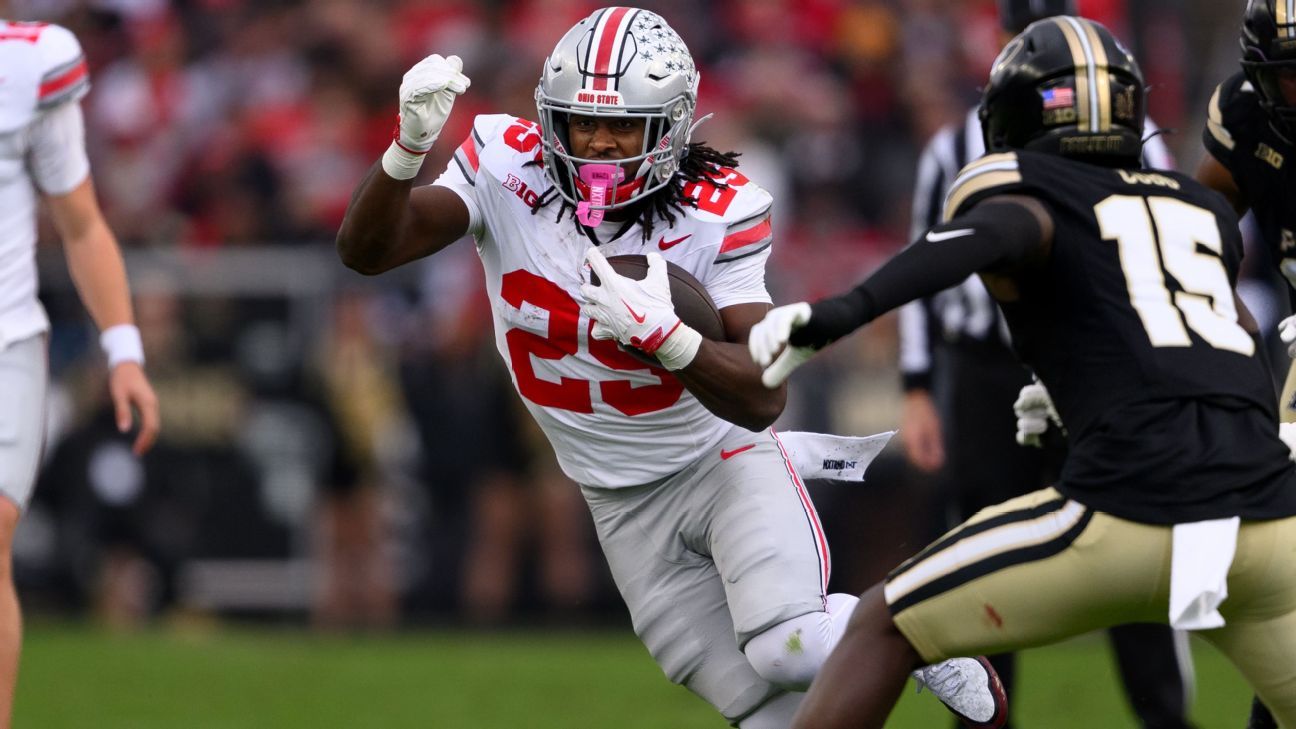
It was an “almost” sort of Saturday in college football. No. 2 Indiana flirted with disaster at Penn State but survived thanks to an Omar Cooper Jr. toe tap. No. 9 Oregon nearly got Iowa’d but saved itself with an Atticus Sappington field goal. Auburn came close to actually winning a close game against a ranked team for once but got Diego Pavia‘d in overtime and couldn’t respond. We even had almosts at the FCS and Division II levels, where top-ranked teams North Dakota State and Ferris State each trailed late but rallied.
Granted, we still got some upsets. Two more top-15 ACC teams fell (in what feels like a weekly occurrence), No. 23 Washington fell to 2-6 Wisconsin in drizzly Madison, and Hawai’i knocked San Diego State out of playoff contention late Saturday night. Lord knows the ACC race doesn’t make any more sense than it did a week ago, but Week 11 wasn’t quite as chaotic as it could have been, and it ended up offering us a decent amount of clarity in the College Football Playoff hunt.
Using the same average CFP odds formula that I used last week — combining those of the Allstate Playoff Predictor with my own odds derived from SP+ — we now have eight teams with at least an 81% chance of making the field of 12. Loads of teams are in the hunt for those other four (or so) spots, but with three Saturdays remaining before Championship Week, let’s again break contenders into tiers and talk about their most toxic traits, the flaws that will likely keep them from either winning the national title or reaching the CFP at all.

Playoff contenders’ fatal flaws
Tier 1
At a combined 28-0 with a 95% (Indiana), 75% (Ohio State) and 49% (Texas A&M) chance of finishing the regular season 12-0, respectively, these three teams are just about at the finish line when it comes to sealing playoff bids. Indiana needed all 60 minutes to get to that point at Penn State, however. For these teams, we’re definitely gauging fatal flaws in terms of what will prevent them from winning the national title; almost nothing will prevent them from reaching the CFP.
 Indiana (average CFP odds: 99.9%): Big-play glitches. Indiana has had a dynamite defense since Curt Cignetti and coordinator Bryant Haines moved to Bloomington, but when the Hoosiers give up a successful play, it’s a very successful play. Usually that comes via run defense — as evidenced by a 59-yard run for Penn State’s Nicholas Singleton on Saturday — but IU also gave up six completions of 19 or more yards against an iffy PSU passing attack, and, combined with an ill-timed interception from Fernando Mendoza, it almost cost them their unbeaten record.
 Ohio State (99.6%): A merely decent run game. Indiana’s combined playoff odds are ever-so-slightly higher than those of top-ranked Ohio State, primarily because the Hoosiers only have two remaining regular-season games left and the Buckeyes have three (including one against 7-2 Michigan). But OSU is indeed the top-ranked team per both the computers. It’s not hard to see why: The defense ranks first nationally in points per drive and yards per play, and the offense features the best receiver in the country (Jeremiah Smith) and a quarterback completing over 80% of his passes (Julian Sayin).
Sayin will face plenty of elite defenses down the stretch, however — Michigan ranks ninth in defensive SP+, likely Big Ten championship opponent Indiana ranks fourth despite the big plays, and the CFP will obviously feature lots of good defenses — and there’s a chance the Buckeyes are rendered one-dimensional at some point because of a run game that ranks 19th in rushing success rate* but doesn’t really go anywhere (4.7 yards per carry). Sayin could carry the offense anyway, but he’s still a redshirt freshman.
(* Success rate: how frequently an offense is gaining 50% of necessary yards on first down, 70% on second and 100% on third and fourth.)
 Texas A&M (99.3%): Run defense. A&M once again proved its versatility on Saturday. The Aggies thumped a Missouri team that was admittedly without starting quarterback Beau Pribula — third-string freshman Matt Zollers was a dire 7-for-22 passing — but they showed off a wonderfully spaced passing game and an elite pass rush, and after a poor first half, the run game showed up in the second half, too. But even with no pass threat, Mizzou rushed for 207 yards, furthering a scary trend: A&M ranks 130th in yards allowed per carry (no sacks). I’m really struggling to see them winning three or four straight playoff games with that anchor dragging them down.
Tier 2
All of the teams in Tier 2 have one loss; four are part of either the Big Ten or SEC, while Texas Tech lands here both because of its overwhelming quality (the Red Raiders remain fourth in SP+) and its increasingly likely Big 12 title push. Only James Madison (74%) can top Tech’s 71% conference title odds, per SP+. There’s still a chance that one of these five teams misses the dance, so we’ll say fatal flaws mean a couple of different things here.
 Texas Tech (average CFP odds: 90.1%): Quarterback. On one hand, Tech has played a pretty weak schedule featuring only two SP+ top-40 opponents. On the other hand, after Saturday’s win over BYU, the Red Raiders have beaten those two opponents by a combined 63-17. The dream season rolls on in Lubbock. But the school of Patrick Mahomes and the Air Raid’s legacy is still merely good throwing the ball, not great. Behren Morton is (A) injury-prone and (B) only 45th in Total QBR, and while the Red Raiders have scored 34 or more eight times, they’re 53rd in three-and-out rate and are mortal against good defenses.
 Ole Miss (87.7%): The run game is a wash. Trinidad Chambliss‘ emergence at quarterback has given Ole Miss another dimension, both passing efficiently and running well at times. But even with Chambliss, and even with Kewan Lacy ranking 10th nationally in rushing yards (first in rushing TDs), Ole Miss still averages only 4.8 yards per carry while allowing the same. They have big advantages in the passing game (8.7 yards per dropback, 5.6 allowed), but it’s their only path to victory against awesome opponents, and it will be hard to win three or four playoff games without a solid Plan B.
 Oregon (87.0%): No easy points against good defenses. Oregon’s defense has rounded nicely into form, and beating Iowa in cold and rain, as the Ducks did Saturday, is a great way to prove your resourcefulness. But in their five games against SP+ top-50 defense, they’ve scored just 22.0 points per game in regulation, with Dante Moore averaging just 9.2 yards per completion (he averages 15.3 against everyone else). The run game almost always shows up, but can Moore make big throws in a run of big games?
 Georgia (85.4%): The defense only shows up when it has to. Georgia tried something novel Saturday, showing up before the fourth quarter and putting away Mississippi State early with a 38-0 run. But the season stats are still alarming: In the first half, the Dawgs rank 74th in points allowed per drive (2.1) and 106th in success rate allowed (44.8%). It’s hard to beat a string of elite teams if you’re taking 30-45 minutes to play your way into the game.
 Alabama (81.0%): No run game. As you’re probably picking up by now, a lot of contenders struggle either with or against the run (or both). Alabama ranks 83rd in yards allowed per carry (not factoring in sacks) despite a solid showing against an admittedly poor LSU run game, but the more alarming part was on the other side of the ball, where Jam Miller and Daniel Hill combined to rush 15 times for 34 yards. Bama is 126th in yards per carry and continues to put everything on Ty Simpson and the (strong) passing game.
Tier 3
Notre Dame was, as expected, the highest-ranked two-loss team in last week’s CFP rankings, while BYU and Georgia Tech have each suffered only one loss (even though both losses were recent and rather demoralizing). It’s highly unlikely all three will reach the CFP, but they each have a decent chance.
 Notre Dame (average CFP odds: 59.6%): Third-and-longs. They face too many of them on offense and allow too many conversions on defense. Thanks in part to a lot of negative run plays (which are often offset by explosive runs), CJ Carr & Co. have needed at least seven yards on 50% of third downs, 86th in the country. They’ve converted 46.9% of them (second), but that will be harder to do against elite teams. Meanwhile, they rank 87th in third-and-long conversion rate allowed.
 BYU (45.4%): Not enough offensive threat. Despite Saturday’s loss at Texas Tech, BYU still has plenty to offer: The Cougars defend the pass well and both create and avoid negative plays. But against two SP+ top-30 defenses, they’ve scored just 31 combined points and averaged 4.8 yards per play. Quarterback Bear Bachmeier has been excellent for a freshman, but he doesn’t get the help he needs against the best defenses.
 Georgia Tech (37.4%): Defense. The Yellow Jackets rank 82nd in points allowed per drive, and they don’t offer enough in terms of either efficiency (87th in success rate) or explosiveness (113th in percent of 20-yard gains allowed). Haynes King and the offense are dynamite, but the dam broke in Week 10’s 48-36 loss to NC State, and it will probably break again moving forward.
Tier 4a: Non-ACC teams
All of these teams are in “win out to finish the regular season, and you have to feel good about your chances” territory. Unfortunately, SP+ gives only one of them (Utah) a greater than 35% chance of winning out, and a 10-2 Utah team wouldn’t have a spectacular résumé to lean on.
 Texas (average CFP odds: 28.0%): Negative plays. Offensive line issues have plagued Texas this season; it ranks 108th in stuff rate allowed (run stops at or behind the line) and 122nd in pressure rate allowed. Running back injuries and Arch Manning taking forever to throw haven’t helped, obviously, and shuffling the line a bit paid off against Vanderbilt. But it’s a lot to ask for the O-line to suddenly become a strength in November.
 Oklahoma (27.0%): Offensive mistakes. Despite their past two games coming against top-10 offenses, the Sooners rank fifth in points allowed per drive and first in success rate allowed. The defense will keep showing up. But the offense has had to master the art of doing just enough to overcome a lack of big plays (102nd in yards per successful play), too many negative plays (84th in percentage of snaps gaining zero or negative yards) and turnovers (12 of them, for 71st).
 Utah (25.6%): Untrustworthy explosiveness. In their seven wins, the Utes have been the 1985 Chicago Bears — average score: 46-10 (same as Super Bowl XX) — but in two losses they’ve scored just 31 total points, with below-average efficiency, minimal big-play presence and six turnovers. Even including the wins, quarterback Devon Dampier averages just 10.3 yards per completion. As with other teams here, a lack of easy points will likely be their downfall.
 Vanderbilt (25.5%): The defense is fading quickly. While a majority of contenders are less trustworthy on offense, Vandy has few issues in that regard. Just ask Auburn, which was allowing 17.0 points per game in regulation this season but allowed 38 to the Commodores. But after allowing 34 points to Texas and 38 to Auburn, Vanderbilt ranks just 84th in points allowed per drive and 124th in completion rate allowed.
 USC (15.8%): Run defense. My line for a while has been that if Lincoln Riley could just craft a top-40 defense, he’d have himself a playoff team. Well, the Trojans are 42nd in defensive SP+. Close. But they’ll probably need to beat Iowa and Oregon to reach the CFP, and both teams have offenses built to punish a terribly passive run defense that ranks 126th in rushing success rate allowed. USC can do the bend-don’t-break thing pretty well, but that’s far too much bending.
 Michigan (7.6%): Not enough risk or reward. Michigan runs the ball well, prevents big plays and takes as few risks as possible with freshman quarterback Bryce Underwood. The issue: The Wolverines can’t force the issue very well. They can’t knock opponents off schedule to take advantage of a good pass rush, and among 132 QBR-eligible QBs, Underwood ranks 95th in completion rate (60.9%) despite ranking 86th in air yards per attempt (7.6).
Tier 4b: ACC teams
Someone has to win the ACC, and after both Louisville and Virginia went down Saturday, everything is as blurry as possible. Here are the current ACC title odds, per SP+: Georgia Tech 25.5%, Virginia 17.6%, Duke 17.1%, SMU 15.8%, Pitt 11.3%, Louisville 8.5%, Miami 4.2%. Tech is in Tier 3 thanks to its one-loss status, but there’s a 74.5% chance someone not named the Yellow Jackets will win the conference title.
 Miami (15.7%): Not enough big plays. The Canes still have a chance despite two demoralizing losses in the past month, but the offense has underachieved against projections five times in six games, primarily due to a total lack of explosiveness.
They have Georgia’s efficiency but Kentucky’s explosiveness. A lack of easy points will likely be their downfall.
 Virginia (14.5%): The offense has run out of juice. Even before Chandler Morris left Saturday’s loss to Wake Forest injured, Virginia had gained just 36 yards in 14 scoreless snaps, furthering a recent downward trend.
First six games: 6.4 yards per play, 46.5% success rate, 3.25 points per drive
Last four games: 5.0 yards per play, 37.0% success rate, 1.37 points per drive
That the Cavaliers reached 8-1 before finally dropping a close game was remarkable. It was also unsustainable. We’ll see if they’re able to rebound in an elimination game at Duke this week.
 SMU (11.8%): Alls vs. nothings. Let’s bring that efficiency and explosiveness chart back up for a moment and highlight a different team.
SMU has won five of six thanks to a surging defense and an offense that gets chunk plays from receivers Romello Brinson and Jordan Hudson and back Chris Johnson Jr. But even with some recent improvement, the Mustangs still rank 86th in success rate and 114th in three-and-out rate. That will make beating Louisville, Cal and a potential ACC championship game opponent awfully difficult.
 Louisville (8.1%): Negative plays. In Saturday’s 29-26 upset loss to Cal, Louisville ran 69 plays; 29 of them (42.0%) gained zero or negative yardage. The Cardinals turned positive yardage on just four of their last 13 snaps. That raised their season average to 35.0%, which ranks 116th nationally. Running back injuries and unreliable QB and line play are dragging Louisville down.
 Pittsburgh (7.8%): Red zone and turnovers. Pitt is on a five-game winning streak since making freshman Mason Heintschel the starting quarterback, and even if the Panthers don’t win the ACC or make the CFP, they’ll decide who will — their last three games are against Notre Dame, Georgia Tech and Miami. Pitt’s defense ranks fourth in three-and-out rate but 112th in red zone TD rate allowed. Meanwhile, even looking only at Heintschel’s starts, the offense ranks 78th in red zone TD rate and 73rd in turnover rate.
Tier (Group of) 5
With Memphis and San Diego State getting more-or-less eliminated in Week 11 – Memphis due to a tight loss to Tulane, SDSU due to a blowout loss at Hawai’i – we’re basically looking at a 1-in-3 playoff chance for James Madison and a 2-in-3 chance for whoever emerges from the American Conference battle royale.
 James Madison (34.3%): Turnovers and short fields. JMU ranks third in success rate allowed (31.2%) and eighth in yards allowed per play (4.5), but the Dukes have given up at least 20 points against all four top-60 offenses they’ve faced, in part because of turnovers (including a pair of fumble-return scores) or short fields generated by special teams issues. The Dukes are good at almost everything, but underdogs can’t afford egregious breakdowns in the CFP.
 North Texas (28.3%): Run defense. Drew Mestemaker is on pace for about 4,000 passing yards, UNT ranks third nationally in points per drive, and the defense – forever flawed in Denton – ranks a solid 26th in yards allowed per dropback. There’s a lot to like here. One thing to dislike? The Mean Green are 125th in rushing success rate allowed. In their lone loss, to USF, they gave up 306 rushing yards. That feels quite damning.
 South Florida (22.4%): Soft pass defense. Like North Texas, USF can score in all sorts of ways, and the Bulls’ run defense creates negative plays and renders opponents one-dimensional. But they can let opponents off the hook. They’re just 73rd in both third-down conversion rate allowed and sack rate, and in two losses their opponents completed 69% of their passes.
 Tulane (7.5%): Defensive inefficiency. When Tulane looks good, you see a clear playoff contender. The Green Wave have two power-conference wins on their résumé, and they look the part athletically. But they rank 117th in success rate allowed, they don’t create negative plays and their defense no-showed in two losses, allowing a combined 93 points and 1,071 yards to Ole Miss (forgivable) and UTSA (less so).
This week in SP+
The SP+ rankings have been updated for the week. Let’s take a look at the teams that saw the biggest change in their overall ratings. (Note: We’re looking at ratings, not rankings.)
Moving up
Here are the five teams that saw their ratings rise the most this week:
Hawai’i: up 4.1 adjusted points per game (ranking rose from 90th to 72nd)
Utah State: up 3.3 points (from 95th to 79th)
Akron: up 3.1 points (from 126th to 123rd)
Florida International: up 3.1 points (from 125th to 118th)
Kentucky: up 3.1 points (from 63rd to 52nd)
Hawai’i’s blowout of San Diego State was a lovely highlight for a lovely season out on the islands. The Rainbow Warriors hadn’t won more than six games in a season since 2019 and haven’t finished in the SP+ top 75 since 2010, but they’re currently 7-3 and 72nd. College football is a lot more fun when Hawai’i’s doing mean things to opponents late on Saturday night.
Meanwhile, Kentucky has overachieved against SP+ projections by double digits in three of its last four games and has won two in a row to get to 4-5 and keep bowl hopes alive. Nice second-half improvement from Mark Stoops’ Wildcats.
Moving down
Here are the five teams whose ratings fell the most:
San Diego State: down 4.5 points (ranking fell from 44th to 56th)
Navy: down 4.0 points (from 50th to 63rd)
Florida: down 3.1 points (from 39th to 48th)
Nevada: down 2.8 points (from 123rd to 128th)
BYU: down 2.8 points (from 16th to 22nd)
In my Friday preview, I wrote that if BYU’s Bachmeier was ever going to look like a freshman, it was going to be against a hostile crowd and hostile defense in Lubbock. He didn’t completely implode by “freshman implosion” standards, but he averaged just 4.7 yards per dropback, found no room to run, threw what amounted to a game-clinching interception in the third quarter and lost a late fumble for good measure. Tech was too good, and BYU’s offensive SP+ ranking fell from 25th to 39th.
Who won the Heisman this week?
I am once again awarding the Heisman every single week of the season and doling out weekly points, F1-style (in this case, 10 points for first place, nine for second, and so on). How will this Heisman race play out, and how different will the result be from the actual Heisman voting?
Here is this week’s Heisman top 10:
1. Diego Pavia, Vanderbilt (25-for-33 passing for 377 yards and 3 touchdowns, plus 114 non-sack rushing yards and a TD against Auburn).
2. Emmett Johnson, Nebraska (28 carries for 129 yards and a touchdown, plus 103 receiving yards and 2 TDs against UCLA).
3. Jake Retzlaff, Tulane (16-for-23 for 332 yards and 3 touchdowns, plus 53 non-sack rushing yards and a TD against Memphis).
4. Byrum Brown, USF (14-for-15 for 239 yards and 2 touchdowns, plus 109 non-sack rushing yards and a TD against UTSA).
5. Ashton Daniels, Auburn (31-for-44 for 353 yards and 2 touchdowns, plus 103 non-sack rushing yards and 2 TDs against Vanderbilt).
6. Bryun Parham, UConn (16 tackles, 1.5 TFLs, 1 sack, 1 forced fumble and 1 interception against Duke).
7. Julian Sayin, Ohio State (27-for-33 for 303 yards, 1 TD and 1 INT against Purdue).
8. Isaiah Smith, SMU (nine tackles, four sacks against Boston College).
9. Beau Sparks, Texas State (10 catches for 186 yards and a touchdown, plus a 49-yard TD run against Louisiana).
10. Antwan Raymond, Rutgers (41 carries for 240 yards and a touchdown against Maryland).
Vandy’s defense is running on fumes, and Auburn’s offense showed up for just about the first time all season, but the Commodores’ playoff hopes remain alive because Diego Pavia pulled another Diego Pavia. Vanderbilt trailed by 14 early and nearly blew it at the end of regulation, but Pavia’s third TD pass of the evening, to Cole Spence in overtime, saved the day and put him atop this list.
Honorable mentions:
• Sieh Bangura, Ohio (17 carries for 102 yards and a touchdown, plus 30 receiving yards and a 97-yard kick return TD against Miami of Ohio).
• Jacob De Jesus, Cal (16 catches for 158 yards and a touchdown against Louisville).
• Phillip Dunnam, UCF (four tackles and three interceptions, including a pick-six, against Houston).
• Nate Frazier, Georgia (12 carries for 181 yards and a touchdown against Mississippi State).
• Makai Lemon, USC (five catches for 166 yards and a touchdown against Northwestern).
• Jayden Maiava, USC (24-for-33 for 299 yards, 2 TDs and 1 INT, plus 19 non-sack rushing yards and 1 TD against Northwestern).
• Josh Moten, Southern Miss (six tackles, three interceptions and 1 pass breakup against Arkansas State).
• Mason Posa, Wisconsin (11 tackles, 2.5 sacks, 1 forced fumble, 1 fumble recovery and 1 pass breakup against Washington).
• Jaron-Keawe Sagapolutele, Cal (30-for-47 for 323 yards and 2 touchdowns against Louisville).
• Gunner Stockton, Georgia (18-for-29 for 264 yards and 3 touchdowns, plus 31 non-sack rushing yards against Mississippi State).
Through 11 weeks, here are your points leaders. Where there’s a tie, I’ll use players’ points from the past four weeks as a tiebreaker.
1. Julian Sayin, Ohio State (29 points, 20 in the past four weeks)
2. Ty Simpson, Alabama (29 points, zero in the past four weeks)
3. Taylen Green, Arkansas (27 points)
4. Trinidad Chambliss, Ole Miss (25 points)
5. Diego Pavia, Vanderbilt (24 points)
6. Demond Williams Jr., Washington (21 points)
7. Gunner Stockton, Georgia (19 points, 10 in the past four weeks)
8. Fernando Mendoza, Indiana (19 points, nine in the past four weeks)
9. Luke Altmyer, Illinois (16 points)
10. Jake Retzlaff, Tulane (14 points)
I understand that it’s my own damn fault for bringing stats to the vibes-based Heisman race, but I’m never going to fully understand Heisman odds. Sayin entered the week as the Heisman betting favorite and went 27-for-33 for 303 yards, a touchdown and an interception. His Total QBR for the week was 89.2, he kept his season completion rate above 80% — a ridiculously high number — and his interception happened when the Buckeyes were up 21.
Fernando Mendoza, meanwhile, went just 19-for-30 for 218 yards against a Penn State defense that Sayin just torched. He averaged 6.1 yards per dropback with a 75.0 Total QBR, both his worst numbers since Week 1. He threw a devastating fourth-quarter pick that could have cost the Hoosiers the game. But then he rallied, making a couple of lovely throws on Indiana’s game-winning drive, and receiver Omar Cooper Jr. made maybe the greatest TD catch of the season — or the 2020s? The 21st Century? Ever? — to save his team.
And after all that … Mendoza became the Heisman betting favorite? Cooper’s amazing catch became Mendoza’s Heisman moment because Sayin’s team won too easily? Do I have that right? Mendoza winning the Heisman would be a spectacular story (just add it to Indiana’s list of spectacular stories at this point), but if anything happened Saturday, it should have been Sayin solidifying his lead.
My 10 favorite games of the weekend
1. No. 2 Indiana 27, Penn State 24. Regardless of my confusion toward Heisman odds, this was a brilliant football game. Penn State reminded everyone of its talent, the Nittany Lions’ home crowd came through, and Indiana drove 80 yards in 1:15 for a glorious game-winning TD. Brilliant stuff, with a brilliant in-game win probability chart.
2 and 3. Division II: No. 1 Ferris State 51, Saginaw Valley State 45 (2OT); No. 6 Colorado State-Pueblo 41, Colorado Mines 34 (OT).
Division II brought it Saturday. Ferris State won its first nine games by an average of 54-15, but redshirt freshman Wyatt Bower, Trinidad Chambliss’ successor, looked incredibly freshman-like Saturday, throwing three picks on eight passes and losing two fumbles. With the Bulldogs trailing 24-7 early in the third quarter, backup QB Chase Carter keyed a 31-7 run, but SVSU tied the game on a Mason McKenzie-to-Zarek Zelinski touchdown pass with 1:55 left. FSU missed a 39-yard field goal at the buzzer and couldn’t seal the deal until Taariik Brett’s 12-yard touchdown run in the second OT. If not for the Mendoza-to-Cooper touchdown, this would have easily been the No. 1 game of the week.
Meanwhile, after coming back from 21 points down to beat a top-10 Western Colorado team last week, CSU-Pueblo spotted rival Colorado Mines a 28-6 lead late in the first half, then slowly clawed all the way back. Roman Fuller found Marcellus Honeycutt Jr. for a tying 32-yard touchdown with 56 seconds left, then hit Reggie Retzlaff for the go-ahead score in OT. Peyton Shaw then sealed the ThunderWolves’ win with an interception.
4. Delaware 25, Louisiana Tech 24. The Blue Hens led 16-10 with under four minutes remaining, but Louisiana Tech scored twice in 46 seconds, first on a short TD run, then on a Jacob Fields pick-six, to take a 24-16 lead. Delaware’s Nick Minicucci rebounded with a TD pass to Elijah Sessoms with 34 seconds left, then the Blue Hens recovered an onside kick and set Nate Reed up for a game-winning 51-yard field goal.
1:16
Louisiana Tech Bulldogs vs. Delaware Blue Hens: Full Highlights
Louisiana Tech Bulldogs vs. Delaware Blue Hens: Full Highlights
5. No. 9 Oregon 18, No. 20 Iowa 16. Iowa proved its top-20 bona fides, Dante Moore and Oregon proved their playoff chops and Atticus Sappington nailed a huge field goal. Just a great game in November Iowa weather.
SAPPINGTON CONNECTS FOR THE DUCKS! pic.twitter.com/8QZdcfVMhW
— CBS Sports College Football 🏈 (@CBSSportsCFB) November 8, 2025
6. No. 16 Vanderbilt 45, Auburn 38 (OT). Indiana’s win probability chart was a classic of one genre (blow it, and then save yourself). Vandy’s was a classic in another (rally, then nearly fall apart multiple times).
7 and 8. FCS: No. 2 Montana 29, Eastern Washington 24; No. 1 North Dakota State 15, No. 15 North Dakota 10. Top-ranked teams struggled in the FCS as well. NDSU, barely challenged all year, trailed its in-state rival 10-9 heading into the fourth quarter. The Bison finally took their first lead on Cole Payton‘s 8-yard touchdown with 2:22 remaining, but UND drove inside the NDSU 30 in the closing seconds before Anthony Chideme-Alfaro made a lunging interception to seal the win.
0:31
Picked! Anthony Chideme-Alfaro hauls in the interception
Picked! Anthony Chideme-Alfaro hauls in the interception
Of course, we’ve seen game-sealing picks before. Have you ever seen a game-sealing fumbled spike?
0:23
Eastern Washington loses on fumbled spike attempt
Jake Schakel fumbles the spike attempt, and the Grizzlies’ defense recovers it.
Unbeaten Montana took a 29-14 lead early in the third quarter but shifted into cruise control too early, allowing 4-6 EWU to score twice, recover a late onside kick — it was a great week for successful onside kicks, by the way — and drive inside the 10 with eight seconds remaining. But Jake Schakel, who shined in his first career start, let the ball slip out of his hands on a spike, and the Griz survived.
9. UConn 37, Duke 34. There were 12 scores in this game; 10 gave a team the lead, including all six in the second half. Skyler Bell‘s 19-yard touchdown catch gave UConn the advantage with 1:58 remaining, but the game wasn’t iced until Trent Jones II recovered a sack-and-strip of Darian Mensah with 18 seconds left.
10. Sam Houston 21, Oregon State 17. Oregon State has been utterly snake-bitten this season, but this one takes the cake. The Beavers led 17-0 midway through the second quarter, but thanks to an interception (which set up a 35-yard touchdown pass), a kick return touchdown to open the second half and a blocked punt return score with 8:29 remaining, SHSU somehow came back to win its first game of the season despite a yardage disadvantage of 474-157. Shocking stuff. And you know what? Good. I ache for Beavers fans this year, but fielding even a bad team is so difficult, and every team deserves to celebrate at least one win. Now we just need to get 0-9 UMass off the schneid at some point in the next three weeks.
Honorable mention:
• Division II: Chadron State 27, No. 11 Western Colorado 24 (OT)
• FCS: No. 10 Mercer 49, No. 24 Western Carolina 47
• FCS: Mercyhurst 16, Saint Francis 15
• Missouri State 21, Liberty 17
• Ohio 24, Miami (Ohio) 20 (Tuesday)
• Division II: Ouachita Baptist 42, SW Oklahoma State 38
• Tulane 38, Memphis 32 (Friday)
• FCS: William & Mary 30, Campbell 27 (OT)
• Wisconsin 13, No. 23 Washington 10
• Division III: No. 14 Wisconsin-Platteville 24, Wisconsin-Stout 23
One last special shoutout: Army’s 14-13 win over Temple didn’t quite make the list, but Army’s last drive — an epic, 18-play, 9:53 clock killer — deserved to.
The midweek playlist
Ohio at Western Michigan (Tuesday, 8 p.m., ESPN2). One week into our midweek MACtion slate, the conference title race is as blurry as ever. Ohio’s win over Miami gave the Bobcats the slightest of edges, but it could disappear this week. Current MAC title odds, per SP+: Ohio 22.2%, Toledo 20.2%, Western Michigan 20.1%, Miami 19.2%, Buffalo 16.7%. What a race! The winner of this one should inch ahead in the odds.

PROVIDENCE, R.I. — A deadly shooting during a youth hockey game in Rhode Island last week claimed a third victim, a grandfather whose daughter and grandson were also killed in the attack, authorities said Wednesday.
Gerald Dorgan, who had been in critical condition, died from his injuries, according to Pawtucket police.
Pawtucket Mayor Donald Grebien said he was heartbroken that another person had died because of the shooting.
“Our thoughts and prayers remain with the victim’s family, friends, and all those impacted by this tragic act of violence,” he said in a statement.
Dorgan’s daughter, Rhonda Dorgan, and grandson, Aidan Dorgan, were also killed in the shooting.
Police identified the shooter as Robert Dorgan, 56, who died from an apparent self-inflicted gunshot wound. Dorgan also went by the names Roberta Esposito and Roberta Dorgano, authorities said. Robert Dorgan’s ex-wife was Rhonda Dorgan and adult son was Aidan Dorgan.
Officials have said the shooter was specifically targeting family members.
Rhonda Dorgan’s mother, Linda Dorgan, and a family friend, Thomas Geruso, were wounded.
Law enforcement have credited several people who intervened and quickly stopped the attack. At least three bystanders were able to contain the shooter in the middle of the stands as the crowd fled and ran around them.
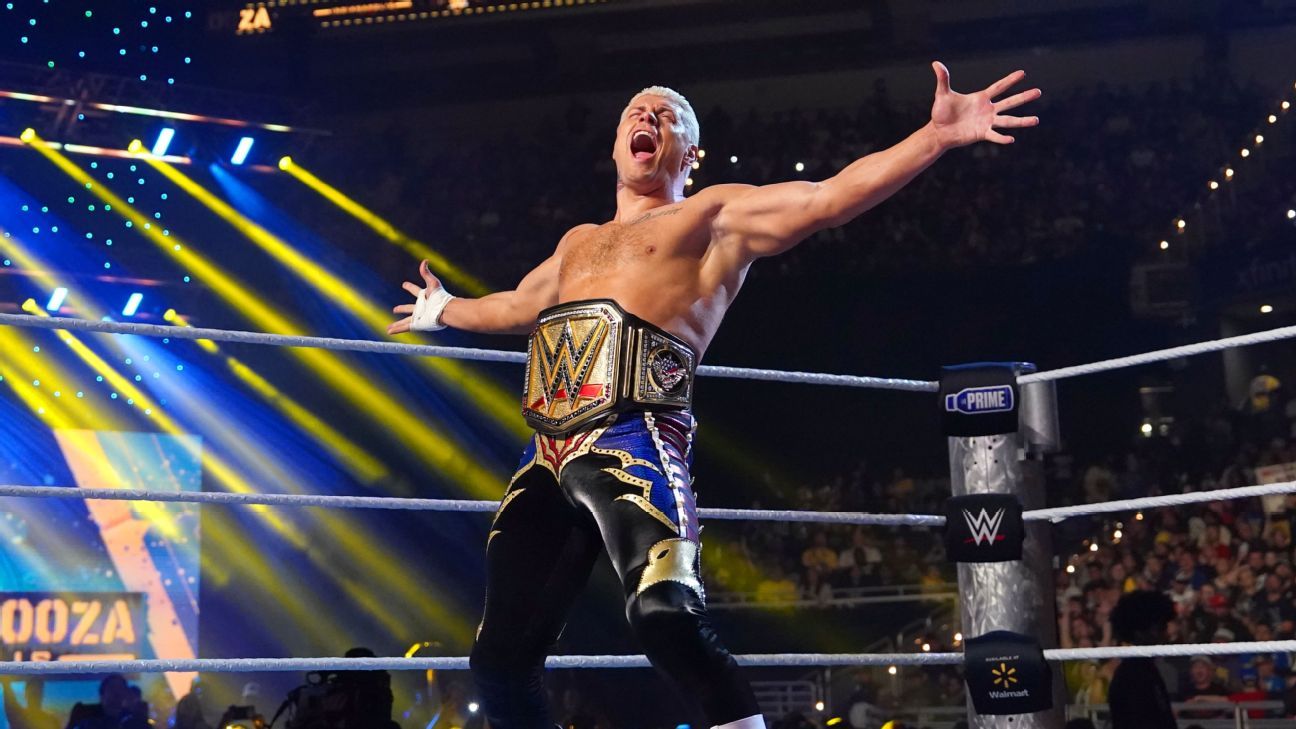
Less than two months remain until WrestleMania 42 from Las Vegas in April, and this Saturday marks a critical stop along the way. Chicago’s United Center will host the 16th WWE Elimination Chamber premium live event (7 p.m. ET on ESPN Unlimited), where the WrestleMania card will continue to be constructed.
The show will feature both men’s and women’s Elimination Chamber matches, during which six wrestlers, surrounded by a steel cage structure, work to pin or submit their opponents until one winner is left standing. That wrestler receives a championship opportunity at WrestleMania. CM Punk will also defend his World Heavyweight Championship in his hometown against Finn Bálor. And the Becky Lynch vs. AJ Lee saga continues with the Women’s Intercontinental Championship on the line.
Here are the notes, stats and Elimination Chamber history to know heading into Saturday’s event.
Men’s Elimination Chamber
Participants: Randy Orton, Cody Rhodes, LA Knight, Je’Von Evans, Trick Williams and Jey Uso
1:04
Cody Rhodes: ‘I need to officially point at the WrestleMania sign’
Cody Rhodes previews the Elimination Chamber against Randy Orton, LA Knight, Je’Von Evans and Trick Williams, readying to punch his ticket to WrestleMania.
• The first Elimination Chamber match occurred 23 years ago at Survivor Series in 2002. Shawn Michaels won the match to become world heavyweight champion.
• There have been 36 men’s and women’s Elimination Chamber matches combined, 11 of which have produced new champions.
• Triple H and John Cena share the distinction of most Elimination Chamber victories with four each. Daniel Bryan is next with three. Cena is the most recent Elimination Chamber winner, having won the men’s match in 2025. He turned heel and claimed his record-setting 17th championship the following month at WrestleMania 41.
• This will be a record-setting 10th Elimination Chamber match for Orton. Chris Jericho and Cena sit two back of Orton in the record book with eight entrants. If Orton records two eliminations in Saturday’s match, he will tie Jericho for the most all time (10). Orton is the only participant in the match with an Elimination Chamber win. He won in 2014 and retained the world title on his way to the WrestleMania 30 main event.
• Rhodes has lost three consecutive PLE matches, dating back to Crown Jewel in October 2025. It is Rhodes’ longest PLE losing streak since he returned to the WWE at WrestleMania 38 in 2022. On Saturday, Rhodes will make his first Elimination Chamber appearance since his WWE return, but not his first ever. In his first WWE stint, he took part in the World Heavyweight Championship Elimination Chamber match, won by Bryan in 2012.
• Uso won five straight WWE PLE matches from November 2024 to August 2025 — including his World Heavyweight Championship win at WrestleMania 41. Since then, he’s on a four-match PLE losing streak for the first time since 2020-21.
• Knight is looking for a change in luck at the Elimination Chamber. It has been more than a year since Knight has won a PLE match. Since Crown Jewel in November 2024, he has lost seven consecutive PLE bouts.
Women’s Elimination Chamber
Participants: Alexa Bliss, Tiffany Stratton, Rhea Ripley, Asuka, Kiana James and Raquel Rodriguez
• The first women’s Elimination Chamber match occurred in 2018. Bliss won the match and retained her “Raw” women’s championship. This will be the eighth women’s Elimination Chamber match in history.
• The only superstar with multiple women’s Elimination Chamber wins is Bianca Belair (2022 and 2025). Bliss or Asuka could join her on that list this weekend.
• Stratton is aiming to avoid her third straight WWE PLE loss after Liv Morgan eliminated her to win the Royal Rumble and Stephanie Vaquer defeated her to win the 2025 Crown Jewel Championship. Stratton hasn’t experienced a three-loss skid in PLE matches since her first three on the main roster in early 2024.
• Asuka has not won a match at a PLE event since Elimination Chamber in 2024, when the Kabuki Warriors defeated Candice LeRae and Indi Hartwell to retain the Women’s Tag Team Championship.
• Rodriguez could earn her first career singles victory at a WWE PLE this weekend. Rodriguez, who holds the women’s record for tag title reigns with six, has accumulated only tag team victories in her WWE PLE career.
• Will anyone run the table in this match? Only one wrestler, Shayna Baszler in 2020, has ever recorded every elimination in an Elimination Chamber match.
World Heavyweight Championship: CM Punk vs. Finn Bálor
1:24
Previewing CM Punk vs. Finn Balor at Elimination Chamber
Arda Ocal previews a huge match for the world heavyweight title between CM Punk and Finn Balor at Elimination Chamber in Chicago.
• The winner of this match is destined for a WrestleMania collision with Roman Reigns. Bálor defeated Reigns on his first night on the WWE main roster — the July 25, 2016, edition of “Raw.”
• This will be CM Punk’s first PLE match in Chicago since he took down Jericho at Payback in 2013. Overall, he has wrestled in six WWE PLE matches from Chicago and has a 4-2 record. One of Punk’s two UFC fights also occurred in Chicago.
• Punk is in the midst of an impressive run. He has not lost a match in more than two months. During that stretch, he successfully has retained the World Heavyweight Championship in three television matches against Bron Breakker, AJ Styles and his Elimination Chamber opponent, Bálor.
• It has been two years since Bálor last won a PLE match. In fact, his last such win occurred at the 2024 Elimination Chamber. At that event, he and Damian Priest successfully defended their tag titles against Pete Dunne and Tyler Bate.
Women’s Intercontinental Championship: Becky Lynch vs. AJ Lee
1:05
Best moments of WWE Elimination Chamber history
Relive some of the top moments of Elimination Chamber history as we gear up for Saturday’s event.
• Lee will compete in her first championship match in more than 11 years. Her last title bout occurred in December 2014, when she battled Nikki Bella at Tables, Ladders and Chairs … and Stairs for the Divas Championship.
• Lynch is 3-0 at Elimination Chamber. Her last such win occurred in 2024, when she won the women’s Elimination Chamber match.
• Lee will make her second career Chicago PLE appearance after she defeated Kaitlyn to win the Divas Championship at Payback in 2013.
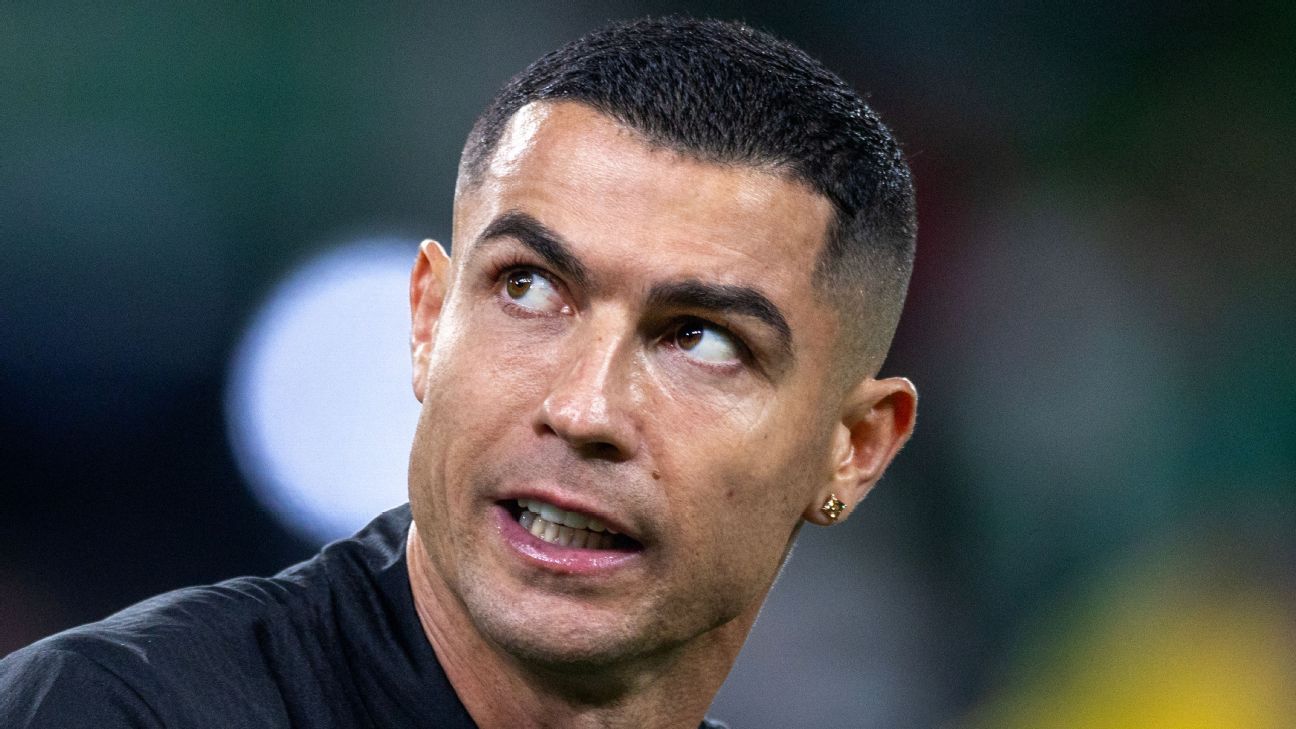
Cristiano Ronaldo has acquired a 25% ownership stake in Spanish second division club UD Almeria.
The financial terms of the transaction, done through the Portugal captain’s CR7 Sports Investments company, have not been disclosed but the deal is considered a long-term strategic investment from Ronaldo.
“I have long had the ambition to contribute to football beyond the pitch,” Ronaldo said in a statement.
“UD Almería is a Spanish club with a strong foundation and clear growth potential. I wish to work with the team leading the club to support it in its new phase of growth.”
UD Almeria were taken over by a Saudi Investment group in May 2025.
Ronaldo, who turned 41 on Feb. 5, has in the past expressed his desire to own a football club once he retired.
– Cristiano Ronaldo goal tracker: Road to 1,000 career goals
– Cristiano Ronaldo reaffirms commitment: ‘I belong to Saudi Arabia’
The former Real Madrid star last summer extended his contract with Saudi Pro League club Al Nassr through June 2027 and is expected to captain Portugal this summer in what will be a record sixth World Cup.
UD Almeria president Mohamed al Khereiji is thrilled to have the five-time Ballon d’Or winner on board.
“He is considered the best on the pitch,” Al Khereiji said. “He knows the Spanish leagues very well and understands the potential of what we are building here both in terms of the team and the youth academy.”
Relegated to the second division in April 2024, Almeria are on course to gain promotion to Spain’s top fight this season. They are third in Spain’s second tier, two points adrift of leaders Racing Santander after 27 games.


“Heated Rivalry” Season 2 is coming “as soon as humanly possible,” says creator Jacob Tierney

Third victim dies from injuries in Rhode Island rink shooting

The NBA doesn’t just want to build a European basketball league — it wants to revolutionize the international pro game

-

 Tech7 days ago
A $10K Bounty Awaits Anyone Who Can Hack Ring Cameras to Stop Sharing Data With Amazon
-

 Fashion6 days ago
ICE cotton ticks higher on crude oil rally
-
 Business6 days ago
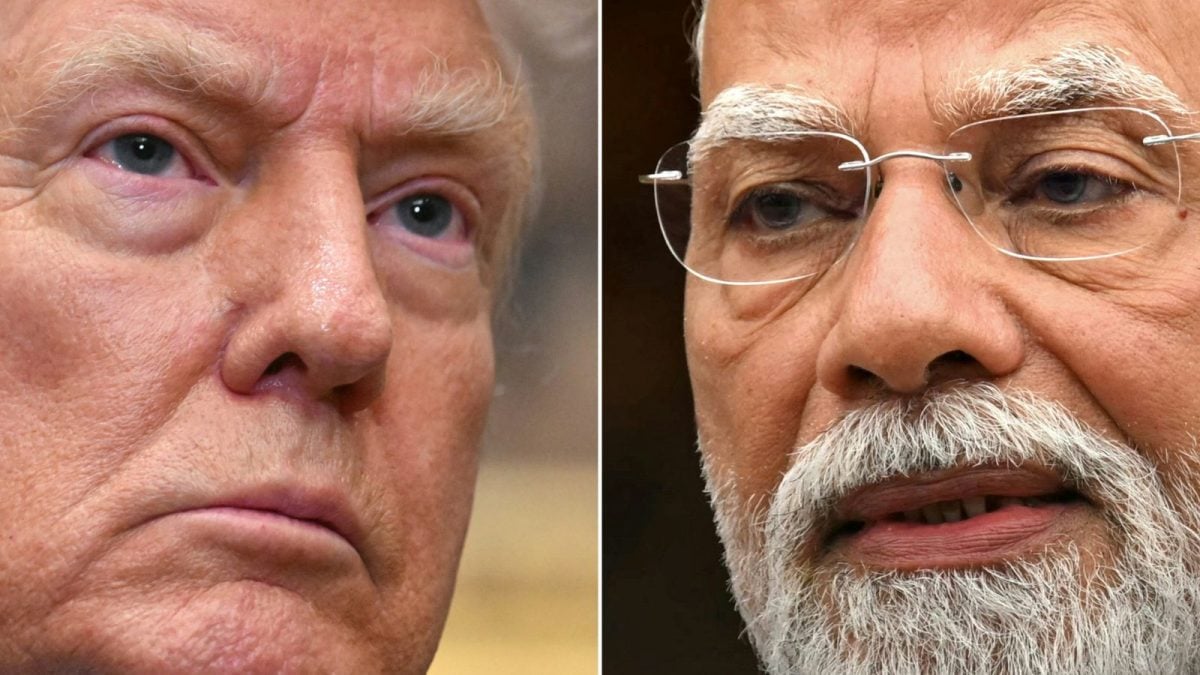
US Top Court Blocks Trump’s Tariff Orders: Does It Mean Zero Duties For Indian Goods?
-
 Business5 days ago
Eye-popping rise in one year: Betting on just gold and silver for long-term wealth creation? Think again! – The Times of India
-

 Entertainment5 days ago
Viral monkey Punch makes IKEA toy global sensation: Here’s what it costs
-

 Sports6 days ago
Brett Favre blasts NFL for no longer appealing to ‘true’ fans: ‘There’s been a slight shift’
-

 Entertainment6 days ago
The White Lotus” creator Mike White reflects on his time on “Survivor
-

 Sports5 days ago
How James Milner broke Premier League’s appearances record