

Fashion
Prada to launch $930 ‘Made in India’ sandals after backlash


By
Reuters
Published
December 11, 2025
Prada will make a limited-edition collection of sandals in India inspired by the country’s traditional footwear, selling each pair at around 800 euros ($930), Prada senior executive Lorenzo Bertelli told Reuters, turning a backlash over cultural appropriation into a collaboration with Indian artisans.
The Italian luxury group plans to make 2,000 pairs of the sandals in the regions of Maharashtra and Karnataka under a deal with two state-backed bodies, blending local Indian craftsmanship with Italian technology and know-how.
“We’ll mix the original manufacturer’s standard capabilities with our manufacturing techniques,” Bertelli, who is chief marketing officer and head of corporate social responsibility, told Reuters in an interview. The collection will go on sale in February 2026 across 40 Prada stores worldwide and online, the company said. Prada faced criticism six months ago after showing sandals resembling 12th-century Indian footwear, known as Kolhapuri chappals, at a Milan show. Photos went viral, prompting outrage from Indian artisans and politicians. Prada later admitted its design drew from ancient Indian styles and began talks with artisan groups for collaboration.
It has now signed an agreement with Sant Rohidas Leather Industries and Charmakar Development Corporation (LIDCOM) and Dr Babu Jagjivan Ram Leather Industries Development Corporation (LIDKAR), which promote India’s leather heritage.
“We want to be a multiplier of awareness for these chappals,” said Bertelli, who is the eldest son of Prada founders Miuccia Prada and Patrizio Bertelli.
A three-year partnership, whose details are still being finalised, will be set up to train local artisans. The initiative will include training programmes in India and opportunities to spend short periods at Prada’s Academy in Italy.
Chappals originated in Maharashtra and Karnataka and are handcrafted by people from marginalised communities. Artisans hope the collaboration will raise incomes, attract younger generations to the trade and preserve heritage threatened by cheap imitations and declining demand.
“Once Prada endorses this craft as a luxury product, definitely the domino effect will work and result in increasing demand for the craft,” said Prerna Deshbhratar, LIDCOM managing director.
Bertelli said the project and training programme would cost “several million euros”, adding that artisans would be fairly remunerated.
Bertelli said Prada, which opened its first beauty store in Delhi this year, has no plans for new retail clothing shops next year or factories in India. “We have not planned yet any store openings in India, but it’s something that we are strongly taking into consideration,” he said, adding that this could come in three to five years.
The luxury goods market in India was valued at around $7 billion in 2024 and is expected to reach about $30 billion by 2030, according to Deloitte, as economic growth accelerates to 7% this year and disposable income among the middle and upper classes rises. The market, however, is dwarfed by China, which generated about 350 billion yuan ($49.56 billion) in value in 2024, according to Bain.
Most global brands have entered India through partnerships with large conglomerates like Mukesh Ambani’s Reliance group and Kumar Mangalam Birla’s Aditya Birla Group. Bertelli said that Prada would prefer to enter the country on its own, even if it took longer, describing India as “the real potential new market.”
© Thomson Reuters 2025 All rights reserved.










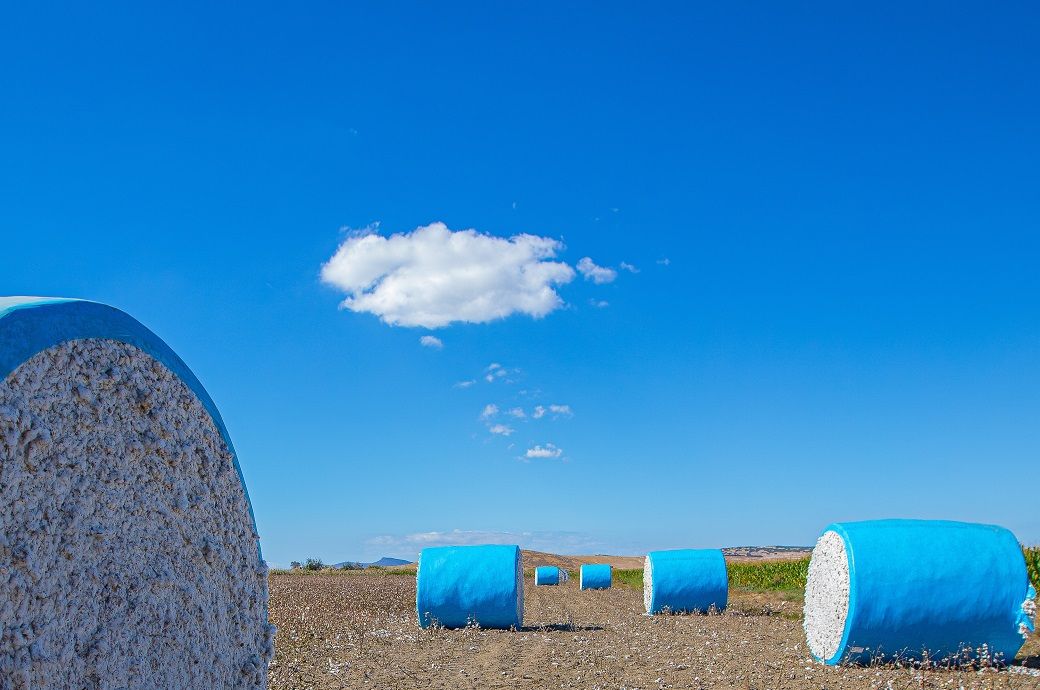
According to the March 2026 cotton production estimate report released by Vinay K Kotak, president of the Cotton Association of India (CAI), higher output is expected in Maharashtra and Andhra Pradesh, offsetting declines in Punjab and Rajasthan. Maharashtra alone accounted for an upward revision of 4 lakh bales, indicating better yields and arrivals, while northern states reported marginal reductions.
CAI has raised India’s 2025-26 cotton output estimate to 320.5 lakh bales, supported by better crop prospects in Maharashtra and Andhra Pradesh.
Consumption was also revised higher, while imports were cut.
Despite increased supply and surplus, exports remain weak, indicating comfortable domestic availability and potential pressure on prices.
Alongside higher output, CAI has raised domestic cotton consumption for 2025–26 to 315.00 lakh bales, up by 10 lakh bales from earlier estimates, signalling improved demand from the spinning and textile industry. Consumption till February 28, 2026, is estimated at 131.25 lakh bales, reflecting steady mill activity despite fluctuating yarn demand globally.
On the trade front, cotton imports are now projected at 47.00 lakh bales for the season, down from the earlier estimate of 50 lakh bales, though still higher than 41 lakh bales recorded last year. Around 36 lakh bales had already arrived at Indian ports by end-February, indicating front-loaded imports amid tight domestic availability earlier in the season.
Exports, however, remain subdued. CAI has retained its export estimate at 15 lakh bales for 2025–26, lower than 18 lakh bales in 2024–25, reflecting reduced competitiveness of Indian cotton in the global market due to relatively higher domestic prices. Shipments till end-February are estimated at 7 lakh bales.
India’s total cotton supply for the ongoing season is estimated at 428.09 lakh bales, significantly higher than 392.59 lakh bales in the previous year. This includes opening stock of 60.59 lakh bales, revised production, and imports. Availability till end-February stood at 357.55 lakh bales, indicating ample supply in the domestic market.
The higher supply is expected to translate into a larger surplus. CAI has estimated an available surplus of 113.09 lakh bales by the end of the season, compared with 78.59 lakh bales last year, which could weigh on domestic prices unless export demand improves.
Despite the increase in output and supply, closing stock estimates have been revised downward by 9.50 lakh bales to 98.09 lakh bales for September 30, 2026. However, this remains substantially higher than last year’s closing stock of 60.59 lakh bales, pointing to comfortable inventory levels.
As of February-end, total stock was estimated at 219.30 lakh bales, including 75 lakh bales held by textile mills and 144.30 lakh bales with entities such as the Cotton Corporation of India (CCI), traders, and ginners. The CAI noted that it will continue to monitor crop progress and may revise estimates further in the coming months, depending on arrivals and market conditions.
Fibre2Fashion News Desk (KUL)
Despite the revenue drop, the company said its core owned brands recorded mid-single-digit growth, supported by stronger full-price sell-through and improving global brand relevance.
G-III Apparel Group has reported net sales of $2.96 billion in FY26, down 7 per cent YoY due to $254 million in lost PVH brand sales.
Net income fell to $67.4 million.
Owned brands posted mid-single-digit growth.
The company expects FY27 sales of about $2.71 billion amid exits from Calvin Klein and Tommy Hilfiger businesses, while focusing on cost savings and margin expansion.
Net income for FY26 fell to $67.4 million, or $1.51 per diluted share, compared with $193.6 million, or $4.20 per share, in the previous year. Results included $46.1 million in non-cash asset impairment charges and $17.5 million in bad debt expense, largely related to the bankruptcy of Saks Global, G-III said in a press release.
On an adjusted basis, non-GAAP diluted earnings per share (EPS) were $2.61, compared with $4.42 in fiscal 2025.
Meanwhile, in the fourth quarter (Q4), net sales decreased 8.1 per cent to $771.5 million from $839.5 million in the same quarter a year earlier. The company reported a net loss of $31.9 million, or $0.76 per share, in the fourth quarter, compared with net income of $48.8 million, or $1.07 per share, in the prior-year period. Quarterly results included $45 million in non-cash asset impairment charges and $17.5 million in bad debt expense linked mainly to the Saks Global bankruptcy.
Non-GAAP diluted EPS for the quarter were $0.3, compared with $1.27 in the same period last year.
G-III ended fiscal 2026 with cash and cash equivalents of $406.7 million, up from $181.4 million a year earlier. Inventories declined 3.8 per cent to $460 million. During the year, the company returned $54 million to shareholders, including $49.8 million through share repurchases and $4.2 million in dividends. To improve profitability, G-III has launched operational initiatives expected to deliver annual run-rate cost savings of $25 million by fiscal 2028.
Morris Goldfarb, G-III’s chairman and CEO said, “Fiscal 2026 was a pivotal year for G-III. The strength and global recognition of our brands, together with a disciplined operating model and strong balance sheet, enabled us to deliver solid performance despite a challenging environment. For the full year, our go forward portfolio produced strong results, led by our key owned brands, with higher quality revenue, improved full-price sell-throughs, and accelerating global relevance throughout the year. I am proud of the results our team delivered and the meaningful progress we made advancing our long-term strategy.”
Looking ahead, the company expects fiscal 2027 (FY27) net sales of around $2.71 billion, reflecting the loss of approximately $470 million in sales from Calvin Klein and Tommy Hilfiger businesses. Net income for FY27 is projected between $88 million and $92 million, translating to EPS of $2-2.1, compared with $67.4 million and $1.51 per share in FY26. For the first quarter of FY27, G-III expects net sales of about $530 million, down from $583.6 million in the same quarter last year, and forecasts a net loss of $13-18 million, or $0.3-0.4 per share.
Goldfarb added, “Looking to fiscal 2027, we are building on the momentum of our go-forward portfolio, which we expect to deliver high-single digit growth for the year, helping to offset the significant lost sales as we exit the Calvin Klein and Tommy Hilfiger businesses. We are focused on driving gross margin expansion while streamlining our cost structure to unlock productivity and profitability across the business. With over $400 million of cash on the balance sheet, we enter fiscal 2027 from a position of strength, giving us the flexibility to invest in our own business as well as strategic opportunities, while continuing to return capital to shareholders.”
Fibre2Fashion News Desk (SG)
According to advance estimates released by the US Census Bureau, total retail and food services sales reached $733.5 billion in January 2026. The figure was down 0.2 per cent from December 2025 but rose 3.2 per cent compared with January 2025.
US retail trade sales in January this year were down by 0.2 per cent month on month (MoM) and up by 3 per cent year on year (YoY), according to advance estimates by the Census Bureau.
Sales at US apparel and clothing accessories increased by 4 per cent YoY in the month, while sales at furniture and home furnishing stores decreased by 3.5 per cent YoY.
Retail trade sales also declined 0.2 per cent from the previous month but increased 3 per cent on an annual basis, indicating stable consumer demand across several segments.
For the three-month period from November 2025 to January 2026, total retail sales increased 2.9 per cent compared with the same period a year earlier, showing moderate growth in consumer spending during the holiday and post-holiday season.
Among retail categories, nonstore retailers—which include e-commerce platforms—recorded the strongest growth, with sales rising 10.9 per cent YoY.
The monthly estimates are adjusted for seasonal variation and holiday and trading-day differences but are not adjusted for price changes, the Census Bureau said.
Fibre2Fashion News Desk (DS)


Niall Horan’s new album ‘Dinner Party’ has a release date: Full tracklist

Steelers legend loses patience with latest chapter in Aaron Rodgers saga: ‘They need to move forward’

Miley Cyrus gives surprising insight into her friendship with Selena Gomez

Stock market crash today (March 12, 2026): Nifty50 opens below 23,600; BSE Sensex down over 900 points on continuing US-Iran war – The Times of India

Intertextile Shanghai 2026: Fringe events spotlight market trends

What time will NASA’s 600 kg satellite crash to Earth today— 14 years after launch?

-
Business7 days ago
Stock market crash today (March 12, 2026): Nifty50 opens below 23,600; BSE Sensex down over 900 points on continuing US-Iran war – The Times of India
-
 Fashion1 week ago
Intertextile Shanghai 2026: Fringe events spotlight market trends
-
 Entertainment1 week ago
What time will NASA’s 600 kg satellite crash to Earth today— 14 years after launch?
-

 Fashion1 week ago
German brand Adidas posts 13% revenue growth in 2025
-

 Fashion1 week ago
UK’s Topshop unveils Tolu Coker capsule collection
-

 Fashion1 week ago
India’s textile recycling market may reach $3.5 bn by 2030: Report
-

 Tech1 week ago
Meta Developed 4 New Chips to Power Its AI and Recommendation Systems
-
 Business1 week ago
US ignites Iran war, but Gulf Arab states pay the price | The Express Tribune