

Entertainment
President Zardari assents 27th Constitutional Amendment to law after parliament’s approval

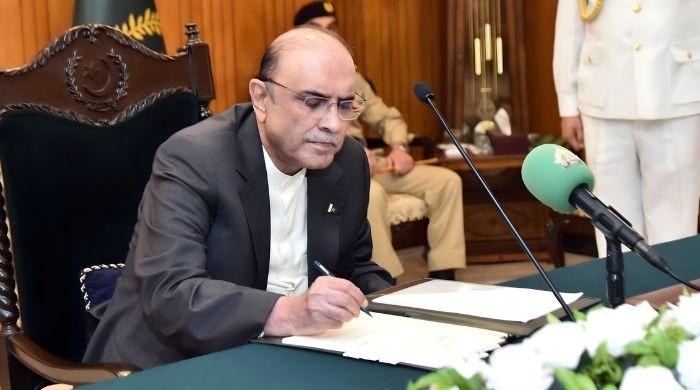
- President gives assent to bill on PM’s advice.
- Assent given to bill after nod from both houses.
- Senate greenlights bill after changes by NA.
ISLAMABAD: President Asif Ali Zardari on Thursday gave assent to the much-debated 27th Constitutional Amendment after approval from the Parliament.
With the president’s signature, the amendment has now officially become part of the Constitution.
“The Constitution (Twenty-Seventh Amendment) Bill, 2025 is assented to, as advised by the Prime Minister [Shehbaz Sharif], at Para-5 of the Summary,” read a notification issued by the President’s House.
The development came moments after the Senate approved the amendment bill following changes approved by the National Assembly a day earlier, amid noisy protests by the opposition.
Federal Minister for Law Azam Nazeer Tarar presented the constitutional amendment bill today, with the tweaks to the draft earlier approved by the upper house. The amendment bill received 64 votes (two-thirds majority in the 96-member House) in favour and four against.
Senate Chairman Yousuf Raza Gilani announced the result, saying: “So the motion is carried by the votes of not less than two-thirds of the total membership of the Senate, and consequently, the bill stands passed.”
The much-touted bill was initially presented in the upper house of parliament on Monday and got a nod on the same day. It was then referred to the NA, which approved it with some amendments. Therefore, the legislation was again presented in the Senate today to approve the latest changes.
New tweaks
A day earlier, the National Assembly passed the amendment bill that seeks to change the judicial structure and military command, with 234 votes in favour and four against amid the opposition’s walkout. It included eight amendments — not part of the Senate-approved previous version — aimed at clarifying the chief justice’s position.
The amended bill fine-tunes the structure of the newly established Federal Constitutional Court (FCC), clarifies the titles and ranking of the country’s top judges, and drops several clauses from the Senate-approved draft that had sought to alter oath-related provisions for various constitutional offices.
One of the most significant updates relates to Clause 2, which modifies Article 6(2A) of the Constitution — the article concerning high treason. The National Assembly’s version adds the term “Federal Constitutional Court” after “the”, thereby explicitly including the new court within the ambit of Article 6. The earlier Senate draft had not mentioned the court by name.
The lower house also introduced a fresh Clause 2A to amend Article 10(4), which deals with preventive detention. This revision adds the words “Supreme Court” within the explanatory portion of that article.
Meanwhile, the National Assembly deleted several provisions that had appeared in the Senate’s version. Clauses 4, 19, 51, and 55 — which collectively proposed to modify the wording of oaths administered to a range of constitutional officeholders — were removed from the final text.
Clause 4 had aimed to revise Article 42, under which the president takes the oath of office before the Chief Justice of Pakistan, by substituting the phrase “Chief Justice of Pakistan” with “Chief Justice of the Federal Constitutional Court.”
Likewise, Clause 19 proposed changes to Article 168, which regulates the appointment and oath of the Auditor General of Pakistan. It would have added the term “Supreme Court” before “Chief Justice of Pakistan,” thereby slightly altering the formal oath text.
Clause 51 mirrored this approach for Article 214, which requires the Chief Election Commissioner to take the oath before the Chief Justice. The Senate draft suggested replacing this with “Chief Justice of the Federal Constitutional Court.”
Similarly, Clause 55 sought to amend Article 255(2), which applies in cases where an oath cannot be administered before the designated official. At present, the Chief Justice of Pakistan can nominate another person; the Senate version proposed transferring this authority to the Chief Justice of the Federal Constitutional Court.
All of these oath-related proposals were ultimately omitted by the National Assembly.
Another key modification came in Clause 23, which amends Article 176 to include a proviso specifying that, “notwithstanding anything contained in the Constitution, the incumbent Chief Justice shall continue to be known as the Chief Justice of Pakistan during his term in office.”
A further addition was made under Clause 56, which now defines the “Chief Justice of Pakistan” as “the senior among the Chief Justice of the Federal Constitutional Court and the Chief Justice of the Supreme Court,” thereby establishing a formal hierarchy between the two judicial heads.
The multi-clause amendment bill required a two-thirds majority in the 336-member House. The ruling coalition easily secured the required votes, with the PML-N holding 125 seats, the PPP 74, the MQM-P 22, the PML-Q four, the Istehkam-e-Pakistan Party four, and one seat each held by the PML-Z, the Balochistan Awami Party, and the National Peoples Party.
However, four members from the JUI-F, once a close ally of the ruling PML-N, were the only lawmakers to register their votes against the amendments.
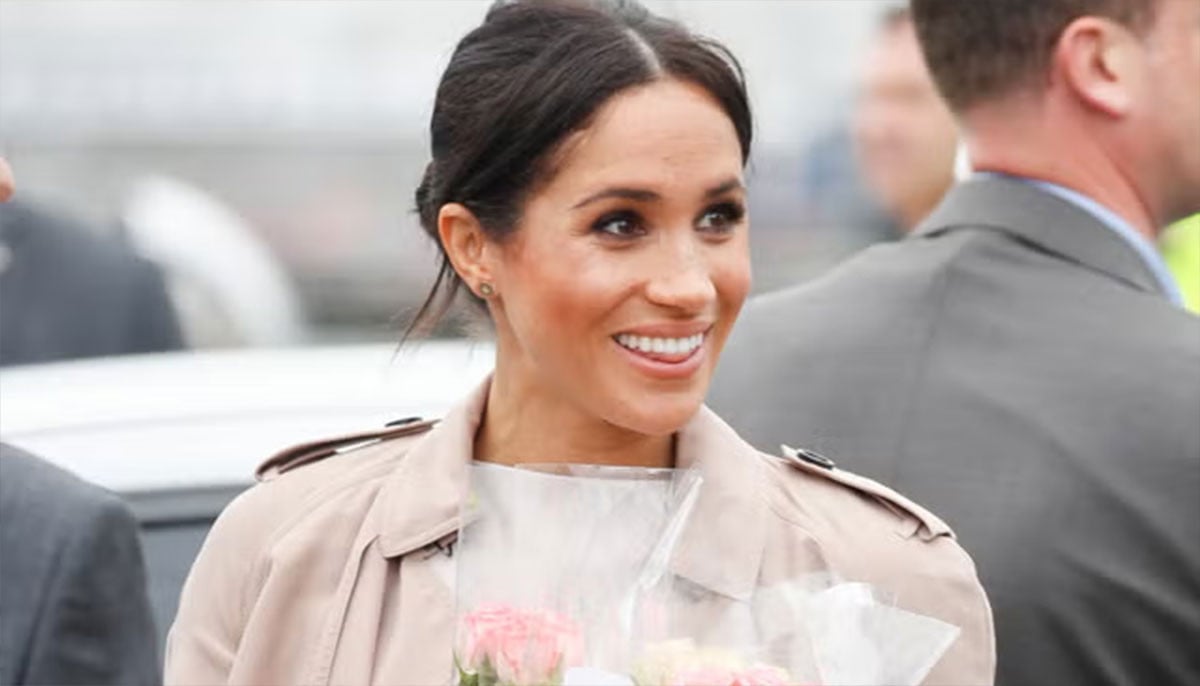
Just days before Easter, Meghan Markle was spotted doing something most parents can relate to.
The Duchess was seen scouring the toy aisles for perfect little surprises.
On April 1, the 44‑year‑old quietly slipped into a local children’s shop in Montecito, California, emerging moments later with two bulging brown paper bags.
Inside one bag, eagle‑eyed onlookers spotted a bright box of Magic Castle Sea‑Monkeys, the instant‑life critters that have delighted kids since the ’60s.
And a deck of Magic Rabbit playing cards for filling Easter baskets ahead of the weekend festivities.
HELLO! asked child and adolescent therapist Laura Gwilt of Swift Psychology what Meghan’s toy picks might suggest about her approach to parenting.
Gwilt points out that nostalgic items like Sea‑Monkeys or classic card sets aren’t just fun throwbacks, they’re developmental gold.
“Open‑ended toys like these encourage kids to invent play scenarios rather than follow instructions,” she explains.
That kind of imaginative freedom is strongly linked to creativity, and emotional regulation.
On Easter weekend Meghan shared clips of Archie and Lilibet hunting eggs, decorating them and frolicking in the garden of their Montecito home.
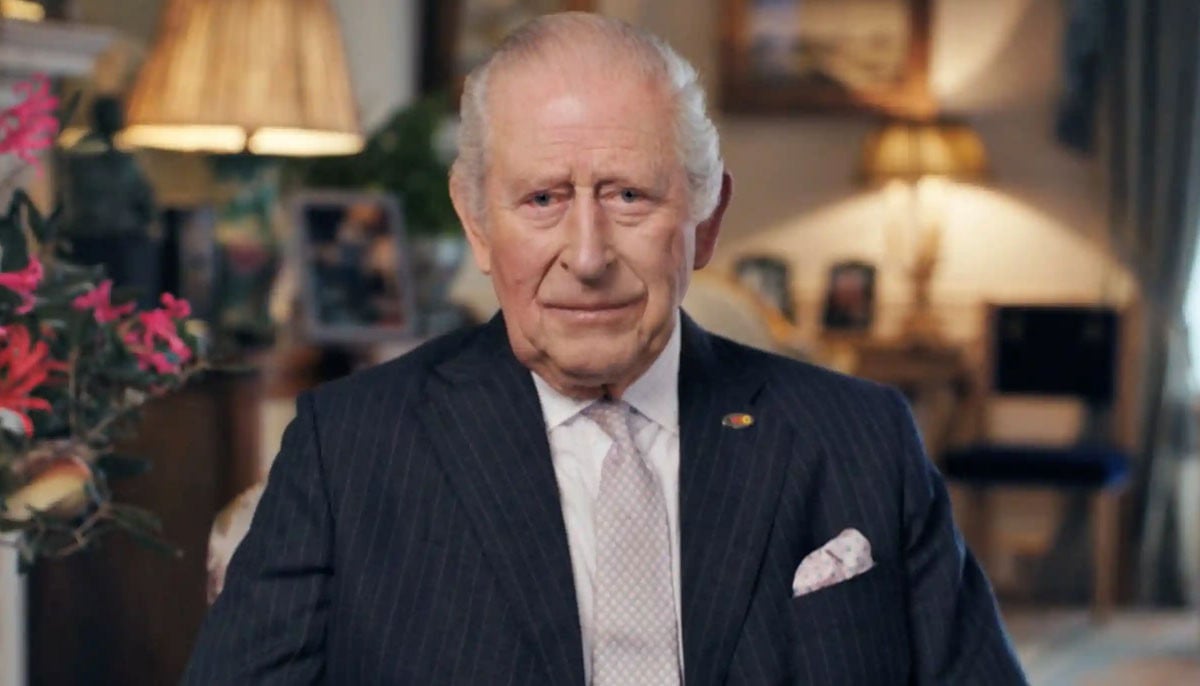
King Charles, who was diagnosed with undisclosed form of cancer in 2024, has reportedly been making good progress in his health.
In a message shared on December 2025, to mark World Cancer Day, the monarch had shared the “good news” that his treatment will be “reduced” in 2026 which he described as a “personal blessing.
However, there are whispers that this has been a deliberate move to conceal any negative update about the King’s health, as the true story is different than what it seems, according to royal experts.
Royal correspondent Robert Jobson stressed that journalists were “pushed” by the Palace to “put a positive spin on the King’s health bulletins” when the reality is rather “sobering”.
He said during the The Royalist podcast that Palace aides had been focussed on only releasing positive news.
“I think it was overhyped in December. I think that the Palace were over-emphasizing the ‘good news’.”
The press spokespeople were saying, “Oh, this is good news.” They were trying to say to the journalists at the time, “Don’t interpret it any other way. This is good news.”
Meanwhile, royal editor Tom Sykes pointed out that since he shared the story about Charles having “live with cancer”, he was removed from the international media pool by the King’s powerful press office.
“Indeed, I was removed from the international media pool by the King’s communications secretary after I noted the King’s cancer was incurable, a fact the Palace has since acknowledged. My expulsion was used as an example to intimidate other journalists into toeing the Palace line,” Tom said.
He pointed out from then on, the press has been supressing the health updates as per the “privacy rules” of the King’s “powerful” press office.
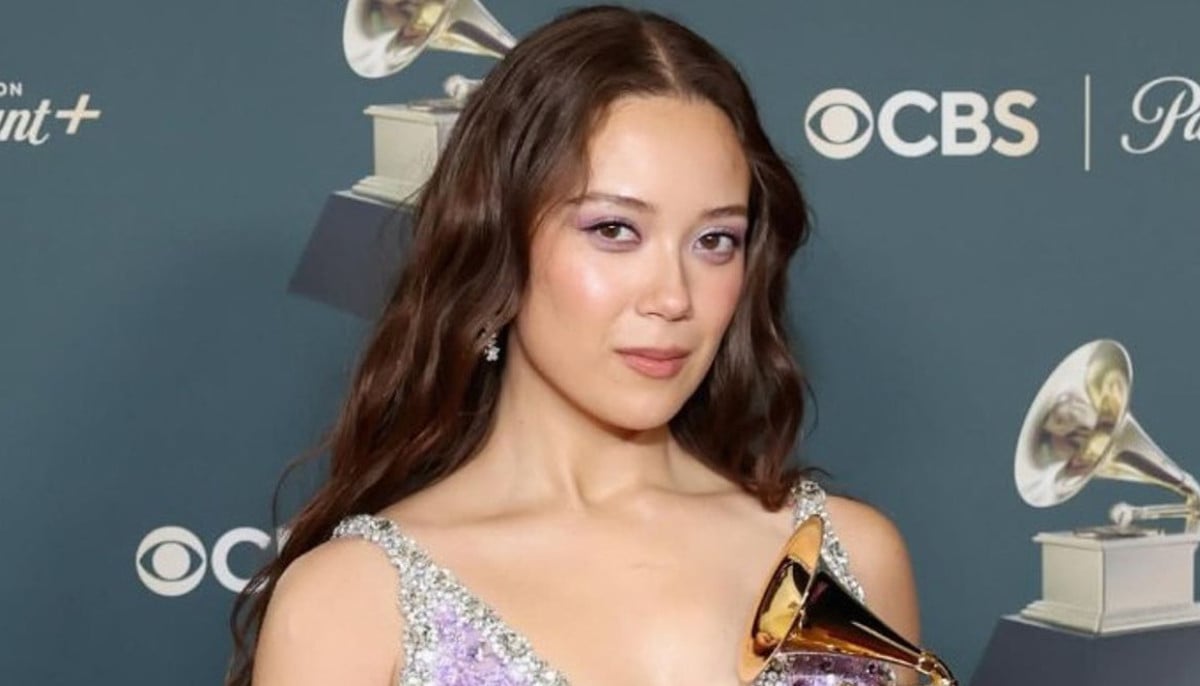
Laufey is about to release the music video for her new single, Madwoman, and it stars many familiar faces, including KATSEYE member Megan Skiendiel.
The 26-year-old jazz pop star has been teasing the project on social media and revealed all her co-stars one by one in Instagram posts.
The From The Start hitmaker will be starring in the video alongside Olympics champion Alysa Liu, The Summer I Turned Pretty star Lola Tung, as well as Skeindiel in the video, according to her latest post.
The music video is set to be released on April 10, alongside the deluxe version of Laufey’s latest album, A Matter of Time: The Final Hour.
The announcement sparked an exciting reaction among fans who flocked to the comments and wrote, “OMGGG?????? HELLO WE WON,” and “ALL QUEENS.”
A third chimed in, “Friday will simply not come FAST enough,” while some joked that she is “collecting wasians like pokemon cards.”


Olympic gold winner dismisses athletes’ negative comments on representing US: ‘I think we’re the best country’
[CinePlex360] Please moderate: “Sensex gains fo

Disney plans layoffs of as many as 1,000 employees

-
Uncategorized7 days ago
[CinePlex360] Please moderate: “Trump signals p
-
 Business1 week ago
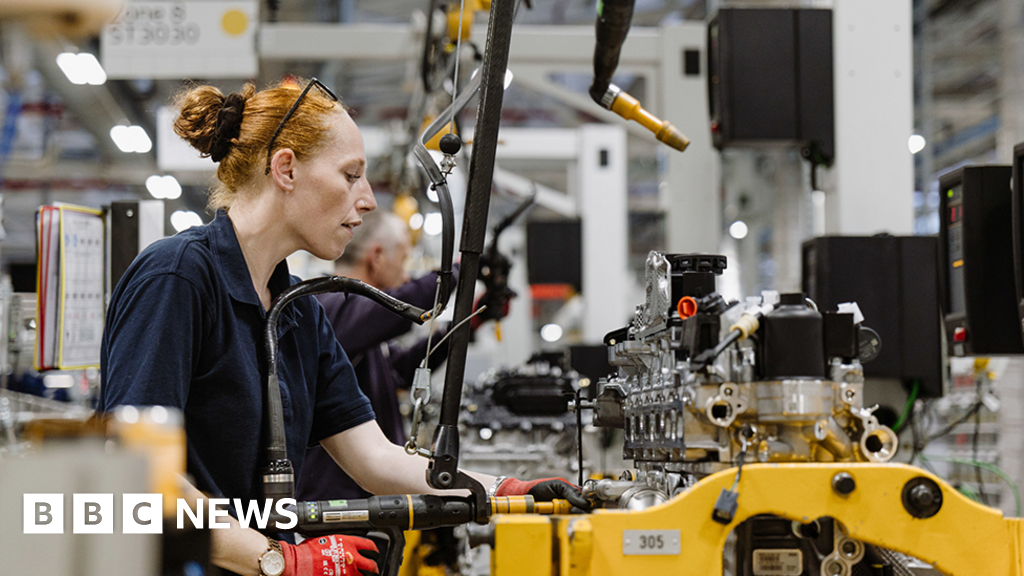
Jaguar Land Rover sees sales recover after cyber attack
-
 Entertainment6 days ago
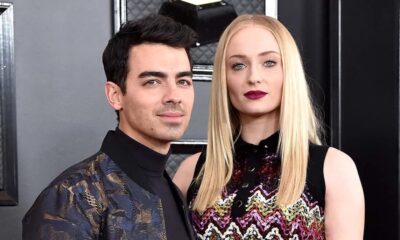
Joe Jonas shares candid glimpse into parenthood with Sophie Turner
-

 Tech6 days ago
Our Favorite iPad Is $50 Off
-

 Fashion1 week ago
China’s Anta Sports posts record $11.62 bn revenue in 2025
-

 Politics6 days ago
Iran can sustain Strait of Hormuz closure for years, will cut US military logistics: Official
-

 Sports6 days ago
UConn Final Four run could trigger a $50M furniture giveaway for Massachusetts-based Jordan’s Furniture
-
 Business6 days ago
Video: Why Is the Labor Market Stuck?