

Entertainment
President Zardari signs amendment bills for Army, Air Force and Navy

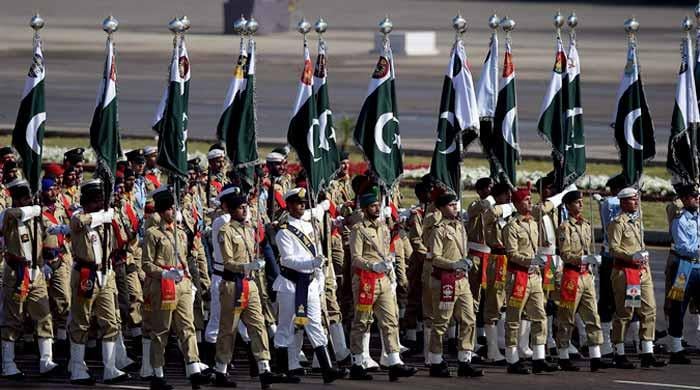
- President signs bills on PM Shehbaz’s advice.
- All three bills passed by parliament this week.
- COAS will concurrently serve as CDF.
ISLAMABAD: President Asif Ali Zardari on Saturday signed the Pakistan Army, Air Force and Navy Amendment Bills 2025 into law following their approval by parliament.
According to notifications shared by the PPP on the social media platform X, the president gave his assent to the Pakistan Army (Amendment) Bill 2025, the Pakistan Air Force (Amendment) Bill 2025 and the Pakistan Navy (Amendment) Bill 2025.
The bills, presented by Deputy Prime Minister Ishaq Dar and Defence Minister Khawaja Asif, were passed by both the lower and upper houses of parliament — the National Assembly and the Senate — this week.
What are the key changes?
Under the Pakistan Army (Amendment) Bill, the COAS will concurrently serve as Chief of the Defence Forces for five years. Field Marshal Munir’s tenure will restart from the date the new notification is issued.
Article 243 provisions applicable to a Field Marshal will also apply to a General promoted to the rank. The federal government may authorise the Vice Chief of Army Staff or Deputy Chief of Army Staff to exercise powers of the COAS, under written orders issued on the CDF’s recommendation.
The legislation further clarifies that once the first notification for the dual office is issued, the incumbent COAS’ tenure will be deemed to have recommenced from the date of that notification.
The federal government will determine the duties and responsibilities of the CDF, including multi-domain integration, restructuring and ensuring jointness across the armed forces.
A major structural change approved in the bill is the abolition of the post of Chairman Joint Chiefs of Staff Committee (CJCSC), to be replaced by the Commander of the National Strategic Command. The prime minister may appoint the commander from among serving Pakistan Army generals for a three-year term, on the COAS/CDF’s recommendation.
The terms and conditions of the appointment will be set by the prime minister, who may also grant a three-year extension in the national security interest. The bill states that any appointment, reappointment or extension for the Commander shall not be challenged before any court.
The Pakistan Air Force (Amendment) Bill, 2025, removes sections 10D, 10E and 10F of the Pakistan Air Force Act, 1953, which previously dealt with the appointment of the PAF chief as CJCSC, his tenure, extension and retirement.
All references to the CJCSC have been omitted across the Act. Similarly, the Pakistan Navy (Amendment) Bill, 2025, deletes sections 14D, 14E and 14F concerning the appointment and tenure of the Naval Chief as CJCSC, also removing the term from other provisions of the law.
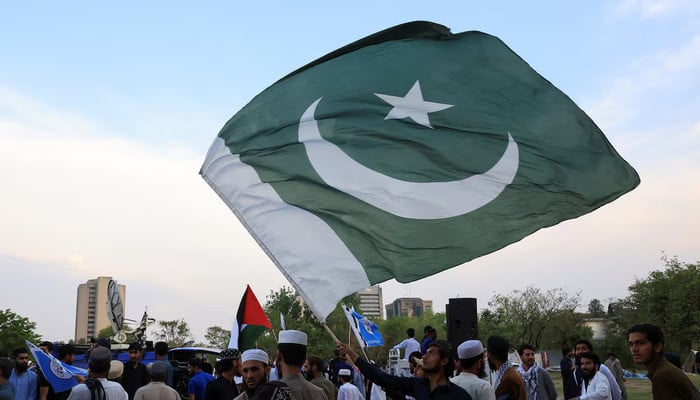
The world at large has been taken aback by Islamabad’s conspicuous role as the only interlocutor between Washington, DC and Tehran in a conflict that has also engulfed Gulf countries hosting US bases, including Qatar, Bahrain, Jordan, the United Arab Emirates (UAE) and Kuwait – and to a lesser extent Oman and Saudi Arabia.
Given US President Trump’s consistently inconsistent disposition – he has regularly delivered contradictory and inflammatory statements regarding the end of hostilities – Pakistan’s role has been outstanding by any standards and has been the only ray of hope in bringing the warring parties to the negotiating table. While Islamabad’s untiring efforts have been appreciated by many, its prominent position has bruised New Delhi’s self-aggrandisement and hubris.
For India, it is a hard pill to swallow Pakistan’s consistently mounting relevance on the global stage. The effect was so severe that it made Indian External Affairs Minister S Jaishankar mad enough to utter exceedingly indecent and undiplomatic words, a shockingly pejorative term regarding Pakistan in fact. Pakistan’s Foreign Office befittingly responded that the usage of such terms “betrays a deeper sense of frustration”, and “when arguments run thin, invective appears to fill the gap”.
Whatever perceptions India or other stakeholders may have of Pakistan’s global relevance, the fact is that, despite the country’s internal weaknesses, no one can deny Pakistan’s perennial geopolitical significance in the international order.
It is appropriate to cite Hathaway, who argues in his study titled ‘The Leverage Paradox: Pakistan and the United States’ that “by most standard measures of power – population size, GDP, size and capability of its military, possession of nuclear weapons – Pakistan stands toward the top in global rankings”.
The author asserts that “as Bruce Riedel has noted, if Pakistan were dropped into a different spot on the map – say, Latin America or Africa – it would be one of the dominant countries in its region” (p 117). Hence, for many doyens, Pakistan cannot be neglected in its significance to the regional and global geopolitical and security architecture.
During the two decades of the ‘war on terror’ and the intensification of the conflict at the domestic front inside Pakistan, the country witnessed unprecedented turmoil and destruction perpetrated by foreign proxies and terrorists. During these years, Pakistan started to be portrayed as the most dangerous place in the world. Besides negative media coverage, various publications also titled the country in ways that led readers to think the situation there is precarious and that the state and society are on the verge of inevitable collapse.
For example, one commentator starts his write-up in The Atlantic with this description: “with its ‘Islamic’ nuclear bomb, Taliban- and Al-Qaeda-infested borderlands, dysfunctional cities, and feuding ethnic groups, Pakistan may well be the world’s most dangerous country, a nuclear Yugoslavia-in-the-making” (Kaplan, 2009). Manuscripts printed during this era contained titles such as ‘Descent into Chaos’ (Rashid, 2008), ‘Armageddon in Islamabad’ (Riedel, 2009), ‘Pakistan: a hard country’ (Lieven, 2011), ‘Breakdown in Pakistan’ (Bano, 2012), ‘Avoiding Armageddon’ (Riedel, 2013), ‘The Pakistan Paradox’ (Jaffrelot, 2015), ‘Pakistan at the Crossroads’ (Jaffrelot, 2016), ‘Pakistan under siege’ (Afzal, 2018) and ‘Pakistan: courting the abyss’ (Devasher, 2018). These are just a few titles besides countless media reports portraying or foretelling an imminent doomsday for Pakistan.
There is no doubt that, since the birth of this country and throughout its turbulent history, the overall economic and political landscape has not improved much more than what the nation deserves, and the country is grappling with multiple crises today as it was in the late 1990s. Pakistan, since its independence in 1947, has had to face tumultuous years for the first four decades, including wars with India and the breakup of East Pakistan to become Bangladesh in 1971. No doubt, the country is still faced with a poly-crisis comprising domestic political, economic, governance and security challenges. Yet, as in the past, it is the nation’s resilience that enables Pakistan to emerge from the abyss.
To begin with, one of the key fortes of the country is the geographical location of Pakistan: a country located at the intersection of three regions comprising Central Asia, the Middle East and South Asia. Because of its distinctive location, Pakistan has remained an active player in global politics and has played a dynamic role in epoch-making historical events such as the cold-war era and in the ‘war on terror’ period.
For a long time, Pakistan has occupied a key position on the global stage due to its geography, demography and other factors (such as its strong military capabilities). For example, according to Chase, Hill, and Kennedy (1999), among the world’s 140 developing states, there is a group of nine pivotal states whose status and fates are likely to significantly affect regional and even global security. Pakistan is among these nine states (others are Indonesia, India, Turkiye, Egypt, South Africa, Brazil, Algeria and Mexico).
Pakistan and these countries have mostly been considered “pivotal states” (Chase, Hill, & Kennedy, 1996, p33) – countries whose fate determines the survival and success of the surrounding region and ultimately the stability of the international system. Hence, “because of its position wedged between Afghanistan and India, as well as its Indian Ocean coastline, Pakistan will continue to be a lynchpin state both for the US and for China” (Sweijs, Oosterveld, Knowles, & Schellekens, 2014, p38).
While many policy pundits indicated that Pakistan’s significance would considerably diminish for the US, particularly after the departure of its troops from Afghanistan in August 2021, the reality is that Pakistan appears to be a pivotal state in the current crisis. The country has emerged as the only actor to mediate between the US and Iran, as both countries have trust in Islamabad.
In recent years, Pakistan’s foreign policy has been remarkably successful in maintaining robust ties with both Beijing and Washington as well as with Tehran and important Gulf capitals. Islamabad’s engagement with Beijing is built on decades of mutual trust, and the relationship is multifaceted, encompassing deep defence collaboration, joint military projects, intelligence cooperation, expanded trade and economic cooperation under CPEC and Pakistan’s status as the largest recipient of Chinese arms exports since 2008. All these make Islamabad-Beijing ties quite unique without a formal defence treaty or military alliance.
At the same time, against the backdrop of Trump’s ‘America First’ policy, there is no doubt that since his second arrival at the Oval Office, Pakistan has successfully engaged his administration. Islamabad has been remarkably successful in earning Trump’s accolades at several forums on multiple occasions. It is still a long shot as to what extent Pakistan can broker a much-awaited and direly needed peace deal, contingent on the behaviour of Iran and the US
The very fact that both Tehran and Washington have reposed trust in Islamabad and that Pakistan has maintained a channel of communication between the two countries signifies Pakistan’s extraordinary diplomatic efforts and stature.
The writer teaches at the University of Malakand. He can be reached at: [email protected]
Disclaimer: The viewpoints expressed in this piece are the writer’s own and don’t necessarily reflect Geo.tv’s editorial policy.
Originally published in The News
- War has reduced global oil supply by 13%, says IMF chief.
- ME conflict to dominate next week’s IMF, WB meetings.
- Barring war, IMF had expected small upgrades in outlook.
The war in the Middle East will lead to higher inflation and slower global growth, the head of the International Monetary Fund (IMF) told Reuters on Monday, ahead of a forecast for the world economy planned by the global lender for next week.
The war has triggered the worst-ever disruption in global energy supply, with millions of barrels of oil production shuttered due to Iran’s effective blockage of the Strait of Hormuz, crucial for shipping one-fifth of the world’s oil and gas.
Even if the conflict is swiftly resolved, the IMF is set to reduce its forecast for economic growth and bump up its outlook for inflation, Kristalina Georgieva, managing director of the IMF, said.
The war is expected to dominate discussions among finance officials from around the world at next week’s spring meetings of the IMF and World Bank in Washington.
The Fund is expected to release a range of scenarios in its upcoming World Economic Outlook due on April 14.
It signalled a possible downgrade in a March 30 blog post, citing the asymmetric shock of the war and tighter financial conditions. Without the war, Georgieva said the IMF had expected a small upgrade in its projection for global growth of 3.3% in 2026 and 3.2% in 2027 as economies continue to recover from the pandemic.
“Instead, all roads now lead to higher prices and slower growth,” said Georgieva, who will preview the spring meetings in a speech on Thursday. World Bank President Ajay Banga will present his view at an Atlantic Council event on Tuesday.
“We are in a world of elevated uncertainty,” the IMF chief said, citing geopolitical tensions, technological advancements, climate shocks and demographic shifts. “All of this means that after we recover from this shock, we need to keep our eyes open for the next one.”
The war has shrunk global oil supply by 13%, Georgieva said, with the impact rippling through oil and gas shipments and into related supply chains such as helium and fertilisers.
Even a rapid end to hostilities and a fairly rapid recovery will result in a “relatively small” downward revision of the growth forecast and an upward revision of its inflation forecast, she said. If the war is protracted, the effect on inflation and growth will be greater.
Poor countries will be hit harder
Poor, vulnerable countries with no energy reserves will be hardest hit, Georgieva added, noting that many countries had little to no fiscal space to help their populations weather the price increases caused by the war, which in turn also increased the prospects of social unrest.
Georgieva said some countries had already asked for funding help, but did not name them. She said the IMF could augment some existing lending programs to meet countries’ needs. Eighty-five percent of the IMF’s members are energy importers.
Broad energy subsidies were not the answer, she said, urging policymakers to avoid government payments that could further inflame inflationary pressures.
The impact has been asymmetric, hitting energy-importing countries hardest, but even energy exporters such as Qatar are feeling the effect from Iranian strikes against their production facilities.
Qatar expects it will take three to five years to restore 17% of its natural gas production because of the damage, Georgieva said, while the International Energy Agency has reported 72 energy facilities have been damaged in the war, one-third of which have suffered significant damage.
“Even if the war is to stop today, there would be a lingering negative impact to the rest of the world,” she said.
Food security a concern
After the US and Israel attacked on February 28, Iran effectively closed the Strait of Hormuz, sending the price of crude oil and liquefied natural gas sharply higher. The international Brent crude benchmark settled near $110 on Monday, with cash benchmarks sourced to the Middle East at a substantial premium to that price.
The heads of the IMF, IEA and World Bank said last week they would form a coordinated effort to assess the energy and economic effects of the war.
Georgieva said the IMF was also engaging with the United Nations’ World Food Programme and Food and Agriculture Organisation on food security.
The World Food Programme said in mid-March that millions of people will face acute hunger if the war continues into June. Georgieva said the IMF did not see a food crisis yet, but that could happen if the delivery of fertilisers were impaired.

Zendaya has revealed the surprising role she played in her mother’s transformation into a “walking piece of art,” confessing that she was the one who originally convinced Claire Stoermer to get her very first tattoo at the age of 50.
Speaking on The Jennifer Hudson Show during the Friday, 3 April episode, the 29-year-old actress explained that she even went as far as drawing the initial design herself.
Since that first appointment, however, it seems Claire has developed a bit of an obsession with the ink parlour.
Zendaya told Hudson that her mother now calls her randomly to announce she is getting a new one, adding, “She’s covered now. She’s like a walking piece of art.”
The Drama star is certainly no stranger to tattoos herself, famously sporting a small lowercase “T” near her ribcage as a tribute to her partner, Tom Holland.
That particular bit of ink made its debut at the 2025 Golden Globes, the same night the Spider-Man: Brand New Day co-stars announced their engagement to the world.
Neither Zendaya nor Holland has officially confirmed the marriage rumours, but the actress has certainly been leaning into the bridal aesthetic while promoting her latest film, The Drama.
As fans continue to hunt for clues regarding her real-life relationship status, Zendaya remains focused on her professional successes.
Her new film, The Drama, which also stars Robert Pattinson, is currently showing in theatres.
Whether she’s helping fans find wedding dresses or inspiring her mother’s extensive tattoo collection, the Emmy winner clearly enjoys keeping her inner circle, and her audience, on their toes.


Turkiye’s apparel exports ease 2.8% in Jan-Feb 2026

IMF red alert: ME war threatens oil flows, risking inflation, global growth crisis

Stock market today: Nifty50 opens below 22,800, Sensex tumbles over 800 points as oil prices stay above $110 – The Times of India

-
Uncategorized4 days ago
[CinePlex360] Please moderate: “Trump signals p
-
Uncategorized1 week ago
[CinePlex360] Please moderate: “Further tariff
-

 Tech3 days ago
Our Favorite iPad Is $50 Off
-

 Entertainment3 days ago
Joe Jonas shares candid glimpse into parenthood with Sophie Turner
-

 Fashion6 days ago
China’s Anta Sports posts record $11.62 bn revenue in 2025
-
 Business6 days ago
UPI transactions hit record Rs 29.53 lakh crore in March; volumes cross 22.6 billion – The Times of India
-
 Politics1 week ago
Trump considers asking Arab allies to help to pay for Iran war
-
 Sports1 week ago
Fakhar Zaman denies ball-tampering charge in PSL match | The Express Tribune