

Fashion
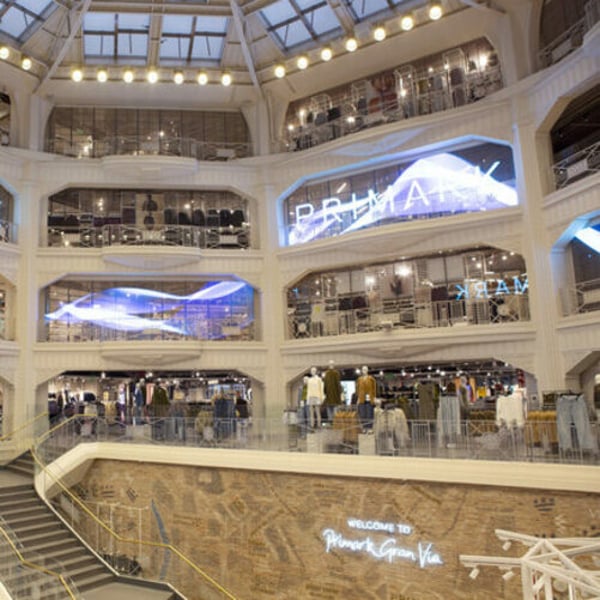
Primark’s Gran Vía store in Madrid contributed €83 million to Spain’s GDP in 2024

Published
October 21, 2025
In 2015, with the reverberations of the early‑2000s economic crisis still being keenly felt in retail, Irish low‑cost fashion brand Primark chose to step out of Spanish shopping centres, its natural habitat until then, and set up shop at 32 Gran Vía in Madrid, in a now century‑old building that originally housed the Madrid-Paris department store (a pioneer of its kind in Spain). For months, the opening drew queues of customers waiting to enter the store. A decade on, Primark is assessing the impact of this store on the city and the economy.
This Tuesday, October 21, at the building that serves as the chain’s flagship store in Spain and also houses its offices, Primark presented a report titled “10 years in the heart of Madrid,” prepared by the economic consultancy Afi. According to its analysis, in 2024 the Gran Vía store, which spans 12,500 square metres, achieved a record impact: it contributed 83 million euros to national GDP (including, among other factors, its direct operations and supply chain activity) and generated a further 42 million euros in taxes and social contributions. In addition, this flagship store records more than five million transactions annually and in 2024 directly employed 1,060 people.
Beyond 32 Gran Vía, Primark’s contribution translates into 0.4 indirect and induced jobs in the Madrid labour market for every direct job. And, for every euro of value the brand generates through its operations, other businesses and sectors generate an additional 0.5 euros for the Madrid economy, according to figures from the Afi report.
The consultancy also points to a “halo effect” along the capital’s commercial hub, Gran Vía. Since the opening of Primark, that is, between 2015 and 2025, the number of retailers has risen from 101 to 186, and restaurants from 46 to 90.
“Ten years ago, when we decided to open here, we wanted to make a difference, to change the perception of the brand and elevate it. We wanted to convey a message to the Spanish consumer and we have succeeded, as well as helping to boost the dynamism of Gran Vía. This store, which leads Iberia by volume and transactions, has changed us as a brand,” said Carlos Inácio, managing director of Primark Iberia, at the presentation of the report.
The key figures of this analysis were revealed during a roundtable discussion, in which Diego Vizcaíno, Managing Partner of Afi, also took part. He stressed that the opening of this store was “a challenge for the city as a whole and for the companies that work with Primark”. “It was a challenge for the evolution of Madrid’s retail fabric; competitors had to raise their game, as did suppliers,” added the executive.

This Gran Vía store never sleeps: it operates 24 hours a day, seven days a week, although not all of those hours are trading hours. “For the night shift workers, who have to replenish the merchandise, it’s as if they had to set up a new store every day,” said Juana Rodero, Primark’s director of people and culture, who also participated in the roundtable discussion. To supply the store, 1,500 lorries are unloaded every year, which translates into some 50,000 unloading hours and more than one million boxes.
“I think transformation is the word that defines these 10 years,” concluded Carlos Inácio. “We arrived, we set trends and the challenge is to stay on that path. We have the responsibility to keep building a dynamic and inclusive business that continues to grow,” said the executive. He also addressed one of the questions that hovers over any discussion of Primark’s future strategy: will it continue to focus on the offline channel, as it has done so far, or is it considering the leap to online sales? “We are not ruling out anything; what we are doing is studying and analysing the channel to launch it when we are certain that it will work. Currently, the company offers ‘click-and-collect’ in the UK; we are analysing the profitability of this model and whether it can be scaled to other territories, including Spain, the second-largest market for the brand.”
Primark, which has been operating in Spain since 2006, has 67 stores in the country, 250,000 square metres of retail space and employs more than 10,000 people. “Next year we will mark two decades in the country and we will celebrate it in style,” said the head of the chain in Iberia.
This article is an automatic translation.
Click here to read the original article.
Copyright © 2025 FashionNetwork.com All rights reserved.












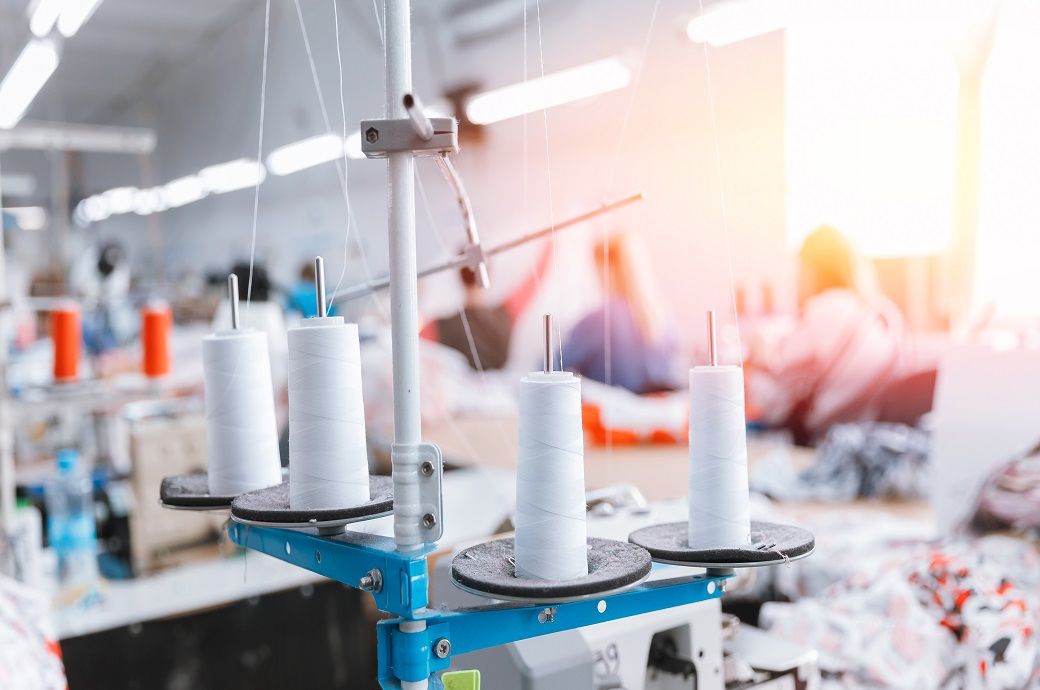
Trade and industry secretary Cristina A Roque said foreign buyers told her automation is no longer optional, but has turned a baseline requirement globally.
The Philippines will provide ‘flexible financing’ to domestic garment manufacturers for automation, machinery and production equipment to make them more competitive in the global market.
Incentives under the DTI’s Board of Investments will support mechanised and digital garment production, while the Philippine Economic Zone Authority will offer a comprehensive package for export-oriented garment firms.
“They expressed a clear preference for exporters with modern, automated production equipment, as short lead time is now the deciding factor, especially for fast-fashion brands,” Roque was cited as telling a recent meeting with garments manufacturers by a domestic media outlet.
Therefore, the department will work with institutions like the Land Bank of the Philippines and the Development Bank of the Philippines to provide flexible financing, she said.
Incentives under the DTI’s Board of Investments will support mechanised and digital garment production, while the Philippine Economic Zone Authority’s (PEZA) incentives will offer a comprehensive package of fiscal and non-fiscal support for export-oriented garment firms located within PEZA special economic zones, she said.
The department will also study proposals by the domestic garment industry aimed at enhancing overall cost competitiveness, including potential reductions in value-added tax rates to levels comparable to those of ASEAN peers and expanded fiscal support for existing firms and subsidiaries.
Fibre2Fashion (DS)
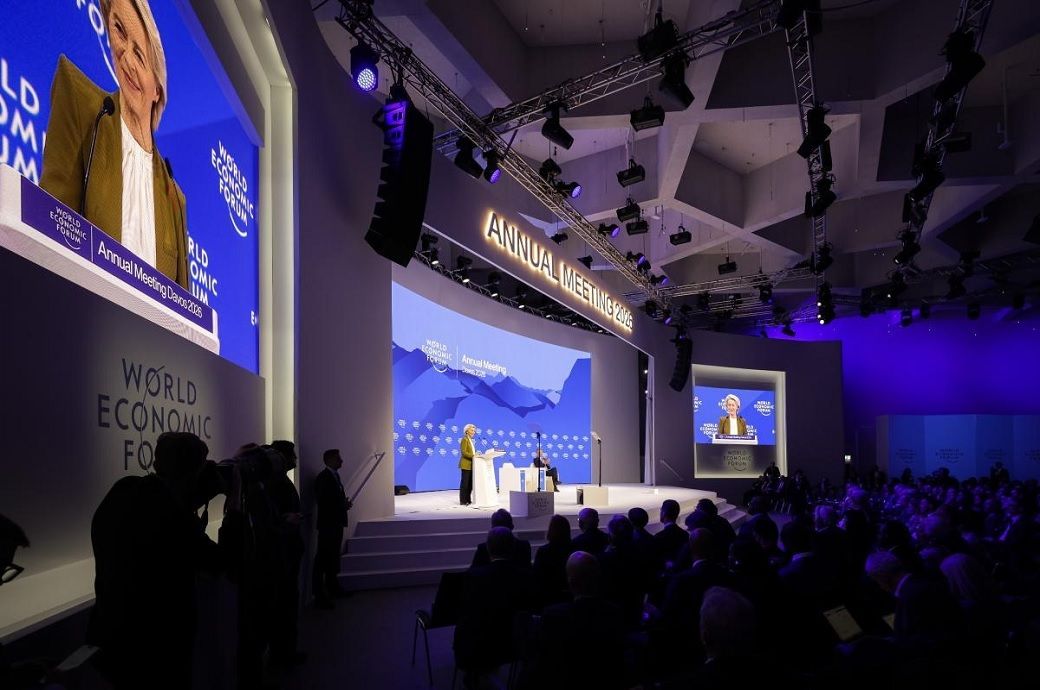
“And right after Davos, the next weekend, I will travel to India. There is still work to do, but we are on the cusp of a historic trade agreement,” she said, adding that “some call it the mother of all deals.”
EU-India talks are reaching a momentous phase, indicated European Commission President Ursula von der Leyen while addressing the World Economic Forum.
“And right after Davos, the next weekend, I will travel to India….we are on the cusp of a historic trade agreement,” she said, adding that “some call it the mother of all deals.”
The FTA talks began in 2007, were abandoned in 2013 and restarted in 2022.
As the EU is committed to de-risking its economy and diversifying supply chains by deepening ties with the world’s major growth centres, she saw the planned India-EU free trade agreement (FTA) as part of Europe’s broader strategy to champion “fair trade over tariffs, partnership over isolation, sustainability over exploitation”.
The FTA would create a combined market of around two billion people and account for nearly a quarter of global gross domestic product (GDP), giving European companies a crucial first-mover advantage in one of the world’s fastest-growing regions, she said.
“Europe wants to do business with the growth centres of today and the economic powerhouses of this century, from Latin America to the Indo-Pacific and far beyond,” she said.
A recent statement by India’s Ministry of External Affairs said European Council President Antonio Luis Santos da Costa and von der Leyen will be on a state visit to India from January 25 to 27. The two will be the chief guests at India’s 77th Republic Day celebrations. The European leaders will also co-chair the 16th India-EU Summit with Prime Minister Modi on January 27.
Negotiations for the planned FTA first began in 2007, and abandoned in 2013. Talks were re-launched in July 2022.
Fibre2Fashion (DS)
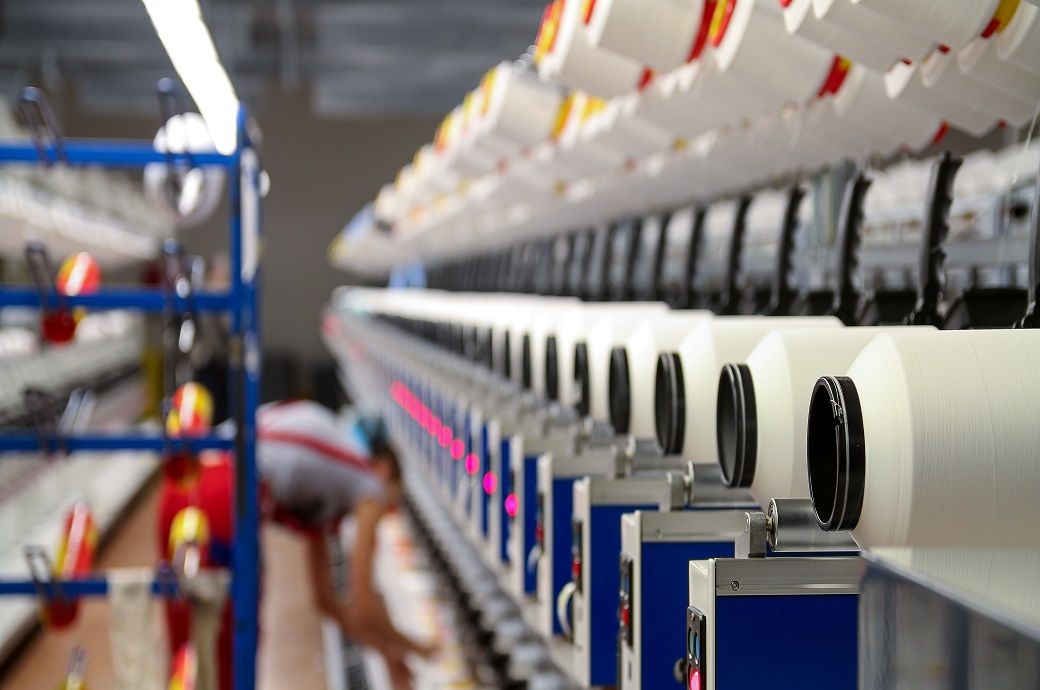
The project will be developed under the private free zones system within Industria October Industrial City.
Egypt will set up an integrated spinning and textile industrial complex in New October City with an estimated initial investment of $350 million.
An agreement was signed recently for the complex between Elsewedy Industrial Development and Crystal International Group, a leading textile manufacturer.
The complex is expected to create around 20,000 direct jobs.
An agreement was signed recently for the complex between Elsewedy Industrial Development and Crystal International Group, a leading textile manufacturer.
Egypt’s Deputy Prime Minister for Industrial Development and Minister of Industry and Transport Kamel Al-Wazir witnessed the signing ceremony, the country’s state information service posted on Instagram.
Al-Wazir said the project aligns with the state’s strategy to revive the spinning and textile industry, boost domestic manufacturing and exports, raise value-added production and reduce import dependence.
The project will receive full government support if it expands to cover all stages of the value chain, he said.
The industrial complex will feature an integrated production system encompassing the spinning of natural and synthetic fibres, yarn production, advanced weaving, textile processing, finishing and dyeing.
The approach is expected to enhance product quality, reduce waste and strengthen the competitiveness of Egyptian textile products globally.
The complex is expected to create around 20,000 direct jobs.
Fibre2Fashion (DS)


EU–Mercosur trade pact: Parliament sends deal to EU court, farmers celebrate while exporters flag risks – The Times of India

Journalists in IIOJK asked by police to sign pledge vowing to keep peace

Philippines announces ‘flexible financing’ for garment manufacturers

-

 Tech1 week ago
New Proposed Legislation Would Let Self-Driving Cars Operate in New York State
-

 Entertainment1 week ago
X (formerly Twitter) recovers after brief global outage affects thousands
-

 Sports6 days ago
Pak-Australia T20 series tickets sale to begin tomorrow – SUCH TV
-

 Politics4 days ago
Saudi King Salman leaves hospital after medical tests
-
 Business5 days ago
Trump’s proposed ban on buying single-family homes introduces uncertainty for family offices
-

 Tech6 days ago
Meta’s Layoffs Leave Supernatural Fitness Users in Mourning
-

 Fashion4 days ago
Bangladesh, Nepal agree to fast-track proposed PTA
-

 Tech7 days ago
Two Thinking Machines Lab Cofounders Are Leaving to Rejoin OpenAI