

Business
PSX smashes through 154,000 | The Express Tribune

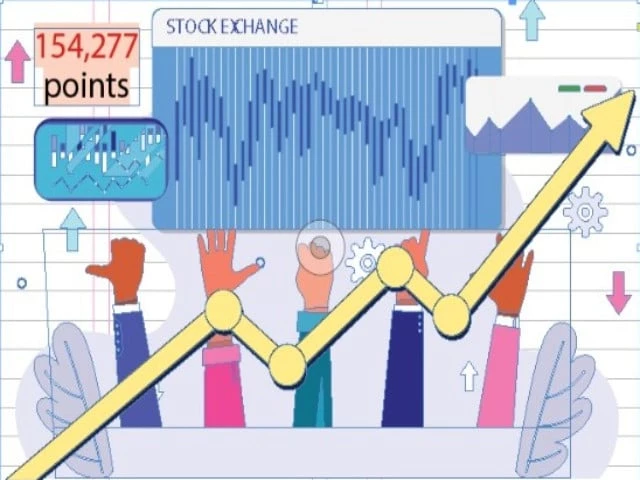
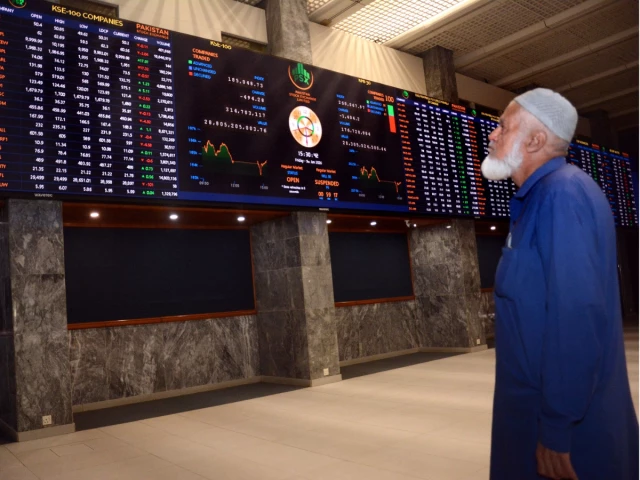
Pakistan Stock Exchange (PSX) closed the week on a strong footing on Friday as the benchmark KSE-100 index surged over 1,600 points to settle at a record high of around 154,280.
The rally was spearheaded by the National Bank of Pakistan (NBP), which hit the upper circuit and skyrocketed 9.88% to Rs171.98, after its corporate briefing bolstered expectations of a healthy year-end dividend. The stock's performance alone set the tone for the session, fuelling institutional and retail interest across banking and cement counters.
Analysts noted that the NBP's management signalled it would not remain overcapitalised, a stance investors welcomed despite payout restrictions under the NBP Act.
The momentum in Friday's session was broad-based, led by financial, cement, power and energy names. Hubco gained 4.59% and Lucky Cement rose 2.93%, while DG Khan Cement and Pakistan Petroleum Ltd (PPL) also added meaningful points to the index.
In contrast, Fauji Fertiliser Company (FFC), UBL and Systems Ltd put resistance, trimming some of the gains. Overall market participation remained robust as traded volumes crossed 1.08 billion shares and value touched Rs59.9 billion.
Sentiment was further buoyed by news that Pakistani and Chinese companies signed joint venture agreements worth $1.5 billion and memoranda of understanding totalling $7 billion in the solar energy and agriculture sectors.
Analysts said these developments provided additional triggers for sustained investor optimism, with the KSE-100 poised to test fresh highs next week as support emerges at 151,000 points and the next upside target is seen at 156,500.
At the end of trading, the benchmark KSE-100 index posted a surge of 1,611.47 points, or 1.06%, and settled at 154,277.19.
"National Bank stole the spotlight, locking at the upper circuit within minutes after its corporate briefing fuelled expectations of a healthy year-end dividend," said Ali Najib, Deputy Head of Trading at Arif Habib Ltd (AHL).
"Investors cheered the management's signal of not staying overcapitalised, though the NBP Act restricts payouts to year-end results," he added. "The stock closed 9.88% (Rs15.47) higher at Rs171.98."
In its daily report, AHL noted that the stock market closed the week with gains of 3.9% week-on-week. Among the major contributors to the index gains on Friday were NBP (+10%), Hubco (+4.59%) and Lucky Cement (+2.93%).
Topline Securities, in its market review, observed that the KSE-100 extended its advance as it surged 1.06% (+1,611 points) to close at 154,277, fueled by institutional buying in banks and cement firms. The top positive contributors were NBP, Hubco, Lucky Cement, DG Khan Cement and PPL as they contributed 1,008 points to the index.
Traded value-wise, NBP (Rs4.69 billion), Pakistan State Oil (Rs3.78 billion), DG Khan Cement (Rs3.45 billion), PPL (Rs3.38 billion) and Oil and Gas Development Company (Rs3.15 billion) dominated the trading activity, Topline said.
"PSX wrapped up the week on a historic note, with the KSE-100 index closing at an all-time high of 154,277 points," said Mubashir Anis Naviwala of JS Global.
Even in the final session, the bullish momentum remained intact, highlighting strong investor confidence. The rally was broad-based, led by cement, banking, power generation and E&P companies. Institutional and retail participation stayed robust, keeping sentiment elevated. The outlook remains bullish while dips offer attractive entry points in leading sectors, he said.
Overall trading volumes were recorded at 1.08 billion shares compared with the previous session's tally of 954.3 million. The value of shares traded was Rs59.9 billion.
Shares of 479 companies were traded. Of these, 239 stocks closed higher, 210 fell and 30 remained unchanged.
The Bank of Punjab was the volume leader with trading in 146.1 million shares, gaining Rs1.33 to close at Rs19.69. It was followed by First National Equities with 55.8 million shares, gaining Rs0.96 to close at Rs7.74 and Fauji Foods with 50.9 million shares, gaining Rs0.56 to close at Rs18.72.
During the day, foreign investors sold shares worth Rs1.6 billion, the National Clearing Company reported.
Source link



Food delivery giant Just Eat, funeral firm Dignity and motor platform Autotrader are among five firms under investigation by the UK’s competition watchdog as part of its crackdown on fake and misleading online reviews.
The Competition and Markets Authority (CMA) said it had launched probes against the companies – also including customer review and feedback firm Feefo and Pasta Evangelists – to see whether consumer laws have been broken.
Since April last year, companies have been banned from certain tactics around online reviews under law, such as fake posts, paid-for reviews that are not clearly marked as incentivised, as well as for hiding negative feedback.
Sarah Cardell, chief executive of the CMA, said: “Fake reviews strike at the heart of consumer trust – with many of us worrying about misleading content when looking at reviews online.
“With household budgets under pressure, people need to know they’re getting genuine information – not reviews or star ratings that have been manipulated to push them towards the wrong choice.
“We’ve given businesses the time to get things right. Now we’re deploying our new powers to tackle some of the most harmful practices head on.”
The CMA said it was looking into whether Just Eat’s ratings system had inflated some restaurant and grocer star ratings, giving a misleading picture of quality.
For Autotrader and Feefo, the CMA is investigating whether a number of one-star reviews – moderated by Feefo, which handles reviews for the new and used car site – were hidden on the platform and did not count towards the star ratings.
Dignity is under investigation by the CMA into whether it asked staff to write positive reviews about the firm’s crematoria services.
And artisan fresh pasta chain Pasta Evangelists is being probed over allegations it offered customers discounts for leaving five-star reviews on delivery apps without this being disclosed.
If the CMA finds the firms have broken the law, it can order them to change their practices and fine them up to 10% of their annual global sales.
An Autotrader spokesperson said: “We endeavour always to operate as a responsible and compliant business and will co-operate fully with the CMA’s investigation.”
It comes after the CMA recently secured commitments from Google and Amazon to beef up their systems to identify and remove fake reviews.
Amazon last June agreed to put in place “robust processes” to quickly detect and remove fake reviews alongside sanctions for rogue sellers and businesses after an investigation by the CMA to curb the customer hazard.
The tech giant said it would sanction businesses that boost their star ratings via bogus reviews or catalogue abuse, including bans from selling on the website, while users could also be banned for posting fake reviews.
Consumer group Which? welcomed the investigations and said the CMA must “get tough” on firms found to be breaking the law with reviews.
Sue Davies, head of consumer rights policy at Which?, said: “Investigations are a welcome first step, but enforcement will be key – the regulator must be prepared to get tough, use its powers and issue serious fines if these companies aren’t playing by the rules.”
The CMA said it swept more than 100 review publishers as part of the clampdown and sent advisory letters to 54 firms to improve their compliance with the law, with 90% having made changes in response and 75% telling the watchdog they better understood the rules.
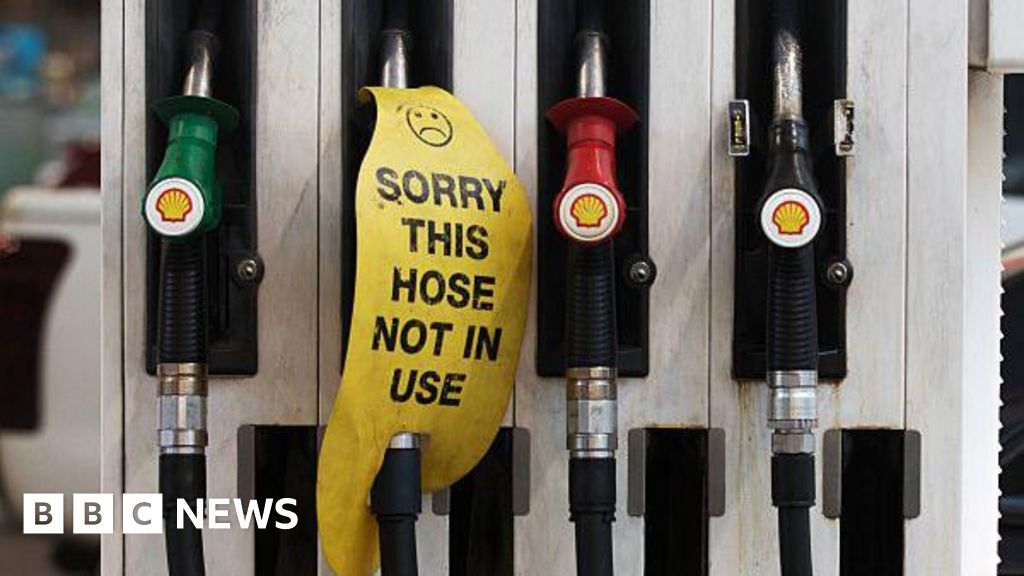
Anthony Albanese says nation’s supply remains “secure” amid reports of panic buying and shortages.
Source link

A woman has been awarded $6m in a verdict that could have implications for hundreds of other cases in the US.
Source link


Transfer rumors, news: Could Foden leave Man City this summer?

Germany’s ifo index drops to 86.4 in March as uncertainty weighs on
Just Eat and Autotrader among five firms under investigation over online reviews

-

 Fashion1 week ago
Sales at US apparel, clothing accessories stores up 4% YoY in Jan 2026
-

 Entertainment1 week ago
Val Kilmer revived 1 year after death through AI
-
 Fashion1 week ago
US’ G-III Apparel’s FY26 sales fall 7% to $2.96 bn
-
 Business1 week ago
Brits cashing in jewellery as gold price hits record high
-

 Sports1 week ago
March Madness 2026 – How to watch in SA, start time, schedule, TV channel for NCAA championship basketball tournament
-

 Fashion6 days ago
China’s textile & apparel exports surge 17% to $50 bn in Jan-Feb 2026
-
 Business1 week ago
Video: The Effects of High Oil Prices
-
 Business6 days ago
Flipkart group CFO to leave co amid IPO plans – The Times of India