

Business
PSX stages strong rally on positive macro triggers | The Express Tribune

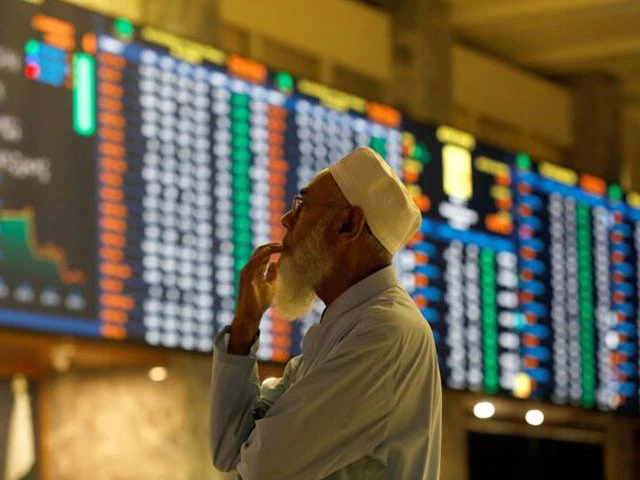
A stock broker reacts while monitoring the market on the electronic board displaying share prices during trading session at the Pakistan Stock Exchange, in Karachi on July 3, 2023. Photo: Reuters/ File
The Pakistan Stock Exchange (PSX) staged a robust rally on Monday, with the benchmark KSE-100 index jumping 1,945.50 points, or 1.22%, to close at 161,538.41. The market opened strong and maintained its upward momentum throughout the session, hitting an intra-day high of 161,881.45 and a low of 160,406.43.
Investor confidence returned after last week’s volatility, with renewed buying interest across key sectors — particularly fertiliser, investment banking, oil & gas, and cement. Both institutional and retail participation reflected optimism over improving macroeconomic indicators and expectations of policy stability in the near term.
Read: Pakistan’s stock market needs depth, not drama
According to KTrade Securities, PSX rebounded sharply as investor sentiment strengthened on expectations of positive macro and political developments, including the parliamentary approval of the 27th Constitutional Amendment, the release of the next International Monetary Fund (IMF) tranche, and easing regional tensions.
Heavyweights such as Engro Corporation, Fauji Fertiliser, Engro Fertiliser, Oil and Gas Development Company, Pakistan Petroleum, and Systems Limited led the index gains.
Read More: PSX allows under-18 investors to open trading accounts
Despite the rally, overall market participation remained moderate. Total traded volume rose slightly to 783.2 million shares from 768.8 million a day earlier, with a total value of Rs36.3 billion.
Shares of 477 companies were traded, of which 292 closed higher, 136 declined and 49 remained unchanged. First National Equities led the volume chart with 73.8 million shares, gaining Rs1.93 to close at Rs21.22.
KTrade noted that investor sentiment is expected to remain positive, contingent on key macroeconomic and political developments in the coming sessions.








Business
Iran oil returns: India set to receive first cargo in 5 years, tanker heads to Gujarat – The Times of India

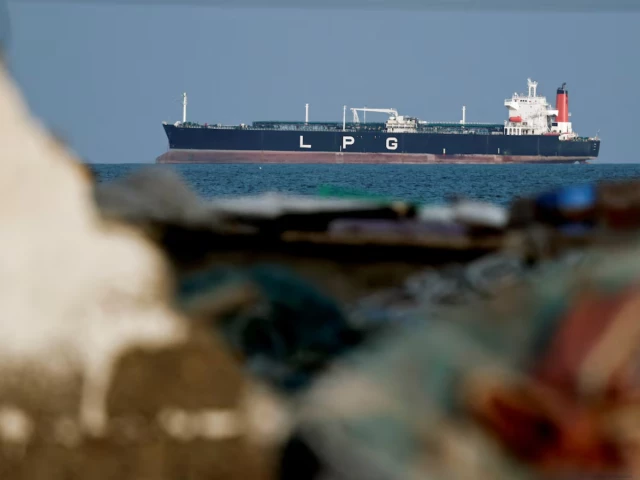
India is set to receive its first shipment of Iranian crude oil since 2019, with a tanker carrying 600,000 barrels of oil en route to Gujarat following a temporary sanctions waiver by the US, according to PTI.Ship-tracking data indicates that the vessel Ping Shun is headed towards Vadinar port, marking a potential revival of Indo-Iran oil trade after nearly five years.“The Indo-Iranian oil trade has flickered back to life. Following the US administration’s decision to grant a 30-day window for Iranian oil “on the water” due to regional conflict, the vessel Ping Shun is now en route to Vadinar (in Gujarat) with 600,000 barrels of crude. This is the first such delivery since May 2019 and comes at a critical time for Indian refiners facing tightening inventories,” said Sumit Ritolia, Lead Research Analyst, Refining and Modelling at Kpler.The development follows Washington’s decision earlier this month to allow a 30-day window for the purchase of Iranian oil already at sea, aimed at easing global oil prices amid the ongoing US-Israel conflict with Iran. The window is set to expire on April 19.While the buyer of the cargo remains unidentified, Vadinar houses a 20 million tonnes per annum refinery operated by Rosneft-backed Nayara Energy and also serves as a landing point for crude supplies to inland refineries such as BPCL’s Bina unit.India’s oil ministry has so far maintained that any decision to resume imports from Iran will depend on techno-commercial viability.Before sanctions were tightened in 2018, India was among the largest buyers of Iranian crude, importing both Iran Light and Iran Heavy grades due to refinery compatibility and favourable pricing terms.Imports ceased in May 2019 after US sanctions were reimposed, with India shifting to alternative suppliers including the Middle East and the US. At its peak, Iranian crude accounted for 11.5 per cent of India’s total imports.India had imported about 518,000 barrels per day (bpd) of Iranian oil in 2018, which declined to 268,000 bpd between January and May 2019 during a sanctions waiver period before dropping to zero thereafter.“The Aframax Ping Shun (IMO 9231901) loaded with Iranian crude oil from Kharg Island in early March has emerged as the first vessel observed signalling a destination of Vadinar, India since May 2019, following sanction reimposition on Iranian oil by the first Trump administration,” Ritolia said.The tanker is estimated to have loaded around 600,000 barrels from Kharg Island around March 4 and is expected to reach Vadinar on April 4.An estimated 95 million barrels of Iranian oil are currently stored on vessels at sea, of which around 51 million barrels could be supplied to India, while the rest may be directed to China and Southeast Asian markets.However, payment mechanisms remain uncertain as Iran continues to be excluded from the SWIFT global banking system, complicating international transactions.Earlier, payments were routed in euros through Turkish banks, but that channel is no longer available following renewed sanctions restrictions.Iran was first disconnected from SWIFT in 2012 due to EU sanctions over its nuclear programme, with further disruptions in 2018 after the US reimposed sanctions, limiting its ability to receive payments and access foreign currency reserves.
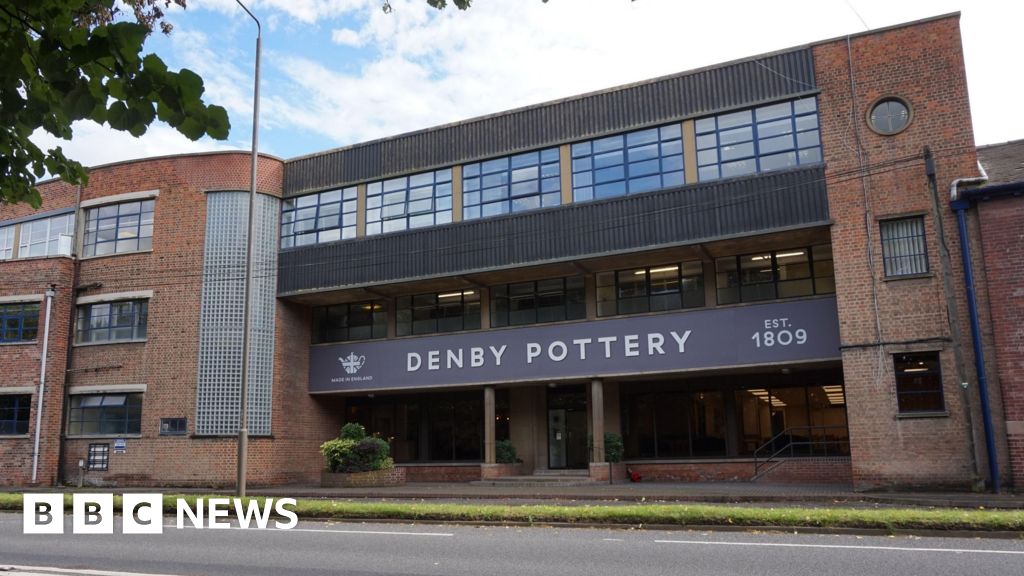
The 217-year-old firm says it appointed FRP Advisory as administrators on Tuesday.
Source link

The Iran war continues to push up prices at the pump for US motorists.
Source link


Italy veterans aware 2026 World Cup is their ‘last chance’

Iran air defenses shoot down MQ-9 drone in Isfahan, LUCAS drone over Qeshm Island

IRGC warns it will target US tech companies for abetting terror in Iran

-

 Politics1 week ago
Afghanistan announces release of detained US citizen
-

 Sports1 week ago
Broadcast industry CEO says consolidation is ‘essential’ to compete for NFL soaring media rights prices
-

 Tech1 week ago
Can a Home Appliance Fix the Problem of Soft-Plastic Waste?
-

 Entertainment1 week ago
UN warns migratory freshwater fish numbers are spiralling
-
 Business1 week ago
Property Play: Home flippers see smallest profits since the Great Recession, real estate data firm says
-
 Business1 week ago
Gold prices soar in Pakistan – SUCH TV
-

 Fashion1 week ago
ICE cotton slips on weaker crude, profit booking
-
 Business1 week ago
More women are entering wealth management, but few are in advisory roles, study finds