

Business
PSX surges past 185,000 as bullish momentum persists | The Express Tribune

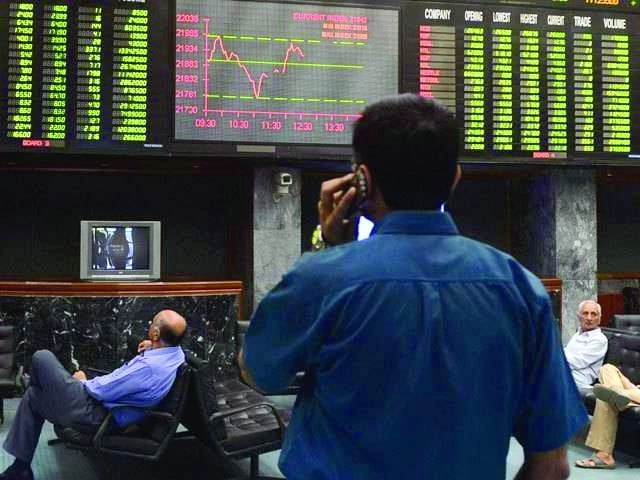
KSE-100 gains 2,653 points as banks, cement, oil & gas, and automobile stocks lead rally
The bullish momentum at the Pakistan Stock Exchange (PSX) remained firmly intact on Tuesday, as aggressive buying drove the benchmark KSE-100 index past the 185,000 mark, setting yet another historic high. The market posted fresh intra-day highs and a record close, reflecting strong investor confidence at the advent of CY26.
The index recorded an intra-day high of 185,481.45 and a low of 181,182.07, before adding 2,653.87 points, or 1.45%, to close at 185,062.11.
Buying interest was broad-based, with strong participation seen across key sectors including automobile assemblers, cement, commercial banks, fertiliser, oil and gas exploration companies, OMCs, power generation, and refineries. The depth of sectoral participation highlighted the strength of the ongoing rally.
Read: Salaried class pays over Rs266 billion in income taxes
On the energy front, oil production increased by 0.9% week-on-week to 64,709 bopd, while gas production rebounded to 2,836 mmcfd, supported by higher output from Mari, Uch, Qadirpur, and Sui. Gas volumes had earlier been impacted by ATA at FFC’s Plant-II and subdued power sector demand, making the rebound a notable positive development for the sector.
In another key market development, United Bank Limited (UBL) emerged as the largest listed company on the PSX, with its market capitalisation surpassing Rs1.29 trillion (approximately $4.6 billion), overtaking Oil and Gas Development Company (OGDC), a milestone reflecting strong investor confidence in the banking sector.
KSE-100 on a historic run
From banks to cement, autos to telecom — these KSE-100 stocks didn’t just perform well, they outperformed the benchmark index for two consecutive years on total return basis.
2024 set the pace. 2025 kept the momentum alive.
Consistency is the real alpha pic.twitter.com/viHeQGDY85— PSX (@pakstockexgltd) January 6, 2026
Overall, the market’s upward trajectory continued to be supported by liquidity-driven buying, ongoing asset class conversion, and upbeat investor sentiment, keeping the rally persistent and reinforcing a positive outlook for equities.
KTrade Securities noted in its market wrap that PSX sustained its bullish momentum, closing the session firmly in the green as the KSE-100 index advanced 2,653 points, +1.45% day-on-day (DoD) to settle at 185,062 points.
The rally remained broad-based and orderly, reflecting continued investor confidence amid improving macro conditions. All-share volumes stood at a healthy 1.3 billion shares, indicating sustained participation and liquidity, it added.
Sector-wise, commercial banks once again led the charge, supported by cements and investment banking companies, which collectively anchored the market’s upside. In terms of index contribution, heavyweights including MCB Bank, United Bank, Meezan Bank, Hub Power, Habib Bank, Lucky Cement, Engro Holdings, National Bank and Attock Refinery added the bulk of points, providing depth and stability to the rally.
Overall market sentiment remained upbeat, with momentum favouring large-cap and fundamentally strong names. “As macroeconomic indicators continue to improve, KTrade expected the ongoing rally to continue, keeping the broader trend positive with further upside potential in the near term.”
Overall trading volume decreased to 1.30 billion shares compared with Monday’s tally of 1.38 billion. Value of traded shares stood at Rs85.3 billion. Shares of 485 companies were traded. Of these, 238 closed higher, 218 fell and 29 remained unchanged. K-Electric led the volume chart with trading in 109.7 million shares, rising Rs0.22 to close at Rs6.56.





Business
From queues to QR codes: How UPI transformed India’s digital payments, now driving 49% of global real-time transactions – The Times of India

India’s financial ecosystem has undergone a major transformation in recent years, with the Unified Payments Interface (UPI) emerging as the centrepiece of the country’s digital payments revolution. Just ten years ago, financial transactions in the country were slow and largely cash-dependent but now, they are just a touch or click away, enabling instant, seamless and real-time payments across the country. The shift began with early digital infrastructure such as Real-Time Gross Settlement (RTGS) in 2004 and Immediate Payment Service (IMPS) in 2010, which enabled faster transfers but remained limited in reach. A broader transformation followed with the development of foundational systems under the JAM Trinity: Pradhan Mantri Jan-Dhan Yojana, Aadhaar and mobile connectivity, which expanded financial access and digital readiness.
UPI: India’s core digital payments achievement
Launched in 2016 by the National Payments Corporation of India, UPI has become the most significant milestone in India’s digital payments journey. It simplified transactions by linking bank accounts through a Virtual Payment Address, removing the need for account numbers and IFSC codes. Users can send or receive money instantly using only a mobile number, UPI ID and secure authentication. The system operates 24/7, processes payments in real time and works seamlessly across banks and platforms due to full interoperability. The scale of UPI has expanded rapidly. The network has grown from 216 banks in 2021 to 691 banks by January 2026, creating a unified national payments infrastructure. UPI has become the world’s largest real-time payments system by volume, processing:
- 21.70 billion transactions in January 2026 alone
- Rs 28.33 lakh crore in transaction value in January 2026
- 81% share of all retail digital transactions in India
- 49% share of global real-time payment transactions
It has achieved this scale in under 10 years, making it one of the fastest-growing financial infrastructures globally. The International Monetary Fund (IMF) has recognised UPI as the world’s largest real-time payment system by volume.Beyond scale, UPI has significantly expanded financial inclusion by reducing dependence on cash and enabling instant, low-cost transactions. It has brought millions into the digital economy, particularly small merchants, informal workers and rural users. The ecosystem has also expanded with features such as UPI Lite for small payments, UPI AutoPay for recurring transactions and Credit on UPI for access to pre-approved credit lines. Financial institutions and fintech companies have further built lending and repayment solutions on this infrastructure. Security and system strengthening UPI is supported by strong security architecture, allowing transactions without sharing sensitive banking details and providing built-in grievance redress mechanisms. Further strengthening the system, the Reserve Bank of India (RBI) has mandated two-factor authentication for digital payments from April 1, 2026. This requires multiple verification layers such as PINs, biometrics or secure tokens along with OTPs, significantly reducing fraud risks and improving trust in digital transactions. Global recognition and expansion India’s UPI model has gained international recognition from institutions such as the International Monetary Fund and the World Bank for its scale and inclusiveness. Global leaders, including French President Emmanuel Macron, have acknowledged India’s ability to process over 20 billion transactions per month through UPI, a level unmatched globally. UPI has also expanded internationally and is now operational or interoperable in countries including the United Arab Emirates, Singapore, Bhutan, Nepal, Sri Lanka, France, Mauritius and Qatar, enabling cross-border payments and supporting global remittance flows.UPI stands as India’s most significant digital financial achievement, a system that has transformed payments at scale, expanded financial inclusion and positioned India as a global leader in real-time digital transactions. Built in under a decade, it has reshaped how the country pays, saves and participates in the formal economy, emerging as a global benchmark for inclusive financial innovation.
Business
100% road tax waiver for electric cars, new rules for 2, 3 and 4 wheelers – what Delhi govt’s draft EV policy says – The Times of India
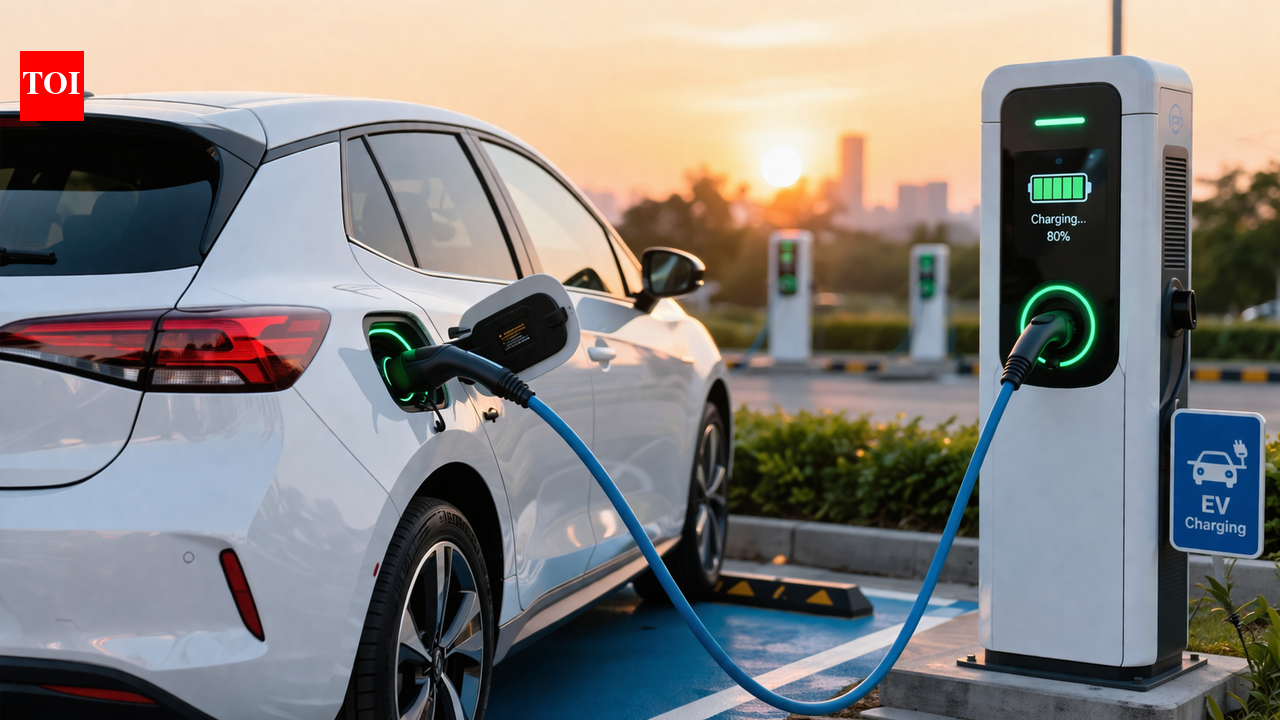
The Delhi government has unveiled the draft Electric Vehicle (EV) Policy 2026–2030, outlining a roadmap to curb air pollution and promote clean mobility in the national capital. With vehicular emissions contributing nearly 23% of the city’s pollution, the policy focuses on accelerating the shift to electric vehicles while strengthening the ecosystem needed to support their widespread adoption.The new draft builds on the earlier EV policy introduced in August 2020, which had a three-year term ending in August 2023 and has since been extended. Officials say the updated framework seeks to expand on previous efforts to curb vehicular pollution and accelerate the transition to cleaner transport. The draft offers incentives like a 100% road tax waiver for electric cars, along with benefits and updated rules for two-, three-, and four-wheelers. It also aims to expand charging infrastructure, build a stronger EV ecosystem, and encourage a gradual move away from petrol and diesel vehicles. Focused on cutting emissions, which make up about 23% of Delhi’s pollution, the policy is linked to the Right to Clean Air under Article 21, highlighting a stronger push to improve air quality in the capital.
Here’s what Delhi government’s new EV draft policy has proposed:
- Full tax exemption for affordable EV carsElectric cars priced up to Rs 30 lakh will get 100% exemption on road tax and registration fees till March 31, 2030. The policy states, “Electric cars with ex-showroom price above (Rs) 30 lakh registered in Delhi shall not be granted any exemption from road tax and registration fees.” However, vehicles priced above this threshold will not be eligible for such benefits. The draft also proposes a 50% exemption for strong hybrid vehicles.
- What’s new for 2 wheelers?
The government has also listed out intensives for two wheelers. To be eligible for incentives, the ex-factory price of an electric two-wheeler must not exceed Rs 2.25 lakh.
In the first year from the date of notification, buyers will receive Rs 10,000 per kWh, capped at Rs 30,000. This incentive reduces to Rs 6,600 per kWh (up to Rs 20,000) in the second year, and further to Rs 3,300 per kWh (up to Rs 10,000) in the third year. - Push for electric three-wheelers
From January 1, 2027, only electric three-wheelers will be allowed for new registrations in Delhi. Furthermore, the Government of National Capital Territory of Delhi (GNCTD) is also set to provide the following incentives to encourage the adoption of electric-rickshaws in the national capital:
- Slow transition to electric vehicles
The draft has proposed phased electrification of school bus fleets. This applies to all school buses, owned, leased, or hired.
10% electric within 2 years
20% within 3 years
30% by March 31, 2030Furthermore, it also mandates electrification of government fleets. All hired or leased vehicles under the Delhi government will be only electric from the date of notification, except exempted categories. New buses inducted by the
Transport Department and DTC will also be electric, with provisions for cleaner alternatives like hydrogen if introduced.Additionally, all new N1 category trucks procured by government bodies and civic agencies will be only electric. Here’s the incentive structure, based on the year of registration:
Year of Registration Incentive Year 1 (from date of notification) Rs 1,00,000 Year 2 (from date of notification) Rs 75,000 Year 3 (from date of notification) Rs 50,000 - Restrictions on conventional fleet operators
Fleet aggregators and delivery service providers will not be allowed to induct new petrol or diesel vehicles after notified timelines, with limited exceptions for certain categories till December 2026. - Expansion of EV charging and swapping infrastructure
Land-owning agencies will identify sites for public charging and battery swapping stations All new buildings and infrastructure projects must be EV charging-ready DelhiTransco Limited will handle planning, deployment, and reliability of charging networks - Battery waste management and recycling push
Strict compliance with Battery Waste Management Rules and Extended Producer Responsibility (EPR) Establishment of battery collection centres across Delhi through partnerships. - Creation of a dedicated EV Fund
A separate EV Fund will be set up under the Transport Department to finance implementation, supported by budget allocations, grants, cess, and other sources. Furthermore, a committee led by the Transport Minister will oversee implementation of the policy and management of the EV Fund. Transport Department to act as nodal agency Environment Department to track emission reductionsUrban bodies to support infrastructure rollout Education Department to ensure compliance and run awareness campaigns. - Fully digital implementation system
All processes including approvals, applications, disbursements, and grievance redressal will be conducted in a paperless digital format. - Public feedback
The government has also invited public feedback for the proposed reforms. In an official circular, the government said, “The draft Delhi Electric Vehicle (EV) Policy 2026 is hereby uploaded on the official website of Transport Department, GNCTD for the information of general public. All stakeholders including general public are invited to submit their feedback/comments within 30 days from the date of publication through the following modes: 1. By e-mail: evpolicy2026@gmail.com 2. By Post: Joint Commissioner (EV), Transport Department, Govt. of NCT of Delhi, 5/9 Underhill Road, Delhi- 110054.”
It further clarified, “All inputs/representations may kindly be submitted only through the above- mentioned modes. In this regard, the public is humbly requested to avoid visiting the office premises, as the same may cause unnecessary crowding. No objections or suggestions received after the expiry of the said period shall be considered.”Earlier this year, on March 20, CM Rekha Gupta flagged off 300 new electric buses and announced the launch of interstate bus services connecting Delhi with Ghaziabad. A foundation stone was also laid for a new Delhi Transport Corporation office near the IP depot.Meanwhile, health minister Pankaj Kumar Singh had noted the pace of adoption, stating, “After our government came to power, we registered more than 1 lakh EV vehicles. There are many reasons why EVs are not advancing further. The previous government did not provide subsidies for EVs. We are providing those subsidies, but if the previous government had given subsidies, perhaps the people of Delhi would have made more efforts to adopt EVs.“

A new government ad campaign is trying to persuade gamers to apply for air safety roles.
Source link


‘Crimson Desert’ Is a Cat Dad Simulator

Does Ben Affleck still have a thing for Jennifer Lopez?

I Put My Dog, Friends, and Family Inside Bike Boxes and Rear Racks to Test All the Best Electric Cargo Bikes

-
 Business1 week ago
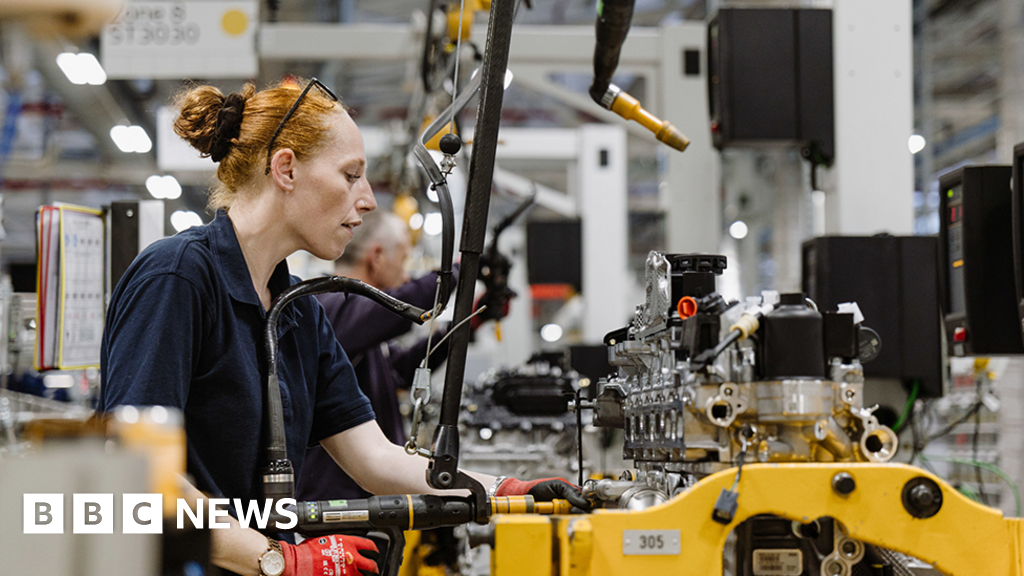
Jaguar Land Rover sees sales recover after cyber attack
-
Uncategorized1 week ago
[CinePlex360] Please moderate: “Trump signals p
-

 Entertainment1 week ago
Joe Jonas shares candid glimpse into parenthood with Sophie Turner
-

 Tech1 week ago
Our Favorite iPad Is $50 Off
-

 Fashion1 week ago
India-Bangladesh textile trade reset: 5 shocks to watch now
-

 Sports1 week ago
UConn Final Four run could trigger a $50M furniture giveaway for Massachusetts-based Jordan’s Furniture
-
 Business1 week ago
The best cash ISAs and savings accounts in April paying highest interest rates
-
 Business1 week ago
Video: Why Is the Labor Market Stuck?