

Business
Rail fares to be frozen in England next year

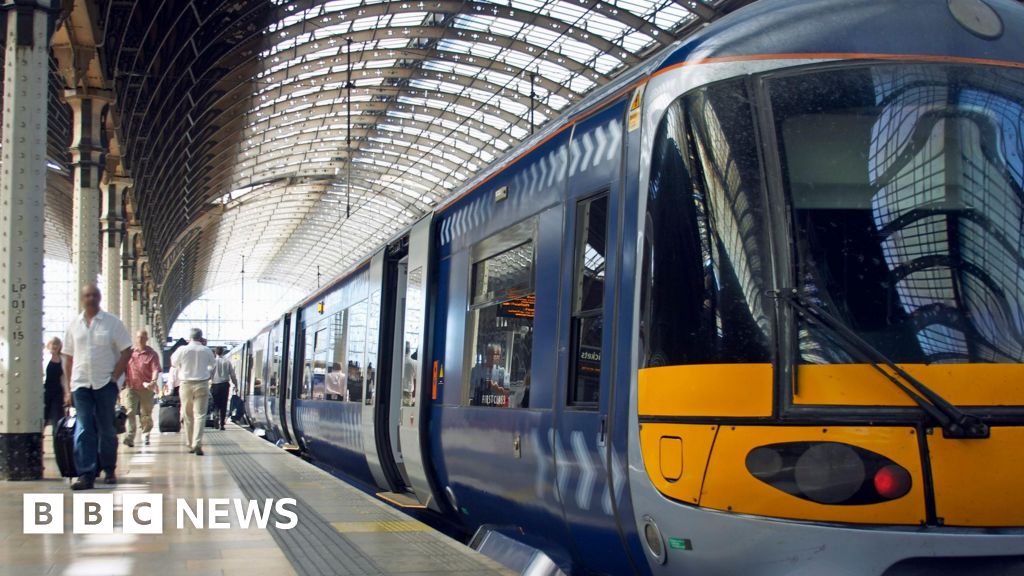
Rail fares in England next year are to be frozen for the first time in 30 years, the government has announced.
The freeze until March 2027 will apply to regulated fares, which includes season tickets and off-peak returns.
The most recent fare rise, in March 2025, was 4.6%. Rail fares traditionally have gone up in January, based on the July rate of the retail price index (RPI) + 1% – although this formula has not always been followed.
The announcement comes days before the chancellor sets out the government’s financial plans in the Budget on Wednesday, with Rachel Reeves indicating that cutting the cost of living will be a key focus.
However, at the same time the chancellor is also widely expected to increase taxes to help fill a multibillion-pound gap in her spending plans.
About 45% of rail fares are regulated by the government in England, Wales and Scotland – but the freeze only relates to travel in England. The announcement also only applies to services run by England-based train operating companies.
Regulated fares include season tickets covering most commuter routes, some off-peak return tickets on long-distance journeys and flexible tickets for travel in and around major cities.
Train operators are free to set prices for unregulated fares, but they typically rise by similar amounts.
The government said freezing rail fares was intended to “directly limit inflation” by holding down “a major component of everyday costs”.
Since 2021, the annual increase has come in March instead of January.
A government source acknowledged it was possible unregulated fares would still rise, but insisted they usually followed regulated fares.
Unregulated fares increased by 5.5% in the year to March 2025, 1.1% above regulated fares – with a total increase in rail fares of 5.1% in that period.
Challenged over whether other ticket prices would rise to compensate for the freeze on regulated fares, Transport Secretary Heidi Alexander insisted the policy was “fully funded”.
She told the BBC’s Sunday with Laura Kuenssberg programme that regulated fares have tended to inform the price of unregulated fares and they normally “track against each other”.
Pressed on whether the policy would mean the government has less to spend on upgrading the transport system, Alexander said investment in the rail network would be protected “because we recognise that investing in the infrastructure of this country is the right long-term decision”.
The Rail Delivery Group, a representative body made up of the UK’s rail operators, said the freeze would be “good news for customers”.
“We want our railways to thrive, that’s why we’re committed to working with government to ensure upcoming railway reforms deliver real benefits for customers,” a spokesperson said.
Since 1996, the government has regulated some train fares following the privatisation of British Rail.
The freeze marks the first point since then that fares will have been frozen, although there have been periods where price increases were below RPI, and a dip in prices following the financial crash in 2010.
The government estimates that the move will save commuters on more expensive routes more than £300.
The chancellor said the freeze was being put in place to help ease cost of living pressures, and make “travelling to work, school or to visit friends and family that bit easier”.
The transport secretary said it was part of “wider plans to rebuild Great British Railways”.
Great British Railways is a public body which is in the process of being set up, and is part of the government’s plans to bring parts of the railway system into public ownership.
The government has said it will take over the running and management of the tracks and trains, “ending years of fragmentation, driving up standards for passengers, and making journey easier and better value for money”.
The government has said part of its plans for the new body is to “gradually move away from annual blanket increases”.
Labour said passengers had faced “relentless” fare increases every year under the previous Tory government.
However, shadow transport secretary Richard Holden said: “In government, the Conservatives kept fares on the right track with below-inflation rises and consistently called for no further hikes to protect hard-working commuters.”
Business
Gold Could Hit 7500 Per Ounce: Gold in ‘structural repricing phase’, could hit $6,000 in 12 months: Report – The Times of India

Gold’s long-term outlook remains bullish as global de-dollarisation, rising fiscal stress and escalating geopolitical tensions reshape the global financial order, according to a report by Motilal Oswal Financial Services Ltd (MOFSL).In its latest Precious Metals Quarterly Report, the brokerage said gold prices crossed the $5,000 per ounce mark in early 2026, marking one of the strongest long-term bull phases in modern history.The firm said gold has entered a “structural repricing phase,” signalling the beginning of a new supercycle rather than a short-term cyclical rally.
Target of $6,000 in 12 months, $7,500 medium term
MOFSL expects Comex gold to settle towards $6,000 per ounce — equivalent to around Rs 1.85 lakh per 10 grams domestically — over the next 12 months. It also sees the potential for prices to move towards $7,500 per ounce in the medium term if geopolitical and fiscal pressures intensify.“The long-term outlook for gold remains positive. As global reserves gradually diversify away from dollar-centric assets and physical supply remains constrained, gold prices are likely to stay supported around and above $5,000 per ounce,” Navneet Damani, head of research, Commodities, Motilal Oswal Financial Services Ltd, said, as quoted by news agency PTI.Damani added that the current cycle is being driven not just by inflation, but by confidence — or the lack of it — in fiscal and monetary systems.
Gold rises despite positive real rates
The report highlighted that gold continued to climb even when real interest rates were positive between 2023 and 2025 — a period when prices would typically decline.This trend indicates that investors are increasingly worried about mounting global debt levels and the long-term stability of fiscal and monetary frameworks.“Gold’s strength despite positive real interest rates shows a clear shift in investor thinking. Real returns are increasingly seen as temporary and policy-driven, which reduces the cost of holding gold and strengthens its role as a safeguard against broader financial risks,” Manav Modi, analyst – commodities, MOFSL, said.
Geopolitical tensions, supply constraints add support
According to the report, rising geopolitical tensions in Eastern Europe, the Middle East and Asia, along with renewed trade tensions and tariff-related disruptions, have heightened inflation and currency volatility, making gold more attractive as a neutral and reliable asset.Damani noted that as fiscal stress increases and questions emerge over monetary independence, gold’s role as non-sovereign money has gained prominence, leading to a structural shift in demand.The brokerage also pointed to tight global physical supply conditions supporting prices. Limited mine output, shrinking inventories across major exchanges and rising production costs have kept precious metal prices elevated.
Domestic demand and central bank buying
On the domestic front, rupee depreciation and strong retail demand have further supported gold prices. Exchange-traded funds (ETFs) have seen renewed inflows after years of decline, the report said.Central banks have remained consistent buyers, adding around 1,000 tonnes of gold annually for four consecutive years as part of efforts to diversify reserves and reduce reliance on dollar-based assets.Overall, MOFSL expects gold to remain well supported over the long term, driven by reserve diversification, constrained supply growth and ongoing global economic and geopolitical uncertainty.
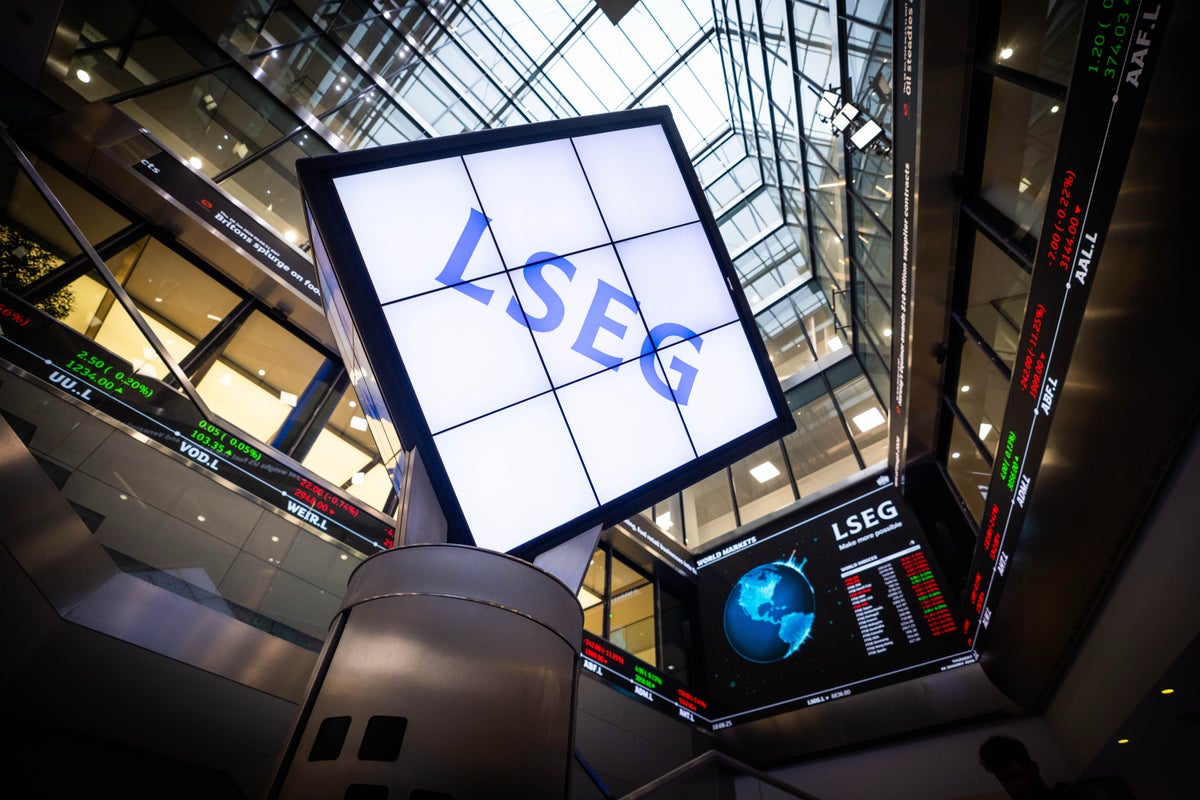
The London Stock Exchange Group has unveiled plans for a £3 billion share buyback amid pressure from an activist investor and as artificial intelligence fears have hammered the stock.
LSEG said it would follow £2.1 billion in buybacks made last year with another £3 billion by February next year, on top of a hike in dividend payouts.
Details of the pledge to step up returns for investors came as it reported underlying operating profits of £3.51 billion for 2025, up 10.8% or 14.7% higher on a constant currency basis.
On a bottom line basis, pre-tax profits jumped 56.5% to £1.97 billion for 2025.
Shares in the group rose as much as 5% in Thursday morning trading, in a welcome increase after the stock has been battered in recent weeks by global investor concerns over the impact of AI on its firm and data companies more widely.
Shares in the firm, which makes a significant chunk of its earnings from selling access to markets data, have slumped by nearly a third in the past year.
Activist investor Elliott Management has also built up a stake in the firm earlier this month and has reportedly been pushing for more share buybacks as it has held talks with LSEG bosses.
In the face of the recent shares slump, chief executive David Schwimmer said recent results showed “another year of very strong financial performance”.
He said: “In the fourth quarter alone, major financial institutions signed long-term contracts worth £1.9 billion to access our leading data and workflow.”
“With our LSEG Everywhere data strategy, we are positioning ourselves as the partner of choice for licensed, trusted data as the use of AI in decision-making scales – and we are seeing very positive signs of adoption,” he added.
It outlined new performance guidance for 2027 to 2029, with aims to deliver “mid to high single digit” growth in total income and further increase profitability.
Despite taking a significant stake in LSEG, the Financial Times newspaper reported earlier this week that Elliott has made assurances to the UK government over its intentions for LSEG as speculation mounted it would look to push for a break-up of the firm or for it to switch its listing to New York.
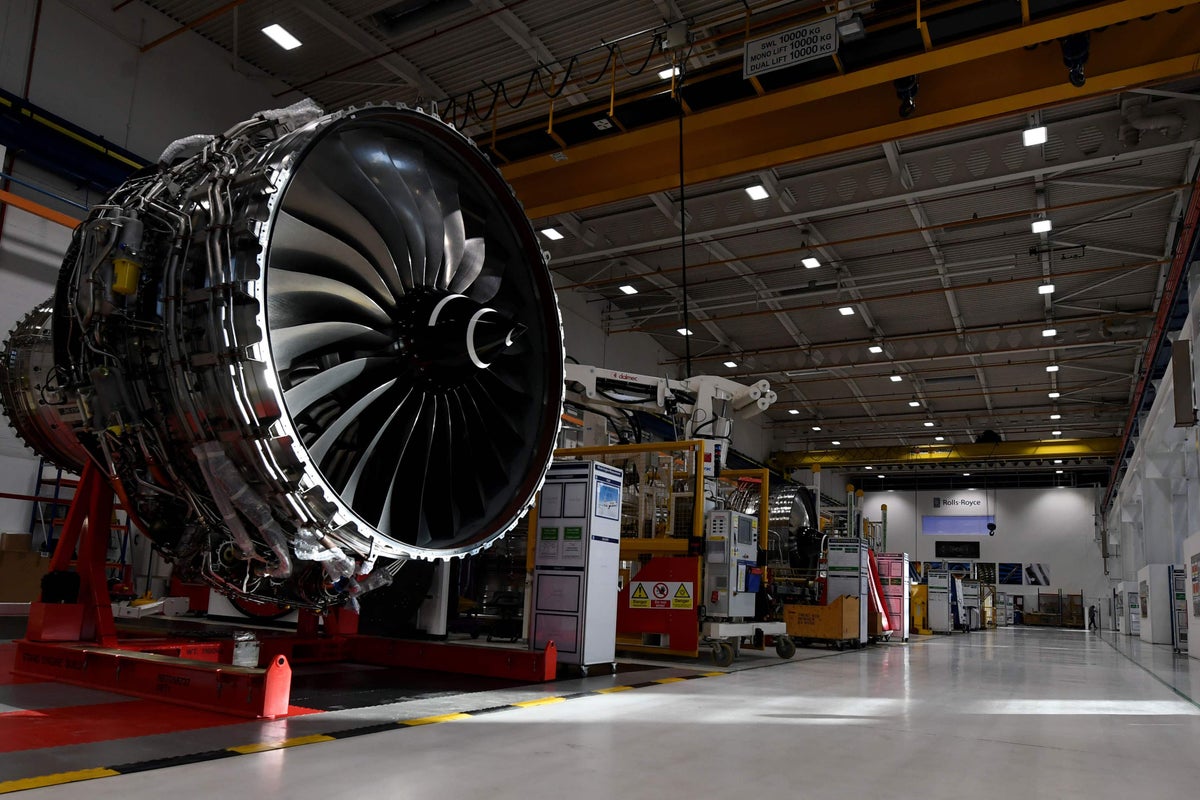
Rolls-Royce has revealed its annual profit surged by £1 billion and upgraded its outlook for the years ahead, following major military aircraft orders and soaring demand for powering data centres.
The engineering giant said its business divisions were in a good place to benefit from “key global trends” over the coming years.
It reported an underlying operating profit of £3.5 billion for 2025, a jump of 40% from the £2.5 billion made the prior year.
Underlying revenues surpassed £20 billion over the year, up about a 10th on 2024.
This was driven by profit and sales growth across its civil aerospace, defence, and power businesses.
Rolls-Royce said demand for its defence products was strong and it secured major orders during 2025.
This included contracts worth more than £1.5 billion with the UK’s Ministry of Defence and the US’s Department of War for EJ200 and AE 2100 engines to power military aircraft.
New orders for the Eurofighter aircraft engines from Italy, Germany and Spain, as well as export agreements from Turkey, will drive production into the 2030s, it said.
Furthermore, Rolls-Royce said it was benefiting from growing demand for power generation, driven by data centres with revenues up by more than a third.
Rolls-Royce said it was now expecting underlying operating profits to increase to between £4.9 billion and £5.2 billion by 2028 following the strengthened financial performance in 2025.
This is significantly higher than the £3.6 billion to £3.9 billion range that it had previously been targeting.
Chief executive Tufan Erginbilgic said growth would not have been possible “before our transformation”, with the business making £600 million worth of cost savings since 2022.
“With our new capabilities and mindset, we have navigated challenges from supply chain to tariffs, and delivered a strong performance in 2025, all while we built the foundations for significant growth for years to come,” he said.
“Based on our 2026 guidance, we expect to deliver underlying operating profit within the prior mid-term guidance range two years earlier than planned.
“Beyond the mid-term we continue to see significant growth from existing businesses as well as from new business opportunities.”


Bangladesh-Japan EPA: Why do some analysts warn of competitive strain?

Brooklyn Beckham debuts ‘Star of David’ tattoo

Australia’s $2 bn home textile imports in 2025 reflect steady demand

-

 Entertainment1 week ago
Queen Camilla reveals her sister’s connection to Princess Diana
-

 Politics1 week ago
Ramadan moon sighted in Saudi Arabia, other Gulf countries
-

 Fashion1 week ago
Philippines expands logistics network to address supply chain issues
-

 Fashion1 week ago
France’s Kering’s FY25 sales fall; eyes growth & margin recovery
-

 Sports1 week ago
Nepal wrap up T20 World Cup campaign with Scotland triumph
-

 Politics1 week ago
Ramadan Moon Sighted in Saudi Arabia, First Fast to Be Observed on February 18
-

 Entertainment1 week ago
Iran foreign minister says progress made in nuclear talks with US
-

 Tech7 days ago
A $10K Bounty Awaits Anyone Who Can Hack Ring Cameras to Stop Sharing Data With Amazon