

Fashion
Rare Beauty and BÉIS debut travel-inspired “Beauty On-the-Go” capsule


Published
November 3, 2025
Rare Beauty and BÉIS have joined forces to release a limited-edition “Beauty On-the-Go” collection, announced across their verified Instagram and TikTok pages. The collaboration unites founders Selena Gomez and Shay Mitchell, longtime friends who expressed their excitement online, emphasizing their shared passion for beauty and travel.
The collection includes three essentials — the Blush Case (US$28), the Makeup Brush Pouch (US$24), and the Large Cosmetic Pouch (US$74). Each item blends BÉIS’s functional travel design with Rare Beauty’s minimalist aesthetic.
The Blush Case features a built-in mirror and key clip, while the Makeup Brush Pouch includes elastic loops and a wipe-clean lining. The Large Cosmetic Pouch features brush holders, adjustable dividers, and an insulated pocket — a detail showcased in Rare Beauty’s official TikTok video.

Inspired by Rare Beauty’s best-selling Soft Pinch Liquid Blush shade Worth, the collection is described on the brands’ social media as “designed for early drives, unexpected detours, jet lag, wrong turns, and every mile in between.”
The BÉIS × Rare Beauty collaboration launches November 3 exclusively online at rarebeauty.com and beistravel.com.
Copyright © 2025 FashionNetwork.com All rights reserved.










Industry stakeholders said the Budget signals a transition away from volume-driven growth towards a value-led, low-carbon and traceable textile ecosystem, supported by initiatives such as the Text-ECO initiative, the National Fibre Scheme, Samarth 2.0, and sustainability-linked capacity building.
Indian textile industry has welcomed the Budget for its strong focus on sustainability, circularity and responsible manufacturing.
Industry leaders said the measures signal a shift towards value-led, low-carbon and traceable growth.
Initiatives such as Text-ECO, Samarth 2.0 and the National Fibre Scheme are seen as strengthening competitiveness, skills and sustainable sourcing across the value chain.
Shruti Singh, Country Director–India at Canopy Planet, said, “This Budget creates enabling conditions for India to lead in manufacturing of low carbon textile fibres and paper packaging. Investing in circular material ecosystems can meet business ESG goals, create domestic fibre security and global export competitiveness,” she said. Singh added that as demand grows across textiles, packaging and paper-based applications, the real test will lie in responsible sourcing. “For companies linked to forest-based supply chains, this is a moment to strengthen traceability, reduce deforestation risk, and move sustainability from intent to execution,” she noted.
From a fashion brand perspective, Amar Nagaram, co-founder of Virgio, said the Budget clearly links sustainability with innovation and design-led growth. “India’s next phase of growth will be driven by the convergence of design, technology and sustainability. The emphasis on sustainable textiles, MSME scale-up, AI-led innovation and design education reflects a long-term vision to move Indian manufacturing up the global value chain,” he said. Nagaram added that the policy direction supports responsible production, data-driven decision-making, and positions India as a credible global hub for future-ready fashion and lifestyle businesses.
At the manufacturing end, Sabhari Girish, chief sustainability officer at Sulochana Cotton Spinning Mills, Tiruppur, said that sustainability and circularity receiving prominence in the Budget is encouraging for the sector. “Circularity and sustainability taking a prominent spot in the Budget speech is a positive signal. The announcement of Text-ECON will help Indian textile companies showcase their environmentally friendly contributions to the world,” he said. Girish noted that upcoming FTAs with the UK and EU are expected to sharpen the focus on sustainability, adding that Samarth 2.0 will play a critical role in skilling the workforce with updated technologies across the value chain, from fibre to garments.
He also pointed out that the National Fibre Scheme could enhance the quality and global competitiveness of Indian-made fibres, though capital-intensive modernisation will require a clear funding roadmap. “Adopting best practices needs more support, and a proper roadmap will help indigenous fibres take centre stage,” Girish said, while welcoming the proposal to upgrade sports goods manufacturing as a boost for R&D and technical textiles.
Industry experts said the Budget’s sustainability-led approach aligns closely with stricter environmental regulations in markets such as the EU and UK, and could strengthen India’s positioning as a responsible, compliant and future-ready sourcing destination.
Fibre2Fashion News Desk (KUL)
“President Trump’s leadership is forging a new direction for trade that promotes partnership and prosperity in Latin America, further strengthening the American economy, supporting American workers, and protecting our national security interests,” said Ambassador Greer in a USTR release.
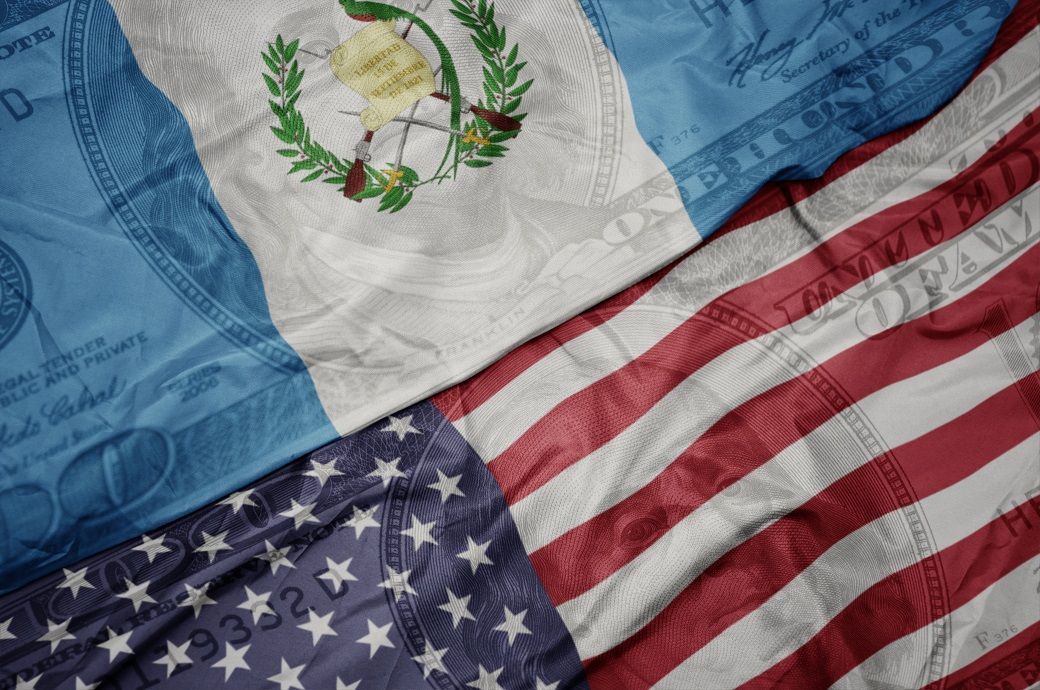
USTR Jamieson Greer and Guatemala’s Minister of Economy Adriana Gabriela Garcia recently signed the US-Guatemala Agreement on Reciprocal Trade.
The agreement addresses trade barriers facing American workers and producers, expands and solidifies markets for US exports and strengthens strategic economic ties in the Western Hemisphere, Greer said.
US trade body NCTO welcomed the signing.
The agreement addresses trade barriers facing American workers and producers, expands and solidifies markets for US exports and strengthens strategic economic ties in the Western Hemisphere, he said.
“This agreement builds on our long-standing trade relationship and shared interest in reinforcing regional supply chains,” he added.
The key terms of the agreement includes breaking down non-tariff barriers for US industrial and exports, advancing trade facilitation and sound regulatory practices; protecting and enforcing intellectual property; preventing barriers for digital trade; improving labour standards; strengthening environmental protection; strengthening economic security alignment; and confronting state-owned enterprises and subsidies.
Guatemala has committed to take steps to restrict access to central level procurement covered by its free trade agreement commitments for suppliers from non-free trade agreement partners, permitting exemptions as necessary, in a manner comparable to US procurement restrictions.
Welcoming the announcement, National Council of Textile Organizations (NCTO) president and chief executive officer Kim Glas said the agreement marks an important step toward strengthening the US textile supply chain.
“Guatemala is a key partner in the CAFTA-DR [Dominican Republic-Central America-United States Free Trade Agreement] region, with nearly $2 billion in two-way textile and apparel trade. Together, the region operates as an integrated co-production platform that is essential to the US textile supply chain,” he noted.
The US-Western Hemisphere textile and apparel supply chain remains ‘a critical strategic alternative’ to China and other Asian producers, he added.
Fibre2Fashion (DS)

Canada could boost long-term economic output by nearly 7 per cent if it dismantles policy-related barriers that restrict the movement of goods, services, and labour across provinces, according to new analysis by the International Monetary Fund (IMF).
Despite being one of the world’s most open economies globally, Canada’s internal market remains fragmented, with non-geographic barriers equivalent to an average 9 per cent tariff nationwide.
Canada could raise long-term GDP by nearly 7 per cent by removing internal trade barriers that restrict interprovincial movement of goods, services, and labour, new analysis shows.
Policy-related frictions act like a 9 per cent internal tariff nationwide.
Liberalising high-impact sectors could deliver productivity-led gains worth about C$210 billion (~$153.04 billion).
Model-based estimates suggest that fully removing these barriers could add around C$210 billion (~$153.04 billion) to real GDP over time, driven largely by productivity gains rather than short-term demand, IMF said in a release.
While full liberalisation will be gradual, targeted reforms in high-impact sectors could deliver sizable benefits and improve economic resilience. Analysts argue that stronger federal–provincial coordination, wider mutual recognition of standards and credentials, and transparent benchmarking of internal trade barriers will be key to turning Canada’s fragmented domestic market into a more integrated national economy.
Fibre2Fashion News Desk (HU)


Indian textile players hail Budget’s ESG & circularity thrust

Duke of Edinburgh brings royal inspiration to mangroves and youth

Fulham to revisit USMNT’s Ricardo Pepi transfer in summer – sources

-

 Sports6 days ago
PSL 11: Local players’ category renewals unveiled ahead of auction
-

 Entertainment6 days ago
Claire Danes reveals how she reacted to pregnancy at 44
-
 Business6 days ago
Banking services disrupted as bank employees go on nationwide strike demanding five-day work week
-

 Tech1 week ago
ICE Asks Companies About ‘Ad Tech and Big Data’ Tools It Could Use in Investigations
-

 Fashion1 week ago
Spain’s apparel imports up 7.10% in Jan-Oct as sourcing realigns
-

 Sports6 days ago
College football’s top 100 games of the 2025 season
-

 Politics1 week ago
Fresh protests after man shot dead in Minneapolis operation
-

 Politics6 days ago
Trump vows to ‘de-escalate’ after Minneapolis shootings