

Business
RMB valuation and limits of traditional exchange rate models | The Express Tribune

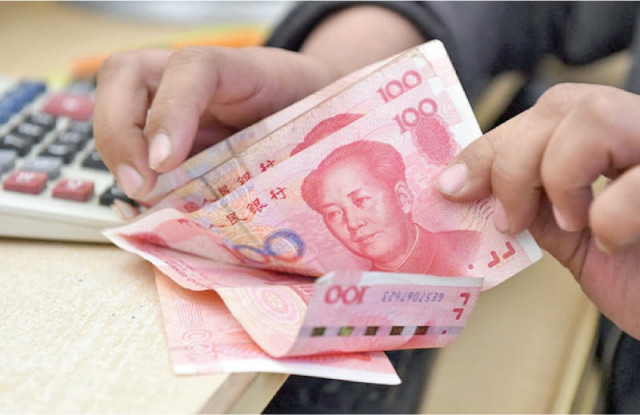
Global focus is on the Chinese currency, sparking debate over whether it is overvalued or undervalued
Foreign exchange reserves have started increasing on the back of recent loans by the AIIB, World Bank, and ADB. The reserves stand over $8.2 billion, and the IMF board is also expected to approve a $700 million tranche this Thursday. photo: file
KARACHI:
China’s merchandise trade surplus surged by $111.7 billion in November, reaching an impressive $1.08 trillion for the first 11 months of the year, a 22.1% increase compared to the same period of last year, according to official data. Western media has described the massive trade surplus as “remarkable,” but also warned that it could be “unsustainable,” citing concerns over China’s undervalued renminbi (RMB).
The soaring surplus has raised eyebrows among economists, many of whom have called on Beijing to allow the renminbi to appreciate more gradually over the next five years. They argue that a stronger currency could help boost China’s imports while providing relief to global competitors in Europe, the US, and other regions, who are increasingly losing market share to Chinese exports.
Global market attention has long been fixed on the trajectory of the renminbi, with renewed debate over whether the Chinese currency is overvalued or undervalued. Recent studies, relying on traditional neoclassical exchange-rate models, suggest that the RMB is deviating from its “equilibrium value.” However, economists warn that these conclusions are heavily influenced by the analytical frameworks used and may fail to account for the crucial role that modern financial forces play in shaping currency values.
Judging whether an exchange rate is misaligned is not simple. It’s inherently complex. Conventional neoclassical frameworks – such as the purchasing power parity (PPP) and the Balassa-Samuelson hypothesis – focus on real-economy fundamentals, including productivity, prices and the current account. These models generally view capital flows and foreign-exchange trading as short-term reactions to real economic factors, rather than as independent forces that can influence long-term exchange-rate trends.
That assumption is increasingly called into question in modern highly financialised global economy. Annual foreign-exchange trading volumes are now many times larger than global trade in goods and services, suggesting that frameworks focused primarily on trade balances and relative prices may be far removed from market realities.
Conversely, (post)-Keynesian approaches argue that capital flows, financial cycles and shifts in expectations lie at the heart of exchange-rate movements. While these approaches do not dismiss the importance of the real economy or the current account, they contend that under modern financial systems, capital movements can influence both short-term fluctuations and long-term currency trends. Exchange rates implied by PPP, they argue, may never be reached and can diverge persistently in one direction.
The two approaches, according to economists, need not be viewed as mutually exclusive. Yet continued reliance on a purely neoclassical lens risks producing serious misjudgments, particularly during periods of heightened financial volatility. A comprehensive analysis, they argue, must account for both real-economy fundamentals and financial forces, with the latter often playing a decisive role.
The renminbi clearly exemplifies this debate. When China’s position in the financial cycle is taken into account – rather than focusing narrowly on the current account or productivity – recent movements in the currency appear less anomalous. Once financial-cycle dynamics are incorporated, the RMB may not deviate significantly from any plausible notion of an “equilibrium exchange rate”, assuming such a benchmark exists at all.
Neoclassical exchange-rate theory is based on several core assumptions: efficient markets, rational agents, flexible prices and wages, and the neutrality of money. Within this framework, trade imbalances are expected to self-correct through exchange-rate adjustments. A country running a persistent current-account deficit should see its currency depreciate, while surplus countries should experience appreciation. Over time, exchange rates are assumed to converge towards levels determined by real fundamentals.
However, real-world evidence frequently contradicts these predictions. The United States, for example, has run large and persistent trade deficits for decades without experiencing a corresponding long-term decline in the dollar. In the 1990s, the US trade deficit widened even as the dollar strengthened. Similarly, China’s own experience has shown that the relationship between the RMB and the current account has been far from stable, despite the presence of capital controls.
(Post-)Keynesian economists argue that these anomalies reflect the growing dominance of financial forces. According to data from the Bank for International Settlements (BIS), daily global foreign-exchange trading reached about $7.5 trillion in 2022, dwarfing annual global trade flows of roughly $32 trillion. In such an environment, exchange rates are shaped primarily by financial transactions, capital flows and expectations rather than by trade fundamentals alone.
Under this view, exchange rates are not anchored to a stable long-run equilibrium. Instead, they reflect the cumulative outcome of short-term movements driven by investor sentiment, risk perceptions and shifts in global liquidity. Capital flows can sustain currency misalignments for extended periods, and there is no automatic mechanism ensuring that current-account imbalances are corrected through exchange-rate changes.
China’s post-2005 experience offers a case in point. Following reforms to the exchange-rate regime, the RMB underwent a period of nominal appreciation alongside rising domestic prices, resulting in sustained real effective exchange-rate appreciation. This pattern is difficult to reconcile with PPP-based mean-reversion models but is consistent with a financial-cycle perspective, in which capital inflows, rising asset prices and credit expansion reinforce one another.
More recently, the picture has shifted. Despite steady improvements in manufacturing capability and productivity upgrades, the RMB’s real effective exchange rate has depreciated. BIS data show that between January 2022 and October 2025, the RMB’s real effective exchange rate declined by around 16%. This outcome runs counter to predictions based on the Balassa-Samuelson hypothesis, which would expect productivity gains to translate into real appreciation.
Economists attribute this divergence to China’s position in a downswing of the financial cycle. As credit growth slowed, domestic demand weakened and price pressures eased, the extent to which productivity gains could support currency strength is limited. At the same time, reduced incentives for holding RMB-denominated assets contributed to periods of depreciation against the dollar.
Signs are now emerging that the financial-cycle adjustment may be nearing its end. As conditions stabilise, incentives for capital allocation into RMB assets are beginning to recover, a shift that has already been reflected in recent currency movements. Against this backdrop, analysts argue that claims of significant RMB undervaluation based solely on traditional models may be overstated.
The broader lesson, economists say, is that exchange-rate analysis must evolve with the structure of the global economy. In an era dominated by finance, capital flows and expectations, frameworks that marginalise these forces risk misreading both the causes and consequences of currency movements.
The writer is an independent journalist with a special interest in geoeconomics






Business
India opposes China-led IFD pact’s inclusion; flags risks to WTO framework and core principles – The Times of India
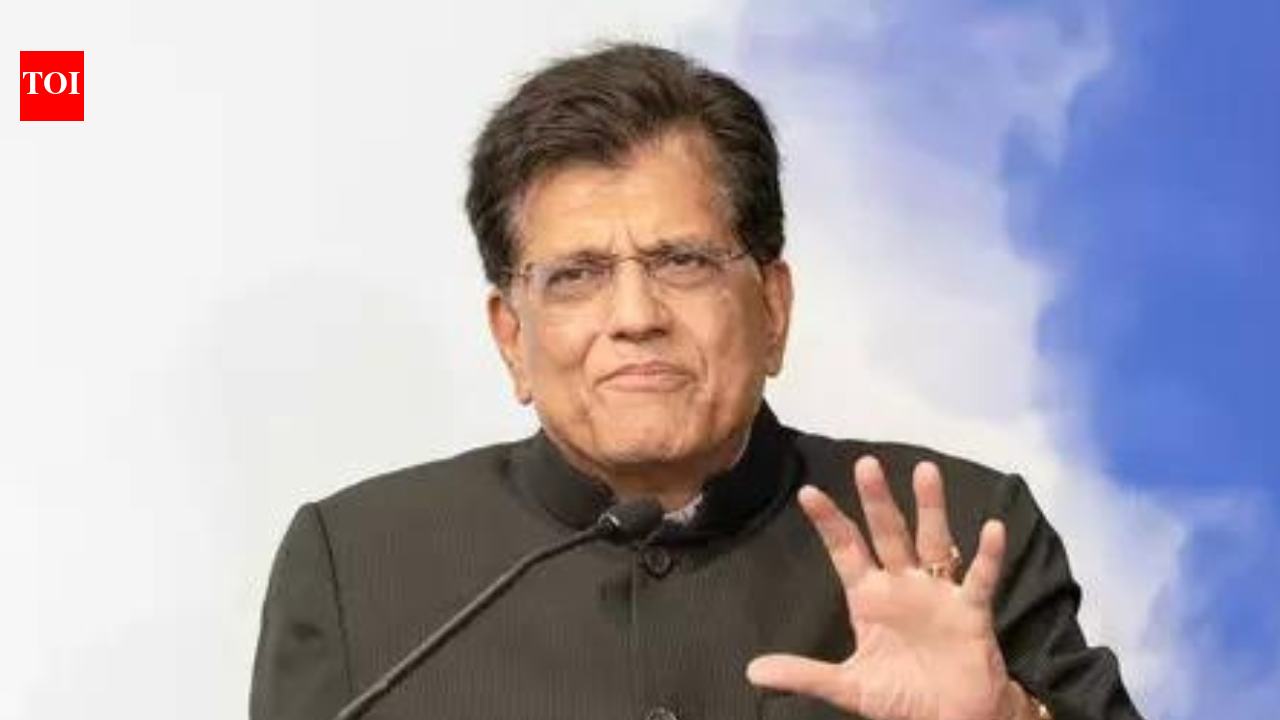
India on Saturday said it has strongly opposed the China-led Investment Facilitation for Development (IFD) Agreement being incorporated into the World Trade Organisation (WTO) framework, flagging concerns over its systemic implications, PTI reported.The issue was raised at the ongoing 14th ministerial conference (MC14) of the WTO in Yaounde, Cameroon, where Commerce and Industry Minister Piyush Goyal said such a move could weaken the institution’s foundational structure.“Incorporation of the IFD agreement risks eroding the functional limits of the WTO and undermining its foundational principles,” Goyal said in a social media post.“At #WTOMC14, drawing inspiration from Mahatma Gandhi ji’s philosophy of Truth prevailing over conformity, India showed the courage to stand alone on the contentious issue of the IFD Agreement and did not agree to its incorporation into the WTO framework as an Annex 4 Agreement,” he said.Annex 4 of the WTO Agreement contains Plurilateral Trade Agreements that are binding only on members that have accepted them, unlike multilateral agreements which apply to all members.Goyal said that as part of WTO reform discussions, members are deliberating on guardrails and legal safeguards for plurilateral agreements before integrating any such outcomes into the framework.“In view of the systemic issue at hand, India showed openness to have good faith, comprehensive discussions and constructive engagement under the WTO Reform Agenda,” he added.India had also opposed the pact during the WTO’s 13th ministerial conference (MC13) in Abu Dhabi.The Investment Facilitation for Development proposal was first mooted in 2017 by China and a group of countries that rely significantly on Chinese investments, including those with sovereign wealth funds. The agreement, if adopted, would be binding only on signatory members.
Business
Middle East crisis: Jubilant FoodWorks reports some Domino’s outlets affected by LPG shortage – The Times of India

Jubilant FoodWorks Ltd (JFL), which operates Domino’s Pizza and Dunkin Donuts in India, has reported constraints in LPG cylinder supplies across parts of its store network due to the ongoing West Asia war, according to ET.In a filing to the BSE, the company said, “Operational impact at this stage is limited and being actively managed. The company is taking several steps to conserve LPG and working overtime to move to alternate energy sources like electricity and piped natural gas (PNG).”It added that it is in continuous touch with oil marketing companies to track developments and respond to the evolving situation. “The company is in constant engagement with oil marketing companies (OMCs) to remain apprised of the latest developments and plan operational responses accordingly, given the rapidly evolving nature of the situation,” the filing said.The company noted that it is closely monitoring the situation as supply disruptions persist.The impact is being felt across the restaurant industry, with several chains facing similar challenges due to LPG shortages.On March 10, the National Restaurant Association of India (NRAI) had advised its five lakh members to consider shorter operating hours, reduce items requiring long cooking times or deep frying, and adopt fuel-saving measures such as using lids while cooking, in view of supply constraints linked to the Gulf war.
Business
Russia sells reserve gold for first time in 25 years to fund Ukraine war deficit: Report – The Times of India
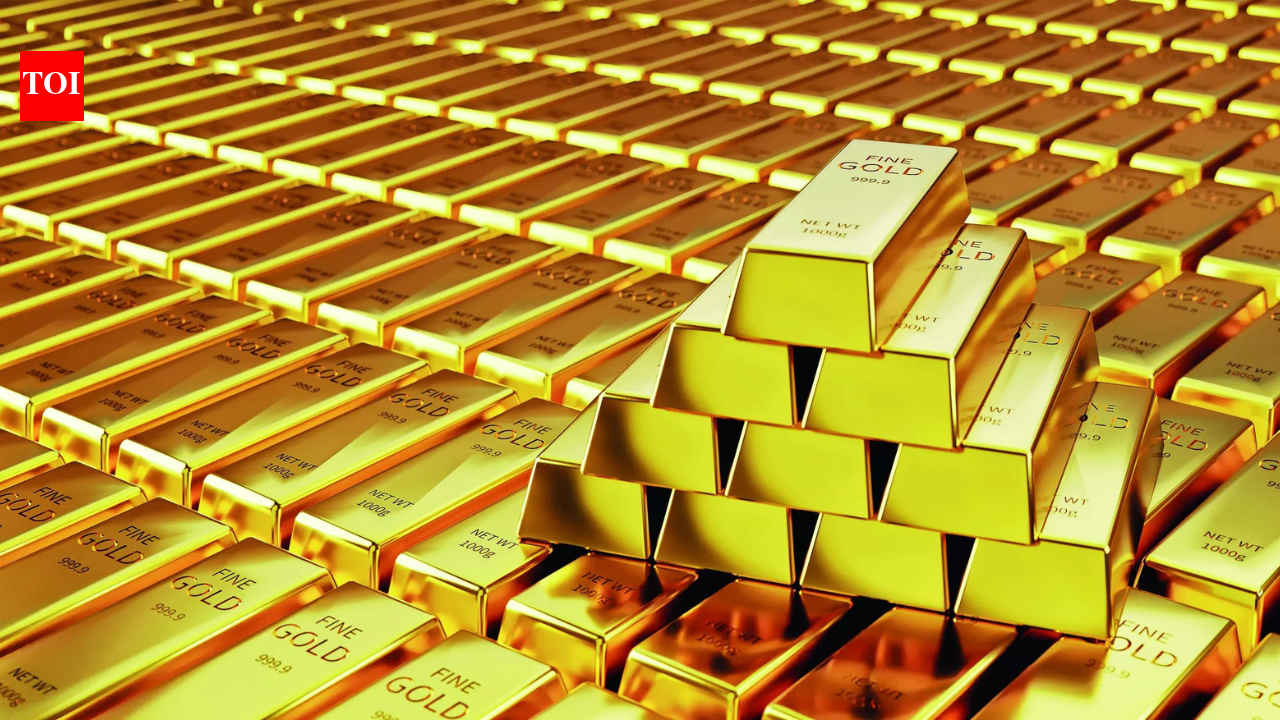
Russia has begun selling physical gold from its central bank reserves for the first time in 25 years, as the government seeks to plug a widening budget deficit driven by sustained military expenditure, according to a report by Berlin-based news outlet bne IntelliNews.Regulatory data show that between 2022 and 2025, Russia sold gold and foreign currency worth over RUB 15 trillion ($150 billion), followed by an additional RUB 3.5 trillion ($35 billion) in just the first two months of 2026, the report noted. In January alone, the Central Bank of Russia sold 300,000 ounces of gold, followed by another 200,000 ounces in February.The move marks a significant shift in reserve management. Earlier, gold transactions were largely notional, involving transfers between the Ministry of Finance and the central bank without physical movement of bullion. In recent months, however, the central bank has started selling actual gold bars into the market.As a result, Russia’s gold holdings have declined to 74.3 million ounces, the lowest level in four years. The disposal of 14 tonnes in January and February is the largest two-month sale since the second quarter of 2002, when 58 tonnes were offloaded in a single tranche.The sales come as Russia’s fiscal position comes under increasing strain. The government ended 2025 with a budget deficit of 2.6 per cent of GDP, compared to an initial projection of 0.5 per cent, Berlin-based bne IntelliNews report noted. Economists estimate the actual deficit could be closer to 3.4 per cent, with some payments deferred to 2026 to limit the reported gap.Pressure on the budget has intensified as oil prices weakened in the second half of the year and US sanctions tightened, reducing the contribution of oil and gas tax revenues to about 20 per cent of total revenues — roughly half of pre-war levels.The decision to sell gold has also been influenced by the sharp rise in bullion prices to above $5,000 per ounce. This surge has pushed Russia’s international reserves to over $809 billion as of February 28, including around $300 billion of assets frozen in the West, according to the Central Bank of Russia. Of this, gold reserves alone are valued at about $384 billion.Russia currently holds more than 2,000 tonnes of gold, making it the world’s fifth-largest sovereign holder, according to World Gold Council data. The country had built up these reserves over the years to reduce dependence on dollar-denominated assets, especially after sanctions imposed following the annexation of Crimea in 2014 and further tightened after the invasion of Ukraine in 2022.Since 2022, the Ministry of Finance has relied on multiple funding channels to manage budget pressures. These include drawing from the National Welfare Fund, which still holds around RUB 4 trillion, increasing issuance of domestic OFZ treasury bonds, and raising value-added tax rates, which account for about 40 per cent of government revenues.The shift to selling physical gold suggests that Russia is now tapping its liquid reserve buffers more directly, underlining the growing fiscal strain as the conflict in Ukraine continues into its fourth year.

India opposes China-led IFD pact’s inclusion; flags risks to WTO framework and core principles – The Times of India

Patriots’ Super Bowl appearance was no fluke, team legends say: ‘They’re for real’
Middle East crisis: Jubilant FoodWorks reports some Domino’s outlets affected by LPG shortage – The Times of India

-
 Business1 week ago
Flipkart group CFO to leave co amid IPO plans – The Times of India
-

 Fashion1 week ago
China’s textile & apparel exports surge 17% to $50 bn in Jan-Feb 2026
-

 Sports1 week ago
Rating Adidas’ 2026 World Cup away shirts: Argentina, Spain, Mexico and more
-

 Sports1 week ago
American Conference Commissioner Tim Pernetti thanks Trump for Army-Navy game executive order
-
Tech1 week ago
The Corsair 4000D RS PC Case Keeps Your System Cool
-

 Tech1 week ago
Gamers Hate Nvidia’s DLSS 5. Developers Aren’t Crazy About It, Either
-

 Tech1 week ago
‘Uncanny Valley’: Nvidia’s ‘Super Bowl of AI,’ Tesla Disappoints, and Meta’s VR Metaverse ‘Shutdown’
-
 Business4 days ago
Property Play: Home flippers see smallest profits since the Great Recession, real estate data firm says