

Business
Rs3.5m loan cap limits housing scheme appeal | The Express Tribune


KARACHI:
Commercial banks have received a lukewarm response from the public to the government’s recently relaunched housing finance scheme, largely due to the limited size of financing on offer compared to prevailing property prices, particularly in major urban centres, market participants said.
In an effort to address Pakistan’s widening housing deficit, the government allocated a subsidy of Rs5 billion for the current financial year. Subsequently, the State Bank of Pakistan (SBP) rolled out a subsidised housing finance scheme that allows a maximum loan of Rs3.5 million for the purchase of housing units and plots, as well as for the construction and renovation of residential properties. However, banking, real estate and construction experts argue that the current financing cap is misaligned with ground realities, where even small apartments in large cities such as Karachi, Lahore and Islamabad are priced well above the scheme’s ceiling. As a result, banks have seen limited uptake, undermining the scheme’s broader objective of boosting home ownership and stimulating construction-led economic growth.
Experts are urging the government and the SBP to revisit the policy framework and introduce a more customer-friendly structure that reflects market prices and the needs of middle-income households. They also stress the importance of pairing housing finance reforms with a broader investment-friendly strategy to revive the construction sector, a key driver of employment and allied industries. Rafia Lakhani, a construction design and management expert, said the government should actively encourage foreign developers with experience in low-cost housing to invest in Pakistan. “The housing deficit has surged beyond 12 million units nationwide. Addressing this challenge requires not only financing but also modern construction techniques and efficient urban planning,” she said.
Lakhani noted that in many developed economies, vertical housing projects are designed with climate-resilient exteriors and space-optimised interiors to maximise capacity within limited urban land. “Adopting innovative, low-cost and climate-friendly construction models can simultaneously reduce the housing shortage and help Pakistan adapt to extreme weather events and natural calamities,” she added.
Affordability remains a critical constraint. According to the latest data from the World Population Review, Pakistan’s housing affordability index has declined to 0.4 from 0.5, indicating a sharp deterioration in affordability amid rising property prices, elevated mortgage rates and a persistent shortage of housing units. The report places Pakistan below regional peers, with Bangladesh posting an affordability index of 0.7 and India at 0.8. Industry stakeholders believe that without a substantial increase in financing limits, the current scheme will fail to gain momentum. Ibrahim Amin, Chairman of TriStar International Consultants, a real estate valuation and engineering firm, said the SBP should enhance the loan ceiling under the “Mera Ghar Mera Ashiana” scheme and allow greater collaboration between banks and developers to launch affordable housing projects within cities and in peri-urban areas.
“As the housing deficit grows every year, demand for property has increased, pushing up land and construction costs. This has effectively priced out a large segment of the population from even small housing units in major cities,” Amin said. In contrast, he noted that demand remains subdued in smaller cities due to limited employment opportunities, inadequate healthcare and education facilities, and weak urban infrastructure. Amin argued that raising the financing limit to Rs10 million would materially change the scheme’s impact. “With a higher loan cap, a significant portion of the middle class and overseas Pakistanis would be able to acquire decent housing. This would not only improve living standards but also trigger a construction boom, generating employment and supporting overall economic growth,” he said.
Market participants point out that Pakistan has already witnessed the potential of subsidised housing finance in the past. In October 2020, the SBP introduced a subsidised markup housing finance scheme for the first time, structured across three income categories. After several revisions, the initiative gained rapid traction, with banks receiving financing applications amounting to Rs514 billion within just one and a half years.
Under that earlier scheme, borrowers could access financing of up to Rs10 million at subsidised markup rates ranging from 5% to KIBOR plus 2.5%, with repayment tenures of up to 20 years. The programme was widely credited with reviving construction activity and increasing formal mortgage penetration in a market historically dominated by cash transactions.
The scheme was later discontinued by the subsequent government, citing elevated policy rates, fiscal constraints and a shortage of funds to sustain markup subsidies. In September 2025, the current government relaunched the housing finance initiative, but with a sharply reduced financing limit, which experts say has diluted its effectiveness.





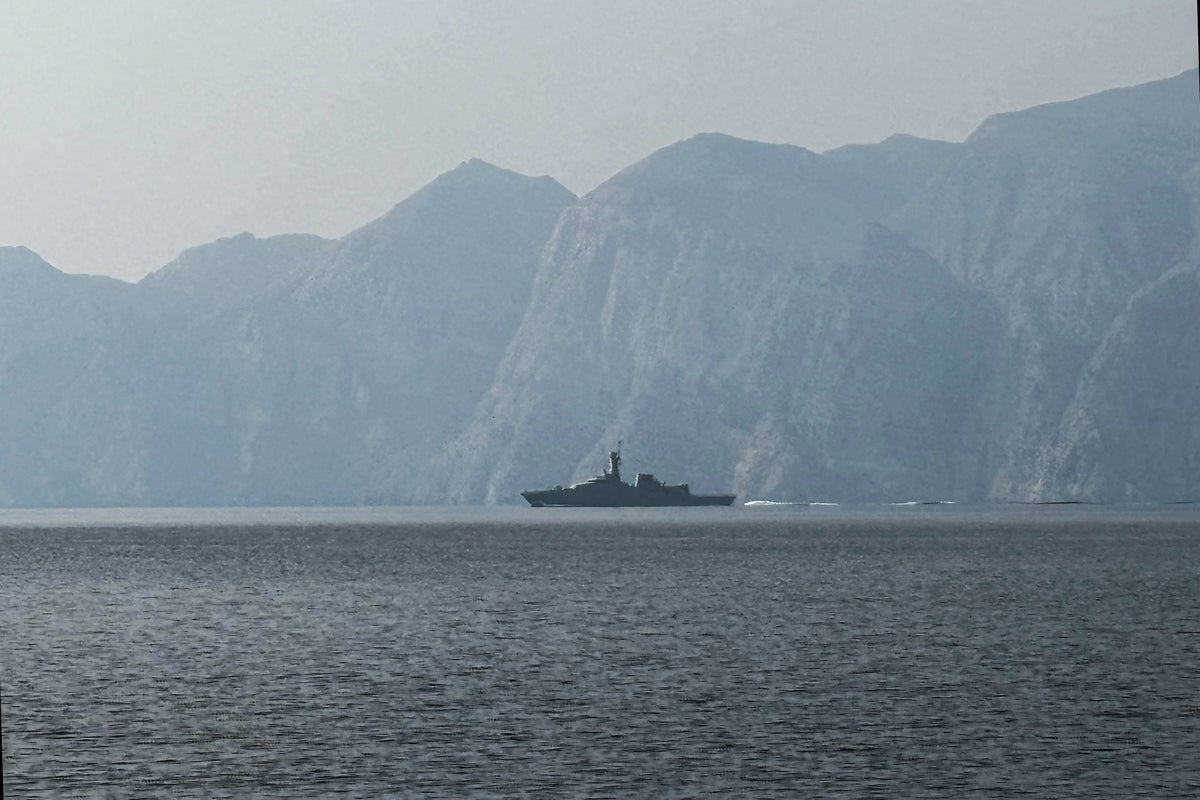
The Strait of Hormuz is still not fully open despite the US–Iran ceasefire, according to the head of Abu Dhabi’s state oil company.
Sultan Al Jaber, the chief executive officer of the Abu Dhabi National Oil Company, said in a post on LinkedIn that “access is being restricted, conditioned and controlled” through the world’s most critical waterway.
“The weaponisation of this vital waterway, in any form, cannot stand. This would set a dangerous precedent for the world – undermining the principle of freedom of navigation that underpins global trade and, ultimately, the stability of the global economy,” Mr Al Jaber wrote.
“An estimated 230 vessels sit loaded with oil and ready to sail. They, and every vessel that follows, must be free to navigate this corridor without condition. No country has a legitimate right to determine who may pass and under what terms. Iran has made clear – through both its statements and actions – that passage is subject to permission, conditions and political leverage. That is not freedom of navigation. That is coercion.”
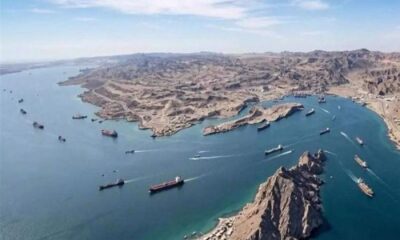
Iran effectively shut down the Strait of Hormuz, a vital maritime route that normally carries about a fifth of the world’s oil and gas, after US and Israeli attacks in late February, leaving around 1,400 ships stranded on either side.
However, despite the US–Iran truce agreed on Wednesday, which supposedly included reopening the strait, very few ships have actually moved.
This uncertainty has pushed energy prices higher and caused stock markets across Asia and Europe to fall, as fears grow that the truce may already be breaking down and tensions could escalate again.
“Every day the strait remains restricted, the consequences compound. Supply is delayed, markets tighten, prices rise. The impact is felt beyond energy markets, in economies, industries and households worldwide. Every day matters. Every delay deepens the disruption,” Mr Al Jaber wrote.
Asian stocks mostly rose on Friday, following gains on Wall Street, while oil prices also edged higher amid a fragile Iran ceasefire and upcoming US-Iran talks. Major indices, including South Korea’s Kospi and Japan’s Nikkei 225 posted strong gains, with Japanese retailer Fast Retailing surging after raising profit forecasts.
London’s FTSE 100, Hong Kong’s Hang Seng and China’s Shanghai Composite Index also climbed, even as China reported softer-than-expected inflation.
Elsewhere, Australia’s S&P/ASX 200 slipped, while Taiwan and India saw moderate gains.
Oil and gas prices have swung sharply amid the ongoing uncertainty. Brent crude jumped more than 4 per cent to above $99 (£74) a barrel on Thursday, while US crude surged 8 per cent to over $102, reversing a steep drop the previous day when Brent had fallen more than 13 per cent to a four-week low.
“The initial wave of relief following president Trump’s two-week ceasefire announcement has quickly given way to underlying doubts,” IG Australia market analyst Tony Sycamore said.
“All eyes remain firmly on tanker tracker flows through the Strait of Hormuz for any signs of increased activity ahead of peace talks scheduled in Pakistan.”
Gas markets showed a similar pattern: UK gas prices edged up after a 15 per cent plunge, and European natural gas futures rebounded from recent lows.
Tensions remained high as Iran’s Revolutionary Guard Corps warned of a “regret-inducing response” if Israel continued its strikes on Lebanon, which have already caused heavy casualties.

ChatGPT developer OpenAI has halted plans for a significant UK data centre project, citing high energy costs and regulatory challenges as barriers to investment.
The US technology giant had intended to establish its “Stargate” data centre initiative within a new artificial intelligence growth zone in the north-east of England.
The venture was slated for multiple sites, including Cobalt Park near Newcastle and Blyth.
However, OpenAI said the plans are now on hold, awaiting “the right conditions” to facilitate long-term infrastructure investment across the UK.
A spokesman for OpenAI said: “We see huge potential for the UK’s AI future. London is home to our largest international research hub, and we support the Government’s ambition to be an AI leader.
“AI compute is foundational to that goal – we continue to explore Stargate UK and will move forward when the right conditions such as regulation and the cost of energy enable long-term infrastructure investment.”
The reference to energy costs come at a time when prices are being pushed higher by the US and Israel’s war with Iran.
The International Monetary Fund (IMF) said in March that the UK was one of the nations particularly exposed to soaring wholesale costs because of its reliance on gas-fired power, as opposed to sources such as nuclear and renewable energy.
Data centres are powered by very large amounts of energy so are more likely to be exposed to volatile prices.
OpenAI added: “In the meantime, we are investing in talent and expanding our local presence, while also delivering on the commitments under our MOU (memorandum of understanding) with the Government to adopt frontier AI in UK public services.”
Its Stargate project aims to invest billions of dollars into AI infrastructure in the US, with funding from OpenAI, SoftBank, Oracle and MGX and partnering with tech giants including Nvidia and Microsoft.
Building it into the UK came as part of a landmark tech deal between Britain and the US, announced last September amid President Donald Trump’s second state visit.
The deal also included a 30 billion US dollar (£22.3 billion) pledge from Microsoft, the largest ever made by the company in the UK, to fund the expansion of Britain’s AI infrastructure.
Conservative MP and shadow science minister Ben Spencer said: “When global firms cite high energy costs and regulatory uncertainty as reasons to walk away, it tells you everything about the direction of travel.
“For too long, Labour have prioritised courting big tech headlines while neglecting our domestic start-ups, but also the fundamentals that actually attract investment at home.”

Importers are in line for tariff refunds. But whether everyone who paid the for the tariffs will get money back is a trickier question.
Source link


ICE cotton hits 11-month high on weak dollar, drought fears

Gap Inc enhances digital retail for smarter shopping experiences

I Did Not Catch Air on the Aventon Current Electric Mountain Bike, but I Could Have

-
 Business1 week ago
Jaguar Land Rover sees sales recover after cyber attack
-
Uncategorized1 week ago
[CinePlex360] Please moderate: “Trump signals p
-

 Entertainment7 days ago
Joe Jonas shares candid glimpse into parenthood with Sophie Turner
-

 Tech7 days ago
Our Favorite iPad Is $50 Off
-

 Sports7 days ago
UConn Final Four run could trigger a $50M furniture giveaway for Massachusetts-based Jordan’s Furniture
-
 Business7 days ago
Video: Why Is the Labor Market Stuck?
-

 Entertainment7 days ago
Blake Lively reacts to harassment claims dismissal against Justin Baldoni
-
 Politics7 days ago
Iran can sustain Strait of Hormuz closure for years, will cut US military logistics: Official