

Business
Rupee At 90: How The Falling INR Is Reshaping Middle-Class Goals, Choices, And Spending Plans

Last Updated:
How families are quietly making USD the benchmark currency for decision-making & financial planning. This shift is not driven by policy, but is happening socially and emotionally
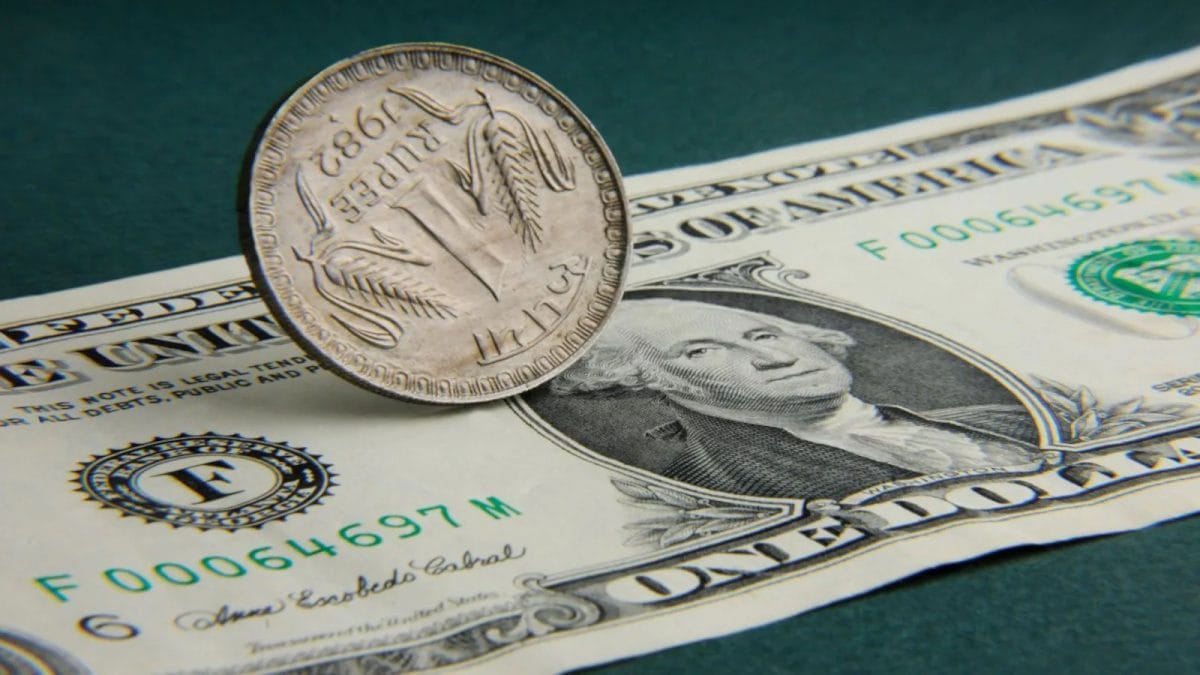
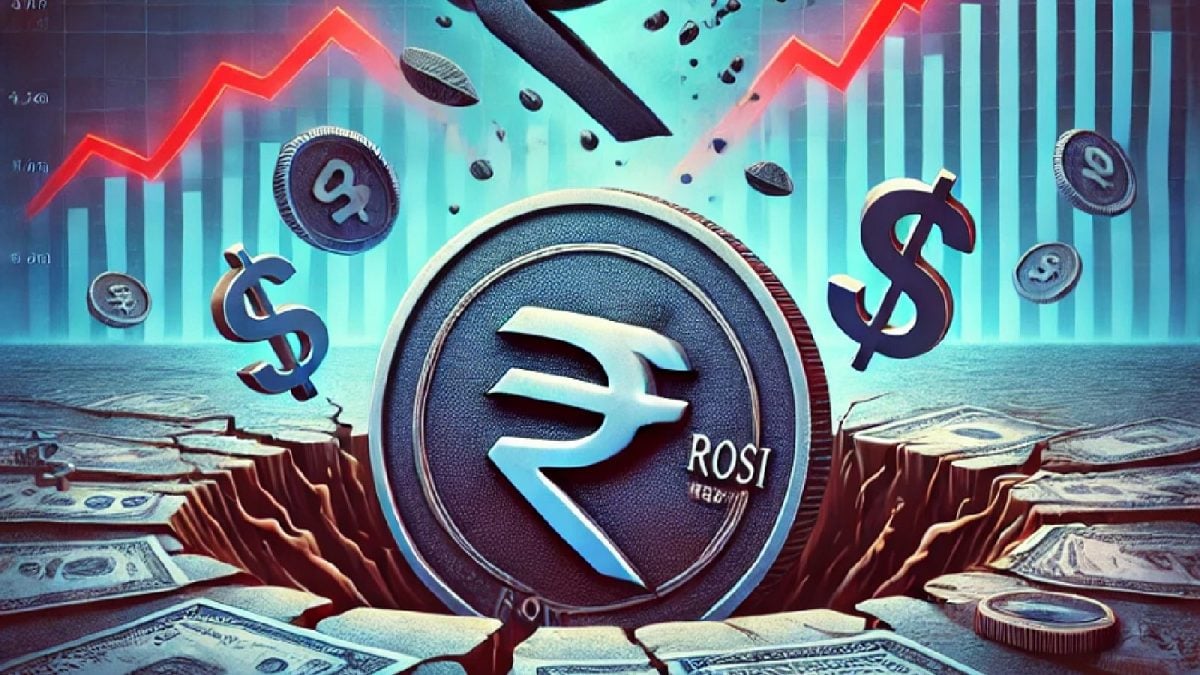
Indian rupee crossing the 90-per-dollar mark has been analysed endlessly through charts, fiscal models, current account pressures, and global market volatility. But buried beneath macroeconomic commentary is a quieter, deeper transition happening inside the middle-class homes. It is a psychological shift that may reshape how a generation thinks about money, ambition, global mobility, and the idea of prosperity.
As the rupee weakens further to 90.43 against the US Dollar on Thursday, India seems to be witnessing a quiet dollarisation, not in the official sense of replacing currency, but in the behavioural sense. The USD has quietly become the benchmark currency for aspiration, decision-making, and financial planning. In living rooms, family WhatsApp groups, college planning discussions, start-up budgets, and even everyday consumption choices, the dollar has become the reference point.
This shift is not driven by policy. It is happening socially, emotionally, culturally, and almost invisibly.
The Aspirational Economy Was Already Dollar-Priced
A weakening rupee not only makes imports costlier, but it also rewires aspiration itself. Over the past decade, India’s middle class moved decisively into a globally linked consumption basket. The products that most symbolise upward mobility — iPhones, drones, MacBooks, branded sneakers, premium headphones — are not priced in rupees. They are priced in dollars and simply translated into rupee terms based on the day’s exchange rate.
With the rupee touching 90, the price reset has been abrupt across multiple categories. Apple’s top-end smartphone that cost Rs 80,000 a few years ago now floats near Rs 1.5 lakh. Cloud services like iCloud, Google Workspace, and premium security apps become considerably more expensive as companies adjust INR-equivalent monthly fees. Netflix and Spotify have had to recalibrate India pricing because their licensing costs are denominated in dollars. Global airline fares, which fluctuate with both fuel prices and currency swings, now create anxiety for households planning holidays.
Even seemingly small services such as AI tools, photo editing apps, cloud storage, and online courses are tied to USD billing. Each rupee slide makes the Indian buyer feel like they are falling further away from global participation. And with 90 becoming the new normal, a psychological shift is underway: earlier, the dollar felt like an external force. Now it feels like an unavoidable ruler against which progress is measured.
Why Families Are Quietly Shifting Their Reference Currency To USD
Just 10 years ago, middle-class households planned everything in rupees: a child’s college fund, the cost of a vacation, or a gadget purchase. Today, these conversations increasingly happen in USD terms.
Parents discussing foreign education now think in fixed benchmarks — “a master’s in the US costs 50-60,000 dollars per year.” Families planning a European vacation calculate budgets directly in Euros and then convert. Salaried professionals working in Indian companies compare their pay packages to US counterparts, often feeling underpaid even when adjusted for PPP. Freelancers in metro cities sometimes quote their rates in USD to Indian clients just to hedge against currency swings.
For a generation exposed to global content, remote work opportunities, and international brands, the dollar is becoming a mental unit of ambition. A man saving for his daughter’s overseas education says planning in rupees feels meaningless because the target keeps shifting. A young coder aims for her dream job ($80K) in USD. A start-up founder, who uses multiple dollar-denominated SaaS tools, keeps a tab on every currency fluctuation for his monthly expenses.
The shift is subtle but profound: Indians no longer see the rupee as the stable anchor of long-term planning. The dollar has replaced it as the more reliable reference for the future.
According to Narender Agarwal, CEO of Wealth1, the recent weakness in the rupee is driven largely by the Reserve Bank of India’s (RBI) deliberate decision to reduce active intervention and allow the currency to find its natural market level. By choosing not to defend the rupee as aggressively as in the past, the RBI is signalling confidence in India’s economic fundamentals while preserving reserves for more disruptive global shocks.
Agarwal notes that this policy shift is subtly reshaping the wealth psychology of Indian households. Instead of reacting with panic, families are becoming more aware of currency cycles, discussing long-term financial planning more openly, and reassessing how they balance domestic assets with future obligations such as education, healthcare and retirement. The weakening rupee is prompting a deeper mindset change: Indians are moving from short-term reactions to more strategic thinking about wealth preservation, risk management and global financial integration — a structural evolution in how the country saves.
Why This Number Feels Different: Understanding The Psychology
Behavioural economists say humans react strongly to round-number thresholds. Prices crossing psychologically meaningful barriers create emotional responses that amplify economic anxiety. The rupee moving from 85 to 90 is not merely a five-rupee drop — it is a symbolic event.
At 90, the dollar no longer feels “temporarily strong.” It feels dominant. It feels structural. It feels like the rupee has entered a phase from which it may not return quickly. That triggers a range of behaviours: precautionary saving, postponement of travel plans, reluctance to commit to foreign degree programmes, and increased interest in dollar-linked assets.
In interviews, several financial planners note that clients have started asking whether the rupee could slide to 100. Once that psychological trigger is activated, households begin making long-term adjustments. They may delay global consumption, reduce discretionary imports, or aggressively increase rupee savings to “keep up.” The psychological shock at 90 marks a turning point where people begin to assume depreciation is here to stay.
And that assumption, more than the number itself, shapes long-term behaviour.
How The Weak Rupee Is Changing Savings & Investment Behaviour
The dollarisation of aspiration naturally leads to the dollarisation of savings. The Liberalised Remittance Scheme (LRS) data indicate rising outward remittances for investments, foreign deposits, and international stock purchases. More Indians are parking money in USD-pegged assets, such as global ETFs, international index funds, and even crypto stablecoins, as a hedge against currency volatility.
Financial planners say the profile of clients seeking dollar-linked products has changed dramatically. It is not just high-net-worth individuals; it is software engineers, freelancers, newly married couples, and parents of school-going children. Many freelancers now insist on being paid in USD or GBP whenever possible, converting only what is needed for monthly expenses.
Parents exploring foreign education are increasingly “frontloading” tuition deposits, hoping to lock in lower exchange rates early. Even those planning for five years are shifting SIPs into funds that invest overseas or hedge currency risk.
This is a form of stealth dollarization; Indian households are not switching currencies, but they are shifting their wealth psychology towards the dollar. The rupee is becoming a spending currency; the dollar is becoming a saving currency.
Are Indians Now Shifting To Newer Alternatives?
Another underreported impact is the declining willingness to pay for global digital services. As the cost of apps, cloud platforms, and online tools rises with a weaker rupee, many Indian users are cancelling subscriptions, sharing accounts, or shifting to cheaper domestic alternatives.
Streaming platforms have already begun adjusting their India pricing to prevent subscriber loss. Global software companies are reworking local billing because India is hypersensitive to price movements. Gaming subscriptions, AI tools like ChatGPT or Midjourney, and online learning platforms see disproportionate churn in India whenever the rupee slides sharply.
Digital services inflation hits the young working population the hardest, the very group most engaged in global online ecosystems. Those who use several tools for design work say every month feels like “being taxed for wanting to stay globally connected”.
The perception that global services are “becoming too expensive in India” is feeding into a broader narrative: the rupee is no longer protecting domestic consumers from global price shifts.
Travel Decisions Are Now Currency Decisions
For middle-class families, foreign travel has long been the ultimate aspirational goal. But with the rupee at 90, vacations are being postponed not because airline tickets are costlier but because households feel the psychological burden of a weak currency.
A report from a travel aggregator shows booking interest for Europe and the US dipping, while demand for domestic tourism has risen. Travel agents note a new kind of question: “Is it worth going now or should we wait for the rupee to stabilise?” Earlier, people worried about flight prices; now they worry about currency value.
Travel budgets increasingly start with USD-INR rate checks. Every one-rupee depreciation adds thousands of rupees to a family’s holiday estimate. People are also avoiding destinations where spending is dollar-linked, such as Singapore, Dubai, or the US, and instead choosing Vietnam, Thailand or Turkey where currency swings hit less hard.
The rupee at 90 is not just reducing travel; it is reshaping how Indians choose where and when to go.
Foreign Education Has Become A Moving Target
The dream of sending children abroad, once a middle-class aspiration that felt difficult but achievable, is starting to look unstable. As tuition, living costs, and visas are all priced in dollars, families planning foreign education are suddenly staring at a steep and uncertain future.
University consultants say inquiries remain high, but conversions are dropping. The fear of future depreciation is forcing parents to file scholarship applications in more affordable destinations such as Germany, Ireland, or the Netherlands.
The biggest anxiety is unpredictability. A planned Rs 1 crore budget for a two-year programme becomes Rs 1.25 crore if the rupee weakens by 10%. Many households now feel foreign education is becoming less a question of eligibility and more a question of currency risk. This changes the calculus for an entire generation.
How Depreciation Of Rupee Is Deepening Inequality
The most invisible consequence of rupee depreciation is the widening economic gap between those who earn in dollars and those who earn in rupees. Remote tech workers, freelancers servicing global clients, IT professionals with overseas stints, and NRIs sending remittances experience rising purchasing power. For them, the rupee at 90 is a boon.
For everyone else, it is an erosion, not just of income, but of a sense of progress. Salaries denominated in rupees lose long-term value; savings lose international purchasing power; global aspirations become harder to fulfil. The gap is psychological as much as financial.
Dollar earners feel protected; rupee earners feel exposed. This divide is likely to deepen as more Indian companies adopt global hiring models and more professionals seek USD-linked income streams. A currency-led inequality — layered atop existing wealth and opportunity gaps — may shape India’s socio-economic landscape for years.
The Rupee At 90 Is Not Just An Exchange Rate But A Turning Point
India’s dollarisation is subtle, quiet, and mostly emotional. The rupee at 90 has triggered a transformation in how the middle class views itself in a global economy. Aspirations are being recalibrated. Dreams are being deferred. Plans are being repriced. And the dollar, not the rupee, is emerging as the currency on which those dreams are constructed.
If the rupee stabilises, some habits will soften. But the mental shift may be here to stay.
For a generation that came of age believing the world was opening up, the rupee at 90 feels like a door partially closing. The challenge now is whether India can keep that door open for its middle class both economically and psychologically.
 Click here to add News18 as your preferred news source on Google.
 December 04, 2025, 15:29 IST

Stay Ahead, Read Faster
Scan the QR code to download the News18 app and enjoy a seamless news experience anytime, anywhere.



Britain is to “step up” defensive support for Gulf states after Iran attacked energy sites across the region in a “serious escalation” of the war that could push up inflation and interest rates.
The price of Brent crude climbed as high as $119 a barrel and European gas prices briefly surged by 35 per cent after Iran pounded Qatar’s Ras Laffan energy hub and other Middle Eastern oil and gas infrastructure with missiles.
Interest rates were held at 3.75 per cent instead of the previously expected cut, as the Bank of England warned that the war could push inflation as high as 3.5 per cent by July on the back of rising energy bills, and that rates could rise – creating misery for homeowners.
It came as:
- US defence secretary Pete Hegseth said “ungrateful” European allies should be thanking Donald Trump for the war
- Trump claimed he was unaware of Israel’s strike on Iran’s South Pars gas field
- Oman called the US/Israel attacks a “grave miscalculation”
- Europe’s biggest airlines warned of higher fares
Iran’s attacks were in retaliation to an Israeli strike on the vital South Pars gas field, which drew condemnation from the Gulf states as well as Tehran. It was the first attack of the war so far on an energy production facility. Tehran fired missiles at multiple energy sites across the Gulf, including a Saudi oil refinery, Qatari gas facilities and two more oil refineries in Kuwait.
While Sir Keir Starmer and Emmanuel Macron called for de-escalation, President Trump threatened to “massively blow up” the South Pars facility if Iran did not halt its retaliatory attacks, repeating his claim that US forces had “obliterated” Iran’s navy and military, adding that the war was “substantially ahead of schedule”. He denied that plans were being made to send more American troops to the region.
John Healey, the UK defence secretary, said Tehran’s tit-for-tat responses threatened to further destabilise the region and Europe’s economies. He called them a “serious escalation”, adding: “They further destabilise the region and we will step up the defensive support that we can offer to those Gulf states.”
British forces are already deployed to the Middle East, with RAF jets flying defensive sorties against Iranian drones across the Gulf and British air defence systems protecting critical infrastructure in Saudi Arabia. UK military planners have also joined US Central Command to help formulate proposals for opening the Strait of Hormuz, a critical trade route for the world’s oil and gas.But there were signs of growing frustration towards Washington’s war aims in the Gulf states, with Oman’s foreign minister claiming that the conflict was President Trump’s “greatest miscalculation”.
In the most scathing attack on Washington’s foreign policy yet by a Gulf state, Badr Albusaidi said “this is not America’s war” and criticised Mr Trump for supporting Israel. Writing in The Economist, he called on American allies to help extricate it from the conflict, which has continued for a third week despite failing to achieve the US and Israel’s stated aim of instigating regime change in Tehran or stopping its nuclear programme.
Meanwhile, the Bank of England has warned that it may have to put up interest rates if the war continues to drive up inflation and unemployment. Its governor, Andrew Bailey, said the impact was already being felt by consumers as petrol prices surge and that he is “ready to act as necessary to ensure inflation remains on track to meet the 2 per cent target”. That would pave the way for a rate hike as early as the end of April.
Bets on the financial markets suggest a 50/50 chance that Britain will face higher interest rates from next month – and the possibility of two more rises by the end of the year.
Danni Hewson, head of financial analysis at AJ Bell, said: “Markets are now pricing in an almost 50 per cent chance that April’s meeting will see rates rise to 4 per cent with the potential for two additional rate hikes by the end of the year. But no one has a crystal ball. No one knows how long the conflict will last or the amount of damage that could be inflicted on crucial energy infrastructure by the time it ends.”
From fuel to mortgages, the BBC looks at how oil and gas prices could push up the cost of living.
Source link

“To put it mildly, this is bananas,” said David Tannenbaum, director of Blackstone Compliance Services, a consultancy specialising in maritime sanctions. “Essentially we’re allowing Iran to sell oil, which could then be used to fund the war effort.”


FIFA clears Israeli settlement clubs but fines IFA over breaches

Prince William and Kate wow with last-minute surprise portrait drop

US Takes Down Botnets Used in Record-Breaking Cyberattacks

Stock market crash today (March 12, 2026): Nifty50 opens below 23,600; BSE Sensex down over 900 points on continuing US-Iran war – The Times of India

UK’s Topshop unveils Tolu Coker capsule collection

US ignites Iran war, but Gulf Arab states pay the price | The Express Tribune

-
Business1 week ago
Stock market crash today (March 12, 2026): Nifty50 opens below 23,600; BSE Sensex down over 900 points on continuing US-Iran war – The Times of India
-
 Fashion1 week ago
UK’s Topshop unveils Tolu Coker capsule collection
-
Business1 week ago
US ignites Iran war, but Gulf Arab states pay the price | The Express Tribune
-

 Fashion1 week ago
India’s textile recycling market may reach $3.5 bn by 2030: Report
-

 Tech1 week ago
Meta Developed 4 New Chips to Power Its AI and Recommendation Systems
-

 Sports1 week ago
Bangladesh crush Pakistan in ODI series opener | The Express Tribune
-
 Business1 week ago
8th Pay Commission: How Much Will Central Govt Employees’ Salaries Rise? What We Know So Far
-

 Entertainment1 week ago
Ed Sheeran makes surprising Benny Blanco confession after hygiene uproar