

Business
Rupee near record lows: Will exporters gain competitiveness or lose on rising import costs? All you need to know – The Times of India

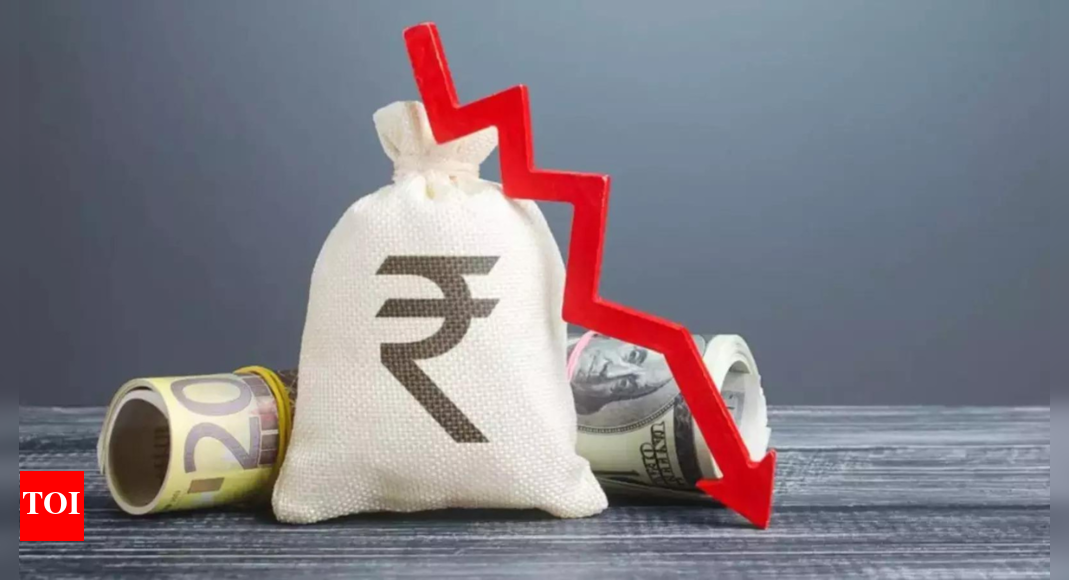
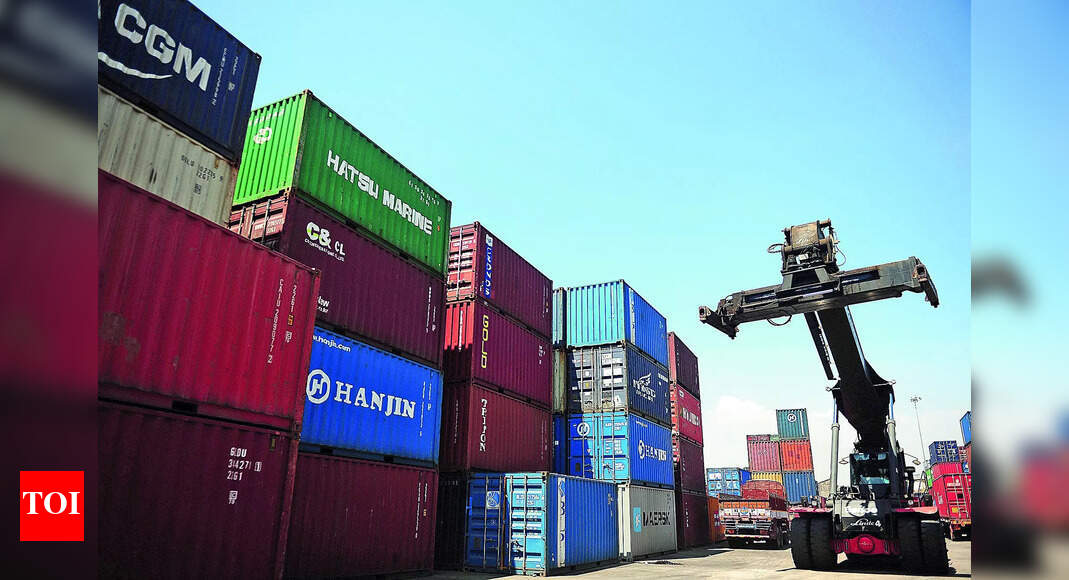
The Indian rupee traded near record lows against the US dollar on Tuesday, slipping to 88.15 after closing at an all-time low of 88.18 a day earlier. The depreciation has provided exporters with better price competitiveness but raised concerns for import-heavy sectors.Exporters said the fall in the rupee presents a mixed picture. “On one hand, it enhances the price competitiveness of Indian products in global markets, particularly as exporters diversify beyond the US. On the other hand, for sectors with high import dependence such as gems and jewellery, petroleum products, and electronics, the cost of imported inputs will partly offset the currency advantage, squeezing margins,” Federation of Indian Export Organisations (FIEO) Director General Ajay Sahai said, PTI quoted him as saying.Exporters diversify amid tariff threatThe government has urged exporters to diversify shipments beyond the US, warning that Washington’s 50 per cent tariffs on Indian goods could dent shipments. The US accounts for about 20 per cent of India’s exports, amounting to $86.5 billion in 2024-25 out of a total of $437 billion.Sahai added that the rupee’s weakness offers an opportunity to deepen presence in emerging markets while pushing for greater domestic value addition. “That will reduce import intensity and ensure sustainable export growth,” he said.Importers face rising billsFor importers, the impact has been immediate. “The primary and immediate impact of a depreciating rupee is on the importers who will have to shell out more for the same quantity and price. However, it is a boon for the exporters as they receive more rupees in exchange for dollars,” said a trader, who did not wish to be named.India meets 85 per cent of its oil needs through imports, making petroleum products particularly vulnerable. The basket of imports also includes crude oil, coal, plastic materials, chemicals, electronic goods, vegetable oil, fertiliser, machinery, gold, pearls, precious and semi-precious stones, and iron and steel. Overseas education and foreign travel are also expected to become costlier.Kanpur-based Growmore International Ltd MD Yadvendra Singh Sachan said that stability was crucial. “Any volatility in the value is not good for both exporters and importers. At the current scenario, 85 will be better,” he said.The rupee’s slide has been attributed to uncertainty over the Indo-US trade deal, capital market outflows, and weak domestic equities. Forex traders said risks remain skewed to the downside amid tariff concerns.India’s exports snapped a two-month decline with a 7.29 per cent rise to $37.24 billion in July, but the trade deficit widened to an eight-month high of $27.35 billion. During April-July 2025-26, exports rose 3.07 per cent to $149.2 billion while imports increased 5.36 per cent to $244.01 billion, leaving a trade deficit of $94.81 billion.




Rising heating oil prices are hitting Northern Ireland harder than the rest of the UK – here’s everything you need to know.
Source link

The logo for the Food and Drug Administration is seen ahead of a news conference at the Health and Human Services Headquarters in Washington, April 22, 2025.
Nathan Posner | Anadolu | Getty Images
A key U.S. Food and Drug Administration official who oversees vaccines and biotech treatments will step down from the agency following multiple decisions that raised concerns within the industry.
Vinay Prasad, director of the Center for Biologics Evaluation and Research, will leave the FDA at the end of April, an agency spokesperson confirmed on Friday. It is his second departure from the position: He briefly left the post in July following backlash over his regulatory decisions, and returned only two weeks later in August.
In a post on X, FDA Commissioner Marty Makary said the FDA will appoint a successor before Prasad returns next month to the University of California San Francisco, where he taught before taking the FDA position last year. Makary said Prasad “got a tremendous amount accomplished” during his tenure at the agency.
Prasad’s decision to step down comes after criticism of the FDA mounted within the biotech and pharmaceutical industry and among former health officials. In the past year, the agency has denied or discouraged the approval applications of at least eight drugs, according to RTW Investments, after taking issue with data the companies used to support their applications. The FDA also initially refused to review Moderna’s flu shot before it later reversed course.
All of those companies accused the FDA of reversing previous guidance about the evidence they could use to back their applications, sparking criticism within the industry that an unreliable regulatory process could stifle development of drugs for hard-to-treat diseases.
A former FDA official who spoke to CNBC on the condition of anonymity to speak freely on the issue called the reversals the worst kind of regulatory uncertainty because companies say they are being told one thing and then experience another.
In a statement earlier Friday, an FDA spokesperson said there was “no regulatory uncertainty,” adding the agency “makes decisions based on the evidence, but does not make assurances about outcomes.” The spokesperson said the FDA is “conducting rigorous, independent reviews and not rubber-stamping approvals.”
The most recent controversy came after the FDA discouraged UniQure from applying for expedited approval of its experimental treatment for Huntington’s disease.
The agency, which underwent staff cuts and an overhaul under Health and Human Services Secretary Robert F. Kennedy Jr., has faced broader backlash for its drug and vaccine approvals process. Critics have worried the agency could stifle the development of new treatments and risk the safety of patients.
The Wall Street Journal earlier reported Prasad’s departure.
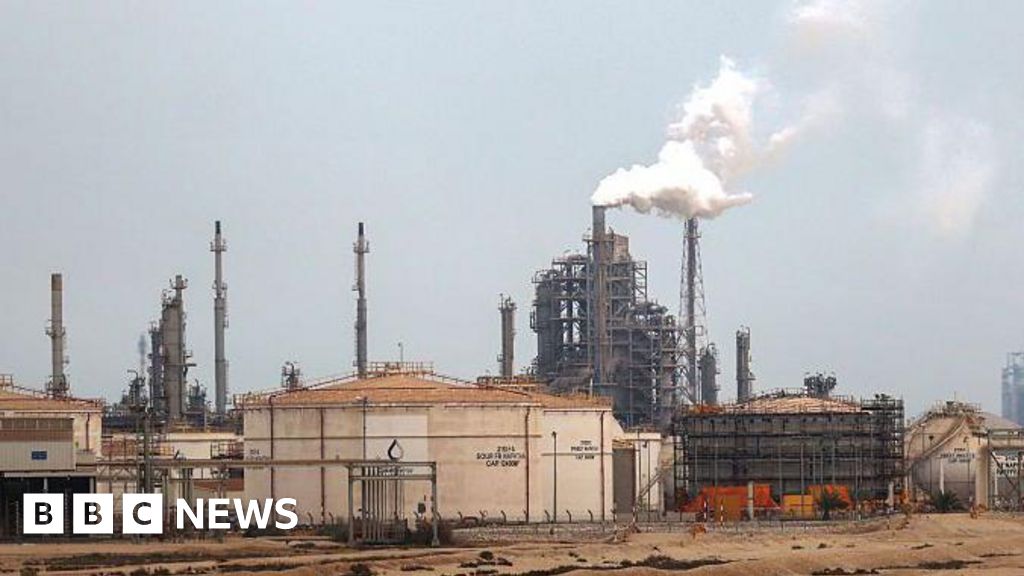
Energy Minister Saad al-Kaabi says oil could hit $150 a barrel if the Iran conflict continues over the coming weeks.
Source link


Winners and losers of the 2026 NHL trade deadline

Ben Stiller condemns use of ‘Tropic Thunder’ clip in political video

Spain, France lead World Cup 2026 Power Rankings, 100 days out

-
 Business1 week ago
Attock Cement’s acquisition approved | The Express Tribune
-

 Politics1 week ago
US arrests ex-Air Force pilot for ‘training’ Chinese military
-

 Fashion1 week ago
Policy easing drives Argentina’s garment import surge in 2025
-
 Business1 week ago
India Us Trade Deal: Fresh look at India-US trade deal? May be ‘rebalanced’ if circumstances change, says Piyush Goyal – The Times of India
-

 Politics1 week ago
What are Iran’s ballistic missile capabilities?
-

 Sports1 week ago
Sri Lanka’s Shanaka says constant criticism has affected players’ mental health
-

 Entertainment1 week ago
Bobby J. Brown, “The Wire” and “Law & Order: SUV” actor, dies of smoke inhalation after reported fire
-

 Sports1 week ago
LPGA legend shares her feelings about US women’s Olympic wins: ‘Gets me really emotional’