

Business
Sebi Board Meet Outcome: Mutual Fund, Stockbroker Rules Overhauled; Expense Ratios Revamped

Last Updated:
Sebi approves new mutual fund and stockbroker rules to clearly show all costs to investors, cut hidden charges, revise brokerage limits and modernise trading and compliance norms.
Sebi Board Meet Outcome December 2025.
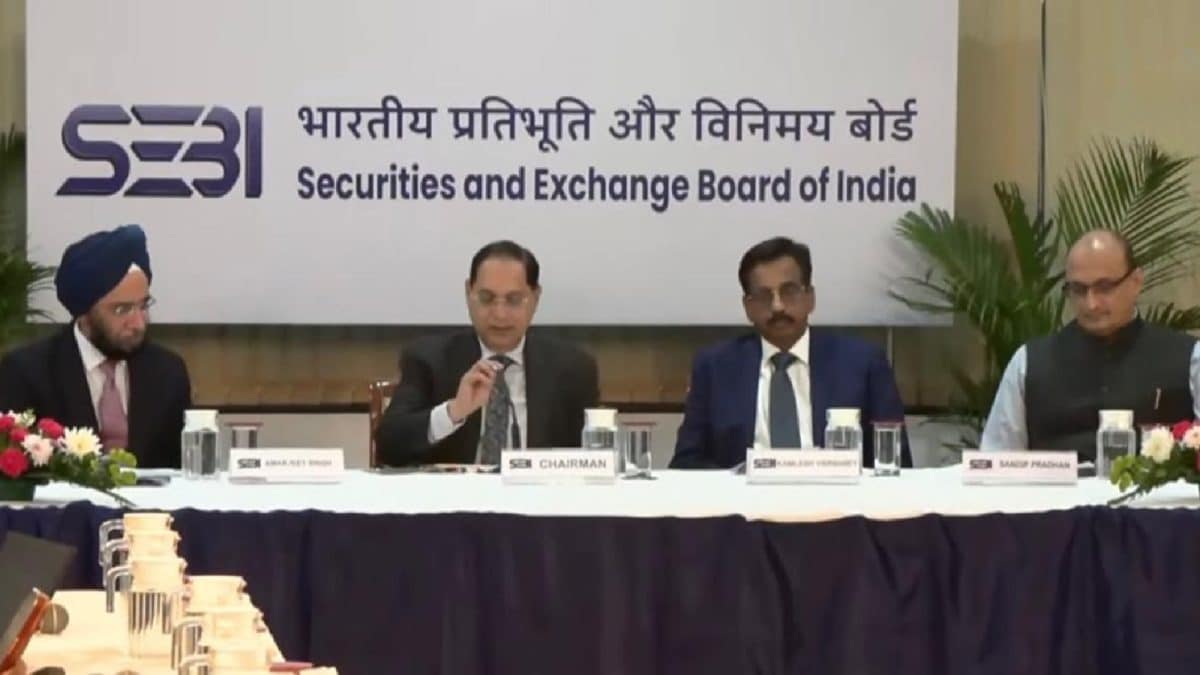
Sebi Board Meet Outcome December 2025: The Securities and Exchange Board of India (Sebi) on Wednesday approved a sweeping overhaul of regulations governing mutual funds and stockbrokers, clearing long-pending reforms aimed at improving cost transparency for investors, modernising market practices and simplifying compliance. The board approved the new Sebi (Mutual Funds) Regulations, 2026, replacing the nearly three-decade-old 1996 framework, and also cleared a comprehensive revamp of stockbroker regulations through the Sebi (Stock Brokers) Regulations, 2025.
Mutual Fund Regulations Revamped to Improve Cost Transparency
The markets regulator cleared a proposal to enhance mutual fund transparency by breaking down total expense ratio (TER), said a release. This is aimed at reducing investor confusion and ensuring greater transparency in costs.
A key change involves the exclusion of statutory levies, including securities transaction tax (STT), commodities transaction tax (CTT), GST, stamp duty, and Sebi and exchange fees, from the TER.
Under the new framework, statutory levies will be charged on actuals over and above the base expense ratio (BER), with TER now comprising the BER, brokerage and statutory or regulatory levies.
Sebi also removed the additional 5 basis points expense allowance linked to exit loads.
The regulator also reduced BER limits across several categories, including index funds and ETFs to 0.9% from 1.0%, liquid-scheme-based fund of funds to 0.9%, and close-ended equity schemes to 1% from 1.25%.
Brokerage Caps Revised
Sebi also reduced the cap on brokerage paid by mutual funds for equity cash transactions to 6 basis points, against the current mutual funds pay brokerage of up to 12 bps for equity transactions. It is, however, higher from the previously proposed 2 bps, after the industry feedback that a sharp cut might affect fund managers’ ability to execute trades effectively.
Brokerage rates for derivative mutual fund deals have also been revised to 2 basis points from 1 basis point, exclusive of statutory levies.
Performance-Linked Expenses Allowed
Sebi has allowed performance-linked expense structures for certain schemes, aligning mutual fund regulations more closely with alternative investment fund (AIF) frameworks, while maintaining safeguards to protect investors.
Mutual Fund Rules Shortened, Simplified
While announcing the decisions, Sebi Chairman Tuhin Kanta Pandey said the new regulations significantly reduce complexity and improve clarity. “There has also been a significant reduction in length of approximately 44%, from 162 pages to 88 pages. The word count has been reduced by about 54%, from nearly 67,000 words in the current regulations to around 31,000 words in the new regulations. Key highlights include improved clarity on statutory levies and expense ratio limits, which are now referred to as the Base Expense Ratio,” Pandey said.
Sebi had released a detailed consultation paper on October 28 proposing a revamp of the TER framework, citing concerns that the existing regime masked actual costs borne by investors and embedded statutory levies within fund expenses.
Stockbroker Regulations Modernised
The SEBI board also approved a comprehensive revamp of the stockbroker regulatory framework, replacing the SEBI (Stock Brokers) Regulations, 1992 with the SEBI (Stock Brokers) Regulations, 2025.
The new framework introduces a formal definition of algorithmic trading, clearer norms for proprietary trading, and a regulatory structure for execution-only platforms (EOPs) facilitating direct mutual fund transactions. Key definitions — including clearing member, professional clearing member, proprietary trading member, designated director and proprietary trading — have been updated to reflect current market practices.
The regulations consolidate provisions previously scattered across multiple circulars, remove obsolete requirements, and reorganise the framework into 11 chapters covering all aspects of stockbroker regulation.
Compliance Eased, Exchanges Made First-Line Regulators
Compliance requirements have been streamlined through measures such as joint inspections, electronic maintenance of books of accounts and rationalised reporting norms. Stock exchanges have been designated as first-line regulators for stockbrokers, with revised norms for reporting non-compliance and submission of financial statements.
The board also approved the rationalisation of criteria for identifying qualified stock brokers, with enhanced supervision focusing on brokers with larger client bases and higher trading volumes.
Debt Issuers To Offer Incentives In Public Issues To Certain Investors
It also allowed debt issuers to offer incentives in public issues to certain categories of investors.
Among other key proposals, the board cleared a recommendation regarding a framework to reduce the compliance burden of companies with large debts by raising the threshold for identifying High Value Debt Listed Entities (HVDLEs) to Rs 5,000 crore from the current Rs 1,000 crore.
Decision on Conflict-of-Interest Framework Deferred
The board reviewed proposals to overhaul norms governing mutual funds and stock brokers, but deferred a decision on a framework requiring senior Sebi officials to disclose their financial assets and liabilities to an independent officer.
IPO norms eased, disclosures made more investor-friendly
Sebi’s board also approved amendments to IPO regulations to address operational challenges around share lock-ins and improve the readability of offer documents. The regulator cleared a technology-enabled mechanism to appropriately mark pledged pre-issue shares as locked-in, easing compliance for issuers and intermediaries, and clarified that shares pledged by non-promoters of IPO-bound companies will be treated as non-transferable during the lock-in period.
To make IPO disclosures more investor-friendly, Sebi decided to replace the need for a separate summary document by requiring an abridged prospectus to be provided at the draft stage itself, along with the DRHP. The abridged prospectus, which is already mandated under the Companies Act, will contain key information and be made accessible through a QR code, allowing investors to quickly assess essential details without navigating lengthy draft offer documents.
This is the fourth board meeting chaired by Sebi chief Tuhin Kanta Pandey, who assumed office on March 1.
 Click here to add News18 as your preferred news source on Google.
 December 17, 2025, 18:29 IST
Read More

Motorists are facing higher fuel prices ahead of Easter break due to the conflict in the Middle East, the RAC says.
Source link

Hyderabad: Pharma player Hetero on Friday said it has rolled out exports of its generic semaglutide injection portfolio as part of a multi-year plan to widen access to treatments for type 2 diabetes and obesity in more than 75 countries.The Hyderabad-based pharmaceutical company said initial rollouts are under way in Africa, Asia and the Middle East, with additional launches planned in other markets subject to regulatory approvals.The injectable therapies will be sold under the brand names Truglyx, Rolmodl and Moto G. Semaglutide belongs to the GLP-1 class of medicines, which are used in diabetes care and weight management.Hetero said the export launch is part of its broader strategy to improve access to advanced cardio-metabolic therapies, particularly in emerging markets.The company said the products will be offered in multi-dose disposable pen devices designed in line with innovator formats and will be available in several strengths, including 0.25 mg, 0.5 mg, 1 mg, 2 mg, 1.7 mg and 2.4 mg, allowing dosing flexibility for both diabetes and obesity treatment.Hetero said it is also awaiting approval from India’s Central Drugs Standard Control Organisation (CDSCO) after completing clinical trials in type 2 diabetes and obesity and plans an India launch after regulatory clearance.Hetero managing director Dr Vamsi Krishna Bandi said the company aims to provide high-quality, affordable generic semaglutide through a single global product platform backed by its manufacturing and development capabilities.He said Hetero would use its commercial networks across Asia, the Middle East, Africa and Latin America to support supply and access. The Hyderabad-headquartered Hetero operates in more than 145 countries and employs over 30,000 people.
Business
India-US trade deal update: Piyush Goyal meets USTR Jamieson Greer, discusses next steps in BTA talks – The Times of India
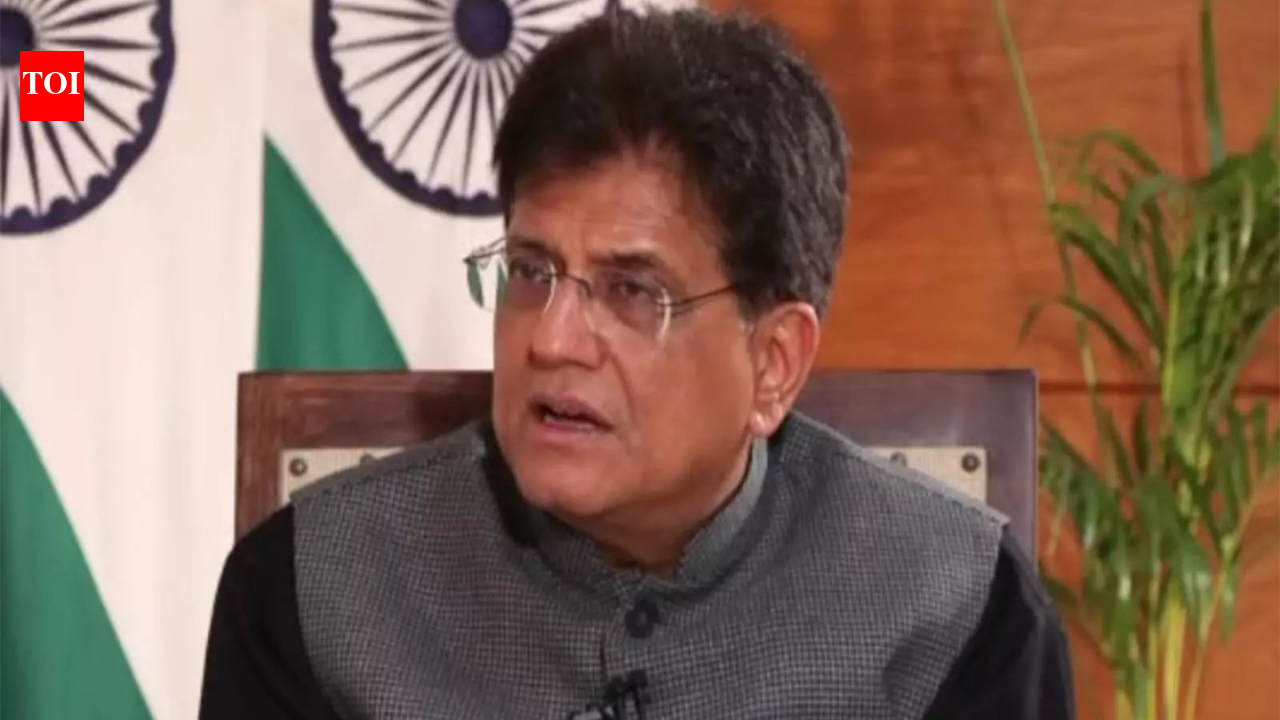
Commerce and industry minister Piyush Goyal on Friday met US Trade Representative Jamieson Greer and reviewed the next steps in negotiations for the proposed India-US bilateral trade agreement (BTA).The meeting took place on the sidelines of the 14th ministerial conference (MC14) of the World Trade Organisation in Yaounde, Cameroon, where both sides also exchanged views on issues related to the WTO agenda.“Had a very productive discussion with @USTradeRep Jamieson Greer on the sidelines of the WTO Ministerial Conference. Exchanged views on the #WTOMC14 agenda, next steps in the India-US BTA negotiations and explored ways to further deepen our economic cooperation and bilateral trade ties,” Goyal said in a social media post.The development comes amid ongoing efforts by both countries to finalise an interim trade pact. Last month, India and the US announced that they had finalised a framework for the first phase of the agreement, though it is yet to be signed.The two sides had earlier announced a trade deal on February 2, followed by a joint statement on February 7 outlining the contours of the agreement.As part of the framework, the US had agreed to reduce tariffs on Indian goods to 18%. However, the tariff structure has since undergone changes after the US Supreme Court struck down sweeping tariffs imposed under earlier measures.Following the ruling, US President Donald Trump introduced a 10% tariff on all countries for a period of 150 days starting February 24.In view of these developments, a planned meeting between chief negotiators of India and the US — aimed at finalising the legal text of the agreement — has been postponed. The pact was earlier expected to be signed this month.An official had earlier said that the interim trade agreement would be signed once the new global tariff framework of the US is fully in place.


Backstreet Boys AJ McLean shows support to Britney Spears after DUI arrest
Asda boss rejects profiteering claims as petrol price tops 150p

Britney Spears turns a new page after recent legal trauma

-

 Entertainment1 week ago
Val Kilmer revived 1 year after death through AI
-

 Fashion7 days ago
China’s textile & apparel exports surge 17% to $50 bn in Jan-Feb 2026
-
 Business7 days ago
Flipkart group CFO to leave co amid IPO plans – The Times of India
-
 Business1 week ago
Video: The Effects of High Oil Prices
-

 Sports1 week ago
Rating Adidas’ 2026 World Cup away shirts: Argentina, Spain, Mexico and more
-

 Sports7 days ago
American Conference Commissioner Tim Pernetti thanks Trump for Army-Navy game executive order
-

 Fashion1 week ago
The hidden $1.62 war tax now embedded in every garment you source
-
Tech1 week ago
The Corsair 4000D RS PC Case Keeps Your System Cool