

Tech
Security platform consolidation in 2026: The AI imperative | Computer Weekly


AI leaves us no other choice but to consolidate cyber security platforms; in 2026, organisations will face AI-driven attacks that adapt in real time. Fragmented security stacks simply can’t keep up, pushing security teams towards consolidated platforms – not for cost savings, but for survival.
AI-powered threats will launch dynamic, multi-layered attacks that instantly adjust to defensive actions. Any organisation juggling dozens of disconnected tools, conflicting alerts, and patchy visibility will be outpaced from the start.
Why consolidation has become critical
Three-quarters of organisations have already started consolidating security vendors because complexity has become unmanageable. The real cost of tool sprawl isn’t licensing – it’s slow response times. When attackers can move across networks in minutes, teams switching between tools and manually stitching data together have no chance of stopping them.
Consolidation allows security teams to centralise data, accelerate detection, and respond in minutes instead of hours.
The AI threat shift
Next year, AI will redefine the threat landscape:
- Adaptive attacks: AI systems learn about a target’s defences and change tactics mid-attack, making traditional detection methods far less effective.
- Autonomous breaches: Research suggests that agentic AI will cause a public breach in 2026, with autonomous agents navigating networks and exfiltrating data with minimal human oversight.
- Speed advantage: Defenders will require AI-enabled tools capable of analysing data across the entire attack surface instantly – something fragmented architectures cannot deliver.
Why unified platforms win
Consolidated platforms provide the visibility and automation AI-era threats demand:
- Holistic visibility across identity, endpoints, cloud, network, and data.
- Centralised risk management, allowing leaders to prioritise based on real business impact.
- AI-driven response that uses context from the entire security stack to contain threats before they escalate.
Key predictions for 2026
- 55% of enterprises will accelerate consolidation, driven by missed SLAs, rising overheads, and security drift.
- Integrated GenAI will cut employee-driven incidents by 40%, but only when supported by a platform approach.
- 45% of Fortune 500 organisations will appoint a Chief AI Security Officer, signalling a new era of executive oversight.
- Quantum security spending will exceed 5% of IT security budgets, as organisations prepare for post-quantum risks.
What security leaders should do now
- Balance platforms with specialist tools – consolidation doesn’t mean giving up innovation.
- Mitigate risks such as vendor lock-in and reduced flexibility by prioritising open standards, integration capabilities, and clear exit strategies.
- Prioritise data centralisation to give AI the visibility it needs to defend at machine speed.
The bottom line
By 2026, cyber defence will be a battle of AI versus AI. Consolidation isn’t optional; it’s the foundation that enables fast, intelligent defence. Organisations that simplify their architectures today will build the resilience needed for tomorrow’s threats. Those that don’t will be left defending modern attacks with outdated, fragmented systems – a strategy guaranteed to fall behind.
John Bruce is CISO at Quorum Cyber, an Edinburgh-headquartered managed security services provider.
Read more on Business continuity planning

In addition to the rubber balls, there’s a nice physical interface on the side for adjusting volume and pairing multiple Mix speakers together if you have multiple on hand (I was only sent the single mono speaker). Setup involves installing the Soundboks app, pairing to the speaker via Bluetooth on your phone, and picking whatever you want to play. It’s all quick and painless, especially for my first-time pairing with a Samsung Galaxy S24 Ultra.
Otherwise, it’s all very pro audio. Everything reminds me very much of the Peavey PA system I have in my music rehearsal space. The top of the speaker features a built-in carrying handle and a place for a strap (an accessory you have to buy aftermarket, or you can fasten it with any strap you have that fits through the hole). There are also top-hat mounts for the speakers to slide onto traditional PA pole stands, if you wanted to use them in that way at a party or event.
The grill is replaceable, as is the massive internal battery, which means that these things are pretty much indestructible as long as the amp and speakers themselves still work—the battery is the weak point of most portable speakers in 2026.
I bounced it around my yard, dropped it off my patio, and generally beat the crap out of it during my two-week testing period, and the thing just needed a little wipe down and a charge when it ran out of juice. The claimed 40 hours of battery at reasonable volume is accurate, but you’ll get about eight hours at max volume (which is very good for the category). If you need to bring some walk-out music to your kid’s all-day Little League tournament, this a great way to go.
Big Sound
Photograph: Parker Hall
Soundboks calls this speaker midsize, but at 21.4 pounds and the size of a medium-size cooler, I’d still call it a large speaker. That said, the size doesn’t make it any less portable than competitors from JBL and others; you still need a car or cargo ebike to take one of these with you, so what’s a couple inches here or there? The fact that this is a rectangle actually makes it easier to strap down than many others, especially with the holes for the strap and the built-in handle to tie down through.

After a working life of nearly a quarter of a century, the London Internet Exchange (Linx) has announced the completion of a large project refreshing its 17-site secondary interconnection fabric LON2 in the UK’s capital as part of a strategic investment in the future of interconnection services in the UK.
The upgrade, for which communications tech provider Nokia has been selected as the technical partner, comes at a time where the existing technical service was reaching end of life.
Linx’s dual local area network (LAN) infrastructure design in London has been something that the provider regards as setting them apart over the years from other internet exchange points (IXPs). The company says operating a diverse and resilient service in-house for its members means not having to look elsewhere for this critical capability.
In 2018, Linx announced it was the world’s first IXP to deploy a disaggregated network using an Ethernet virtual provider network (EVPN), with hardware and software sourced from alternative suppliers.
LON2 was originally launched in 2002, following the primary LON1 LAN’s increasing popularity, and was created to ensure there was no critical single point of failure in the UK’s internet connectivity. It operates in parallel with LON1 to provide its members with enhanced network resilience, redundancy and architectural diversity.
Linx’s LON1 network moved to Nokia technology in 2021, following the demand for 400GE port access from members. LON2 has traditionally been a supplier-diverse LAN, but Linx said the decision to also move LON2 to Nokia technology followed a series of proof of concepts with a shortlist of possible suppliers.
LON2 remains fully diverse for Linx members as it uses different hardware and software to LON1.
With LON2 approaching 25 years in operation next year, and so close to that 1Tb traffic mark, Linx stressed that it remains a key point of interconnection for the UK and Europe, and a cost-effective way to access its services in London.
“The LON2 refresh is a cornerstone of our strategy to deliver resilient, scalable and cost-effective interconnection,” said Linx chief technology officer Richard Petrie. “Nokia’s platform not only meets our technical requirements, but also supports our long-term vision for a diverse and robust network ecosystem.
“When looking for a new technical partner for LON2, we had criteria we needed to meet, including being able to support all our interconnection services, support EVPN, and … scale from 10GE to 100GE, 400GE and even 800GE port options for the future. Diversity to LON1 was still a crucial element for us in the decision-making process. Many of our members take complete mirrored infrastructure and Linx services on LON1 and LON2 for resilience and redundancy, so diversity was non-negotiable.”
Paul Alexander, vice-president and country general manager for UK&I at Nokia, said: “Linx’s networks are critical to the UK’s digital infrastructure. Its continued trust in Nokia to provide high-performance, flexible and advanced connectivity across both of its UK networks demonstrates a shared commitment to resilience, innovation and long-term scale.
“As AI [artificial intelligence] becomes the dominant workload shaping modern networks, service providers and critical infrastructure operators need platforms that are ready for new traffic patterns, higher performance and greater scale. This investment helps ensure Linx’s members benefit from a future-ready foundation for the AI era, supporting growing capacity demands across 100GE, 400GE and beyond.”
Linx is also working with Nokia as a technical partner in most of its operating regions from Linx NoVA in the US, to Linx sites in Kenya and Ghana.
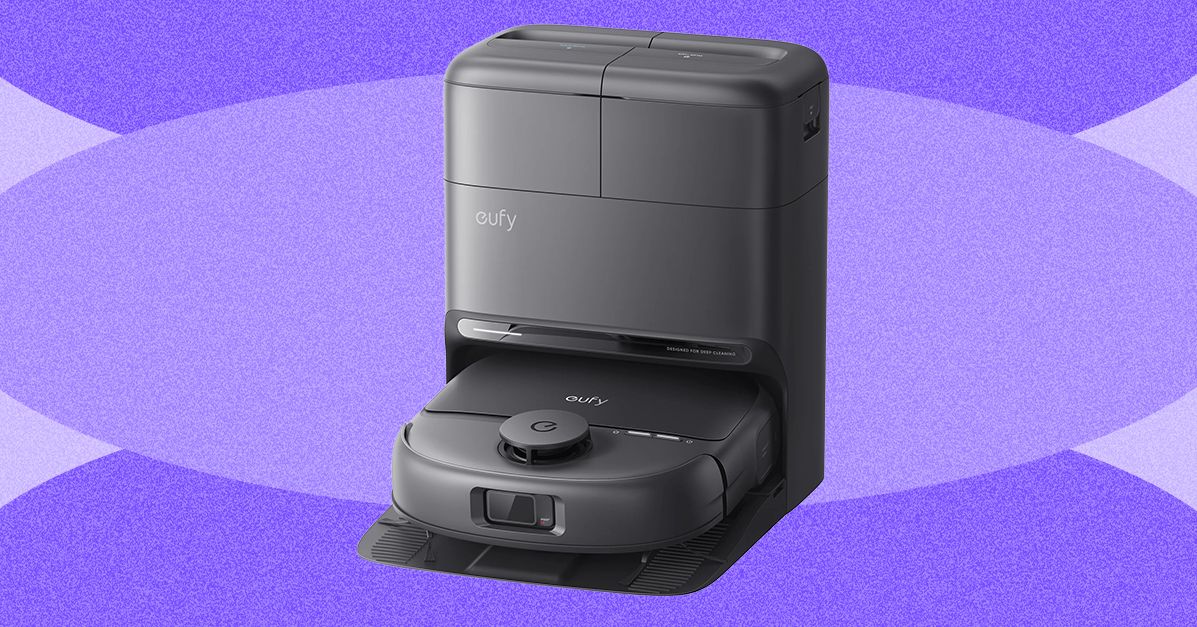
Where the X10 Pro Omni had rotating mop pads, the rolling mop pad on the Omni C28 continuously self-cleans to prevent spreading dirt or grime to other parts of the house. Both apply downward pressure, but neither can spot dirtier places on their own as pricier, AI-powered robot vacuums will. Still, I was happy to see that it was able to scrub away some of the large dirt smudges in my entryway, though it didn’t get all of them. It also didn’t manage to scrub away all of the cherry juice I intentionally spilled in my routine mess setup for robot vacuum testing, even after sending the vacuum to do a second mopping job on one of the spots.
Photograph: Nena Farrell
Still, the Omni C28 was able to raise its roller mop high enough when it switched from mopping my floors to vacuuming my living room rug that there was no hint of dampness anywhere. The older X10 did get my colleague Adrienne So’s carpet wet, but it didn’t get mine wet, though my carpet is a fairly low pile. It did a fine job vacuuming the carpet, though I could tell the difference in suction between this and more powerful vacuums I’ve tested.
The base station is nice and compact, and includes drying fans to dry off the roller mop. That does mean there’s a gentle fan noise in the background for a couple of hours after you use this robot vacuum, which was more annoying than I expected, but you could easily place this vacuum’s base station in a less central spot in your home so you don’t hear it. You could also set up a schedule for the vacuum to run in the morning and finish its drying job before you get home.
Multi-Floor Madness

Photograph: Nena Farrell
My favorite feature on the Omni C28 is that, even at this price point, it can still learn multiple maps. While it can’t climb up stairs, you can move it around your home and switch the maps in the app to the floor you’ve relocated to. This isn’t new for Eufy, as the older affordable model can do that too, but it’s nice to see the feature maintained when I’ve tried more expensive robot vacuums that don’t include it. It’s pretty simple to use; you’ll go to the maps, select “make a new map,” and then activate the robot to map. Once the map is made, you’ll switch to that map from the little map icon on the right side, which will label them with numbers in the order you created them.


Kylian Mbappé: ‘Can’t imagine’ World Cup without ‘big star’ Neymar

Gulf crisis: British Airways and SWISS add India flights – The Times of India

Cynthia Nixon and Kristin Davis celebrate

Sales at US apparel, clothing accessories stores up 4% YoY in Jan 2026

Justice Department Says Anthropic Can’t Be Trusted With Warfighting Systems

March Madness 2026 – How to watch in SA, start time, schedule, TV channel for NCAA championship basketball tournament

-
 Fashion1 week ago
Sales at US apparel, clothing accessories stores up 4% YoY in Jan 2026
-
 Tech1 week ago
Justice Department Says Anthropic Can’t Be Trusted With Warfighting Systems
-
 Sports1 week ago
March Madness 2026 – How to watch in SA, start time, schedule, TV channel for NCAA championship basketball tournament
-
 Business1 week ago
Stocks and pound rise as US rate call approaches
-

 Politics1 week ago
Iran strikes Tel Aviv with cluster-warhead missiles in retaliation of Larijani’s martyrdom
-

 Entertainment1 week ago
Val Kilmer revived 1 year after death through AI
-

 Fashion1 week ago
Spain’s Inditex FY25 sales rise 3.2% to $46.28 bn amid strong demand
-
 Business1 week ago
Brits cashing in jewellery as gold price hits record high