

Business
Semicon India 2025: PM Modi receives first made-in-India chip; industry leaders hail nation’s role in global ecosystem – The Times of India

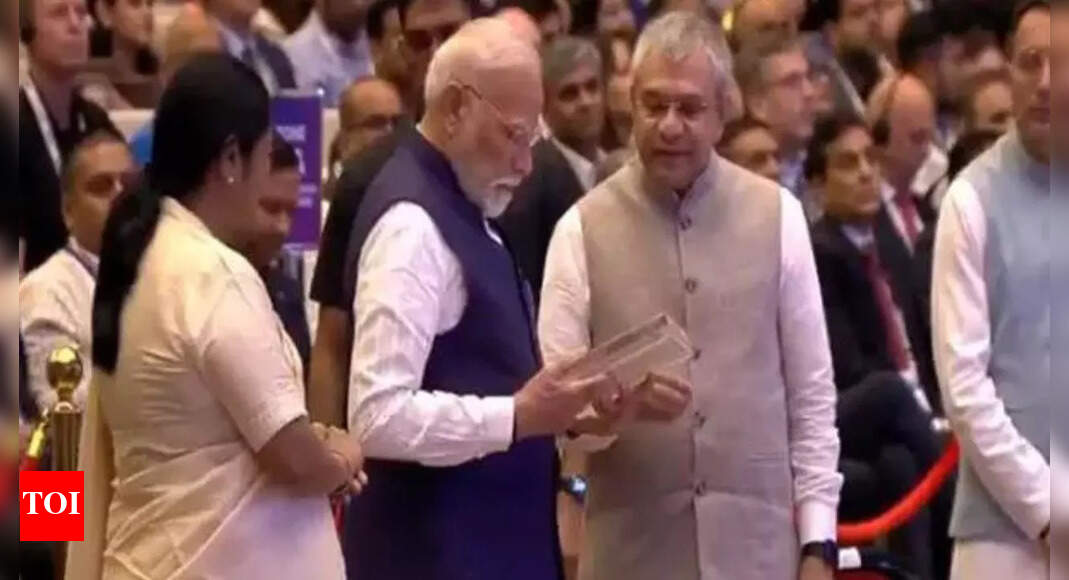
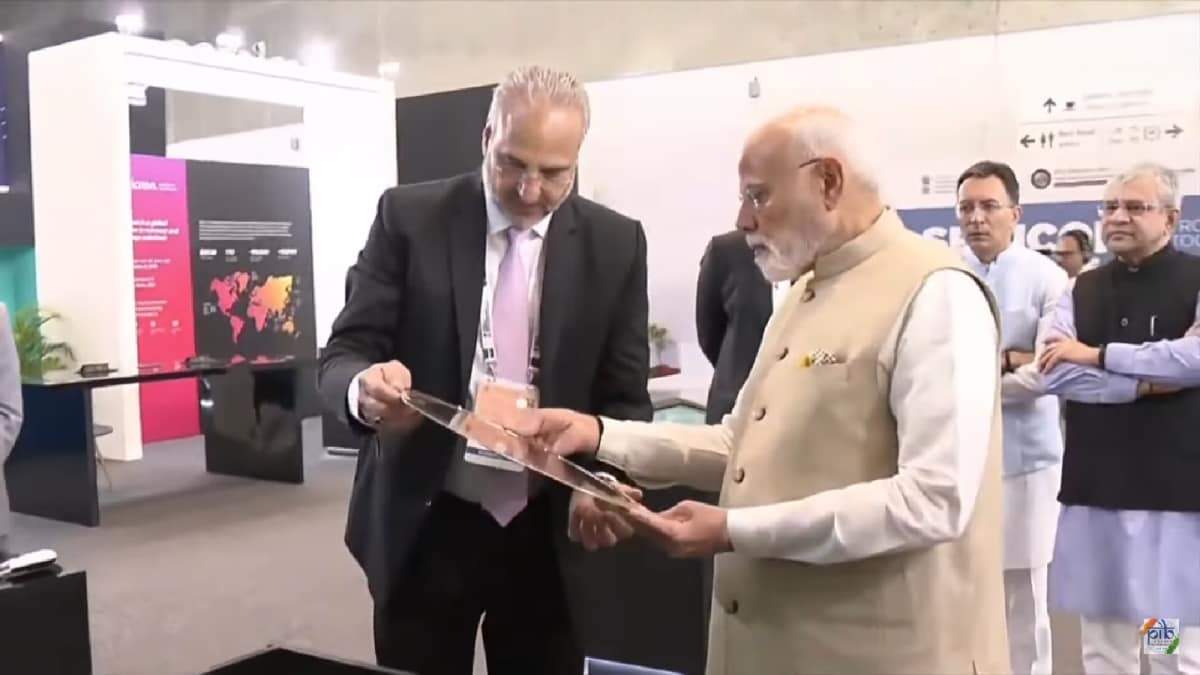
Prime Minister Narendra Modi on Tuesday received the country’s first made-in-India semiconductor chip at the inauguration of Semicon India 2025 in New Delhi. Union IT minister Ashwini Vaishnaw presented the Vikram 32-bit processor, developed by Isro’s Semiconductor Lab, along with test chips from four approved projects.
According to news agency ANI, Vaishnaw said the achievement reflects the country’s rapid progress under the India Semiconductor Mission launched in 2021. “Just a few years ago, we met for the first time to make a new beginning driven by our Prime Minister’s farsighted vision. In a short span of 3.5 years, we have the world looking at India with confidence. Today, the construction of five Semiconductor units is going on at a rapid pace…We just presented the first ‘Made-in-India’ chip to PM Modi,” he stated.Vaishnaw added that despite global policy turmoil, India has emerged as a “lighthouse of stability and growth.” The Vikram processor, fully indigenous, has been qualified for use in harsh launch vehicle conditions, ANI reported.The minister highlighted India’s semiconductor ecosystem push, including the Rs 76,000 crore Production Linked Incentive scheme, of which nearly Rs 65,000 crore has already been committed. He also referred to the Outsourced Semiconductor Assembly and Test (OSAT) Pilot Line Facility launched in Sanand, Gujarat, with CG-Semi expected to roll out chips soon.As per ANI, the government has sanctioned 23 design projects under the Design Linked Incentive scheme, while 10 semiconductor manufacturing projects worth over Rs 1.6 lakh crore have been approved across Gujarat, Assam, Uttar Pradesh, Punjab, Odisha, and Andhra Pradesh.Industry leaders also hailed India’s growing role. Tim Archer, CEO of Lam Research, said India is laying the foundation for a “resilient semiconductor ecosystem” as the global market moves toward the $1 trillion mark. Kai Beckmann of Merck projected India’s local semiconductor market would reach $100 billion by 2030, while AMD CTO Mark Papermaster highlighted the company’s $400 million India investment plan announced at last year’s Semicon event.Beckmann stressed collaboration, calling semiconductors a “team sport,” while Papermaster praised India’s “extraordinary talent base” and government backing.The three-day Semicon India 2025 aims to position India as a global hub for chip design, manufacturing, and innovation, focusing on building a robust and sustainable ecosystem, ANI reported.

Business
EU–Mercosur trade pact: Parliament sends deal to EU court, farmers celebrate while exporters flag risks – The Times of India

The European Parliament has voted to refer the recently signed EU-Mercosur free trade agreement to the bloc’s top court, pushing the long-negotiated pact into legal uncertainty just days after it was sealed, according to an AFP report.Lawmakers in Strasbourg voted 334 to 324 in favour of asking the Court of Justice of the European Union (CJEU) to examine whether the agreement complies with EU rules. The move follows the signing of the deal on Saturday with Brazil, Argentina, Uruguay and Paraguay, aimed at creating one of the world’s largest free trade areas.
The decision was greeted with celebration by farming groups, particularly from France, which has led opposition to the pact over concerns about agricultural imports. Hundreds of farmers gathered with tractors outside the European Parliament ahead of the vote and cheered as the result was announced.“We’ve been on this for months and months, for years,” Quentin Le Guillous, head of a French young farmers’ group, told AFP. “Tonight, I’m going home, I’m going to kiss everyone, and I’m going to tell my kids, ‘I got it, we got it, we can be proud.’”The court referral deals a setback to the European Commission, which negotiated and champions the agreement. Commission President Ursula von der Leyen had earlier described the pact as a “historic deal,” especially at a time when countries are seeking new trade partners amid tariff threats from the US administration.The Commission said it “regrets” the parliament’s decision. Trade spokesman Olof Gill said the questions raised by lawmakers were “not justified,” arguing that the Commission had already addressed concerns in detail.At the heart of the legal challenge is whether the agreement can be partially applied before full ratification by all EU member states, and whether it improperly limits EU powers on environmental and food-safety standards.The decision also drew criticism from industry. Hildegard Mueller, head of Germany’s auto industry group VDA, said the vote sent a “devastating sign” and risked alienating Mercosur partners at a time of heightened geopolitical uncertainty.Germany, Spain and Nordic countries back the deal, viewing it as a way to boost exports amid competition from China. German Chancellor Friedrich Merz said after the vote: “We are convinced of the legality of the agreement. No more delays. The agreement must now be provisionally applied.”However, France, Poland, Austria, Ireland and Hungary remain opposed, citing risks to domestic agriculture. French Foreign Minister Jean-Noel Barrot said, “The fight continues to protect our agriculture and guarantee our food sovereignty.”The EU-Mercosur deal would ease tariffs on more than 90 per cent of bilateral trade, favouring European exports such as cars, wine and cheese, while opening EU markets further to South American beef, poultry, sugar and soy.Together, the EU and Mercosur account for around 30 per cent of global GDP and more than 700 million consumers.
Business
Forget Budget Homes! Luxury Housing Sales Reach 4-Year High As Indians Opt For High-End Flats

Last Updated:
Luxury homes made up 27% of Indian residential sales in 2025, with high demand in Mumbai, Delhi-NCR, Bengaluru, and Hyderabad



The report noted that around 62,500 homes were sold during the October–December 2025 quarter
The residential real estate market is undergoing a decisive shift, with luxury housing emerging as the dominant growth driver and redefining buyer preferences across the country. Once led by demand for compact and affordable homes, the market has now firmly entered what industry observers describe as a “luxury era”, where larger homes, premium locations and lifestyle-driven amenities have become central to purchasing decisions.
The year 2025 has proved to be a watershed moment for this transformation. According to the India Market Monitor Q4 2025 report, luxury homes accounted for nearly 27% of total residential sales during the year, bringing the segment within striking distance of one-third of all housing transactions. For the first time, sales of premium and luxury homes outpaced those in the mid-income and affordable categories.
The scale of the shift is striking. In 2022, premium and luxury homes made up just about 12% of total residential sales. In a span of four years, that share has more than doubled, signalling a rapid change in the aspirations and spending power of Indian homebuyers.
Industry experts attribute this surge to a combination of economic and demographic factors. Sustained salary growth in the corporate sector, the expansion of the startup ecosystem, rising entrepreneurial incomes and strong participation from non-resident Indian (NRI) investors have significantly boosted purchasing capacity at the top end of the market.
“Today’s crore-plus homebuyers are looking well beyond basic shelter,” said Yash Miglani, Managing Director of Migson Group, “They want larger homes in prime locations, global-standard amenities and a sense of exclusivity. Features such as clubhouses, swimming pools, landscaped green spaces, smart home technology and sustainable design are no longer add-ons, they are expectations.”
Developers, too, are recalibrating their strategies in response. Many are increasingly prioritising high-end and super luxury projects, particularly in markets where demand has shown resilience even during periods of economic uncertainty.
The definition of luxury, however, continues to vary across cities. In Mumbai and the Delhi-NCR region, homes priced between Rs 1.5 crore-Rs 3 crore are typically classified as premium. In Bengaluru and Hyderabad, the range is narrower, between Rs 1.5 crore-Rs 2.5 crore. At the same time, cities such as Pune, Chennai and Kolkata are witnessing rising demand for homes priced above Rs 1.25 crore, underscoring that luxury housing is no longer confined to a handful of metros.
Harvinder, Chairman of Sikka Group, said strong demand in NCR, Mumbai and Bengaluru reflects the underlying strength of the housing market. “Infrastructure upgrades, improved connectivity and sustained corporate expansion have pushed high-end residential projects to a new level,” he said, adding that the premium and luxury segment is likely to maintain steady growth over the next five to seven years.
The momentum is even more pronounced at the very top of the market. The super luxury segment recorded a sharp rise in 2025, with demand increasing by nearly 70% over the year. Growth during the October–December quarter alone exceeded 60 per cent, pointing to heightened interest from ultra-high-net-worth individuals, who increasingly view real estate as a stable and secure asset class.
“Buyer attitudes have changed fundamentally,” said Amit Modi, Director of County Group, “There is a clear preference for larger, better-planned homes with superior amenities, especially in metro and tier-1 cities. Real estate is no longer seen merely as a necessity, it has become a status symbol and a long-term investment.”
The report noted that around 62,500 homes were sold during the October–December 2025 quarter, while approximately 60,000 new units were launched in the same period. Mumbai, Pune, Delhi-NCR and Hyderabad accounted for the bulk of the transactions, indicating a healthy equilibrium between demand and supply.
For developers, the shift marks a critical inflection point. Success today depends on far more than pricing, said Kushagra Ansal, Director of Ansal Housing, adding, “Design excellence, location, sustainability and reliability of delivery are now decisive factors. The growing appetite for luxury and super luxury homes shows that the market has matured and become quality-driven.”
 Click here to add News18 as your preferred news source on Google.
January 21, 2026, 18:44 IST
Read More
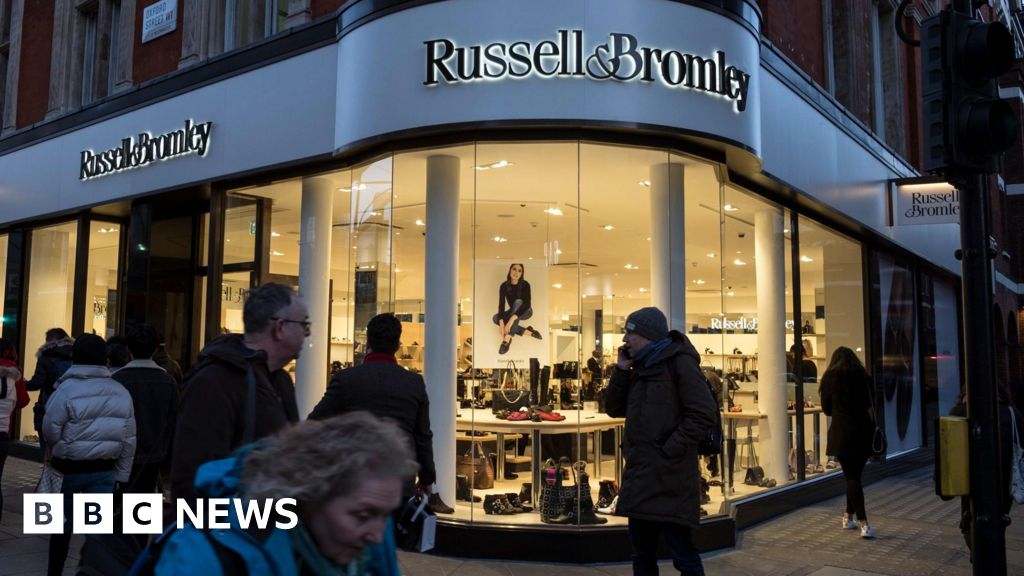
High street fashion giant Next has bought shoe retailer Russell & Bromley which had collapsed in to administration.
Next paid £2.5m in a rescue deal for the upmarket British footwear and accessories seller — but the future for most of the chain’s current staff and shops remains uncertain
Next will own the brand and three of Russell & Bromley’s 36 stores, as well as some existing stock for which it is paying an additional £1.3m.
Administrators Interpath said it was considering the future of the remaining stores, which for the moment remain open, as well as nine concession stores which all employ around 400 people.
Russell & Bromley’s chief executive Andrew Bromley said it was a “difficult decision” but the sale of the brand was the best way to secure its future.
The company is around 150 years old but has become the latest to struggle in a tough retail environment.
It joins other brands in a familiar path to largely disappearing off the high street via a process of administration, which means companies are often broken up and the highest value assets sold off to the highest bidder.
The Original Factory Shop and accessories retailer Claire’s are both currently going through a process of administration, with site closures and jobs at risk. Around 1,000 people lost their jobs after Bodycare collapsed in September, while River Island will close some stores to avoid a total collapse. The woes all come after a tranche of high profile closures such as Debenhams and Wilko.
In a statement, Next said it secured “the future of a much loved British footwear brand.”
“Next intends to build on this legacy and provide the operational stability and expertise to support Russell & Bromley’s next chapter, allowing it to return to its core mission: the design and curation of world-class, premium footwear and accessories for many years to come.”
The three stores Next will acquire are in high-end shopping destinations in or around London: Chelsea, Mayfair and Kent.
Next has seen relatively solid performance in the current turbulent retail landscape – unlike Russell & Bromley which has been loss-making in recent years.
Its saviour has experience in failing circumstances: last year, Next bought out of administration fashion maternity label Seraphine, and began rolling out its FatFace concessions a few years after snapping it up.

EU–Mercosur trade pact: Parliament sends deal to EU court, farmers celebrate while exporters flag risks – The Times of India

Journalists in IIOJK asked by police to sign pledge vowing to keep peace

Philippines announces ‘flexible financing’ for garment manufacturers

-

 Tech1 week ago
New Proposed Legislation Would Let Self-Driving Cars Operate in New York State
-

 Entertainment1 week ago
X (formerly Twitter) recovers after brief global outage affects thousands
-

 Sports6 days ago
Pak-Australia T20 series tickets sale to begin tomorrow – SUCH TV
-

 Politics4 days ago
Saudi King Salman leaves hospital after medical tests
-
 Business5 days ago
Trump’s proposed ban on buying single-family homes introduces uncertainty for family offices
-

 Tech6 days ago
Meta’s Layoffs Leave Supernatural Fitness Users in Mourning
-

 Fashion4 days ago
Bangladesh, Nepal agree to fast-track proposed PTA
-

 Tech7 days ago
Two Thinking Machines Lab Cofounders Are Leaving to Rejoin OpenAI