

Politics
Shark mauls boy in Sydney Harbour

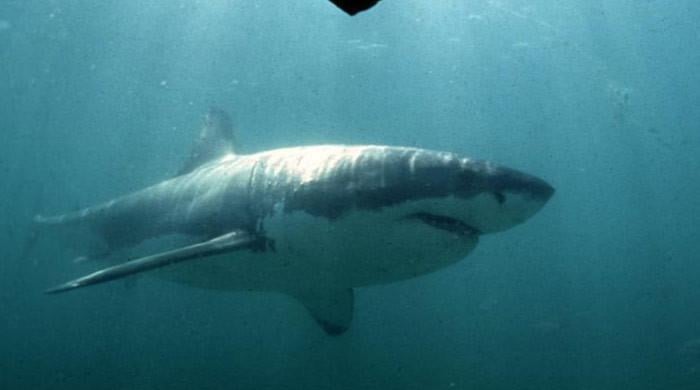
A shark mauled a boy swimming in Sydney Harbour on Sunday, leaving him in a critical condition with serious leg injuries, authorities said.
The predator bit the boy, believed to be about 13 years old, during the late afternoon off Shark Beach, New South Wales state police said.
“The injuries are consistent with what is believed to have been a large shark,” police said in a statement.
Officers pulled the boy from the water off the harbour beach within minutes of being alerted to the incident, police said.
They gave the boy first aid for “serious” leg injuries while he was aboard a police boat, applying two medical tourniquets.
Paramedics transported him to Sydney Children´s Hospital, where he was said to be in a critical condition.
“Swimmers are advised to avoid entering nearby waters at this time,” police said.
Shark Beach, in Sydney´s eastern suburb of Vaucluse, was closed and police evacuated nearby beaches in the harbour, the state government said.
Wildlife experts were working to identify the shark species involved, it said in a statement.
“This is a tragic shark attack on a young boy having a swim on a Sunday afternoon near a harbour beach in Sydney´s east,” New South Wales Agriculture Minister Tara Moriarty said.
“Our thoughts are with the young boy and his family. I understand there were also other young people with him at the time of the attack, our thoughts are also with them.”
There have been more than 1,280 shark incidents around Australia since 1791, of which more than 250 resulted in death, according to a database of the predators´ encounters with humans.
Increasingly crowded waters and rising ocean temperatures that appear to be swaying sharks´ migratory patterns may be contributing to a rise in attacks despite overfishing depleting some species, scientists say.
A great white shark mauled surfer Mercury Psillakis to death at a popular northern Sydney ocean beach in September.
Two months later, a bull shark killed a woman swimming off a remote beach north of Sydney.


- Sukhoi Su-30MKI fighter jet crashes during training.
- Jet went missing after taking off from Jorhat airbase.
- Dead pilots identified as Sq Ldr Anuj, Flight Lieutenant Duragkar.
Two pilots from the Indian Air Force (IAF) were killed after a Sukhoi Su-30MKI fighter jet crashed in India’s northeastern state of Assam, NDTV reported, citing officials.
The Indian Air Force said on Friday that a fighter jet, which was on a training mission, crashed in the northeast Indian state of Assam.
“The Su-30MKI, which was on a training mission, crashed in the area of Karbi Anglong, Assam, approx 60 km from Jorhat,” the Indian Air Force said on X.
The aircraft had gone missing shortly after taking off from the Jorhat airbase. Communication with the Russian-origin fighter jet was lost at 7:42pm, according to officials.
The crash occurred in Assam’s Karbi Anglong district, around 60 kilometres from the airbase. The aircraft reportedly went down in a remote hilly area.
The IAF identified the deceased pilots as Squadron Leader Anuj and Flight Lieutenant Purvesh Duragkar.
“All personnel of the IAF express sincere condolences, and stand firmly with the bereaved family in this time of grief,” the Air Force said in a post on X.
Local residents in the area said they heard a loud explosion from a nearby hill and saw a ball of fire shortly afterwards.
India’s Defence Minister Rajnath Singh said he was “deeply saddened” by the loss of the two pilots in the “tragic” crash.
The Sukhoi Su-30MKI is a two-seater, long-range fighter aircraft developed by Russian manufacturer Sukhoi. It is produced under licence in India by state-run Hindustan Aeronautics Limited (HAL) for the IAF.
The aircraft was first inducted into the Indian Air Force in 1997, and the service currently operates a fleet of more than 260 Su-30MKI jets.
Similar incidents have occurred in recent years. A Sukhoi fighter jet crashed in Nashik, Maharashtra, in June 2024, while another Su-30 aircraft crashed in January 2023 shortly after taking off from the Gwalior airbase in Madhya Pradesh.

- Hegseth acknowledges US military was investigating incident.
- Press Secy Leavitt says Iran continues to targets civilians, children.
- Rubio says US would not deliberately target a school.
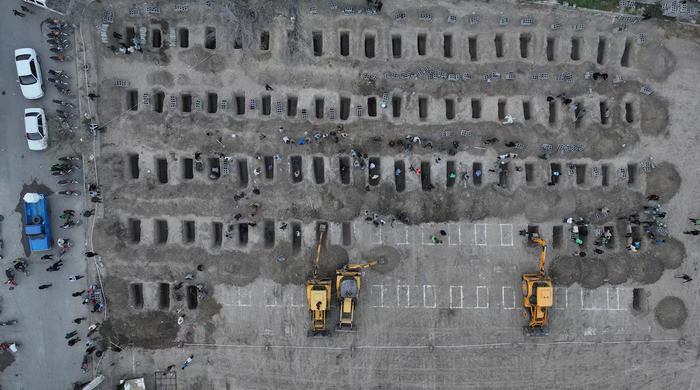
US military investigators believe it is likely that US forces were responsible for an apparent strike on an Iranian girls’ school that killed scores of children on Saturday but have not yet reached a final conclusion or completed their investigation, two US officials told Reuters.
Reuters was unable to determine more details about the investigation, including what evidence contributed to the tentative assessment, what type of munition was used, who was responsible or why the US might have struck the school.
US Defence Secretary Pete Hegseth on Wednesday acknowledged the US military was investigating the incident.
The officials, who spoke on condition of anonymity to discuss sensitive military matters, did not rule out the possibility that new evidence could emerge that absolves the US of responsibility and points to another responsible party in the incident.
Reuters could not determine how much longer the investigation would last or what evidence US investigators are seeking before the assessment can be completed.
The White House did not directly comment on the investigation, but press secretary Karoline Leavitt said in a statement to Reuters, “While the Department of War is currently investigating this matter, the Iranian regime targets civilians and children, not the United States of America.”
Asked about the incident during a news briefing on Wednesday, Hegseth said: “We’re investigating that. We, of course, never target civilian targets. But we’re taking a look and investigating that.”
US Secretary of State Marco Rubio told reporters on Monday that the United States would not deliberately target a school.
“The Department of War would be investigating that if that was our strike, and I would refer your question to them,” Rubio said.
Israeli and US forces have until now divided their attacks in Iran both geographically and by target type, a senior Israeli official and a source with direct knowledge of the joint planning said. While Israel was striking missile launch sites in western Iran, the United States was attacking such targets, as well as naval ones, in the south.
The UN human rights office, without saying who it believed was responsible for the strike on the school, called on Tuesday for an investigation.
“The onus is on the forces that carried out the attack to investigate it,” UN human rights office spokesperson Ravina Shamdasani told a press briefing in Geneva.
Images of the girls’ funeral on Tuesday were shown on Iranian state television. Their small coffins were draped with Iranian flags and passed from a truck across a large crowd towards the grave site.
Deliberately attacking a school, hospital, or any other civilian structure would likely be a war crime under international humanitarian law.
If a US role were to be confirmed, the strike would rank among the worst cases of civilian casualties in decades of U.S. conflicts in the Middle East.
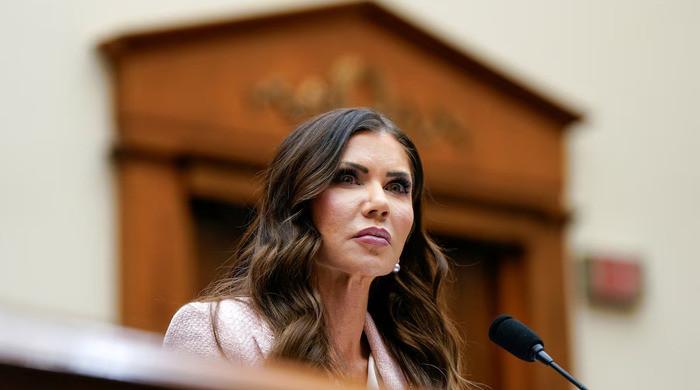
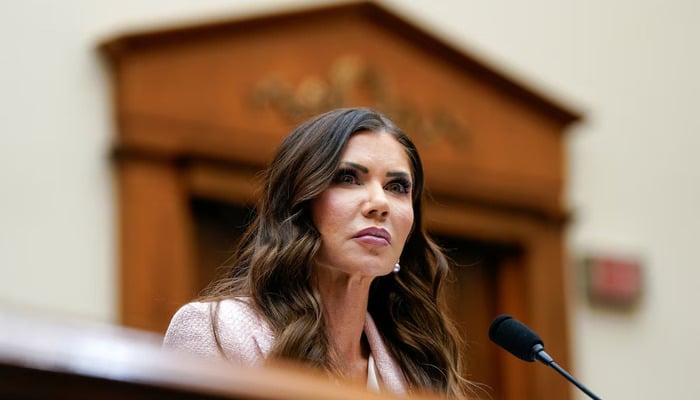
US President Donald Trump fired Homeland Security Secretary Kristi Noem on Thursday after months of controversy, including the fatal shootings of the US citizens by federal officers in Minneapolis and lawmakers’ questions over a $220 million advertising contract.
The Republican president will tap Oklahoma Senator Markwayne Mullin to replace her by the end of the month, he said on his Truth Social platform on Thursday. The appointment would require US Senate confirmation.
Noem, a former governor of South Dakota, became one of Trump’s most high-profile Cabinet secretaries with social media posts that portrayed immigrants in harsh terms, highlighted alleged criminal offences and used vitriolic language.
Her departure, after emerging as the face of an aggressive immigration crackdown that had grown unpopular according to recent polling, could allow Trump to reset his approach on immigration policy, a centrepiece of his agenda.
Shortly after Trump announced Noem’s replacement, she posted on X: “We have made historic accomplishments at the Department of Homeland Security to make America safe again.”
During congressional hearings this week, Democrats and some Republicans criticized Noem for her approach to immigration enforcement and management of her department, including concern over a $220 million advertising campaign that featured Noem heavily and had been awarded to two longtime Republican operatives without a standard bidding process.
Noem’s personal life also came under scrutiny, with a Democratic lawmaker on Wednesday asking whether she had a sexual relationship with top aide Corey Lewandowski. Both are married.
Noem called the question from US Representative Sydney Kamlager-Dove “tabloid garbage.” Lewandowski did not respond to a Reuters request for comment.
Trump told Reuters on Thursday that he did not sign off on the ad campaign, which prominently featured Noem and included a scene of her on horseback at Mount Rushmore, in her home state of South Dakota.
In one congressional hearing this week, Noem told Republican US Senator John Kennedy that Trump had approved the ad campaign.
First Senate-confirmed cabinet member fired in Trump 2.0
Noem is the first Senate-confirmed member of Trump’s Cabinet to be removed this term. In Trump’s 2017-2021 term in office, 14 confirmed Cabinet appointees, who serve in the line of succession to the presidency, quit or were fired.
Noem faced criticism in January when she quickly accused two US citizens fatally shot by federal immigration agents in Minneapolis of “domestic terrorism.” Videos that emerged after the deaths undercut the assertion by Noem and other Trump officials that the two deceased – Renee Good and Alex Pretti – were violent aggressors.
The public backlash over the deaths led the Trump administration to adopt a more targeted approach on immigration enforcement in Minnesota, after months of sweeps through US cities that sparked violent clashes between federal agents and residents who opposed the crackdown.
Two Trump administration officials, speaking on the condition of anonymity to discuss a personnel matter, said the fallout over the fatal shootings, the $220 million contract, the mismanagement of DHS and the allegations of the affair all contributed to her firing.
Democrats in the US House of Representatives moved to impeach Noem, and at least two Republicans in Congress called for her to lose her job after the shootings in Minnesota.
Trump said on Truth Social that Noem would be appointed envoy to a planned summit in Miami to reinforce his Western Hemisphere policies.
Within minutes of Trump’s post about her replacement, Noem spoke at a law enforcement event in Tennessee for 40 minutes but did not mention her departure.
Noem was aware she would be removed before she spoke at the event, one of the officials and another person familiar with the matter said, both of whom spoke on the condition of anonymity.
They added that Lewandowski was also expected to leave the department. DHS and the White House did not immediately comment when asked about Lewandowski’s future.
Strong embrace of Trump’s hardline immigration approach
Mullin, who spent a decade in the House of Representatives before becoming a senator in 2023, also supports Trump’s hardline immigration agenda.
Speaking to reporters on Thursday, Mullin said he had not been expecting the call from Trump. He described Noem as a friend and said he had not had a chance to call her yet.
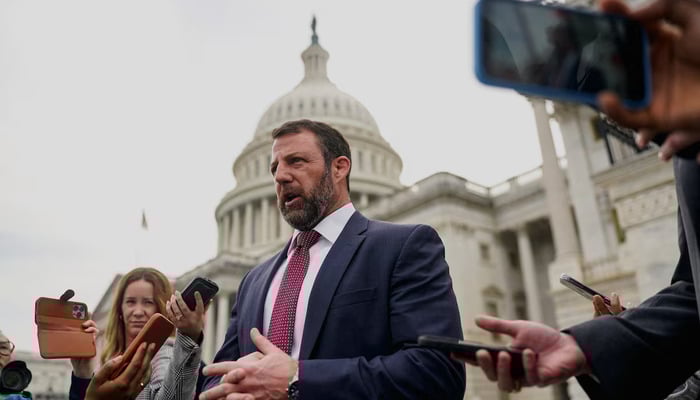
“She was tasked to do a very difficult job,” Mullin told reporters.
Democrats in Congress have blocked funding for DHS since mid-February, saying federal immigration enforcement must be reformed.
Senate Democratic Leader Chuck Schumer said Noem’s firing would not be enough to break the stalemate.
“The problems at ICE transcend any one person,” he told reporters. “The president has to end the violence and rein in ICE.”
Trump’s immigration approach lost popularity as agents detained US citizens and tear-gassed streets in an attempt to drive up deportations, which last year fell short of the administration’s goal of 1 million per year.
While Noem, 54, served as a prominent proponent of Trump’s agenda, White House Deputy Chief of Staff Stephen Miller, a longtime Trump aide, controls Trump’s immigration policy.
Noem was quickly confirmed to lead the 260,000-employee department in January 2025 after Trump took office. On social media, she referred to immigrants convicted of crimes as “scumbags” even as the number of non-criminals arrested by immigration authorities rose under Trump.
She joined immigration enforcement operations on the ground in New York City and visited a maximum-security prison in El Salvador where Venezuelan immigrants deported by the Trump administration were being held without charges or access to lawyers.


Two Indian pilots killed after IAF fighter jet crashes in Assam

Mexico’s apparel imports down 9% on weak consumer demand

PCB Demands Public Apology Over ‘Fake News’ Targeting National Cricketers – SUCH TV

-

 Politics1 week ago
What are Iran’s ballistic missile capabilities?
-
 Business1 week ago
India Us Trade Deal: Fresh look at India-US trade deal? May be ‘rebalanced’ if circumstances change, says Piyush Goyal – The Times of India
-
 Business1 week ago
Attock Cement’s acquisition approved | The Express Tribune
-

 Fashion1 week ago
Policy easing drives Argentina’s garment import surge in 2025
-

 Politics1 week ago
US arrests ex-Air Force pilot for ‘training’ Chinese military
-
 Business7 days ago
Greggs to reveal trading amid pressure from cost of living and weight loss drugs
-

 Sports7 days ago
LPGA legend shares her feelings about US women’s Olympic wins: ‘Gets me really emotional’
-

 Fashion1 week ago
Texwin Spinning showcasing premium cotton yarn range at VIATT 2026