

Business
Silver Prices Sink Sharply To Rs 2.25 Lakh/Kg On MCX, Log Biggest One-Day Fall In 4 Years; Know Why

Last Updated:
Silver is the big mover in trade overnight. Prices have finally stabilised after slumping 8.7% in the biggest one-day fall since August 2020
Silver Prices Fall
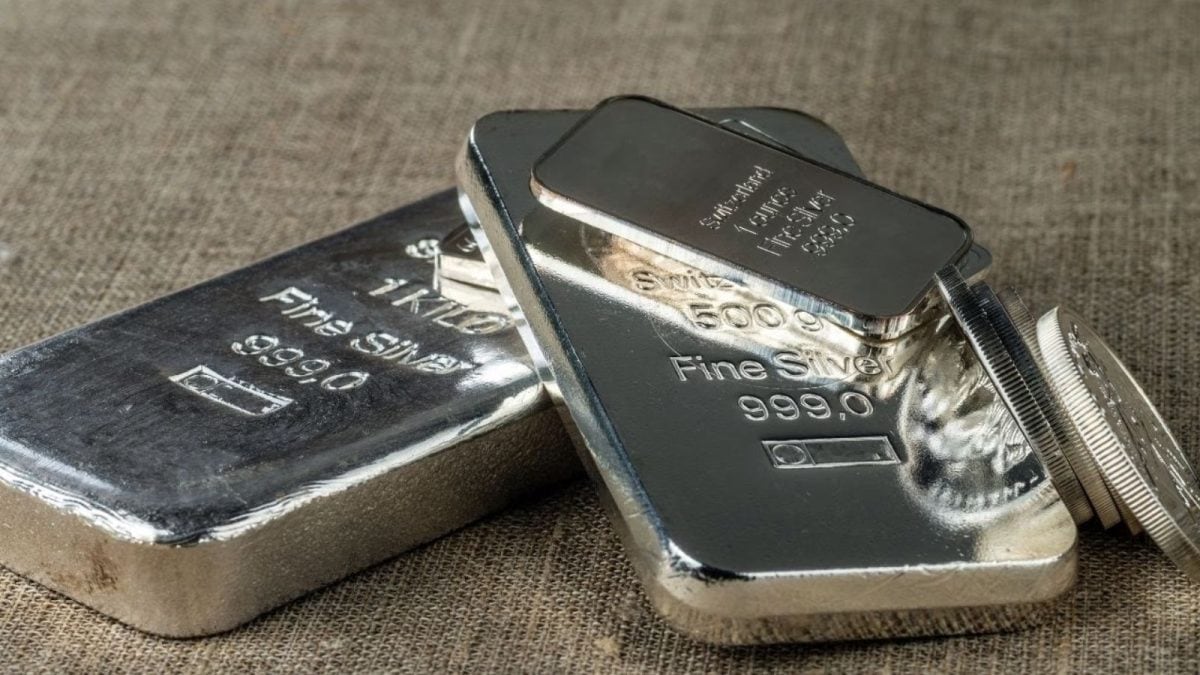
Silver Prices Crash: Silver is the big mover in trade overnight. Prices have finally stabilised after slumping 8.7% in the biggest one-day fall since August 2020. In fact, the year-end is proving to be highly volatile for silver. On MCX too, silver prices plunged to the Rs 2.25 lakh/kg level from a high of Rs 2.54 lakh/kg.
Most analysts believe that this correction in prices may have helped bring down some of the speculative trade in silver.
Let us look at the price rates of silver in different cities of India
Prices in India correct in sync with global trend
MCX silver prices generally follow global silver prices, moving in line with COMEX trends and currency changes.
Currently, silver prices in India are down 0.04%, with one kg trading at Rs 2,33,480/kg, while the price of 10 gram silver today is Rs 2,334.80.
For city-wise rates, the white metal is trading at Rs 233.76 per gram in Mumbai, followed by Delhi, where the silver rate is Rs 223.21 per gram, which is Rs 10.27 lower than the silver rate in Mumbai.
The silver rate in Chennai is Rs 224.25 per gram, while the silver rate in Hyderabad is Rs 223.95 per gram. The silver rate in Ahmedabad is Rs 223.89 per gram.
These differences in city-wise prices mainly arise from local taxes, transportation costs and demand levels.
So what exactly is driving these prices? Let’s take a look at the key triggers for the sharp correction in silver prices:
1. Aggressive profit booking
Analysts added that aggressive profit booking by traders led to a crash in the prices of the white metal. Traders sold silver to lock in gains as prices had spiked. Further, trading volumes in the markets are relatively low because of the holiday season, which made silver rally higher than usual.
Commenting on the volatility, Jigar Trivedi, Senior Research Analyst at Reliance Securities, said, “Silver rose 2.6% to $73.9/oz, stabilizing after a steep drop in the previous session, as traders adjusted positions following aggressive profit-taking. The rebound follows a sharp retreat from record highs above $80 an ounce, with holiday-thinned liquidity amplifying recent price swings.”
2. CME raises margins
Margin costs raised by the CME Group compelled traders to reduce their market positions, triggering a sell-off. The exchange hiked margins for the March 2026 derivatives contract to $25,000 from $20,000 earlier.
This essentially means traders now have to pay more to keep their contracts. Often, margin hikes are used by exchanges as a risk-control tool to manage volatility.
“Stricter margin rules may keep price gains measured in the short term. MCX Silver March may appreciate to Rs 226,000/kg as the undertone is bullish in the international markets,” Trivedi added.
3. Easing geopolitical tensions
The meeting between US President Donald Trump and Ukrainian President Volodymyr Zelenskyy has eased geopolitical tensions between Russia and Ukraine, as both leaders said an end to the war is close. The Ukrainian president views the peace plans as 90% agreed following talks with Trump.
Easing geopolitical tensions ultimately reduce safe-haven demand for precious metals, thereby lowering demand.
Silver rally: Next target?
According to MOSL, silver price rally is rooted in real metal scarcity and is not just speculative.
It explained that beyond supply constraints, sustained industrial and investment demand has reinforced silver’s price strength. Its growing use in electronics, renewable energy and other technology-driven sectors has ensured steady industrial offtake, while investors have increasingly viewed silver as a strategic hedge amid macroeconomic uncertainty.
Navneet Damani and Manav Modi, Commodities Analyst at MOSL noted, “Silver’s 2025 rally is being shaped by real metal scarcity rather than speculative positioning. Physical deficits, policy-driven supply restrictions, and concentrated inventories are increasingly dictating prices, signalling a durable shift in how the silver market is priced and traded.”
From an investment perspective, MOSL said it continues to maintain a buy-on-dips approach with a staggered investment strategy. While its initial target of $75 on COMEX has already been achieved, the brokerage reiterated its next target of $77 on COMEX, equivalent to around Rs 2,46,000 in the domestic market. Any further revisions to this outlook, the report noted, will depend on how supply dynamics, inventory trends and policy developments evolve over time.
 Click here to add News18 as your preferred news source on Google.
December 30, 2025, 10:52 IST
Read More







Visa Inc. signage on the floor of the New York Stock Exchange (NYSE) in New York, US, on Wednesday, Jan. 28, 2026.
Michael Nagle | Bloomberg | Getty Images
Visa is launching six new tools using artificial intelligence to modernize the process of disputing credit card charges, the company told CNBC exclusively.
The digital payments company said the tools are designed to reduce the costs and frustration of “outdated” dispute processes for multiple entities involved in the payments process: merchants, issuers and acquirers.
“Some of the challenges are these back-office systems are still largely manual,” Andrew Torre, Visa’s president of value-added services, told CNBC. “We really had to think differently about how we approach this at scale.”
In 2025, Torre said, Visa processed more than 103 million charge disputes globally, marking a 35% increase since 2019.
“Our goal is to streamline this as much as possible,” Torre said. “We’d love to be able to see that growth rate come down.”
Visa’s new tools are part of a larger push by major banks and financial institutions to incorporate AI into their businesses — both internally and in consumer-facing applications. JPMorgan Chase and Goldman Sachs have both said they’re already using AI to hire fewer people. BNY spent $3.8 billion on technology in 2025, or about 19% of its revenue.
Visa said three of its six new tools focus on merchants, allowing them to address potential disputes before they escalate, managing disputes with generative AI responses and providing a deeper level of detail on order insights to manage confusion over unfamiliar charges.
For example, Torre said, many disputes are borne out of cardholders not recognizing a specific charge on their statements. With the new tool, Visa will be able to provide further details to financial institutions to show cardholders that data at a deeper level, according to the company.
The other three tools are built for issuers and acquirers, using predictive AI models to aid in case-by-case analysis, analyzing documents for summaries and auto fill and establishing an AI-powered dispute platform to manage the entire process in one location, Visa said.
“We’ll be able to get them insights and data so they can move from being reactive to proactive,” Torre said.
Torre said Visa’s new AI tools are part of a broader host of solutions for consumers, including a subscription manager announced last week that allows cardholders to cancel unnecessary subscriptions directly on the manager.
The automation will save time, money and unnecessary confusion for both parties, he added. Most of the tools will be generally available later this year, the company said.
“We really believe that disputes in this solution makes it much easier to manage and resolve,” Torre said. “We think it has better outcomes for everyone.”
Business
Stock market today (April 1, 2026): Which are the top gainers and losers in Nifty50 and BSE Sensex today? Check list – The Times of India

Benchmark equity indices Sensex and Nifty ended nearly 2 per cent higher on Wednesday, starting the new financial year on a firm footing as global markets rallied on hopes of a potential de-escalation in the ongoing West Asia conflict.The 30-share BSE Sensex jumped 1,186.77 points or 1.65 per cent to settle at 73,134.32. During intra-day trade, it surged 2,017.03 points or 2.80 per cent to 73,964.58.The broader NSE Nifty rose 348 points or 1.56 per cent to close at 22,679.40. A decline in crude oil prices also supported investor sentiment.
Nifty50 top gainers
- Trent (+7.00%)
- InterGlobe Aviation (+6.02%)
- Kwality Wall’s (+5.79%)
- Adani Ports SEZ (+5.55%)
- BEL (+4.51%)
- SBI (+3.93%)
- Eicher Motors (+3.64%)
- Jio Financial Services (+3.50%)
- Eternal (+3.30%)
Nifty50 top losers
- Dr Reddy’s (-3.61%)
- HDFC Life (-2.99%)
- Cipla (-2.32%)
- Sun Pharma (-1.64%)
- NTPC (-1.62%)
- Apollo Hospitals (-1.53%)
- Power Grid (-1.12%)
- Max Healthcare (-0.36%)
- UltraTech Cement (-0.29%)
Sensex top gainers
- Trent (+7.00%)
- InterGlobe Aviation (+6.02%)
- Adani Ports SEZ (+5.55%)
- BEL (+4.51%)
- SBI (+3.93%)
- Eternal (+3.30%)
- L&T (+2.96%)
- Titan Company (+2.89%)
Sensex top losers
- Sun Pharma (-1.64%)
- NTPC (-1.62%)
- Power Grid (-1.12%)
- UltraTech Cement (-0.29%)
- Bharti Airtel (-0.03%)
“Indian equity markets opened the new financial year on a positive note, with stocks soaring on fresh optimism surrounding a potential de-escalation of the Middle East conflict and easing of energy supply disruptions,” said Ponmudi R, CEO of Enrich Money.He added that US President Donald Trump’s remarks suggesting the US could withdraw from Iran “whether we have a deal or not” within the next two to three weeks provided the trigger for a broad rally in global risk assets.“Indian equity markets opened FY27 on a strong note, driven by improving risk appetite following US President Donald Trump’s remarks hinting at a potential resolution to the West Asia conflict,” said Vinod Nair, Head of Research at Geojit Investments Limited.In the US, markets ended significantly higher on Tuesday, with the Nasdaq Composite surging 3.83 per cent, the S&P 500 rising 2.91 per cent and the Dow Jones Industrial Average gaining 2.49 per cent.Brent crude, the global oil benchmark, declined 0.22 per cent to USD 103.7 per barrel.Stock markets were closed on Tuesday on account of Shri Mahavir Jayanti.Foreign Institutional Investors (FIIs) offloaded equities worth Rs 11,163.06 crore on Monday, while Domestic Institutional Investors (DIIs) bought shares worth Rs 14,894.72 crore, according to exchange data.
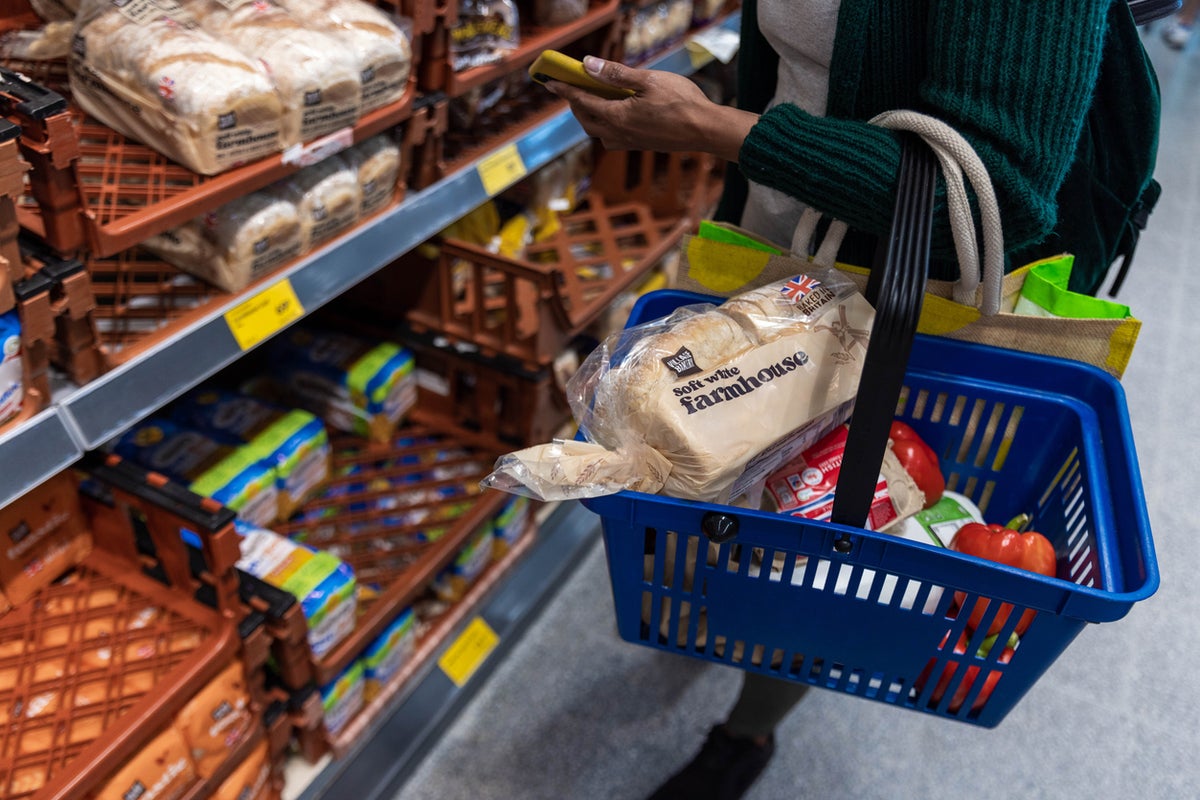
Food bills are set to soar as much as 10 per cent this year as a direct consequence of the Iran war, a key industry body has warned.
The Food and Drink Federation (FDF), which represents 12,000 food and drink manufacturers, has hiked its inflation forecast for the year from 3.2 per cent to between nine and 10 per cent.
During the 2022 cost of living crisis, food inflation rose at a rate of 10.9 per cent, figures from the Food and Drink Federation (FDF) show, while the following year was even worse at 14.6 per cent.
Since then, it had dropped back to 2.7 per cent (2024) and 4.2 per cent (2025), but while this year had originally been forecast to deliver food inflation of 3.2 per cent, the latest assessment is that it will instead see a huge rise in the second half of 2026.
The FDF said the current situation is “unprecedented and hard to predict”, but it’s “clear that food inflation is going to rise in the months ahead”.
How much that adds to the average bill depends on the size and frequency of a consumer’s usual grocery habits, but on average, bills could rise by around £588, according to some estimates.
Consumer rights and review site Which? frequently assesses UK supermarkets for cost, and at the start of 2026, an average basket of 89 shopping products cost £161.56 at Aldi and up to £217.02 at Waitrose.
Assuming food inflation lands at the mid-point of the FDF forecast, 9.5 per cent, and that all products and supermarkets applied that uplift equally, that would move the costs of those shops up to £176.91 and £237.64 respectively.
Research from confused.com suggested the average UK household spent £119 each week on food shopping, which is £6,188 each year; a 9.5 per cent uplift to that equates to an extra £588 annually, or a total of just over £130 per week and £6,775 annually.
Chancellor Rachel Reeves is due to meet with some supermarket chiefs on Wednesday, including Sainsbury’s and Tesco, over discussions to assess the upcoming impact of price rises on the cost of living. The Treasury has described it as a “fact-finding” conversation.
Last month, Asda boss Allan Leighton called on Labour to do more to help businesses after creating “a lot of constraints” for them.
For food manufacturers, there is both a concern now and another yet to come in terms of energy cost rises.
Diesel – used in farm machinery – is up by 80 per cent since the start of the war, while fertiliser costs could increase further, as well as supply being constrained. The FDF also points to lost sales due to cancelled shipments to the Middle East, with UK firms regularly exporting cheese, cereals, chocolate and more to the region.
Dr Liliana Danila, chief economist at The Food and Drink Federation, said: “The food and drink sector is already feeling the force of this geopolitical shock. As one of the UK’s energy-intensive industries, manufacturers are facing mounting energy bills, rising transport and packaging costs and disruption across key supply chains.
“These pressures are hitting simultaneously and are a significant challenge for businesses to absorb.
“The current situation is unprecedented and hard to predict; however, given the scale and speed of these cost increases, and despite companies’ best efforts not to pass price increases on, it’s clear that food inflation is going to rise in the months ahead.”
The FDF says its upgraded inflation figures were based on “assumptions that the Strait of Hormuz opens to cargo traffic within the next two to three weeks”, as has been suggested by Donald Trump this week, and that most commodities, including oil, gas and fertiliser production, return to normal within a year.
In the past few months, the FDF has repeatedly called for the government to offer support to businesses in the sector from rising energy bills in the same way as it does to those in some other manufacturing areas.


EU clears $6.5 bn Italy renewable hydrogen support scheme

Apparel retailer Uniqlo signs landmark deal with Los Angeles Dodgers
Visa launches new AI tools to manage the charge dispute process

-

 Politics1 week ago
Afghanistan announces release of detained US citizen
-

 Tech1 week ago
Can a Home Appliance Fix the Problem of Soft-Plastic Waste?
-

 Sports1 week ago
Broadcast industry CEO says consolidation is ‘essential’ to compete for NFL soaring media rights prices
-

 Entertainment1 week ago
UN warns migratory freshwater fish numbers are spiralling
-
 Business1 week ago
Property Play: Home flippers see smallest profits since the Great Recession, real estate data firm says
-
 Business1 week ago
Gold prices soar in Pakistan – SUCH TV
-

 Fashion1 week ago
ICE cotton slips on weaker crude, profit booking
-
 Business1 week ago
More women are entering wealth management, but few are in advisory roles, study finds