

Entertainment
Simu Liu details inspiration behind ‘The Copenhagen Test’

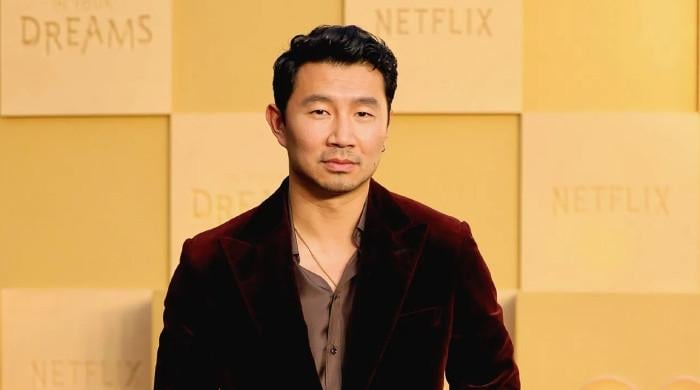
Simu Liu reflected on his latest spy project, The Copenhagen Test and what made him drawn towards it.
Liu plays a new-future intelligence agent, Alexander Hale, whose brain gets hacked allowing unknown forces to see and hear everything he does.
In a conversation with the Deadline, the Marvel star discussed his new sci-fi thriller series in detail.
“I think on the one hand, it was definitely the premise and the world building, just dealing with themes of surveillance and technology,” he began. “I feel like a lot of those things are really just topical and relevant today.”
He continued, “And so, I think there was that. I really appreciated Thomas’ take on this 5 minutes into the future, set in this world of intelligence. And just getting to play a super spy, I think is something that I’ve always wanted to do.”
Liu went on to talk about the relatability of the role saying, “And then on the other hand, it was the cultural specificity. I really was struck by Alexander’s backstory in the script and feeling like he was somebody who, in a fully three dimensional ways, kind of embodied what it was like for someone from an immigrant family to be in a situation or to work in a situation, an environment where they’re constantly being second-guessed, constantly being overlooked and underestimated.”
“I think, for myself, it’s something that a lot of people who grew up in those immigrant families, something that I think resonates a lot.” He said.
The Copenhagen Test was released on December 27.
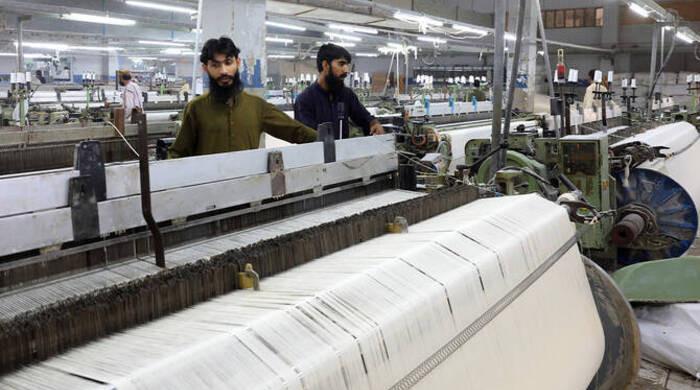
Pakistan’s growth failure is often explained away through familiar cliches: low productivity, weak exports, lack of innovation, or insufficient entrepreneurship. These are symptoms, not causes. The real problem lies deeper: in a state-engineered cost structure that has made doing business prohibitively expensive and structurally irrational.
A recent private sector analysis reported by Nikkei Asia has now quantified what businesses have been saying for years: operating a business in Pakistan is 34% more expensive than in comparable South Asian economies. That single statistic is not merely an indictment of policy; it is a post-mortem of Pakistan’s growth model.
According to the study conducted by the Pakistan Business Forum (PBF), the excess cost is not incidental or cyclical. It is structural, cumulative and policy-induced. Fuel taxes, electricity tariffs, interest rates, currency depreciation and an extraordinary effective tax burden together form a lethal cocktail that prices domestic industry out of both regional and global markets. This is not capitalism failing. It is the state failing the economy.
The PBF’s findings, based on industrial data up to December 2025, expose a simple but devastating reality. Pakistan’s firms operate under energy and fiscal costs that no competitor in the region is forced to bear.
Electricity tariffs average Rs34 per unit, while the regional average hovers around Rs17. Fuel is burdened with an additional petroleum levy of roughly Rs80 per litre, converting energy not into an input but into a fiscal extraction mechanism.
Interest rates remain at 12.5%, nearly double those in neighbouring economies where capital is treated as a facilitator of growth rather than a revenue source. Overlay this with a currency that collapsed from Rs110 per dollar in 2018 to around Rs280 by December 2025, and imported inputs — raw materials, machinery, intermediate goods — become prohibitively expensive. To call this a “challenging business environment” is a euphemism. It is an engineered disadvantage.
Most alarming is the effective tax burden, which the PBF estimates can reach up to 55% for companies, far above regional norms. This is not taxation in the classical sense of financing public goods. It is fiscal overreach that systematically cannibalises investible surplus.
One of the most revealing aspects of the Nikkei-reported data is not about firms but about people. Gallup Pakistan shows that salaried employment now accounts for 60.1% of the workforce, up from 53.4% in FY2010-11, while self-employment has declined from 24.4% to 21.8% over the same period.
This shift is often misread as modernisation. It is not. In Pakistan’s context, it reflects risk aversion induced by a hostile business climate. When the cost of compliance, energy, finance and taxation overwhelms potential returns, rational individuals choose employment over enterprise. This is a policy outcome.
A young business graduate in Islamabad, quoted by Nikkei, abandoned plans to open a restaurant after being “hounded by so many government departments”. His experience is systemic. The state’s licensing obsession, regulatory fragmentation and compliance fetish raise fixed costs to levels that extinguish small and medium enterprises before they are born.
The workforce distribution data over nearly three decades reveals a quiet but profound structural shift in Pakistan’s economy. In 1996-97, self-employment constituted around 28% of the workforce, alongside a significant share of contributing family and unpaid labour — categories that traditionally reflect small enterprise activity, family businesses and informal entrepreneurship. By 2010-11, self-employment had already declined to 24.4%, while salaried employment rose sharply.
The latest figures for 2024-25 complete this transformation: over 60% of the workforce is now salaried, while self-employment has fallen further to just 21.8% and unpaid family labour to about 14%. This is not a benign modernisation trend. In Pakistan’s context, it signals the systematic erosion of entrepreneurial space, where rising energy costs, punitive taxation, regulatory harassment and expensive credit have made independent business activity economically irrational.
Instead of producing a dynamic class of risk-taking entrepreneurs, Pakistan’s policy environment is steadily converting potential job creators into job seekers — an outcome fundamentally incompatible with sustained growth, export expansion and productivity-led development.
Bilal Ghani of Gallup Pakistan correctly identifies another structural distortion: Pakistan’s trade and industrial policies systematically restrict access to cheaper foreign inputs in the name of protecting domestic producers. This is import substitution without competitiveness, protection without productivity.
Instead of integrating Pakistani firms into global value chains, policy forces them to rely on costlier domestic inputs, raising production costs while delivering no gains in quality or scale. The result is a manufacturing sector that is simultaneously protected and uncompetitive — a contradiction that no economy can sustain.
Add to this Pakistan’s perception as a high-risk jurisdiction — due to terrorism, money-laundering concerns and geopolitical tensions — and firms face layers of due diligence, certification and compliance costs unknown to competitors in other developing economies. These non-tariff costs disproportionately punish exporters and technology firms, the very sectors Pakistan claims it wants to promote.
The impact on exports is both severe and predictable. Pakistan’s export performance has stagnated since 2021, with particularly damaging consequences for textiles, which still account for around 60% of total exports. Hundreds of medium-sized textile firms have shut down in recent years, as noted by PBF’s chief organiser Ahmed Jawad. This collapse is not the result of inefficiency alone. When electricity costs double those of competitors, when financing costs are punitive and when regional trade agreements — such as the EU-India arrangement — tilt the playing field further, survival itself becomes uncertain. Pakistan’s exporters are not losing markets because they are incompetent; they are being priced out by their own state.
At the root lies a deeper contradiction: the state has converted energy pricing and taxation into instruments of short-term fiscal stabilisation, ignoring their long-term growth consequences. Petroleum levies substitute for structural tax reform. Electricity tariffs plug budgetary holes created by inefficiencies elsewhere. High interest rates compensate for fiscal indiscipline. This is a survival strategy — and a deeply flawed one.
By extracting maximum revenue from a shrinking formal sector, the state accelerates informality, discourages investment and erodes the tax base it seeks to protect. The result is a vicious cycle: higher taxes to cover falling revenues, higher costs to sustain inefficient systems, and lower growth to justify further extraction.
In December last year, the PBF wrote to Prime Minister Shehbaz Sharif, urging regionally competitive electricity tariffs and more rational corporate taxation. These demands are prerequisites for survival.
Pakistan must unlearn three dangerous assumptions. First, that energy can be priced as a fiscal tool without destroying industry. Second, that businesses will continue to operate regardless of cost asymmetries. Third, that entrepreneurship can flourish under regulatory hostility and financial repression.
Growth does not occur in policy speeches or five-year plans. It emerges where the cost of risk is lower than the reward. Pakistan has inverted this equation.
The data reported by Nikkei Asia does not merely diagnose a problem; it forces a choice. Pakistan can continue to tax, tariff, and regulate its way into stagnation, or it can realign its fiscal, energy and regulatory architecture toward competitiveness.
High taxes and expensive energy are not neutral policy instruments. In Pakistan’s case, they have become anti-growth weapons, quietly dismantling entrepreneurship, hollowing out exports and converting a nation of potential producers into reluctant employees. Until this reality is acknowledged and corrected, no amount of rhetoric about investment, exports, or innovation will revive Pakistan’s growth model. The arithmetic is unforgiving, and the evidence is now incontrovertible.
The writer is an advocate of the Supreme Court and specialises in studying the global narco-arms economy and its linkages with terrorism.
Disclaimer: The viewpoints expressed in this piece are the writer’s own and don’t necessarily reflect Geo.tv’s editorial policy.
Originally published in The News
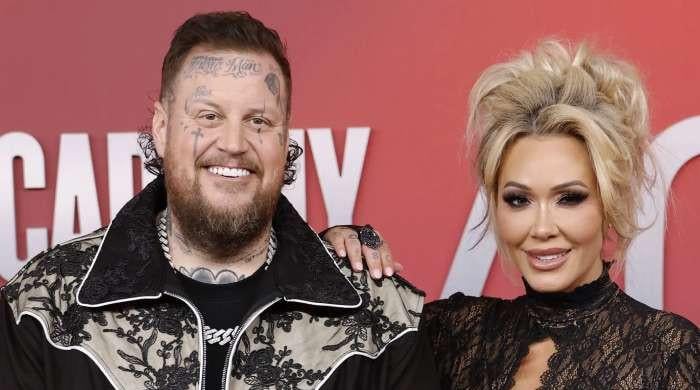
Bunnie Xo is opening up about the darkest chapter of her marriage to Jelly Roll.
In her new memoir, Stripped Down: Unfiltered and Unapologetic, the podcaster, 44, reveals she contemplated suicide in 2018 after discovering the country star, 41, was having an affair just two years after tying the knot — a betrayal that nearly ended both her marriage and her life.
After an explosive fight, Jelly Roll, born Jason Bradley DeFord, moved out of their Nashville home with his daughter, Bailee. Bunnie, whose real name is Alisa DeFord, grew increasingly suspicious.
Despite his denials, she later learned “he had his ex-fling waiting for him in a hotel down the street.” When a friend confirmed the affair, the weight of it all crushed her.
“That night I contemplated taking my life,” she revealed. “The pain was so intense that I genuinely just wanted to end it all.” She recalled staring at a bottle of pills and wondering, “Would J even care if I was dead?” Ultimately, she stopped herself.
The road back wasn’t easy. “I’m not going to pretend that we just went back to normal. We absolutely did not,” she admitted, adding, “It would take years to actually feel like this man loved me — that I wasn’t disposable.”
Last year, the couple marked nine years of marriage.
Entertainment
Stephen Colbert slams CBS, says lawyers told him James Talarico interview could not air on “The Late Show”
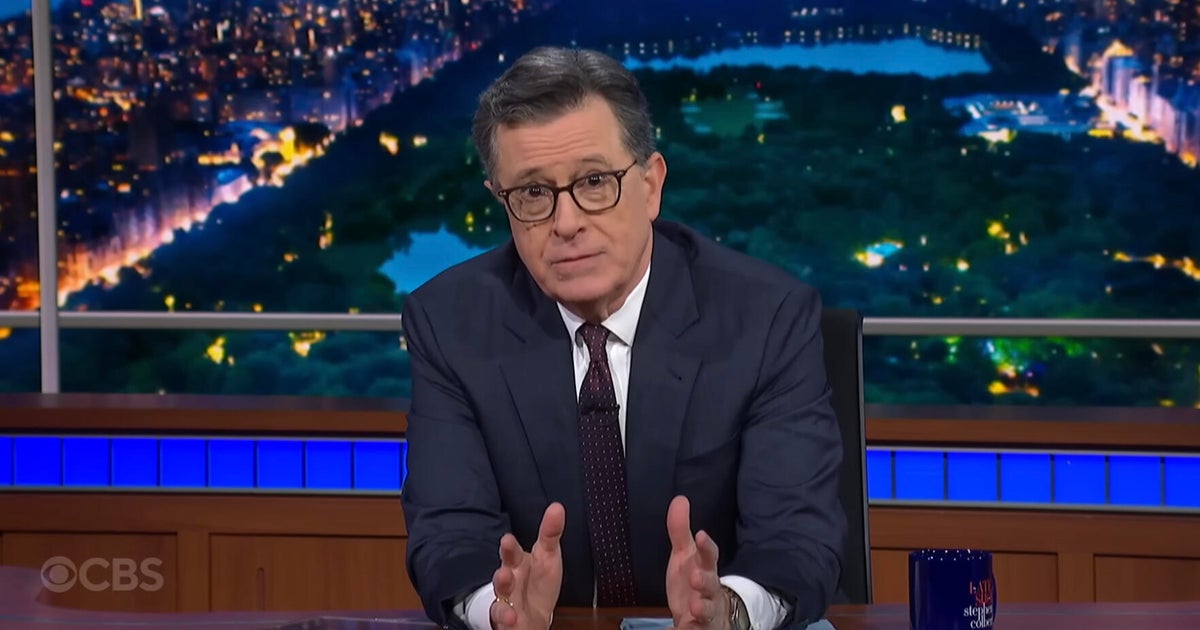
“The Late Show” host Stephen Colbert criticized CBS on Monday night, saying the network blocked his interview with U.S. Senate hopeful James Talarico from airing.
“You know who is not one of my guests tonight? That’s Texas State Representative James Talarico,” Colbert told his studio audience. “He was supposed to be here, but we were told in no uncertain terms by our network’s lawyers, who called us directly, that we could not have him on the broadcast. Then I was told in some uncertain terms that not only could I not have him on, I could not mention me not having him on. And because my network clearly doesn’t want us to talk about this, let’s talk about this.”
Colbert said the reason CBS prevented “The Late Show” from broadcasting Talarico’s appearance was rooted in new guidance from the FCC for daytime talk shows and late-night TV programs, which requires the shows to provide equal time to opposing candidates.
While “The Late Show” didn’t air Talarico’s interview on TV, it did post it on YouTube, where FCC rules don’t apply.
“The network says I can’t give you a URL or a QR code, but I promise you, if you go to our YouTube page, you’ll find it,” Colbert said.
Talarico, a Democrat, has served as a Texas state representative since 2018 and is campaigning in the Democratic primary to represent his state in the U.S. Senate.
CBS said in a statement: “THE LATE SHOW was not prohibited by CBS from broadcasting the interview with Rep. James Talarico. The show was provided legal guidance that the broadcast could trigger the FCC equal-time rule for two other candidates, including Rep. Jasmine Crockett, and presented options for how the equal time for other candidates could be fulfilled. THE LATE SHOW decided to present the interview through its YouTube channel with on-air promotion on the broadcast rather than potentially providing the equal-time options.”
CBS News has reached out to the FCC for comment.
The FCC issued a notice last month that daytime talk shows and late-night programs must give equal time to opposing candidates. The announcement hinged on a decades-old federal law requiring any FCC-licensed broadcaster that lets a political candidate appear on its airwaves to also offer “equal opportunities” to all other candidates running for the same office. The law exempts “bona fide newscasts” and news interviews from the equal time rule.
FCC Chair Brendan Carr, who was appointed by President Trump and is an ally of the president, wrote on X as he shared the notice: “For years, legacy TV networks assumed that their late night & daytime talk shows qualify as ‘bona fide news’ programs – even when motivated by purely partisan political purposes. Today, the FCC reminded them of their obligation to provide all candidates with equal opportunities.”
On “The Late Show” Monday, Colbert said, “Well, sir, you’re chairman of the FCC, so FCC U, because I think you are motivated by partisan purposes yourself.”
“Let’s just call this what it is: Donald Trump’s administration wants to silence anyone who says anything bad about Trump on TV, because all Trump does is watch TV, OK? He’s like a toddler with too much screentime. He gets cranky and then drops a load in his diaper,” Colbert said.
CBS News has reached out to the White House for comment.
Talarico shared a clip on social media early Tuesday, saying, “This is the interview Donald Trump didn’t want you to see. His FCC refused to air my interview with Stephen Colbert. Trump is worried we’re about to flip Texas.”
Tuesday marked the first day of early voting in Texas for the March 3 primary, in which Talarico faces U.S. Rep. Jasmine Crockett and businessman Ahmad Hassan. They are facing off to take on the winner of the Republican primary, in which longtime GOP Sen. John Cornyn is being challenged by Texas Attorney General Ken Paxton and U.S. Rep. Wesley Hunt. Both races could go to runoffs if no candidate in either party gets 50% of the vote.
Networks, individual shows and talk show hosts have come under fire by Mr. Trump for what he has claimed is their politically biased programming. Mr. Trump has at times called for broadcasters to lose their FCC licenses.
After taking over “The Late Show” from David Letterman in 2015, Colbert is preparing to wrap his final season as its host in May, when CBS will retire the late-night franchise. Although many suggested the cancellation was politically motivated, as Colbert has been an outspoken critic of Mr. Trump and his administration, the network insisted its decision was purely financial.


Kansas State cruises past Baylor in Matthew Driscoll debut

Nate Heise fuels No. 6 Iowa State’s win over No. 2 Houston

How the state prices out growth

Aye Finance IPO Day 2: GMP Remains Zero; Apply Or Not? Check Price, GMP, Financials, Recommendations

Comment: Tariffs, capacity and timing reshape sourcing decisions

Gold price today: How much 18K, 22K and 24K gold costs in Delhi, Mumbai & more – Check rates for your city – The Times of India

-
Business1 week ago
Aye Finance IPO Day 2: GMP Remains Zero; Apply Or Not? Check Price, GMP, Financials, Recommendations
-
 Fashion1 week ago
Comment: Tariffs, capacity and timing reshape sourcing decisions
-
Business7 days ago
Gold price today: How much 18K, 22K and 24K gold costs in Delhi, Mumbai & more – Check rates for your city – The Times of India
-

 Tech1 week ago
Removing barriers to tech careers
-
 Fashion1 week ago
Saint Laurent retains top spot as hottest brand in Q4 2025 Lyst Index
-
 Business5 days ago
Top stocks to buy today: Stock recommendations for February 13, 2026 – check list – The Times of India
-

 Fashion5 days ago
$10→ $12.10 FOB: The real price of zero-duty apparel
-

 Fashion6 days ago
India’s PDS Q3 revenue up 2% as margins remain under pressure