

Business
Sinclair, Nexstar will bring ‘Jimmy Kimmel Live’ back to owned ABC stations on Friday


Sinclair and Nexstar are returning “Jimmy Kimmel Live!” to ABC affiliate broadcast stations beginning Friday, the companies said in separate statements.
The announcements come three days after Disney’s ABC broadcast network returned the late night program to its air after a nearly week-long suspension. Disney had temporarily suspended the late night show following comments Kimmel made about the alleged murder of conservative activist Charlie Kirk and President Donald Trump’s MAGA movement.
“Our objective throughout this process has been to ensure that programming remains accurate and engaging for the widest possible audience. We take seriously our responsibility as local broadcasters to provide programming that serves the interests of our communities, while also honoring our obligations to air national network programming,” Sinclair said in a statement on Friday.
“Over the last week, we have received thoughtful feedback from viewers, advertisers, and community leaders representing a wide range of perspectives,” Sinclair said. “We have also witnessed troubling acts of violence, including the despicable incident of a shooting at an ABC affiliate station in Sacramento. These events underscore why responsible broadcasting matters and why respectful dialogue between differing voices remains so important.”
The broadcast station owners said earlier this week they would continue to preempt Kimmel’s late night show, meaning it would be unavailable on local stations for roughly 20% of the country, while they evaluated the situation and continued discussions with Disney.
Sinclair owns roughly 40 ABC affiliate stations in the U.S., including one in in Washington, D.C. Nexstar owns about 30 in markets including Salt Lake City and New Orleans.
Kimmel addressed the situation — and the ongoing preemptions — during his returning show this week.
“We are still on the air in most of the country, except, ironically, from Washington, D.C., where we have been preempted,” Kimmel said during Tuesday’s monologue. “After almost 23 years on the air, we’re suddenly not being broadcast in 20% of the country, which is not a situation we relish.”
Sinclair said Friday it had proposed measures to “strengthen accountability, viewer feedback, and community dialogue” at ABC and its affiliates.
“While ABC and Disney have not yet adopted these measures, and Sinclair respects their right to make those decisions under our network affiliate agreements, we believe such measures could strengthen trust and accountability,” it said.
Nexstar said in a statement: “We have had discussions with executives at The Walt Disney Company and appreciate their constructive approach to addressing our concerns.”
Disney declined to comment Friday.
Kimmel’s suspension last week came shortly after Nexstar announced it would not air the program in light of the host’s comments. Sinclair soon after said it would likewise preempt the program.
Those announcements followed comments from Federal Communications Commission Chairman Brendan Carr that suggested ABC affiliate stations could be at risk of losing broadcast station licenses over Kimmel’s remarks, which came during a show monologue.
The series of events raised questions about influence by the Trump administration on the media and First Amendment protections.
“Our decision to preempt this program was independent of any government interaction or influence,” Sinclair said Friday. “Free speech provides broadcasters with the right to exercise judgment as to the content on their local stations. While we understand that not everyone will agree with our decisions about programming, it is simply inconsistent to champion free speech while demanding that broadcasters air specific content.”
Earlier this week, Sen. Maria Cantwell, D-Wash., sent a letter to Sinclair pushing to bring “Jimmy Kimmel Live!” back on air. Sinclair owns the Seattle ABC affiliate station.
Nexstar similarly denied any government influence.
“As a local broadcaster, Nexstar remains committed to protecting the First Amendment while producing and airing local and national news that is fact-based and unbiased and, above all, broadcasting content that is in the best interest of the communities we serve,” Nexstar said in a statement.
“We stand apart from cable television, monolithic streaming services, and national networks in our commitment – and obligation – to be stewards of the public airwaves and to protect and reflect the specific sensibilities of our communities,” the statement continued. “To be clear, our commitment to those principles has guided our decisions throughout this process, independent of any external influence from government agencies or individuals.”






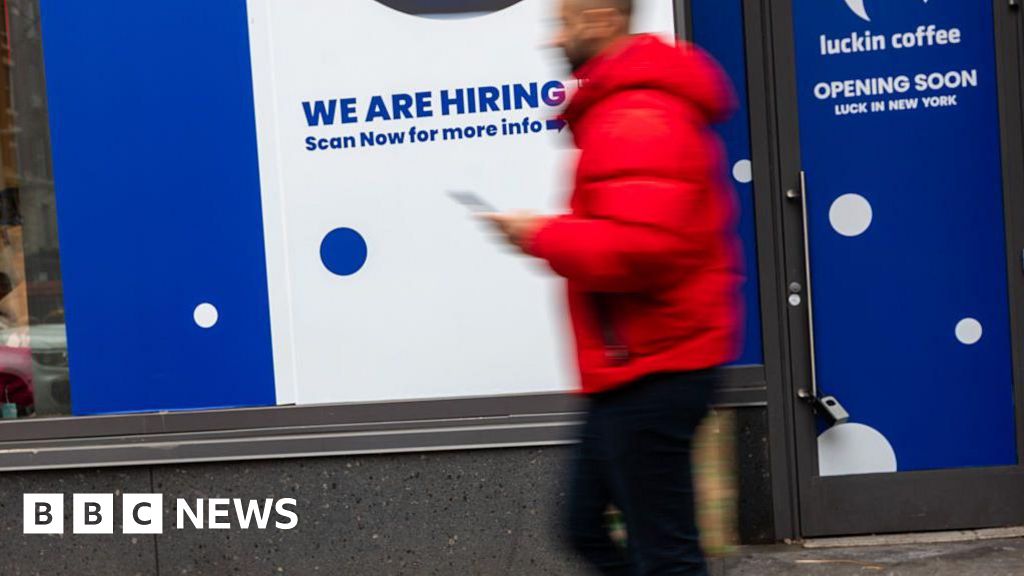
Employers added 178,000 jobs, far more than had expected, the Labor Department says.
Source link

Writing a CV requires important decisions. What should you include, what should you leave out – and how honest should you be?
One particularly tricky dilemma that might come up is whether to disclose weaknesses on your CV or remain silent about them. Common sense suggests it’s not advisable to advertise your flaws, but what about important information that employers might expect you to supply? Could the omission of such details look suspicious?
Research my colleague and I conducted looks at this specific question, focusing on the academic qualifications of new graduates entering the job market. And it provides a clear, evidence-based answer: if your grades are low, you are better off not disclosing this.
Complete honesty is not the best policy.
In the UK, where we did the research, most universities award undergraduate degrees on a scale: first-class, upper second (2:1), lower second (2:2) and third. While a first or 2:1 is often seen as evidence of strong performance, lower degrees are held in lower esteem.
A graduate jobseeker with a lower classification has a choice of what to reveal on their CV. They can be upfront about it, or they could simply state that they have a degree, without mentioning the class. (A third option, to lie about the class, is probably a bad idea because employers can and do ask for proof.)
Perhaps surprisingly, traditional economic theory would probably favour fronting up. Interactions like this, where a “seller” (in our case, a jobseeker supplying their skills) holds information about their quality that they can voluntarily disclose or not to “buyers” (here, employers), have been popular subjects for analysts of game theory (the mathematical study of strategic interactions).
The idea starts with the notion that people who fail to supply available evidence about their quality look like they have something to hide. Some economists have concluded that buyers will assume non-disclosing sellers must be not merely bad, but of the lowest possible quality level.
In our context, this means employers would think that any graduate whose CV omits degree classification information has a third-class degree, and should treat them accordingly. To avoid this, it would be in the interests of any applicant who earned a 2:2 or higher to disclose it.
To see how job seekers actually behave, we analysed the CVs of recent graduates on the job website Monster. We noticed that a substantial minority left their degree class undisclosed. Included among them, presumably, were plenty of applicants with at least a 2:2.
About the author
Tom Lane is a Senior Lecturer in Economics at Newcastle University.
This article is republished from The Conversation under a Creative Commons license. Read the original article.
To work out whether these applicants were making a mistake, we also conducted a large experiment, sending more than 12,000 applications to genuine graduate job vacancies. These varied only in the jobseeker’s degree classification, and whether this was disclosed on their CV, with other details kept the same.
Success was measured by how often applications resulted in invitations for an interview or further communication. As expected, the most successful of our applications were those with a first-class degree.
However, those who said nothing about degree class were not the least successful. Instead, their success rate was in between that achieved by jobseekers disclosing 2:1s and 2:2s. Applicants who openly reported a third-class degree were the least likely to receive a response.
Put simply then, full disclosure harmed their chances.
The third degree
Our findings challenge the neat logic of traditional economic theory. If employers always assumed the worst about missing information, hiding poor grades should not help.
Yet in practice, it seems recruiters do not have time to scrutinise every detail. Faced with hundreds of applications, they may skim CVs, focusing on standout positives or negatives. If the grade is not there, it may simply go unnoticed.
Of course, interviewers might ask about grades later in the application process, but by initially concealing this information, otherwise unattractive applicants can help themselves get to the interview stage, at which point they can use other qualities to impress.
The practical message of our research is clear. If you have strong academic credentials, highlight them proudly. But if your results are weaker, you are under no obligation to advertise them. Omitting them will not guarantee success, but it may increase your chances.
The graduate job market remains highly competitive. Yet our study suggests that lower grades do not need to define a candidate’s prospects, provided they make careful choices about self-presentation.
Strategic omissions may help level the playing field for those whose academic record does not reflect their potential. So if you have recently graduated with a third, there’s no need to panic, and no need to mention it either.

These highly skilled, highly educated foreign workers have been documenting the challenges of trying to build a career in the U.S. “If I don’t find a job, I have to leave the country.” “I sent out 907 applications.” “Have I ever truly relaxed in America?” They need an H-1B visa, which is given through a lottery system that allows U.S. companies to hire highly skilled international professionals for up to six years, in industries like tech and medicine. But the Trump administration has made changes to the program, requiring companies to pay a high fee and enforcing new rules that prioritize higher-paid foreign workers, in an effort to make more jobs available to Americans. This has forced some foreigners to rethink their career plans. “I think the U.S. is still the golden standard.” Wen-Hsing Huang came to the U.S. from Taiwan in 2022 for the tech scene, and was hired by Amazon on an H-1B visa. “I want to use my talents to change the world, and I think the United States was the best platform to do that.” Ananya Joshi came from India to attend a master’s program in Chicago in 2022. “So it was actually my my father’s dream that I had inherited because my father couldn’t go because of his financial situation.” Haina, a Chinese national, fell in love with the U.S. while studying in New York. She got her H-1B in 2022. “I remember there were a lot of companies, they would be able to sponsor.” Haina said she’s experienced a recent shift, where it has become harder to find companies that sponsor H-1B visas. “This time when I was job searching, I didn’t realize it could be a deal breaker. I just had my second interview of 2026, and it was a pretty short call.” (Recruiter) “I don’t think we’re eligible or able to do sponsorship for this role at the moment.” “They don’t even really get to know if I’m qualified, am I experienced, or anything. The decision is already made at that point.” “Please, please make sure that the company you’re about to work for has experience handling international hires.” Joshi said a start-up she interned with during grad school rescinded their promise to sponsor her H-1B visa. “Ask for everything in writing. And then there were jobs that were contract jobs. They would just reject me. They would only need people with a green card or a U.S. citizenship.” Even with an H-1B and a six-figure salary, Huang said he felt himself becoming anxious, as tech layoffs ramped up and Trump’s immigration policies kept changing. “I woke up every morning with this knot in my stomach, because my entire life depended on the policy I couldn’t control. The United States seems not very welcoming to immigrants that contribute to this country.” “The signals are, like, pretty clear at this point. They want to make this H-1B, is, like, risky and also, like, harder.” Hello, everyone.” Despite that, Haina says she’s determined to keep looking for a job until she’s forced to leave the country. “The pressure about where I’m going to be in the next of my career or, like, my life. I sort of like lost the ability to enjoy my life or just be happy.” “So I had to leave the U.S. Of course, I expanded my search beyond the U.S. Found a job in Germany.” Joshi packed up her life and started a new role with a European biotech firm in January. “I think I left at a good time, because there would have been more stress. I would have been stuck in a loop.” “It’s an endless cycle of anxiety.” After quitting his job at Amazon, Huang is now back in Taiwan, planning to launch his own company. “To bet on building an A.I. company that gives me complete control over my time, location and future. Staying in the United States is no longer the only way to achieve my American dream.”


Itlay’s Ermenegildo Zegna’s FY25 profit jumps 20% despite revenue dip

Mumford & Sons on collaborations and how they got their confidence back with their new music
US jobs surge unexpectedly in March despite Iran war

-

 Entertainment1 week ago
Lee Sang-bo dies at 45: Funeral details revealed
-

 Sports1 week ago
Illinois defense gets tough, ousts Houston to reach Elite Eight
-

 Sports5 days ago
2026 NCAA men’s hockey tournament: Schedule, results
-

 Fashion7 days ago
China rolls out tariff cuts on Congo imports from April 1
-

 Fashion6 days ago
EU apparel imports slump 15.48% YoY in Jan; Bangladesh hardest hit
-

 Sports5 days ago
USMNT handed reality check by Doku, Belgium ahead of World Cup
-
 Business1 week ago
How do you spot a fake online review?
-
 Sports1 week ago
NCAA men’s tournament: Rick Pitino’s case for best men’s college basketball coach ever