

Business
State Bank’s reserves edge up to $15.91b | The Express Tribune

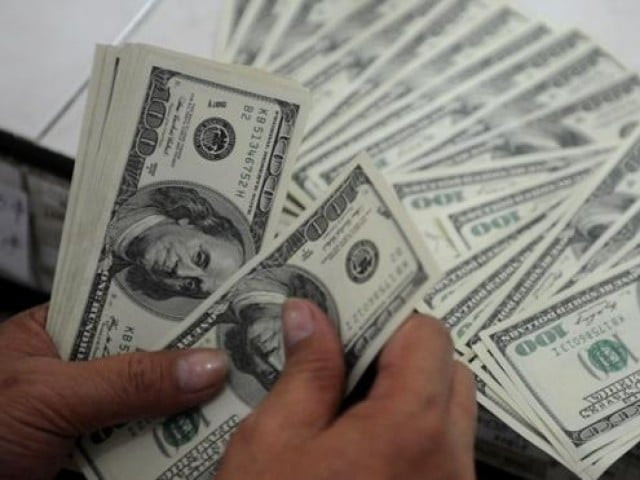
Central bank holdings rise $13m as total deposits reach $21b; 2026 starts with softer bullion prices
KARACHI:
Pakistan’s liquid foreign exchange reserves saw a modest increase in the final week of 2025, with the State Bank of Pakistan (SBP) reporting a $13 million rise in its holdings.
As of December 26, 2025, the SBP’s foreign currency reserves stood at $15.915 billion, up from $15.902 billion in the previous week. Net reserves held by commercial banks dipped slightly to $5.097 billion, resulting in total liquid foreign reserves of $21.012 billion.
This brings the country’s import cover to an estimated 3.2 months, providing a stable buffer amid ongoing external payments and debt obligations, according to AKD Securities.
Over the past three years from 2023 to 2025, the SBP’s reserves have shown a profound transformation, moving from the brink of crisis to a position of notable recovery and stability. In early 2023, the reserves plummeted to critically low levels, dipping below $3 billion in February, barely enough to cover a few weeks of imports, amid high debt repayments, stalled external financing, and severe balance-of-payments pressures that brought the country perilously close to sovereign default. This nadir reflected years of structural challenges, including elevated import bills and restricted inflows, with import cover falling below one month at its worst.
The turning point came in mid-2023 with the approval of a nine-month, $3 billion Stand-By Arrangement from the IMF in July, supplemented by bilateral support from allies like Saudi Arabia, the UAE, and China, alongside improved remittances and export performance. The reserves began a gradual climb, reaching around $4.5 billion by June 2023 and approximately $8-9 billion by year-end, steadily improving import cover and easing immediate liquidity risks.
Meanwhile, gold prices in Pakistan edged lower on Thursday, tracking losses in the global bullion market. In the domestic market, the price of gold per tola fell by Rs2,400 to settle at Rs454,562.








Business
Stock market today: Nifty50 opens below 22,800, Sensex tumbles over 800 points as oil prices stay above $110 – The Times of India

Stock market today: Dalal Street opened in red on Tuesday, with benchmark indices slipping 0.9% as oil prices continued to rise and US President Donald Trump’s deadline for Iran nears. While Nifty50 began the day below 22,800, Sensex fell over 800 points in early trade to touch 73,282.41. As of 9:20 am, Nifty50 was trading at 22,765.45, down 202.80 or 0.88%. BSE Sensex made slight recovery, down 694.03 points or 0.94% to 73,412.82.This fall comes after a sharp rebound in the previous session, when both Sensex and Nifty recovered strongly, erasing early losses triggered by rising crude oil prices as tensions continued to intensify in the Middle East. Traders attributed the rise to intense buying in banking and IT stocks, along with a strengthening rupee, that lifted investor’s confidence.During the volatile session on Monday, the 30-share BSE Sensex surged 787.30 points, or 1.07%, to settle at 74,106.85. During intraday trade, it had jumped 887.91 points, or 1.21%, to touch 74,207.46. Market breadth remained firmly positive, with 3,207 stocks advancing, 1,147 declining and 190 remaining unchanged on the BSE.The 50-share NSE Nifty also ended higher, rising 255.15 points, or 1.12%, to close at 22,968.25. Rupee, however, stayed firm on Tuesday, opening at 93.0025 per US dollar, rising 0.06% from its previous close of 93.06 against the greenback.In global markets, oil prices climbed while equities showed a mixed trend as investors assessed Donald Trump’s latest deadline for Iran to reopen the strategic Strait of Hormuz or face being “decimated”.West Texas Intermediate rose 2.6% to $115.34 per barrel, and Brent North Sea crude gained 1.3% to $111.24 per barrel. Across Asia, Tokyo’s Nikkei 225 slipped 0.2% to 53,323.41 in early trade, while Shanghai’s Composite index rose 0.5% to 3,899.09. Hong Kong’s Hang Seng Index remained closed for a holiday.In currency markets, euro weakened to $1.1530 from $1.1543 on Monday, while the pound dipped to $1.3216 from $1.3236. The dollar strengthened against the yen to 159.86 from 159.68. The euro also edged lower against the pound to 87.25 pence from 87.27 pence. In the US, the Dow Jones Industrial Average ended 0.4% higher at 46,669.88, while London markets were closed for a holiday.

Greggs is launching a chicken version of its customer favourite sausage and vegan rolls in a permanent addition to its menu.
The Chicken Roll – described by the high street baker as “seasoned chicken wrapped in layers of crisp, golden, glazed puff pastry” contains 305 calories and will cost £1.35 when it goes on sale on Thursday.
It follows the Sausage Roll and the pork free Vegan Roll.
To celebrate the final launch of the “trilogy”, Greggs is allowing customers the chance to be among the first to taste the new roll with a 20-minute slot between 3.30pm and 9pm on Wednesday (April 8) at a pop-up location at 15 Bateman Street, in London’s Soho.
Places will be given on a first-come first-served basis but, in a nod to the trilogy theme, guests must arrive as part of a trio of friends or family.
Visitors will be able to pair their three complimentary rolls with a free chicken-themed cocktail or mocktail.
A Greggs spokeswoman said: “They say the best things come in threes, and our iconic roll trilogy is no exception.
“We can’t wait for our customers to experience the Chicken Roll as the ultimate headline act of our flaky franchise.”
Over the past year, Greggs has come under pressure from cautious shoppers affected by the rising cost of living, higher tax and labour costs, and the growing use of weight-loss treatments.
Last month, the Newcastle-based firm reported that statutory pre-tax profits fell by 17.9% to £167.4 million for the year to December 27, compared with a year earlier.
It also told shareholders that total sales grew by 6.8% to £2.15 billion over the year, with like-for-like growth buoyed by its continued store opening programme.
Greggs said it had 121 net store openings in 2025, expanding its shop estate to 2,739 locations by the end of the year.
It is targeting around 120 further openings this year as it highlighted ambitions to grow to “significantly more than 3,000 UK shops over longer term”.

Applied Nutrition is significantly expanding its product range to cater to customers using weight loss drugs, following a substantial increase in demand over the past year.
The health and wellness brand said it has identified a key business opportunity stemming from the sharp rise in Britons using GLP-1 treatments, such as Mounjaro and Wegovy.
The London-listed company, which already offers GLP-1-friendly high-protein ready meals launched in late 2025, confirmed that new products specifically designed for this market will be introduced later this year.
“The GLP-1 user is a growing customer. We see this as a consumer at the start of their weight loss journey who is now looking at how the medication can help them,” Thomas Ryder, founder and chief executive of the Liverpool-based firm, said.
“There is an opportunity, as those customers often need supplements and need smaller portions. I think this is a catalyst for the health and wellness space if we have that consumer in mind.
“We do have a number of products we will bring to market in this area because we do see that area growing.”
At least 1.6 million Britons have used weight loss jabs in the past year, according to research by University College London.
Applied Nutrition has reported strong growth, driven by targeting new customer opportunities and diversifying its sales channels, including expansion into UK retail stores.
In March, the company announced robust financial results, with pre-tax profits soaring by 77.1% to £20.9 million for the six months ending 31 January, compared to the previous year.
Sales also saw a significant uplift, rising by 56.5 per cent to £74.5 million over the same half-year period.
However, the firm cautioned that sales volumes in the Middle East are expected to be affected by the ongoing conflict in the region.
Applied Nutrition said it still expects to meet revenue targets for the year of around £140 million.
The company added: “Importantly, we have managed similar disruption in the past, supported by the agility of our operations.
“In this instance, we are working closely with customers to adapt our routes into the region and logistics arrangements to safeguard continued supply to those customers.”


Pakistan commits to IMF on civil servants’ asset disclosures, NAB autonomy

How Dusty May and Michigan turned a team of transfers into a national champion

India’s major ports handle record 915 MT cargo in FY 2025-26

-
Uncategorized4 days ago
[CinePlex360] Please moderate: “Trump signals p
-
Uncategorized1 week ago
[CinePlex360] Please moderate: “Further tariff
-

 Tech3 days ago
Our Favorite iPad Is $50 Off
-

 Entertainment3 days ago
Joe Jonas shares candid glimpse into parenthood with Sophie Turner
-
 Fashion6 days ago
China’s Anta Sports posts record $11.62 bn revenue in 2025
-
 Business6 days ago
UPI transactions hit record Rs 29.53 lakh crore in March; volumes cross 22.6 billion – The Times of India
-

 Politics1 week ago
Trump considers asking Arab allies to help to pay for Iran war
-

 Sports1 week ago
Fakhar Zaman denies ball-tampering charge in PSL match | The Express Tribune