

Business
Stats overhaul: New inflation and GDP base year series slated for February; IIP to follow in May – The Times of India

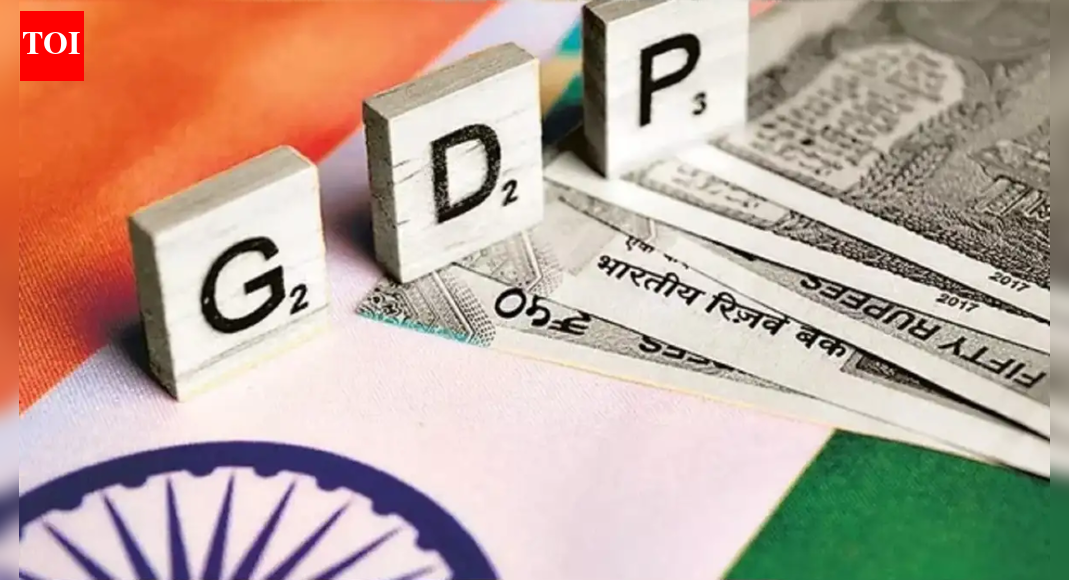
India’s key macroeconomic indicators are set for a base-year reset early next year, with the government announcing timelines for releasing new series of retail inflation, national accounts and industrial production data, PTI reported.The Ministry of Statistics and Programme Implementation (MoSPI) said on Monday that a new series of Consumer Price Index (CPI) data, reflecting a revised base year, will be released in February 2026, alongside updated national accounts data, while the revised Index of Industrial Production (IIP) series will be rolled out in May.According to an official statement, a new CPI series with base year 2024=100 is scheduled for release on February 12, 2026. The revised National Accounts data, with 2022-23 as the base year, will follow on February 27, 2026. The new IIP series, also using 2022-23 as the base year, is slated for release on May 28.Ahead of the data rollout, the ministry has convened a pre-release consultative workshop on the base revision of GDP, CPI and IIP on Tuesday. This follows an earlier workshop held in Mumbai on November 26.The primary objective of the consultation is to share proposed methodological and structural changes in the revised data series and seek feedback from stakeholders, the statement said.The workshop will bring together economists, subject matter experts, representatives from financial institutions and the banking sector, users of official statistics, and senior officials from central and state governments. The ministry said participation from a wide range of stakeholders is expected to enrich discussions and help users better understand the changes in the revised series.The event will be attended by NITI Aayog Vice Chairman Suman K Bery as chief guest, along with Chief Economic Advisor V Anantha Nageswaran, MoSPI Secretary Saurabh Garg and Director General (Central Statistics) N K Santoshi.
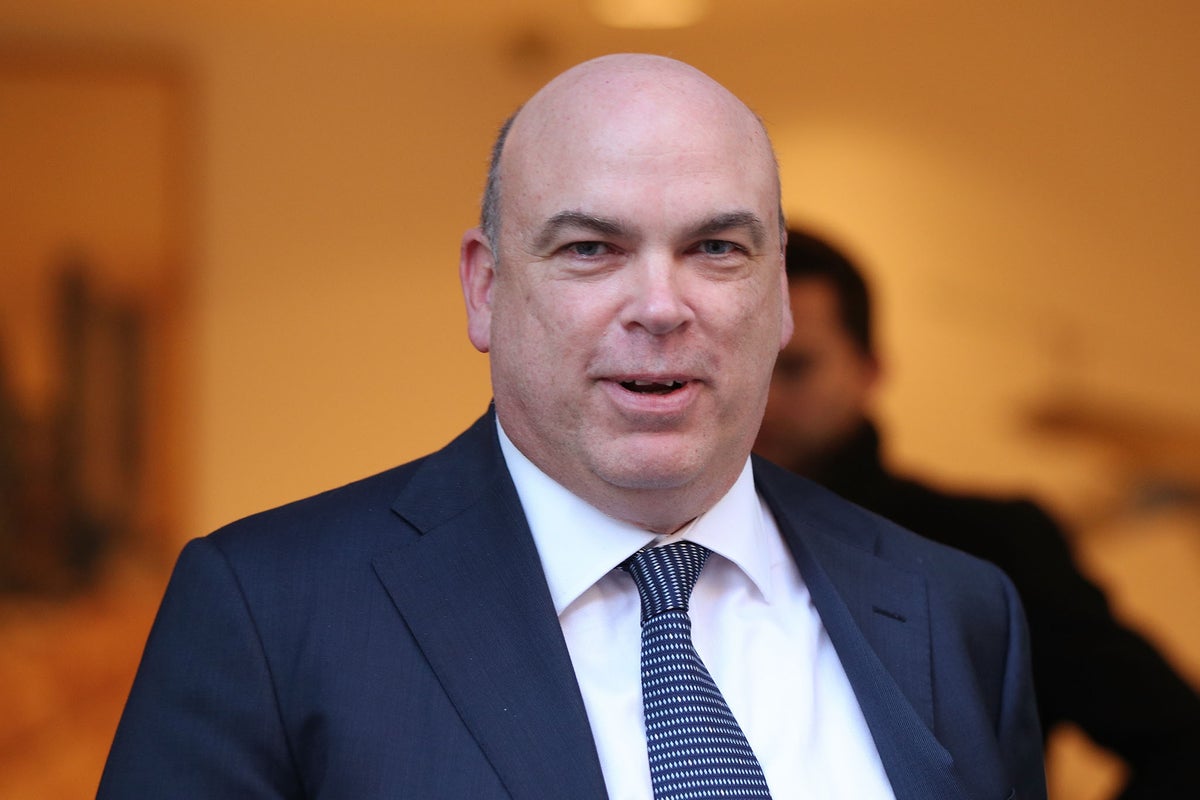
The estate of British technology tycoon Mike Lynch has been denied the right to appeal a High Court ruling that found it liable to pay Hewlett-Packard (HP) following the contentious acquisition of software firm Autonomy.
A High Court judge rejected the estate’s bid to challenge Mr Justice Hildyard’s 2022 decision, which concluded that HP had “substantially won” its more than a billion-dollar fraud claim against Mr Lynch over the 2011 purchase of Autonomy.
The estate had also sought permission to appeal against the judge’s subsequent ruling in July last year, which determined that Hewlett-Packard Enterprise (HPE) suffered losses totalling around £700 million as a result of the deal.
At a hearing in November, barristers for HP, now known as Hewlett-Packard Enterprise, said that Mr Lynch’s estate was liable to pay 1,786,668,553 dollars (£1.35 billion), which includes around 761 million dollars (£578 million) in interest.
In a ruling on Tuesday, Mr Justice Hildyard refused Mr Lynch’s estate permission to appeal against either of his earlier judgments, with a spokesperson for HPE claiming that it had been awarded damages and interest totalling around 1.24 billion dollars (£0.93 billion) from Mr Lynch’s estate.
The estate could still ask the Court of Appeal directly for the go-ahead to challenge the rulings.
HP sued Mr Lynch for around five billion dollars (£3.79 billion) following its purchase of Cambridge-based Autonomy for 11.1 billion dollars (£8.2 billion) in 2011.
The company claimed at a nine-month trial in 2019 – then believed to be the UK’s biggest civil fraud trial – that Mr Lynch inflated Autonomy’s revenues and “committed a deliberate fraud over a sustained period of time”.
It said this forced it to announce an 8.8 billion dollar (£6.5 billion) write-down of the firm’s worth just over a year after the acquisition.
In a ruling in 2022, Mr Justice Hildyard said the American firm had “substantially succeeded” in its claim, but that it was likely to receive “substantially less” than the amount it claimed in damages.
He said that Autonomy, founded by Mr Lynch, had not accurately portrayed its financial position during the purchase, but even if it had, HPE would still have bought the company, but at a reduced price.
Then in 2024, Mr Lynch died aged 59 along with his 18-year-old daughter, Hannah, and five others when his yacht, the Bayesian, sank off the coast of Sicily.
In written submissions for the hearing in November, Patrick Goodall KC, for HPE, said Mr Lynch had “not only perpetrated an enormous fraud, but lied about it at every stage”, and an appeal “aimed at escaping the consequences of that fraud” should not be allowed to be pursued.
Richard Hill KC, in written submissions for Mr Lynch’s estate, said the 761 million dollars (£578 million) in interest sought by the claimants was an “excessive sum … based on a flawed analysis”.
Mr Hill also said Mr Lynch’s estate should be allowed to appeal against the two earlier rulings, claiming that the judge “erred in law” and that there was a “compelling reason for allowing the appeal to be heard”.

The equity market rose on Tuesday as hopes of easing Middle East tensions lifted sentiment, while reports that Pakistan may be playing a mediating role between the United States and Iran added support.
The Pakistan Stock Exchange’s (PSX) benchmark KSE-100 Index closed at 152,207.89 points, up 1,225.99 points, or 0.8%, versus the previous close of 152,740.37. During the session, the index traded between a high of 157,442.68, up 4,702.31 points, or 3.08%, and a low of 153,382, up 641.63 points, or 0.42%.
“The market opened on a positive note, driven by investor optimism surrounding the potential easing of geopolitical tensions and further supported by Pakistan’s perceived geopolitical relevance following media reports suggesting the country may be mediating between the United States and Iran,” said Huzaifa Riaz, Director, Mayari Securities (Pvt) Limited.
US President Donald Trump said on Monday he had ordered a five-day postponement of any military strikes against Iranian power plants, citing what he described as “very good and productive” conversations over the past two days about a “complete and total resolution of hostilities in the Middle East”.
Iran’s Fars news agency later reported there had been no direct communication with the United States or through intermediaries, citing an unnamed source, while also quoting Deputy Speaker Ali Nikzad as saying there would be no talks and that the Strait of Hormuz would remain effectively closed.
Asian equities rose on the headlines as hopes of de-escalation briefly strengthened, with Tokyo, Hong Kong, Shanghai, Sydney, Seoul, Taipei and Manila higher, though gains pared as trading progressed. Oil prices, after plunging on Monday, edged up again as the outlook remained uncertain.
Analysts said market direction would remain tied to Middle East developments, with investors also watching post-Ramadan participation and upcoming inflation data.
AKD Research said any de-escalation could trigger a sharper rebound as valuations had turned more attractive, with forward price-to-earnings at 6.6 times. Arif Habib Limited Research put the market at a price-to-earnings ratio of 7.5 times and a dividend yield of around 6.8%.
Business
After Trump’s sanction waiver, Reliance Industries procures 5 million barrels of Iran crude oil: Report – The Times of India

With the US waiving sanctions on Iran oil, Reliance Industries has reportedly bought 5 million barrels of Iranian crude. Reliance runs the world’s largest refining complex. The effective closure of the Strait of Hormuz has led to global crude oil prices shooting up. In recent years, Iranian crude has largely been purchased by independent refiners in China and is often rebranded as originating from other countries.Last Friday, the Donald Trump administration granted a 30-day waiver on sanctions for Iranian oil already in transit. The exemption covers cargo loaded on or before March 20, including shipments on sanctioned vessels, provided it is discharged by April 19.
Reliance buys Iran crude oil
Two sources told Reuters that the cargo was sourced from the National Iranian Oil Company. One of them noted that the crude was priced at a premium of about $7 per barrel over ICE Brent futures. The delivery schedule is not yet known.The transaction marks India’s first import of Iranian oil since May 2019, when the country, the world’s third-largest importer and consumer of crude, stopped purchases following the reimposition of US sanctions on Tehran.The move follows large-scale buying of Russian crude by Indian refiners, who secured more than 40 million barrels to deal with supply crunch from the Middle East.Other Asian refiners, including Indian state-run firms, are evaluating whether to buy Iranian oil, sources said.
State refiners hesitant?
At the same time, a Bloomberg report indicates that state-run refiners are reluctant to procure Iranian crude, as apprehensions around operational, financial and regulatory hurdles could outweigh any short-term benefits.Despite the sanctions waiver granted by the administration of Donald Trump, these refiners have remained cautious. Persistent uncertainties linked to shipping, insurance and payment mechanisms have so far prevented deals from being finalised.The brief duration of the waiver is a major concern. Refiners worry that any delays in execution could push shipments beyond the allowed timeframe, potentially exposing them to the risk of sanctions.


Mohamed Salah to leave Liverpool at end of the season

Keith Urban gets new gig to ‘pay the bills’ after divorce

2026 NBA draft stock watch: Which NCAA prospects are rising?

-

 Tech7 days ago
Justice Department Says Anthropic Can’t Be Trusted With Warfighting Systems
-

 Fashion1 week ago
Trump signs order to combat fraudulent ‘Made in America’ labels
-
 Business1 week ago
Stocks To Watch: Tata Motors, IndiGo, Jindal Stainless, GMR Airports, Hindalco, And Others
-
 Business1 week ago
Stocks and pound rise as US rate call approaches
-
 Business1 week ago
Peloton is launching bikes and treadmills for gyms, accelerating commercial strategy
-

 Sports1 week ago
Men’s March Madness 2026 bracket: Get to know all 68 teams
-
 Business1 week ago
Gas supply crunch a worry for AC makers ahead of peak season – The Times of India
-

 Fashion6 days ago
Sales at US apparel, clothing accessories stores up 4% YoY in Jan 2026