

Tech
Strategic shift pays off as Okta bids to ease agentic AI risk | Computer Weekly


Off the back of its expanding agentic AI security vision, identity specialist Okta has turned in a solid third quarter with revenues up 12% to $742m (£562m) reversed a 12 month-ago multimillion dollar GAAP operating loss, and booked GAAP net income of $43m, up from $16m year-on-year.
In a signal that strategic decisions taken earlier this year may be paying off, Okta also revealed it currently has a subscription backlog of over $4bn, with approximately $2.3bn of that figure set to be recognised in the coming 12 months.
Okta CEO Todd McKinnon, who proclaimed a few short weeks ago that identity security and agentic AI security are basically one and the same, described a solid set of results highlighted by continued strength with large customers and adoption of its new products.
Speaking to Computer Weekly ahead of the results announcement, president and COO Eric Kelleher said: “Coming out of last year we had an important shift in strategy. We’d realised that going out to Q4 [1 November 2024 – 31 January 2025] our product innovation had accelerated to the point where it was putting a burden on our sales organisation to have to sell all products to all people.
“We made a significant change to specialise our go-to-market organisation on two buyer personas, the enterprise buyer, primarily chief information officers [CIOs] and chief information security officers [CISOs] and the developer buyer, and specialising our platforms as well – the Auth0 platform for developers and the Okta platform for CIOs and CISOs.”
Kelleher said that based on that, Q1 2026 had been broadly on-track, Q2 had shown improvement, and Q3 was “solid against our plans and expectations”.
He said the firm was now having more successful conversations with both of its core audiences and described identity security as never having been more important – something buyers are starting to recognise too, particularly those that have deployed multiple point solutions for different identity scenarios.
“They’re looking for an identity partner that can help them solve all these use cases with a single pane of glass … so we give them the administrative layer to make their businesses more secure.
“When you add to that the industry momentum around agents and people now having a brand new problem to solve with how they secure the identity of agents that are deployed in their environments, we are very optimistic for what the future holds for us,” he added.
AI bubble?
Amid more ambient chatter about an AI bubble – the Organisation for Economic Cooperation and Development’s (OECD’s) latest forecast for the US talks of a key risk to its projections being a “correction to equity markets that have been buoyed by the hopes of high returns to investment in AI” Kelleher said there would be winners and losers at every level of the AI world at some point, but that regardless of who they may turn out to be, AI agents are not going away.
“People are going to have agents deployed … and the existence of the agents is what creates the need for a platform to secure their identities, irrespective of whatever bubble there may or may not be,” he said.

Chances are that when you google “mattress store near me,” one of the first results you will see is Mattress Firm. This brick and mortar titan carries both established mattress brands like Serta and Sealy, as well as many online brands, like Purple, letting you go see for yourself if it’ll be the mattress for you. And if you were looking for an excuse to hop in the car and head over, we have a Mattress Firm coupon available right now, as well as tons of Mattress Firm promo codes to save big on those big (and small) purchases. Fingers crossed that you could start sleeping better, potentially as soon as tonight.
Upgrade Your Sleep Sale: Save Up to $600 (Plus Get a Free Adjustable Base)
This year, Mattress Firm wants to make it even easier (and more affordable) to upgrade your sleep with the Upgrade Your Sleep Sale. During this sale, you can save up to $600 and get a free adjustable base included on select mattresses, through April 28. You’ll receive a free Sleepy’s Basic adjustable base (a $300 value) with select mattress purchases—this means a free queen adjustable base with a minimum $499 purchase, or free king adjustable base with minimum $599 purchase.
Get 15% Off When You Sign Up for Emails
To make sure you never miss out on Mattress Firm discount codes, you can sign up for email notifications. By doing so, you automatically get one! You can get an extra 15% off on your first order. Heads up that it can’t be combined with other coupons, nor can it be applied to specific brands and models, including Nectar, Purple, Sealy Hybrid, Tempur-Pedic, Stearns & Foster, and Serta iComfort.
Free Adjustable Base (Up to $499 Value) With Select Mattresses
First and foremost, make sure you have or are getting a mattress that’s compatible with an adjustable base. If you’re all set bed-wise, but have been looking for the right time to buy an adjustable base, consider this your sign: select mattresses come with a free adjustable base (up to $499 value). At last, you can sit up in bed or kick up your feet to your heart’s content.
Score Up to $300 in Instant Credits and Gifts
Mattress Firm’s got a gift for you, just ‘cuz. For those eyeballing Tempur-Pedic, Sealy, and Sterns & Foster in particular, it’s your lucky day, as there are Mattress Firm coupon codes for all three of these brands.
Starting with Tempur-Pedic, when you buy a qualifying Tempur-Pedic mattress, you can receive a $300 Instant Credit on these adjustable bases: Tempur-Ergo, Tempur-Ergo Smart Base, Tempur-Ergo ProSmart Base, Tempur-Ergo ProSmart Air Base, or the Sealy Ease Base. Use code TEMPURGIFT. You can also get a $300 credit toward these same adjustable bases when you purchase a qualifying Stearns & Foster mattress: use code STEARNSGIFT at checkout.
Lastly, if you wanted to pair a Sealy mattress with the Sealy Ease adjustable base (or any of the aforementioned adjustable bases), there’s a Mattress Firm coupon for that, too. Use code SEALYGIFT at checkout, and get a $200 Instant Credit on select Sealy and Tempur-Pedic adjustable bases.
Take 20% Off With Military, Medical, Student, or Teacher Discounts
Sleep is a necessity for everyone. But for those who work all day on their feet, and have to be dialed in at all times, sleep is critical. This is especially true for first responders, nurses, doctors, and medical professionals. As a way to say “thank you” for all that you do, there’s a special mattress firm discount just for you. Use the Mattress Firm first responder discount for 20% off select purchases. It’s for one-time use, but renews every 90 days when you re-verify your status.
For military members, as a way to thank you for your service, you can use the Mattress Firm military discount for 20% off select purchases as well. It’s a one-time use code, but re-verify your status every 90 days, and you can get a new one!
If you’re a teacher or student, there’s also a Mattress Firm discount for you, too. To help you bounce back after long days teaching, or late nights studying, use this Mattress Firm student discount code for 20% off select purchases. Like the first responder and military coupons, it’s a one-time usage code that can be renewed every 90 days when you re-verify your status.

On February 28, United States and Israeli forces launched a series of strikes on Iran, kicking off turmoil in the Middle East.
Pete Hegseth, the secretary of the Department of Defense, said in a recent press conference that the operation could last as long as eight weeks. President Donald Trump himself said in a press conference on March 2 that the administration projected the operation would last four or five weeks but had “the capability to go far longer than that.”
This week Iran has responded in turn, attacking Israel, regional US embassies and military bases, and other sites across the Middle East. Iran has peppered neighboring countries with hundreds of drone and ballistic missile strikes since the operation began. While many of these have been intercepted, over a thousand people have died in the region and multiple buildings have been damaged, including luxury hotels in Dubai, US military bases and embassies, and international airports and marine ports.
Israel has also started bombarding Lebanon, following strikes at the country by the Lebanese militant group Hezbollah.
The Trump administration has given various, and at times seemingly contradictory, justifications for the military action, citing everything from potential “nuclear threat” to unverified claims that Iran attempted to interfere in the 2020 and 2024 US presidential elections. As of March 5, Congress, which in the US has the sole power to declare war, has not done so.
The attacks have already disrupted supply chains, creating uncertainty for the oil and gas and fertilizer industries as key infrastructure has been targeted or shut down out of caution. Shipping traffic has halted along the Strait of Hormuz, a critical route.
As the conflict continues to escalate and expand, WIRED is tracking which countries have been affected and how. This article was last updated on March 5.
Iran
As of March 4, Iranian state media estimates that over 1,000 people have died in the country since the US-Israeli attacks began. Several schools and hospitals have been hit, according to Al Jazeera. The Israeli Air Force says it has struck Iran with over 5,000 munitions since the beginning of the operation.
Israel
Israel has faced retaliatory strikes from Iran. As of March 4, at least 11 people have died and over 40 buildings have been damaged in Tel Aviv, according to Al Jazeera.
Azerbaijan
On March 5, Azerbaijan said drone attacks launched from Iran had crossed over the country’s borders and damaged an airport building and two civilians. President Ilham Aliyev of Azerbaijan said that the country’s military forces “have been instructed to prepare and implement appropriate retaliatory measures,” according to Reuters. Iran has denied responsibility for the attacks, according to Al Jazeera.
Bahrain
Missile and drone strikes have targeted different locations in Bahrain, including a US naval base, according to the BBC. On March 2, Amazon reported that a drone strike occurred in close proximity to one of its data centers in the country. CNBC later reported that Iranian state media said that Iran had targeted the data center because of the company’s support of the US military.
Cyprus
On March 2, a drone strike hit a British air base in Cyprus, according to Reuters. It caused limited damage and no casualties. Greece, the UK, and France have lent defensive support to the country, according to a Bloomberg report.
Iraq
Since February 28, there have been reports of multiple Iranian strikes aimed at a US military base near the Erbil International Airport, according to the nonprofit monitoring group Armed Conflict Location and Event Data.
Jordan
Jordan’s armed forces have intercepted dozens of missiles since the start of the conflict. At least one Iranian-backed militant group in Iraq has claimed responsibility, according to the Associated Press. On March 2, the US Embassy in the country announced that all its personnel had temporarily departed.
Kuwait
Kuwait has endured multiple waves of Iranian missile and drone attacks since February 28. On March 2, US Central Command said in a statement that three US fighter jets were accidentally struck down by Kuwaiti air defenses during an attack that included Iranian aircraft, missiles, and drones.
Lebanon
Israel attacked southern Lebanon after the militant Lebanese group Hezbollah launched rocket and drone attacks against them. Lebanon prime minister Nawaf Salam subsequently banned Hezbollah’s military and security activities, according to Al Jazeera.
Oman
Oman’s Duqm commercial port has been hit by several drone attacks, according to Al Jazeera. Omani authorities have said at least one oil tanker off the country’s port of Khasab in the Strait of Hormuz has been attacked.
Qatar
On March 2, QatarEnergy posted on X saying that it would halt production of liquified natural gas following a military attack on its operational facilities in the country. It did not attribute the attack to any particular country. On March 3, it posted again, saying that it would also stop the production of additional products, including urea, polymers, methanol, and aluminum.
Saudi Arabia
Infrastructure in Saudi Arabia has been targeted with projectiles. On March 3, the US embassy in Riyadh, the country’s capital, was damaged following an attack. On March 4, Reuters reported that one of the Saudi Aramco’s largest domestic refineries of Saudi Aramco, the majority state-owned oil company, was targeted by an attempted drone attack.
Syria
Tom Fletcher, the United Nations undersecretary-general for humanitarian affairs and emergency relief, says that civilians and civilian infrastructure were under attack in several countries including Syria.
Turkey
On March 4, the Turkish Ministry of National Defence announced that NATO had intercepted ballistic munitions launched from Iran, and that munition fragments had fallen into Hatay, a province that borders the Mediterranean Sea and Syria. Iran has denied any missile launch towards the country.
United Arab Emirates
As of March 4, UAE Ministry of Defence officials say that the country has intercepted hundreds of drone and missile attacks from Iran. Despite the relatively high rate of interceptions, debris created by the fallout has still damaged areas of the country. In Dubai, the luxury hotel Burj Al Arab was struck by debris, as well as the Palm Jumeirah, a man-made island home to high-end hotels and apartments. On March 2, Amazon Web Services announced that two of its facilities were directly struck in the country, causing “elevated error rates and degraded availability.”
Countries Evacuating Citizens
On March 2, US assistant secretary of state for consular affairs Mora Namdar posted on X urging Americans to depart from several middle eastern countries due to “serious safety risks.” On March 4, Reuters reported that the US military has offered seats on military transport planes to Americans trying to leave the region.
Over a dozen countries have announced that they will be evacuating their citizens from the area or sponsoring repatriation flights, including the UK, Ireland, Germany and Italy.

OpenAI CEO Sam Altman is still in the hot seat this week after his company signed a deal with the US military. OpenAI employees have criticized the move, which came after Anthropic’s roughly $200 million contract with the Pentagon imploded, and asked Altman to release more information about the agreement. Altman admitted it looked “sloppy” in a social media post.
While this incident has become a major news story, it may just be the latest and most public example of OpenAI creating vague policies around how the US military can access its AI.
In 2023, OpenAI’s usage policy explicitly banned the military from accessing its AI models. But some OpenAI employees discovered the Pentagon had already started experimenting with Azure OpenAI, a version of OpenAI’s models offered by Microsoft, two sources familiar with the matter said. At the time, Microsoft had been contracting with the Department of Defense for decades. It was also OpenAI’s largest investor, and had broad license to commercialize the startup’s technology.
That same year, OpenAI employees saw Pentagon officials walking through the company’s San Francisco offices, the sources said. They spoke on the condition of anonymity as they aren’t licensed to comment on private company matters.
Some OpenAI employees were wary about associating with the Pentagon, while others were simply confused about what OpenAI’s usage policies meant. Did the policy apply to Microsoft? While sources tell WIRED it was not clear to most employees at the time, spokespeople from OpenAI and Microsoft say Azure OpenAI products are not, and were not, subject to OpenAI’s policies.
“Microsoft has a product called the Azure OpenAI Service that became available to the US Government in 2023 and is subject to Microsoft terms of service,” said spokesperson Frank Shaw in a statement to WIRED. Microsoft declined to comment specifically on when it made Azure OpenAI available to the Pentagon, but notes the service was not approved for “top secret” government workloads until 2025.
“AI is already playing a significant role in national security and we believe it’s important to have a seat at the table to help ensure it’s deployed safely and responsibly,” OpenAI spokesperson Liz Bourgeois said in a statement. “We’ve been transparent with our employees as we’ve approached this work, providing regular updates and dedicated channels where teams can ask questions and engage directly with our national security team.”
The Department of Defense did not respond to WIRED’s request for comment.
By January 2024, OpenAI updated its policies to remove the blanket ban on military use. Several OpenAI employees found out about the policy update through an article in The Intercept, sources say. Company leaders later addressed the change at an all-hands meeting, explaining how the company would tread carefully in this area moving forward.
In December 2024, OpenAI announced a partnership with Anduril to develop and deploy AI systems for “national security missions.” Ahead of the announcement, OpenAI told employees that the partnership was narrow in scope and would only deal with unclassified workloads, the same sources said. This stood in contrast to a deal Anthropic had signed with Palantir, which would see Anthropic’s AI used for classified military work.
Palantir approached OpenAI in the fall of 2024 to discuss participating in their “FedStart” program, an OpenAI spokesperson confirmed to WIRED. The company ultimately turned it down, and told employees it would’ve been too high-risk, two sources familiar with the matter tell WIRED. However, OpenAI now works with Palantir in other ways.
Around the time the Anduril deal was announced, a few dozen OpenAI employees joined a public Slack channel to discuss their concerns about the company’s military partnerships, sources say and a spokesperson confirmed. Some believed the company’s models were too unreliable to handle a user’s credit card information, let alone assist Americans on the battlefield.


Save up to $600 With These Mattress Firm Coupons and Deals

Trump fires Kristi Noem as homeland secretary after storm over shootings, spending

Cotton innovation to take centre stage at Bremen conference 2026

-

 Fashion1 week ago
Policy easing drives Argentina’s garment import surge in 2025
-

 Politics1 week ago
What are Iran’s ballistic missile capabilities?
-
 Business7 days ago
India Us Trade Deal: Fresh look at India-US trade deal? May be ‘rebalanced’ if circumstances change, says Piyush Goyal – The Times of India
-
 Business1 week ago
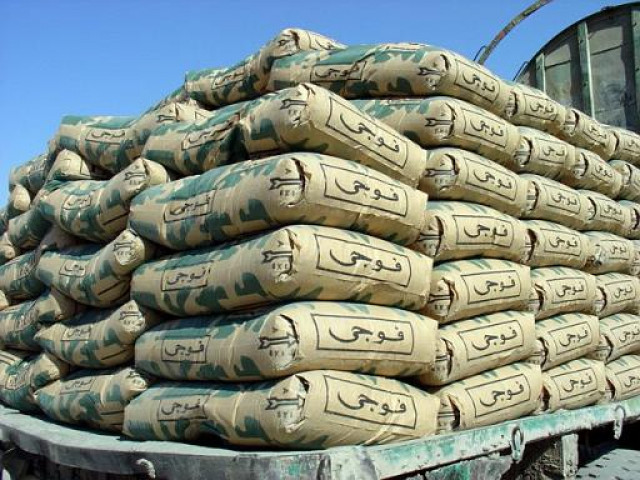
Attock Cement’s acquisition approved | The Express Tribune
-

 Politics1 week ago
US arrests ex-Air Force pilot for ‘training’ Chinese military
-
 Business7 days ago
Greggs to reveal trading amid pressure from cost of living and weight loss drugs
-

 Sports7 days ago
LPGA legend shares her feelings about US women’s Olympic wins: ‘Gets me really emotional’
-

 Fashion1 week ago
Texwin Spinning showcasing premium cotton yarn range at VIATT 2026