

Politics
Strict penalties for insulting National flag as residents prepare for celebrations

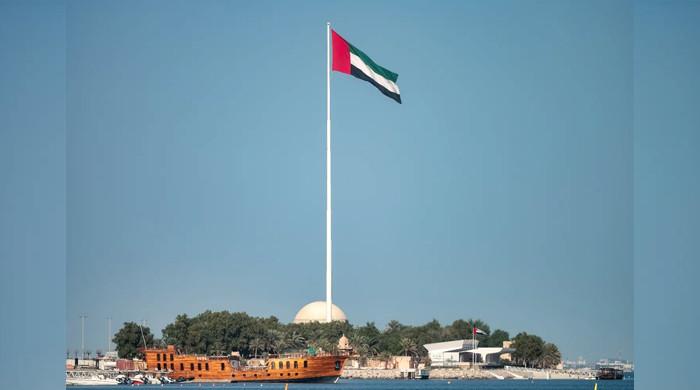
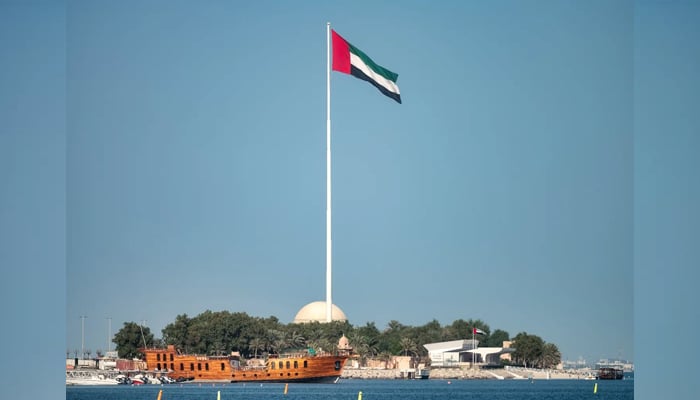
DUBAI: As the UAE celebrates Flag Day today, authorities have issued a reminder that any act of disrespect toward the national flag, such as using its design on cakes, decorations, or promotional items, is a serious crime punishable by up to 25 years in prison and a fine of Dh500,000 (almost Rs37.8 million).
The warning comes ahead of UAE National Day celebrations on December 2, when citizens and expatriate communities across Dubai, Sharjah, and Abu Dhabi typically mark the occasion with flag hoisting, parades, and cake-cutting ceremonies. Officials have urged everyone to ensure the national flag is treated with the utmost respect.
Residents are advised to follow a set of dos and don’ts issued by the government. Flags must be made of high-quality polyester, kept clean and undamaged, and should never touch the ground. Nothing else should be attached to the flagpole, and flags must be properly folded after use.
Authorities have also clarified that no emblem, logo, or decorative edge should be added to the flag, and it should not appear on food items or altered for promotional designs such as balloons, logos, or typography.
The UAE flag, featuring red, green, white, and black colours symbolising Arab unity, was first raised by the nation’s founding father, Sheikh Zayed bin Sultan Al Nahyan, during the Eid Al Etihad celebrations in 1971.
As the country prepares for its 53rd National Day, the message is clear: the flag represents the UAE’s pride and unity, and must be honoured accordingly.
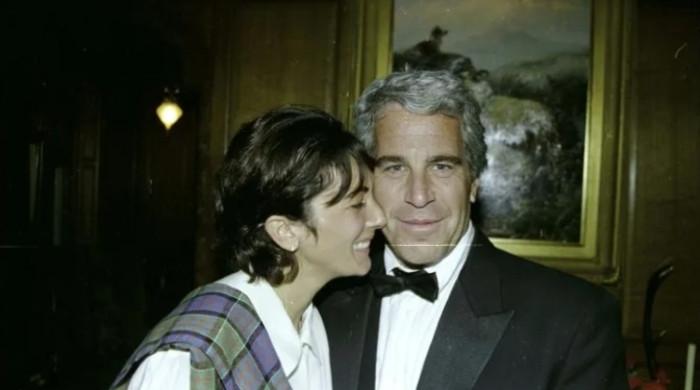
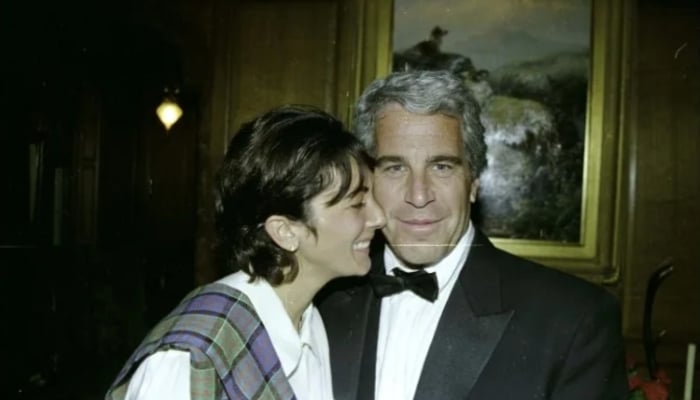
Jeffrey Epstein cultivated a global network of politicians, top business executives, academics and celebrities, many of whom have been severely tainted by association with the convicted sex offender.
While high-profile figures like Britain’s former prince Andrew have been very publicly disgraced, some powerful but lesser-known names have been sacked, forced to resign, placed under investigation or had their positions placed under review.
The mere mention of someone’s name in the Epstein files released by the US Department of Justice does not, in itself, imply any wrongdoing by that person.
Epstein was convicted in 2008 for soliciting a minor and died in 2019 while awaiting trial for sex trafficking minors.
Borge Brende
The governing board of the World Economic Forum, which organises the Davos summit, has ordered an independent review of the interactions of WEF chief Borge Brende, 60, with Epstein.
Brende, a former Norwegian foreign minister, has acknowledged attending dinners with Epstein in New York in 2018 and 2019.
He has insisted he was “completely unaware” of Epstein’s criminal activities.
Thorbjorn Jagland
Former Norwegian prime minister Thorbjorn Jagland, 75, is under police investigation on “suspicion of aggravated corruption” over his links to Epstein, which include many email exchanges unearthed from the released files.
Jagland served as prime minister from 1996 to 1997 and later as secretary general of the Council of Europe. He also chaired the committee that awards the Nobel Peace Prize.
Mona Juul
Mona Juul, 66, a Norwegian diplomat who played a key role in the secret Israeli-Palestinian negotiations which led to the Oslo Accords of the early 1990s, has been suspended pending an investigation into her alleged ties to Epstein.
Epstein left $10 million in his will to Juul’s two children with her husband, fellow diplomat and Oslo talks broker Terje Rod-Larsen.
The Norwegian Ministry of Foreign Affairs said Juul, currently the Norwegian envoy to Jordan, was being temporarily relieved while the investigation was underway.
Dean Kamen
American engineer Dean Kamen, 74, the inventor of the Segway, took a leave of absence from the board of directors of the robotics organisation he founded, FIRST.
The latest Epstein files release includes photos of Kamen with Epstein and Ghislaine Maxwell, who is serving a 20-year prison sentence for trafficking underage girls to the disgraced financier.
They also include an email in which Kamen thanks Epstein for a 2013 visit to his private Caribbean island.
Brad Karp
American attorney Brad Karp, 66, stepped down after 18 years as the chairman of Paul Weiss, one of the most powerful corporate law firms in the United States.
In emails, Karp thanked Epstein for inviting him to a 2015 dinner at his Manhattan mansion, calling it “an evening I’ll never forget.”
Karp, who has said he regrets socialising with Epstein, also asked Epstein in another email if he could help get his son a job on a Woody Allen film.
Miroslav Lajcak
Miroslav Lajcak, 62, the Slovakian government’s national security advisor, resigned after text messages included in the Epstein files showed the two men discussing women.
Lajcak was the foreign minister at the time.
Caroline Lang
French film producer and former actor Caroline Lang, the daughter of former French culture minister Jack Lang, resigned as head of a film producers’ group following revelations of the family’s Epstein ties.
Caroline Lang told French investigative website Mediapart that she and Epstein had agreed to set up a company together to buy artworks, but she did not invest any money in it.
She described herself as being “incredibly naive.”
Her father, Jack Lang, 86, said he was introduced to Epstein by Woody Allen about 15 years ago and had no knowledge of his crimes.
George Mitchell
Former US senator George Mitchell, 92, brokered the negotiations which led to the 1998 peace agreement ending three decades of conflict over British rule in Northern Ireland.
Queen’s University Belfast in Northern Ireland dropped Mitchell’s name this week from its Institute for Global Peace, Security and Justice over his links with Epstein.
Mitchell has previously said he regrets having met and known Epstein and that he had no knowledge of his illegal activities.
Steve Tisch
Steve Tisch, 76, producer of “Forrest Gump” and co-owner of the New York Giants, was connected by Epstein to multiple women, according to email exchanges between the two.
Tisch acknowledged in a statement that he and Epstein had “a brief association where we exchanged emails about adult women, and in addition, we discussed movies, philanthropy and investments.”
National Football League chief Roger Goodell said the league, which has a strict personal conduct policy, would “look at all the facts” before deciding whether to take any action against Tisch.
Casey Wasserman
Casey Wasserman, 51, has faced calls to step down as chairman of the Los Angeles Organising Committee for the 2028 Olympic Games after flirtatious email exchanges between him and Maxwell emerged.
Wasserman has said he “deeply regrets” the exchanges he had with Maxwell in 2003, well before Epstein’s and Maxwell’s crimes were public knowledge.
- Trump fired then-US Archivist Colleen Shogan last year.
- Rubio has held many roles in Trump administration.
- US archivist is responsible for overseeing government records.
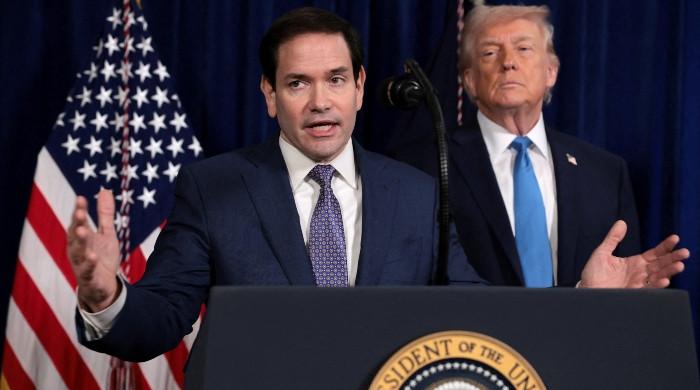
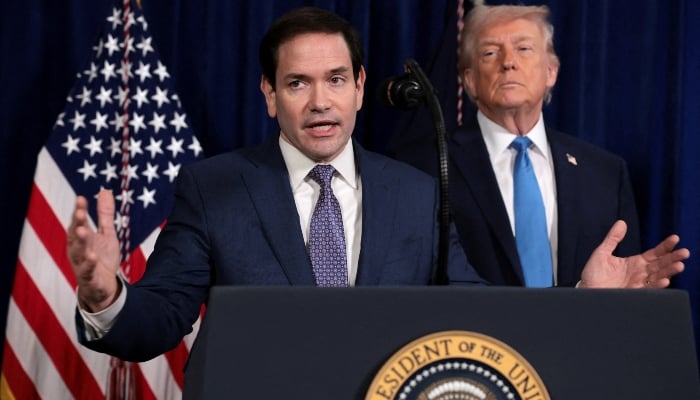
WASHINGTON: US Secretary of State and national security adviser Marco Rubio is no longer the acting archivist of the United States, a spokesman of the National Archives and Records Administration said on Thursday.
The national archivist is responsible for overseeing government records and heads the National Archives, an agency Trump used to criticise after it alerted the Justice Department to his handling of classified documents in 2022.
Within weeks of taking office last year, Trump fired then-US Archivist Colleen Shogan and appointed Rubio as acting head of the archives, one of many hats he has worn in the administration.
Rubio’s many roles, which have sparked jokes and spawned internet memes, underscore the trust Trump has in him, even though the two exchanged insults a decade ago when running against each other for the Republican presidential nomination.
He has been central to Trump’s push for US oversight of Venezuela after the seizure of Venezuelan leader Nicolas Maduro, the dismantling of the US Agency for International Development (USAID) and the president’s crackdown against pro-Palestinian protesters through revocations of visas and green cards.
Rubio stepped back from the National Archives job in compliance with the Federal Vacancies Reform Act, which limits how long officials can serve in Senate-confirmed roles in an acting capacity, NARA General Counsel Matt Dummermuth said in an email.
Rubio has delegated his authority at the National Archives to James Byron, who was a senior adviser to the archivist, Dummermuth said.
The FBI raided Trump’s Mar-a-Lago estate in 2022 as part of an investigation into the removal of official presidential records from the White House after his first term. The National Archives had been seeking the documents. Trump was subsequently indicted, and the case was dropped after he won the 2024 election.
- Trump has said Khamenei ‘should be very worried.’
- US wants missiles, proxies, rights issues included.
- Fears grow that failed talks could spark wider war.
The White House said on Thursday that diplomacy is President Donald Trump’s first choice for dealing with Iran and he will wait to see whether a deal can be struck at high-stakes talks, but also warned that he has military options at his disposal.
Final preparations were underway for Friday’s meeting in Oman amid heightened tensions as the US builds up forces in the Middle East, which Trump has called a massive “armada,” and regional players seek to avert what many fear could escalate into a wider war.
The talks were set to go ahead even though the two sides have had differences over the agenda, and that has increased doubts about the prospects for a deal. Trump has threatened to carry out strikes on Iran if an agreement cannot be reached.
The US previously said it wanted the discussions to include Iran’s missile arsenal and other issues, while Tehran has insisted on focusing exclusively on its disputed nuclear program. It was unclear whether that disagreement had been resolved.
“The president’s diplomacy is always his first option when it comes to dealing with countries all around the world, whether it’s our allies or our adversaries,” White House press secretary Karoline Leavitt told reporters when asked about the coming talks.
She reiterated Trump’s position that “zero nuclear capability is something he’s been very explicit about” in his demands for Iran.
“He wants to see if a deal can be struck,” Leavitt said. “And while these negotiations are taking place, I would remind the Iranian regime that the president has many options at his disposal, aside from diplomacy, as the commander in chief of the most powerful military in the history of the world.”
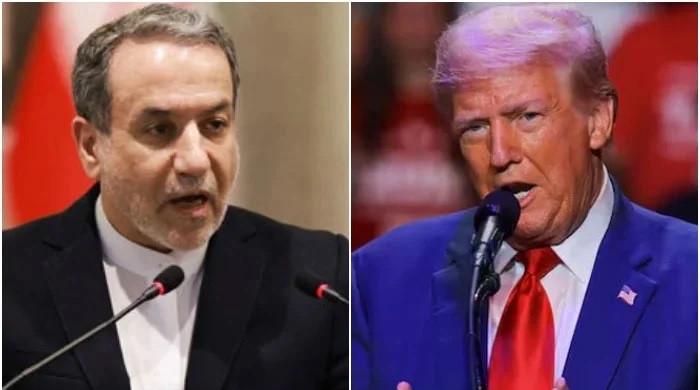
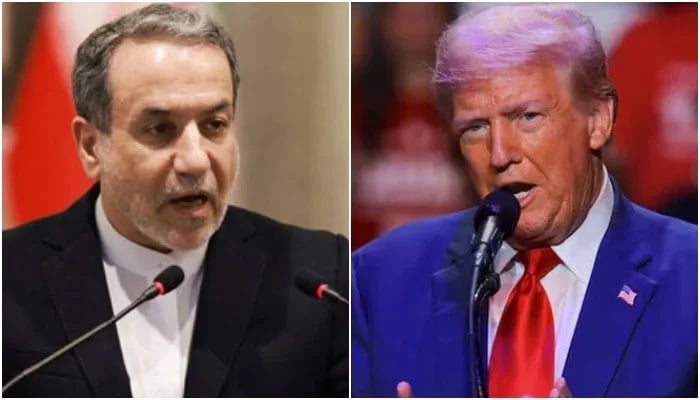
Iran’s Foreign Minister Abbas Araqchi departed for Oman on Thursday. His spokesperson Esmail Baghaei said Tehran would engage “with authority and to reach a fair, mutually acceptable and dignified understanding on the nuclear issue.”
“We hope the American side will also participate in this process with responsibility, realism and seriousness,” Baghaei added.
Araqchi is expected to meet in Muscat with Steve Witkoff, Trump’s special envoy, and Jared Kushner, the president’s son-in-law and adviser.
On the eve of the talks, Iran’s state-run Press TV said “one of the country’s most advanced long-range ballistic missile(s),” the Khorramshahr 4, has been deployed at one of the Revolutionary Guards’ underground missile sites. The missile has a range of 2,000 km (1,240 miles) and is capable of carrying a 1,500-kg (3,300-pound) warhead, it added.
The US has pressed Iran to accept a much more limited range for its missiles.
Mutual threats
Trump’s blunt warnings and Iran’s vows of counter-strikes have spurred regional governments’ efforts to calm the situation.
Turkish President Tayyip Erdogan said his government was working hard to prevent US-Iran tensions from tipping the Middle East into a new conflict. He has spent years cultivating a close relationship with Trump while expanding Ankara’s diplomatic influence across the region.
Speaking to reporters on a return flight from a visit to Egypt, Erdogan added that talks at the level of the US and Iranian leadership would be helpful after lower-level nuclear negotiations due in Oman on Friday, according to a transcript of his comments shared by his office on Thursday.
Tensions ratcheted up this week amid uncertainty over the location and format for the talks, which will follow Tehran’s bloody crackdown on street protests last month.
Asked on Wednesday whether Iran’s Supreme Leader Ayatollah Ali Khamenei should be worried, Trump told NBC News: “I would say he should be very worried. Yeah, he should be.”
After Trump spoke, US and Iranian officials said the two sides had agreed to shift the talks’ location to Muscat after initially accepting Istanbul.
At a press conference in Doha, German Chancellor Friedrich Merz said on Thursday that “great concern” had been expressed about potential escalation in the conflict with Iran during his meetings with officials in a visit to the Gulf region. He urged Iran to end what he called aggression and help bring stability to the region.
Gulf Arab states fear that Iran will carry out its threat to target US bases on their territory if the United States attacks the Islamic Republic.
China, meanwhile, said it supported Iran’s legitimate right to the peaceful use of nuclear energy and opposed the “threat of force and sanction pressure.”
‘Bad things will happen’
Iran has said the talks must be confined to its long-running nuclear dispute with Western powers.
But US Secretary of State Marco Rubio said on Wednesday that talks would have to include the range of Iran’s ballistic missiles, its support for armed proxy groups around the Middle East and its treatment of its own people, besides nuclear issues. Iranian sources say the US is demanding Tehran limit the range of Iran’s missiles to 500 km (310 miles).
Tehran’s regional sway has been weakened by Israel’s attacks on its proxies – from Hamas in Gaza to Hezbollah in Lebanon, the Houthis in Yemen and militias in Iraq – and by the ousting of Iran’s close ally, former Syrian President Bashar al-Assad.
Iran says its nuclear activities are meant for peaceful, not military purposes, while the US and Israel have accused it of past efforts to develop nuclear weapons.
The US has sent thousands of troops to the Middle East, as well as an aircraft carrier, other warships, fighter jets, spy planes and air-refuelling tankers.
Trump has warned that “bad things” would probably happen if a deal could not be reached.


Gold, Silver ETFs Sink Up To 10% As Precious Metals Rout Deepens; What Should Investors Do Now?

Is India the next big luxury fashion market?

Epstein fallout triggers resignations, probes

-
 Business1 week ago
PSX witnesses 6,000-point on Middle East tensions | The Express Tribune
-

 Tech1 week ago
The Surface Laptop Is $400 Off
-

 Tech1 week ago
Here’s the Company That Sold DHS ICE’s Notorious Face Recognition App
-

 Tech4 days ago
How to Watch the 2026 Winter Olympics
-

 Tech6 days ago
Right-Wing Gun Enthusiasts and Extremists Are Working Overtime to Justify Alex Pretti’s Killing
-
 Business1 week ago
Budget 2026: Defence, critical minerals and infra may get major boost
-

 Entertainment1 week ago
Peyton List talks new season of "School Spirits" and performing in off-Broadway hit musical
-
 Business6 days ago
Labubu to open seven UK shops, after PM’s China visit