

Business
Taco Bell tries to woo younger customers with Live Más Café’s flashy beverages


IRVINE, Calif. — Taco Bell is going all in on beverages, starting with its Live Más Café concept.
The Yum Brands chain unveiled the drink-focused store format last December, with the first location in Chula Vista, California. Ten months later came the second location, near the University of California, Irvine campus. By the end of the year, Taco Bell is projecting that it will have 30 Live Más Cafés in its portfolio, across Southern California, Dallas and Houston.
Unlike McDonald’s now-defunct CosMc’s spinoff, which had its own standalone locations, the Live Más Café lives inside existing Taco Bell restaurants. Customers order at kiosks and can watch the “bellristas” assemble their drinks from behind the designated counter, which takes prime real estate in the store. The drink menu includes a range of beverage options, from blended coffees to lemonade-based drinks.
The beverage-focused concept is supposed to help the Mexican-inspired chain reach its goal of generating a $5 billion drink business by 2030. Taco Bell first disclosed that target in March at an investor day, where the chain shared more about its plans to keep growing as it fuels Yum’s operating profit growth.
So far this year, Taco Bell has sold more than 600 million beverages, up 16% from the year-ago period, according to the company. More than 60% of the chain’s orders this year have included a drink, Taco Bell said.
“I think drinks are big right now because I think people are really craving unique, interesting flavors in their beverages, and we hear that all the time from our consumers,” said Liz Matthews, global chief food innovation officer for Taco Bell.
Center stage
Taco Bell’s Live Más Café.
Courtesy: Taco Bell
Stepping inside the Irvine location, the Live Más Café beverage station is the clear star.
Most of the self-order kiosks are positioned in front of the station’s long counter. Customers have a free view of the “bellristas” making their specialty drinks, unlike the restaurant’s other employees who assemble Crunchwrap Supremes and Chalupas hidden from sight.
Digital menu boards across the restaurant highlight the beverage offerings. The drink menu spans four distinct categories: churro chillers, specialty coffees, refrescas and “bellrista favorites.”
The churro chillers are creamy and cold milkshakes topped with churro chunks. The specialty coffees come either hot, iced or blended as a “chiller.” Brightly colored refrescas use either lemonade, green tea or Rockstar energy drinks as the base for their fruity flavors, such as strawberry passionfruit or mango peach. And the “bellrista favorites” include seasonal options, such as the autumnal caramel apple empanada churro chiller, which incorporates blended chunks of Taco Bell’s apple empanada.
When crafting the menu, Matthews and her team tried to stick to the chain’s Mexican-inspired roots, but she said Taco Bell will always have a “playful spirit.”
And while the Live Más Café offers plenty of options with a variety of flavors, Taco Bell kept the options to customize minimal.
“What we found when we talked to consumers, they actually really want us to curate their drink for them,” Matthews said.
To date, the Irvine location’s top-selling drinks are the Mexican Chocolate Churro Chiller, the Dirty Mountain Dew Baja Blast Dream Soda and the Mango Peach Agua Refresca. Six of the top 10 bestselling drinks at the location are chillers. That’s a reversal from the initial test location in Chula Vista, which has seen similar demand for every drink category, according to Matthews.
Since its opening day in September, the Irvine location has been selling more than 900 drinks per day, according to Taco Bell. More than a third of orders include an item from the Live Más Café menu.
Meanwhile, the Chula Vista location — which exceeded its initial sales forecast by four times — is selling more than 750 beverages a day nearly a year since its opening, the company said. A quarter of all transactions include a Live Más Café beverage, according to Taco Bell.
“Given what we’re seeing right now from the business results, the payback looks really attractive and in line with what our franchisees would expect for something big, but we’ve got a lot more to learn,” said Taylor Montgomery, global chief brand officer of Taco Bell.
‘Little treat’
This year, the hottest trend in fast food hasn’t been a chicken sandwich or plant-based burgers. Instead, beverages of all consistencies, colors and nutritional values have taken the spotlight.
For example, Shake Shack is selling lemonade with mini raspberry popping boba, inspired by the success of bubble tea. Panera Bread is testing frescas and energy refreshers in select bakery-cafés. Chick-fil-A is planning to open Daybright — a beverage-focused restaurant with specialty coffees, smoothies and cold-pressed juices — in Hiram, Georgia, later this year. And although McDonald’s this summer wound down its spin-off called CosMc’s that focused on drinks and snacks, it also tested new coffee drinks, refreshers and flavored sodas at more than 500 U.S. restaurants.
The number of beverages sold by the top 500 chains has climbed more than 9% in the last year, according to Technomic. The swell of beverage innovation follows the speedy expansion of a number of a specialty drink chains, from upstart 7 Brew Coffee to dirty-soda inventor Swig.
“[Quick-service chains] have seen that there’s a big opportunity with an entire generation and how they’re interested in that ‘little treat’ culture,” said Claire Conaghan, “trendologist” at Datassential, which tracks menu trends. “There’s options to kind of go beyond their focus area of core meal and really lean into that snacking moment.”
Generation Z and millennials are driving the trend, according to Varchasvi Singh, a foodservice analyst for Mintel. Younger generations enjoy customizing their food and beverage orders.
“Among younger consumers, in particular, we see that fast-food dining is just as much about experimentation and novelty as it is about indulgence,” Singh said. “They’re a lot more open to trying premium menu items and personalizing their orders, whereas older generations, who have associated fast food with extreme affordability for a long time, are a little bit more critical of how expensive it has become for them.”
For Taco Bell, turning to beverages and creating the Live Más Café is part of its broader plan to appeal to younger consumers, whose spending power is projected to increase rapidly in just a few years.
“Over the past five years, we’ve really, really been transitioning and thinking about the brand and how to position it for Gen Z, and so Café was really born from that,” Montgomery said. “I think it’s something like 60% of Gen Z consumers come to a restaurant or [quick-service restaurant] for an afternoon treat.”
Rather than creating a standalone Live Más Café, Taco Bell chose to put the sub-brand inside existing restaurants in part because of “humility,” according to Montgomery.
“Today, we’re not known to be a beverage destination — yet,” he told CNBC.
Live Más Café can also help Taco Bell more broadly.
“It also acts a little bit as a test market where they can get some more real-time data. Which combos do people do the most?” Conaghan said. “Which customizations matter the most? Do we need every type of alternative milk or maybe just these one or two? Do we need all 15 flavors of whatever energy refresher?”
That’s already started happening. Taco Bell’s agua frescas, which began as a Live Más Café menu line, have since been launched nationwide.
“They’re one of our top-selling items, and we didn’t wait to scale the Café,” Montgomery said. “We pushed those in all the restaurants, and we’ve seen success there.”
Plus, the coffee options on the café’s menu are part of Taco Bell’s plan to make a bigger push into breakfast. The chain started serving the morning meal more than a decade ago but told franchisees last year that they could opt out serving breakfast; for some fast-food operators, opening early isn’t profitable, plus there’s the added headache of finding staff willing to work the morning shift.
Taco Bell has already had some success with another sub-brand. Its Cantina format, typically found in cities, features a custom menu, alcoholic beverages and seating meant to encourage customers to linger. Since opening the first location in Chicago a decade ago, Taco Bell Cantina has grown to dozens of restaurants.
Broadly, even as inflation-weary consumers pull back their spending, Taco Bell’s focus on new menu items has lifted its sales; earlier this year, the company announced plans to double innovation in 2025. Taco Bell’s prices have climbed 75.5% since 2019, according to Technomic’s Ignite Menu. Still, customers keep coming back.
In recent years, Taco Bell has been the gem of Yum’s portfolio, typically outperforming both Wall Street’s expectations and its sister chains, KFC and Pizza Hut. Executives have named the chain as one of the company’s primary growth engines. In the second quarter, while many fast-food rivals reported shrinking sales, Taco Bell reported same-store sales growth of 4%.
“From a portfolio standpoint, we represent a pretty significant amount of Yum’s operating profit, but we learn a lot from other brands, too,” Montgomery said.
Yum is expected to report its third-quarter earnings before the bell on Nov 4.
Watch the video to learn more about why Taco Bell is betting on drinks.


new video loaded: How Kharg Island May Change the Trajectory of the Iran War
By Peter Eavis, Gilad Thaler, Edward Vega, Lauren Pruitt and Joey Sendaydiego
March 25, 2026
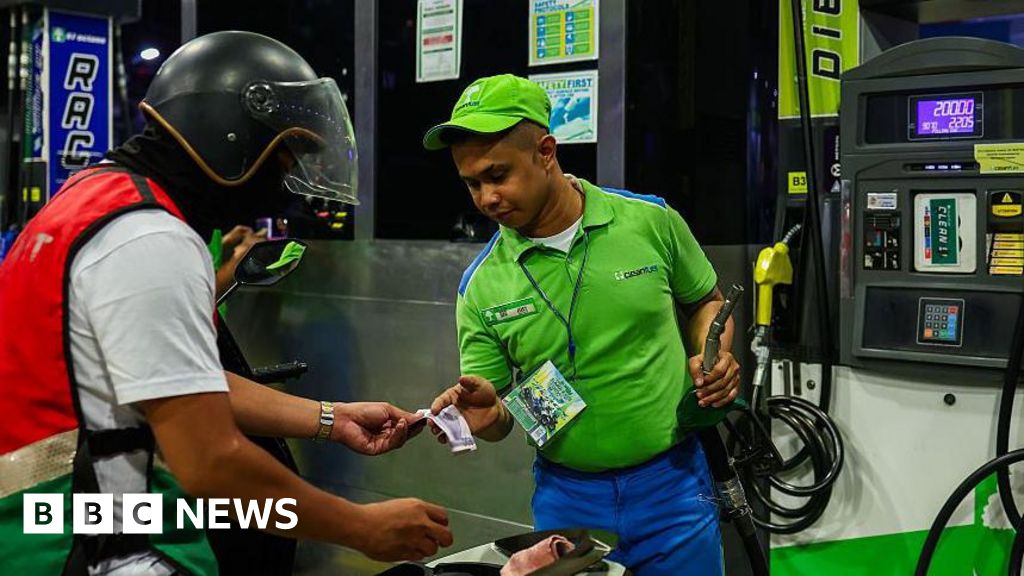
Crude rose back above $100 a barrel as the US and Iran clashed over bringing the conflict to an end.
Source link

President Donald Trump said he’s considering sending the National Guard to U.S. airports, two days after the administration deployed Immigration and Customs Enforcement agents to several major U.S. airports following hourslong waits for travelers because of the partial government shutdown.
In a Truth Social post Wednesday, Trump blamed Democrats for the shutdown, which began Feb. 14.
“Thank you to our great ICE Patriots for helping. It makes a big difference,” he wrote in his post. “I may call up the National Guard for more help.”
Travelers wait in line at a Transportation Security Administration (TSA) checkpoint at Hartsfield-Jackson Atlanta International Airport (ATL) in Atlanta, Georgia, US, on Monday, March 23, 2026.
Elijah Nouvelage | Bloomberg | Getty Images
More than 11% of TSA officers called out on Wednesday and over 450 have quit since the shutdown started, the Department of Homeland Security said.
Elevated absences of Transportation Security Administration officers, who are required to work though they’re not getting paid during the shutdown, have contributed to long lines at major U.S. airports, including in Atlanta, Houston and New York.
The DHS, which oversees both ICE and and the TSA, said the ICE agents will “support airports facing the greatest strain” but the department didn’t respond to requests for comment on what the ICE agents’ duties are. ICE agents are getting paid in the shutdown.
Airlines have been warning customers about potentially long security lines, while executives grow increasingly frustrated with lawmakers about the impasse. On Tuesday, Delta Air Lines said it suspended its airport escorts and other special services for members of Congress and their staff because of the ongoing partial shutdown of the DHS.
The shutdown comes as Democrats in Congress have demanded changes to how federal immigration enforcement operates in exchange for releasing DHS funding after two U.S. citizens were shot and killed by ICE officers in Minneapolis.

Video: How Kharg Island May Change the Trajectory of the Iran War
Oil prices volatile as Trump talks up Iran negotiations

What small businesses need to know

-

 Fashion1 week ago
Sales at US apparel, clothing accessories stores up 4% YoY in Jan 2026
-
 Tech1 week ago
Justice Department Says Anthropic Can’t Be Trusted With Warfighting Systems
-

 Sports1 week ago
March Madness 2026 – How to watch in SA, start time, schedule, TV channel for NCAA championship basketball tournament
-
 Business1 week ago
Stocks and pound rise as US rate call approaches
-

 Entertainment1 week ago
Val Kilmer revived 1 year after death through AI
-
 Business1 week ago
Brits cashing in jewellery as gold price hits record high
-

 Sports1 week ago
WBC championship: USA-Venezuela preview, live updates, analysis
-

 Tech1 week ago
Meta Is Shutting Down Horizon Worlds on Meta Quest