

Fashion
Ternua and Loreak Mendian brands change hands

Published
October 9, 2025
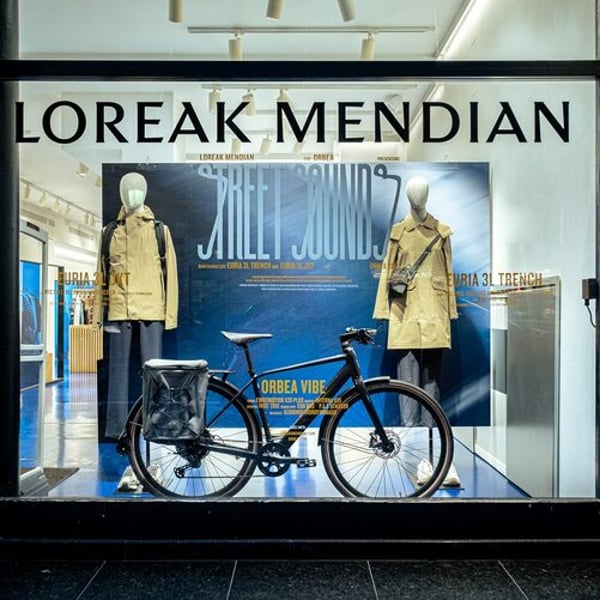
Basque conglomerate Ternua Group is moving forward with its insolvency proceedings, announced in June, through the sale of its Ternua and Loreak Mendian brands.
The Dikar co-operative, part of Mondragon Corporation, has acquired the group’s eponymous brand, following authorisation from Commercial Court No 1 in San Sebastián. The deal aims to safeguard the industry and the brand’s Basque roots, ensuring its continuity “within a solid, internationalised business project committed to the region.”
In a statement carried by Europa Press, Dikar stressed that this acquisition “consolidates its commitment to the region and its support for the Basque industry.”
The co-operative has not disclosed the purchase price for Ternua and noted that the deal forms part of its “diversification strategy” and “strengthens its position in the outdoor sector, where it already operates with its Columbus brand, specialising in equipment for outdoor activities.”
Incorporating Ternua into the Basque co-operative’s brand portfolio will allow “both brands to share synergies in product development, marketing, suppliers and sales channels”, the same sources said, adding that it will also bolster Dikar’s presence “in European and digital markets, and reducing its dependence on the U.S. market.”
They added that this operation likewise aims to “preserve industry, employment and the roots of a Basque brand with strong international recognition, promoting its continuity within a solid, internationalised business project committed to the region, in line with Mondragon’s values.”
Founded in 1969 and headquartered in Arrasate (Gipuzkoa), Dikar focuses on the hunting, sport shooting and outdoor sports sectors, and has two subsidiaries, one in Lawrenceville (United States) and another in Aveiro (Portugal). The head office and subsidiaries together employ more than 250 people.
Loreak Mendian also changes hands
As it proceeds with the sale of its four business units, Ternua Group has also found a buyer for its fashion brand Loreak Mendian, which it acquired in 2019. The brand will keep its roots in the Basque country: its new owner will be the Gipuzkoan company Borobitex, according to local media El Correo and El Diario Vasco.
The transaction was authorised by Commercial Court No 1 in Donostia on 15 September. Behind Borobitex, a limited company based in Irún, are three employees linked to the brand, including one of its founders, Víctor Serna.
With the sale of Loreak Mendian’s business unit, the continuity of 18 jobs is guaranteed (Ternua Group had around 180 employees at the beginning of the process).
In parallel with these two operations, the Basque conglomerate is working to ensure the continuity of its other two brands, Astore and Lorpen.
FashionNetwork.com with information from Europa Press
This article is an automatic translation.
Click here to read the original article.
Copyright © 2025 FashionNetwork.com All rights reserved.











The downward movement remained closely tied to crude oil dynamics, which continue to shape industrial cost structures across energy-intensive sectors. Average North Sea Brent crude prices stood at nearly €55 per barrel in January 2026, representing a drop of more than 27 per cent from a year earlier. In comparison, December prices averaged €52.5 per barrel, marking an annual decline of almost 25 per cent, CBS said in a press release.
Dutch manufacturing output prices fell 1.9 per cent YoY in January 2026, extending December’s decline as lower crude oil costs weighed on industrial pricing.
Brent prices dropped over 27 per cent annually, pulling petroleum derivative prices down 15.8 per cent.
However, producer prices rose 0.9 per cent MoM, supported by export and domestic market gains.
Petroleum-derived products registered a sharper contraction in line with weaker crude benchmarks. Prices for petroleum derivatives fell 15.8 per cent YoY in January, following a 12 per cent decrease in December, underscoring persistent softness in refined energy product pricing.
Despite the annual decline, producer prices showed sequential improvement at the start of the year. Overall manufacturing output prices increased 0.9 per cent in January from the previous month, indicating short-term pricing stabilisation across industrial segments.
The monthly uptick was led by export markets, where prices rose 1.2 per cent, while domestic market prices increased 0.6 per cent. The divergence between YoY declines and MoM gains highlights the continued influence of last year’s elevated energy base alongside emerging signs of near-term price recovery.
Fibre2Fashion News Desk (SG)

Regional adjustments are anticipated to drive the contraction. Cotton acreage across the southern United States is expected to transition towards soybeans amid improved profitability prospects, while irrigated cotton areas in the Plains are likely to shift towards corn production as producers rebalance crop rotations and manage input cost pressures, CoBank said in an article by Tanner Ehmke and Emmie Noyes.
Slower US cotton export momentum to China, intensifying competition from Brazil and Australia in global markets, and continued substitution by manmade fibres have collectively restrained price recovery, limiting growers’ willingness to expand cotton area.
US cotton planted area is forecast to decline for a second straight year to about 9 million acres in 2026, down 3 per cent year on year, reflecting weak price competitiveness.
Acreage shifts towards soybeans and corn, slower exports to China, rising competition and fibre substitution are weighing on plantings.
Meanwhile, farm support payments are expected to stabilise the overall acreage decline.
Despite the projected decline, policy mechanisms are expected to provide a degree of support. Base acreage payments under farm support programmes are likely to cushion the adjustment, helping stabilise cotton plantings and preventing a sharper contraction in the 2026 season.
Fibre2Fashion News Desk (SG)
The recommendation follows a survey analysed by researchers from the University of Nottingham and the University of Leicester in collaboration with trade justice charity Transform Trade, which found systemic late payments, last-minute order changes without compensation and post-contract price reductions. Manufacturers reported that such practices shift financial risk from brands and retailers onto suppliers and ultimately workers.
Among respondents, 31 per cent reported order cancellations, while 78 per cent said brands failed to cover costs of last-minute changes to confirmed orders. A further 75 per cent stated prices were not adjusted to reflect minimum wage increases. Additionally, 67 per cent experienced order volumes being reduced without corresponding revisions to unit costs, and 44 per cent faced repeated payment extension requests. Ten per cent reported payments delayed by more than three months beyond agreed terms.
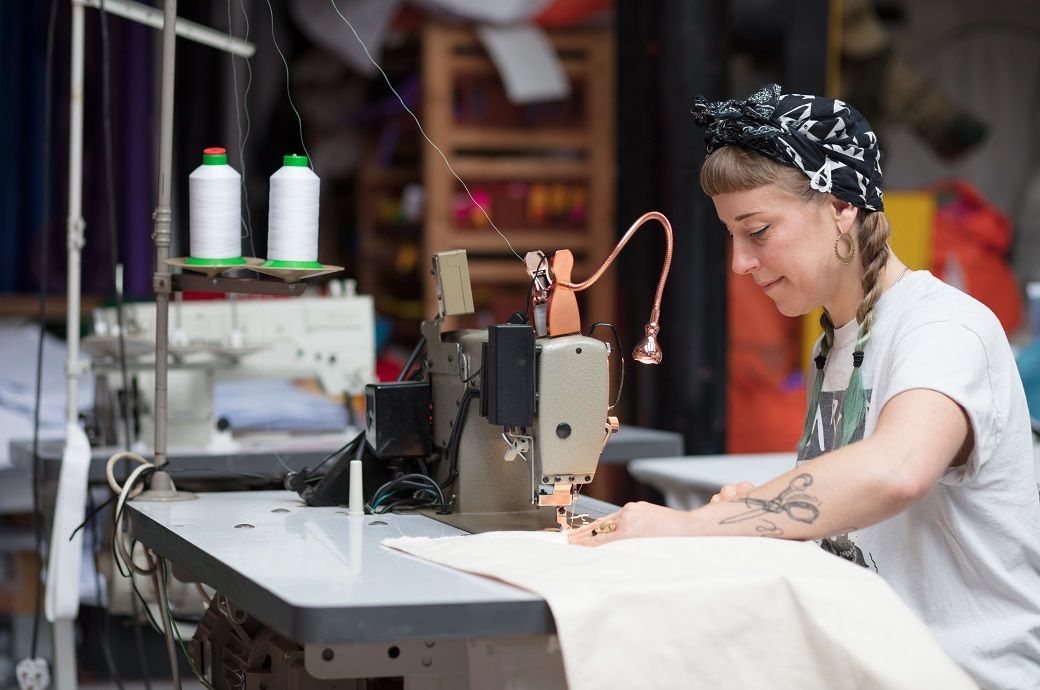
Researchers are urging the UK government to establish a Garment Trading Adjudicator after a survey by the University of Nottingham, University of Leicester and Transform Trade found widespread unfair purchasing practices in UK garment manufacturing.
The study highlights systemic late payments, cancellations and cost pressures affecting manufacturers and workers.
Manufacturers said these pressures had direct workforce consequences, including increased overtime to meet sudden order spikes for 73 per cent of workers, reduced hours following cancellations for 58 per cent, and job terminations for 29 per cent.
The survey also revealed limited confidence in formal dispute mechanisms. Only 22 per cent viewed the legal system as a viable route for redress, and none considered government or multistakeholder initiatives effective. Respondents cited financial and legal barriers, stating that pursuing action against brands was often unaffordable.
Dr Sabina Lawreniuk of the University of Nottingham’s School of Geography said, “Our research shows that current brand purchasing practices directly impact workers, resulting in precarious and insecure work across UK factories. Voluntary codes have proven insufficient. If we are serious about protecting workers and supporting a sustainable UK fashion industry, we need a Garment Trading Adjudicator to enforce fair practices across the sector.”
She added that the findings emphasise the need to rebalance relationships between brands and fashion manufacturers in the UK to support domestic manufacturing, sustainable business models, investment strategies, and to strengthen work and employment in the sector.
Professor Nikolaus Hammer of the University of Leicester also highlighted the importance of rebalancing these relationships to ensure sustainable UK production.
The researchers and Transform Trade said a sector regulator, like the Groceries Code Adjudicator, could help curb unfair purchasing practices and create greater accountability across fashion supply chains.
Fibre2Fashion News Desk (CG)


Katie Price’s husband Lee Andrews shares safety update from Dubai

Netherlands manufacturing prices fall 1.9% in January

When the Internet Goes Dark, the Truth Goes With It

Pakistan carries out precision strikes on seven militant hideouts in Afghanistan

Eye-popping rise in one year: Betting on just gold and silver for long-term wealth creation? Think again! – The Times of India

These Cheap Noise-Cancelling Sony Headphones Are Even Cheaper Right Now

-
Business1 week ago
Eye-popping rise in one year: Betting on just gold and silver for long-term wealth creation? Think again! – The Times of India
-
 Politics1 week ago
Pakistan carries out precision strikes on seven militant hideouts in Afghanistan
-
 Tech1 week ago
These Cheap Noise-Cancelling Sony Headphones Are Even Cheaper Right Now
-

 Sports1 week ago
Kansas’ Darryn Peterson misses most of 2nd half with cramping
-

 Sports1 week ago
How James Milner broke Premier League’s appearances record
-

 Entertainment1 week ago
Viral monkey Punch makes IKEA toy global sensation: Here’s what it costs
-

 Entertainment1 week ago
Saturday Sessions: Say She She performs "Under the Sun"
-
Sports1 week ago
Mike Eruzione and the ‘Miracle on Ice’ team are looking for some company