

Tech
The 24 Best Movies on Amazon Prime Right Now

In Recent years, Netflix and Apple TV+ have been duking it out to have the most prestigious film offerings, but some of the best movies are on Amazon Prime Video. The streamer was one of the first to go around picking up film festival darlings and other lovable favorites, and those movies are all still there in the library, so if they flew under your radar the first time, now is the perfect time to catch up.
Our picks for the best movies on Amazon Prime are below. All the films in our guide are included in your Prime subscription—no renting here. Once you’ve watched your fill, check out our lists for the best shows on Netflix and best movies on Disney+ if you’re looking for something else to watch. We also have a guide to the best shows on Amazon, if that’s what you’re in the mood for.
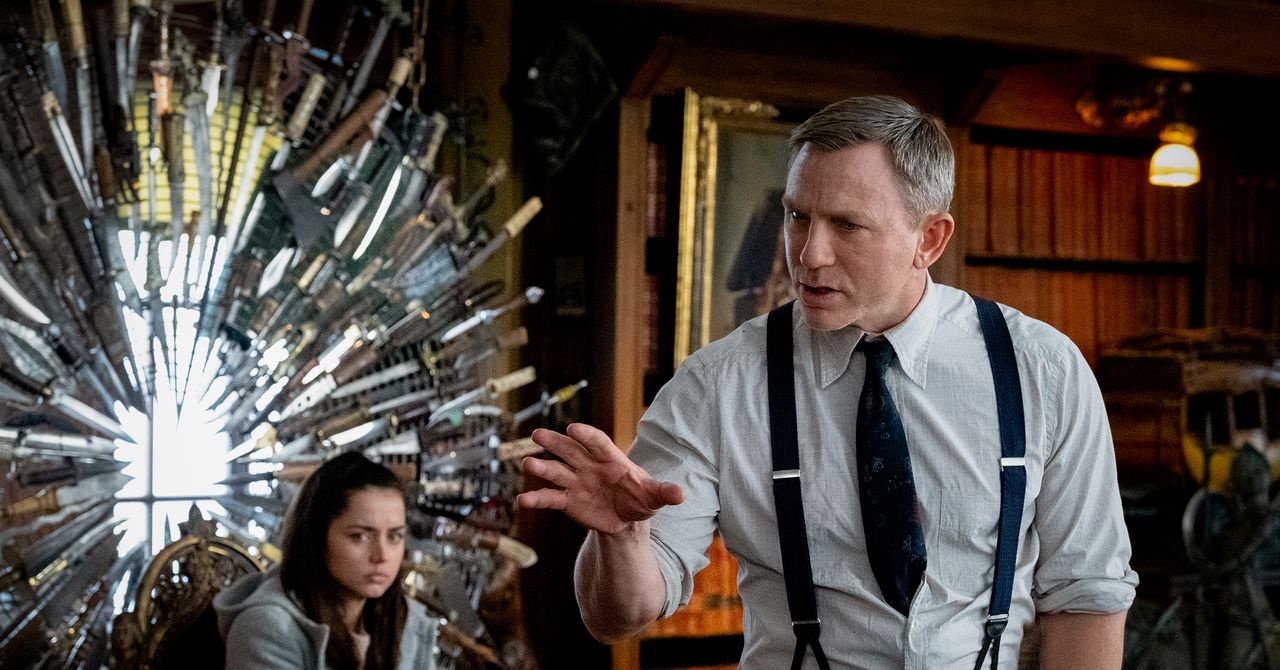
Knives Out
The debut outing of Benoit Blanc (Daniel Craig) finds the master detective investigating the suspicious death of famed crime novelist Harlan Thrombey (Christopher Plummer). It’s a case complicated by the deceased’s expansive, dysfunctional family, all of whom appear to have a motive for killing their supposedly-beloved patriarch. Boasting a murderers’ row of acting talent, including Chris Evans, Jamie Lee Curtis, Toni Collette, LaKeith Stanfield, and Ana de Armas as Thrombey’s attentive nurse Marta—director Rian Johnson’s Knives Out remains a masterful modern updating of the classic whodunit, packed full of meta twists that almost single-handedly reenergized the genre.
Air
Sure, nowadays Michael Jordan is a bona fide sports god, and Nike Air Jordans are still arguably the cool sneaker—but that wasn’t the case back in 1984. Jordan was a rookie, and Nike was about to close down its basketball shoe division. Enter Sonny Vaccaro (Matt Damon), a talent scout for the footwear maker who’s spotted a rising star in North Carolina who could turn everything around—he just needs to convince everyone else that Jordan is worth betting the company on. We all know how that panned out, so thankfully Air is more than a two-hour advert for gym shoes. Damon, Jason Bateman, Chris Tucker, and director Ben Affleck all deliver strong performances—only to be utterly eclipsed by Viola Davis in a magnetic and powerful, if somewhat under-utilized, turn as matriarch Deloris Jordan—while Alex Convery’s script keeps the drama on the people and personalities involved, rather than the boardroom. In an age of franchises and endless blockbusters, Air is the sort of character-focused film that rarely gets made anymore, and is all the more enjoyable for it.
American Fiction
Thelonious “Monk” Ellison (Jeffrey Wright) is a successful professor of literature, but a struggling author, his books constantly rejected for not being “Black enough.” After seeing fellow novelist Sintara Golden (Issa Rae) lauded for her pandering, stereotypical work, Monk pseudonymously pens a novel filled with every lazy trope and cliché he can imagine to lampoon the situation—but is horrified when it becomes an instant success. As a massive advance turns into a multimillion-dollar movie deal, Monk spirals as everyone from the public to his own family seems to love the deliberately offensive work. Based on Percival Everett’s novel Erasure, American Fiction is a darkly satirical work with a wicked sense of humor—an all-too-rare modern comedy with something to say, fronted by one of the finest performances of Wright’s career.
Heads of State
Grumpy British prime minister Sam Clarke (Idris Elba) and action-movie star turned US President Will Derringer (John Cena) can’t stand each other—so teaming up to survive after Air Force One is shot down over the Belarusian wilderness is going to put a real strain on the Special Relationship. Luckily for viewers, though, it also makes for one of the most hilarious and brilliantly choreographed action comedies in years. Priyanka Chopra Jonas is astounding as hard-nosed senior MI6 agent Noel Bisset, out to protect the combative world leaders from each other as much as a mounting terrorist threat, but it’s the spiky chemistry between the leads that really carries the film. Cena is so perfectly obnoxious throughout that you can’t help but feel Elba might actually hate him. A throwback of an action flick in the best way.
Deep Cover
When London police detective Billings (Sean Bean) hits a brick wall infiltrating criminal organizations, he turns to the only people he can trust: struggling improv actors. This ludicrous concept is played for maximum laughs by Bryce Dallas Howard as Kat, a comedian desperate for her big break, and Orlando Bloom as the intractably method-acting Marlon. But it’s Ted Lasso‘s Nick Mohammed who steals every scene as meek and awkward Hugh—an IT nerd who can’t act but “yes, ands … ” every increasingly farcical scenario the trio find themselves in. A bizarre blend of slapstick and Guy Ritchie-esque grit, Deep Cover fully commits.
The Adventures of Buckaroo Banzai Across the 8th Dimension
One of the absolute wildest films you’ve probably never seen, 1984’s The Adventures of Buckaroo Banzai is … almost impossible to describe. Centered on Peter Weller’s Dr. Buckaroo Banzai—a super-genius physicist, skilled neurosurgeon, high-flying test pilot, and beloved rock star—the film follows his battle with the evil Dr. Emilio Lizardo (John Lithgow) over the advanced “oscillation overthruster” that allows travel between dimensions. It’s so much stranger than that though. Expect alien invaders, identical twins of long-lost lovers, Orville Welles, and mid-1980s nuclear war paranoia, and that’s just scratching the surface. The highest of high concept sci-fi flicks, it absolutely bombed on release (despite a phenomenal cast including Jeff Goldblum and Christopher Lloyd) but has since more than earned its standing as a cult favorite. Even Weller himself can’t explain the film, but it is undeniably an experience.
Conclave
Arriving on Prime Video with divine timing, this parable of the election of a new pope makes for powerful viewing. When the pope passes, Cardinal Thomas Lawrence (Ralph Fiennes) starts the process of hosting the papal conclave to choose his successor—but given that the supreme pontiff is one of the most powerful positions on Earth, the election makes for anything but dry Catholic procedure. As the choice narrows to four candidates, and no one is allowed in or out until a new pope is elected, tension mounts while power plays, blackmail, and long-buried secrets rock the Holy See. Based on the novel by Robert Harris and directed by Edward Berger (2022’s All Quiet on the Western Front), Conclave is a meticulously researched and exquisitely shot drama, driven by magnetic performances from a cast including Stanley Tucci, John Lithgow, and Isabella Rossellini.
Evangelion 3.0+1.0: Thrice Upon a Time
Fair warning: As the culmination of 15 years of work for creator and director Hideaki Anno, and serving as a follow-up to his classic 1995 TV anime Neon Genesis Evangelion, this is hardly what you’d call a jumping on point for the notoriously complex mecha franchise. (Thankfully, Prime Video has the whole movie saga available, starting with Evangelion 1.11.) Nevertheless, snagging the international rights for this long-awaited film from Japan’s Studio Khara was a genuine coup for Amazon. Thrice Upon a Time brings to a close the decades-long tale of traumatized teenage robot pilots forced to fight biblically accurate angels—and worse, the twisted machinations of lead character Shinji’s abusive father, Gendo. With bewilderingly beautiful animation, plenty of emotional clout, and an ending that surprised even longtime fans, this is a textbook example of how to send a series out with a bang.
Challengers
Directed by Luca Guadagnino (Call Me by Your Name), Challengers follows the complicated three-way relationship between tennis aces Tashi (Zendaya), Patrick (Josh O’Connor), and Art (Mike Faist). Told nonlinearly, it volleys between the trio’s disaffected present and their more optimistic, exciting past. It’s an energetic and inventively shot sports movie, but the real match tension is in how the promise of Grand Slam glory (and no shortage of raging hormones—it is a Guadagnino film, after all) in the trio’s youth lead to choices that ricochet into the present. Tashi has been forced to abandon the court after a horrific injury, her now-husband Art is stuck in a competitive rut, and Patrick hustles low-stakes games to get by—but none of them have really moved on.
My Old Ass
The unstoppable rise of Aubrey Plaza continues in this smart, modern take on the coming-of-age dramedy. Written and directed by The Fallout’s Megan Park, My Old Ass follows 18-year old Elliott (Maisy Stella) who, on the cusp of college and major life changes, celebrates her birthday by taking mushrooms with her friends. Mid-trip, she meets … Elliott, age 39 (Plaza). It’s when she’s sobered up that things get really trippy, though. Elliott starts receiving text messages from the future—warning her to avoid a boy named Chad. Equal parts hopeful and melancholic, and with powerful performances from both actors playing an Elliott, this film beautifully captures the messy, joyful potential of youth and the nagging, wistful “what ifs?” that come with age. A delight however old you are.
Brittany Runs a Marathon
When Brittany (Jillian Bell) is told by her doctor to lose weight, she uses it as a reason to take control of her life. She starts by putting on a pair of trainers and challenging herself to run one block, which quickly escalates into deciding to run the New York City Marathon. First-time director Paul Downs Colaizzo based the story on the experiences of his friend, and highlights not only the benefits of running but also the pain. This film shows that no matter how bad things get, you can still get back up.
The Idea of You
The best rom-coms tend to succeed thanks to how unrealistic they are—the improbable meet-cute, the heightened emotions, the exaggerated gestures of affection, the dizzying spin of falling head over heels for someone. It’s something The Idea of You perfectly nails as it charts the relationship between successful gallery owner Solène Marchand (Anne Hathaway) and global music superstar Hayes Campbell (Nicholas Galitzine)—who also happens to be 16 years her junior. It could so easily have been cheap scandal fodder—and that’s how it’s played in-universe when the paparazzi get wind of Hayes’ relationship with the “older woman”—but as the pair embark on a globe-trotting romance, the charismatic leads serve up enough genuine chemistry to sweep the audience up in the whirlwind of it all. It’s ultimately less “will they, won’t they?” and more “should they, shouldn’t they?” thanks to a well-handled awareness of the age gap (already narrowed from the source novel by Robinne Lee), but for fans of the genre, it’s a delight.
Saltburn
Oxford student Oliver Quick (Barry Keoghan) is having trouble fitting in at the prestigious British university—until he befriends the popular Felix Catton (Jacob Elordi). Handsome, rich, and born to the landed gentry, Felix brings the awkward, socially invisible Oliver into his circle, eventually inviting him to spend summer at the family estate, Saltburn. But as Oliver works his way into the family’s graces, his obsession with Felix takes increasingly dark and deranged turns. Oscillating between black comedy and psychological thriller, writer and director Emerald Fennel (Promising Young Woman) frames the film in 4:3 aspect ratio for a tighter, almost voyeuristic viewing experience that makes its frequently unsettling moments even more uncomfortable. Having attracted plenty of debate since its 2023 release—not least for how it questionably navigates its themes of class and social inclusion—Saltburn was one of the year’s most divisive films, but one that demands your attention.
The Burial
Courtroom dramas are rarely laugh riots, but this tale of funeral home director Jeremiah O’Keefe (Tommy Lee Jones) and his flashy lawyer Willie Gary (Jamie Foxx) taking on a major player in America’s “death care” system brings a dark sense of humor to already grim proceedings. This is no comedy though. Based on true events, director Maggie Betts’ (The Novitiate) latest drama retells a real-life legal case that exposed massive inequality in funereal care and the way Black communities were being regularly overcharged. Foxx and Jones are in top form throughout, but it’s Jurnee Smollett as Mame Downes, Gary’s rival attorney who threatens to outpace him at every turn, whose performance threatens to steal the whole movie. For a film about death, The Burial proves warmly life-affirming.
A Million Miles Away
Charting the life of José Hernández, this biopic—based on Hernández’s own book—mixes the aspirational with the inspirational as it follows its central figure’s rise from, in his own words, migrant farm worker to the first Mexican-American astronaut. Michael Peña is in fine form as Hernández, painting a picture of a man almost myopically driven to reach space, no matter the cost, while Rosa Salazar impresses as his wife Adela, refusing to fade into the background even as she puts her own dreams on pause for José to chase the stars. In lesser hands, this could all be cloying—a twee tale of hard work and achieving the American Dream, with a dash of NASA promo material on the side, but director Alejandra Márquez Abella has her lens as focused on the small beauties of life here on Earth as the splendor and sheer potential of space. A rare delight.
Red, White, and Royal Blue
Look, this is clearly a “best film” by a highly specific metric—and that metric is “gloriously cheesy trash.” Adapted from Casey McQuinston’s best-selling novel, this intercontinental rom-com charts the relationship between First Son Alex Claremont-Diaz (Taylor Zakhar Perez) and Prince Henry (Nicholas Galitzine), the “spare” to the British throne, going from rivals through to grudging respect, and ultimately groundbreaking romance. It’s often ludicrous, including an inciting incident seeing the pair falling into a wedding cake, a tabloid-worthy tryst in a hotel room, and political intrigue surrounding Alex’s mother, President Ellen Claremont (Uma Thurman, vamping scenes with a bizarre “Texan” accent), but it’s all just irresistibly wholesome and upbeat. Red, White, and Royal Blue is the movie equivalent of pizza—not good for you, but still delicious.
Shin Masked Rider
If you’re sick of cookie-cutter Hollywood superhero movies, then this ground-up reboot of one of Japan’s most beloved heroes deserves your attention. Helmed by Hideaki Anno (Evangelion, Shin Godzilla, Shin Ultraman—“shin” meaning “new” or “true” in Japanese), this revamps the 1971 TV series Kamen Rider. Like that show, it follows motorcyclist Takeshi Hongo (Sosuke Ikematsu). Kidnapped by the terrorist organization S.H.O.C.K.E.R. and forcibly converted into a powerful cyborg, Hongo escapes before being reprogrammed as an agent of the group, instead using his newfound powers to take down its forces. However, unlike the original, Anno’s approach taps into the body horror of the core concept, while also challenging his characters—and audience—to hang onto their intrinsic humanity in the face of a world trying to dehumanize them. It’s more violent than you’d probably expect, often showing the grisly outcome of regular people getting punched by superpowered cyborgs and monsters, but never gratuitous. While those with some understanding of the source material will get more out of Shin Masked Rider, it’s an exciting outing for anyone looking for something a bit fresher from their hero movies.
Borat Subsequent Moviefilm
Sacha Baron Cohen’s “Kazakh” TV reporter (even if he speaks Hebrew) travels back to the US, 14 years after his last feature-long escapade. This time Baron Cohen has brought his (Bulgarian-speaking) teenage daughter along, with the mission of giving her “as a gift” to some powerful American politicians—initially Mike Pence, then Rudy Giuliani. In classic Boratic fashion, the mockumentary follows the wacky duo on a cavalcade across Trump’s America, filming candid performances by unsuspecting characters ranging from QAnon believers to Republican activists to prim debutantes, all the way to Giuliani himself. Even the coronavirus pandemic, which struck America as the film was being shot, is subverted as a comedic plot point. Baron Cohen delivers, with the expected repertoire of shock gags and deadpanned verbal enormities, and he manages to land some punches at the expense of bigots. In contrast to its 2006 predecessor, many of the pranks and stunts here seem more aimed at eliciting the audience’s nervous laughter than at exposing America’s heart of darkness, but it remains a worthy—and funny—watch.
Nanny
Aisha (Anna Diop) is a Senegalese woman working as a nanny for a rich couple in New York City, hoping to earn enough to bring her son and cousin to join her in America. However, her future is at the mercy of her employers, who seem content to leave Aisha to raise their daughter, Rose, while often withholding her pay. As the stress of the power imbalance weighs on her, Aisha begins having strange dreams of drowning, worsened by her fears of abandoning her own child. The feature debut of director Nikyatu Jusu, Nanny contrasts the horror of the immigrant experience in modern America with something darker, while swapping the expected tropes of hope and opportunity for a palpable sadness for culture and community left behind. Nanny takes a slow-burn, psychological approach to its scares, but Diop is phenomenal throughout, and the meticulous pacing and gorgeous cinematography means every frame lingers.
Coming 2 America
Relying on nostalgia to carry new entries in long-dormant series can be risky business, but Eddie Murphy’s return to the role of Prince—now King—Akeem of Zamunda more than three decades after 1988’s Coming to America shows how to do it right. Drawn back to the US in search of a son he never knew he had, Akeem—and the audience—gets to reunite with familiar faces from the first film, before director Craig Brewer (Hustle and Flow) reverses the formula and tests the American characters with a trip to Zamunda. With a sharper, smarter, and more globally aware script than the original, Coming 2 America defies the odds to be a comedy sequel that stands up to the reputation of its predecessor.
Thirteen Lives
Director Ron Howard’s latest gathers a top-notch cast—including Viggo Mortensen, Colin Farrell, and Joel Edgerton—for a dramatization of the 2018 Tham Luang cave rescue, where a Thai junior soccer team and their assistant coach were trapped in the flooded cave system. As an international effort mounts to save the children, the challenges of navigating miles of underwater caverns become ever more dangerous, and Howard masterfully captures every perilously claustrophobic moment of it. A nail-bitingly tense movie with some ingeniously shot aquatic scenes, Thirteen Lives is a testament to one of the most difficult rescues ever performed.
One Night in Miami …
Based on the play of same name, One Night in Miami follows four icons of culture, music, and sports—Malcolm X, Jim Brown, Sam Cooke, and Muhammad Ali—at the height of the Civil Rights Movement, a converging and pivotal point in their lives and careers. Meeting in a motel room in the wake of Ali’s—then still Cassius Clay—heavyweight victory over Sonny Liston in 1964, the four men discuss their roles in the movement and society as a whole, all while the audience knows the weight of history is bearing down on them. The close confines of much of the film reflect its theatrical roots, but this feature directorial debut from Regina King perfectly portrays the larger-than-life personalities of its cast. Kingsley Ben-Adir is on fire as Malcolm X, with Aldis Hodge, Leslie Odom Jr., and Eli Goree—as Brown, Cooke, and Ali—all utterly magnetic.
The Report
Produced by Amazon, The Report is an engrossing depiction of the US Senate’s investigation into the CIA’s “enhanced interrogation” program—how it came to be, who knew about it, and how the CIA massaged the facts to support its efficacy. Adam Driver stars as Daniel Jones, the lead investigator who plowed an increasingly lonely path to the truth, battling against political resistance and CIA interference all the way. Driver is, as is his habit these days, superb, and the film’s 82 percent “fresh” rating on Rotten Tomatoes is well earned.
Sound of Metal
Punk-rock drummer and recovering addict Ruben starts experiencing hearing loss, and it threatens to upend his entire life. Faced with an impossible choice between giving up his hearing or giving up his career, Ruben begins to spiral, until his girlfriend Lou checks him into a rehab center for the deaf, forcing him to confront his own behavior as much as the future he faces. Riz Ahmed is in spectacular form as the troubled Ruben, while Olivia Cooke’s turn as Lou, who suffers with her own demons, including self-harm, is riveting. Fittingly enough, Sound of Metal also features incredibly nuanced use of sound—and its absence—as director Darius Marder crafts one of the finest dramas in recent years.









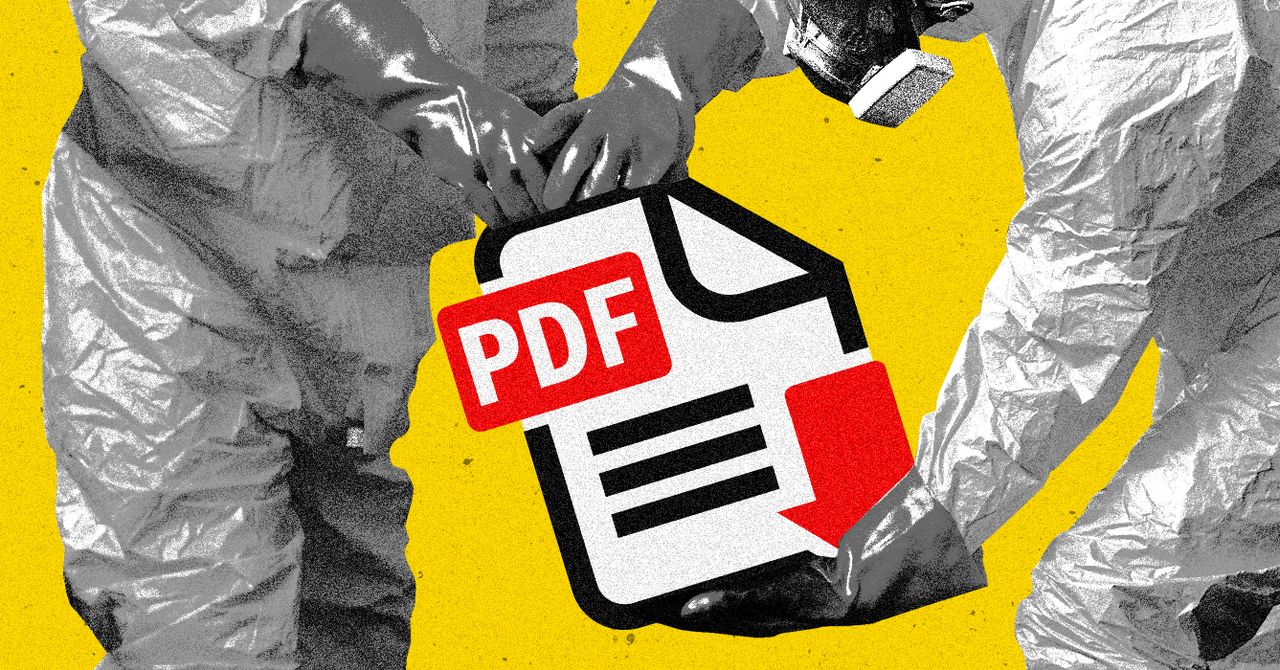
Word documents, and even PDF files, aren’t necessarily safe. These normally innocuous files can be injected with malicious “poison” code or simple scripts of code that can be a serious security risk.
You probably already know it’s dangerous to open files from sources you can’t necessarily trust. If you’re an activist or journalist—or anyone who occasionally depends on anonymous tips to do their jobs—you might run into a situation where potentially useful information is inside a Microsoft Word document or PDF file that you can’t exactly vouch for. Wouldn’t it be nice if you could open those files and read them without exposing your device to potential security risks?
Dangerzone is a free and open source tool built for this purpose. Originally built by journalist and security engineer Micah Lee, this application opens files in a sandbox environment with no internet access, then converts the file to an image-based PDF with no scripting enabled. The resulting PDF has any malicious code stripped out and should be safe to open—at least, as safe as anything can be.
“You can think of it like printing a document and then rescanning it to remove anything sketchy, except all done in software,” explains the about page, which includes a lot of fascinating details about how the application works.
To get started, download and install Dangerzone. There are downloads for Windows, macOS, and various Linux systems. The first time you run it there will be a brief setup, after which you can simply drag files to the window.
Photograph: Justin Pot
The application can open and convert PDF, Word, Excel, PowerPoint, Open Office, EPUB, and image files. You can drag and drop multiple documents at once, if you’d like.
After adding documents you will be asked a few questions: where you’d like the resulting files to end up, whether they should open after the conversion is done, and whether you’d like to use optical character recognition (OCR) in order to make the document searchable. You can also move the original, potentially unsafe documents into a subfolder named “unsafe,” helping ensure you don’t confuse them with the newly made safe ones.
.png)
Photograph: Justin Pot

I always tell people that the best thing I’ve ever tested for my job here on the WIRED Reviews team is my automatic litter box from Litter-Robot. I recommend every cat owner invest in an automatic litter box. If they can swing it, the Litter-Robot is the best one to invest in. You’ll be able to say goodbye to the days of scooping and smells while this nifty machine does the grunt work for you.
Litter-Robot is the OG automatic litter box, and the name itself has become synonymous with the concept. And that’s not by accident, as the brand makes incredibly well-made, ergonomic products to help the lives of pet parents everywhere. Along with their famous automatic litter boxes, they also make a super sleek automatic pet feeder that I’ve also tested (and loved). These gadgets are an investment, and can be pricey, but we here at WIRED love the brand so much that we’ve rounded up some of the best Litter-Robot promo codes, coupons, and deals to make these life-changing pet machines more affordable. Because your pet (and you) deserve it.
Get $150 Off Litter-Robot Bundles This Month: No Promo Code Needed
One of the best ways to save big without needing a Litter-Robot promo code is to buy in a bundle. Litter-Robot has several bundles that give you all the essentials you’ll need to get started using your automatic litter box, like a litter trapping mat, replacement waste bags, odor eliminators, litter, and more. A bundle is a great way to save money on the purchases you’ll already have to make, without needing a Litter-Robot coupon. You can get $150 off several different bundles, including Litter-Robot 4 models, as well as the newly released Litter-Robot 5 and Litter-Robot EVO models.
Get the Best Deals on the Litter-Robot 4
I’ve tested well over a dozen models of automatic litter boxes from different brands, including several models from Litter-Robot. The one I keep coming back to is my personal favorite, the Litter-Robot 4. Even though the 5 is the newest model (I’ve tested it and I’m in the process of writing the review now), I just can’t quit you, Litter-Robot 4! I still think it’s one of the best automatic litter boxes you can buy: it has a user-friendly, intuitive connected app that isn’t overcrowded or confusing, the drawer is easy to pull out to remove waste, it has buttons on the top to manually change, and it doesn’t take up a large footprint on the floor. Plus, with a variety of discounted bundles to choose from, you won’t even need a Litter-Robot promo code.
Litter-Robot 5 Pro Insights Bundle Discount: $150 Off
As previously mentioned, I just tested the Litter-Robot 5 Pro, part of Litter-Robot’s recently released line of brand new models. I was seriously impressed with this model, which looks super similar to the Litter-Robot 4, but has a built-in camera to see what’s going on inside and outside of the box. The newest model isn’t cheap, but right now, the Litter-Robot 5 Pro Insights Bundle is only $999 ($152 off). This bundle includes the newest Litter-Robot 5 Pro with built-in camera, plus a litter tracking mat and waste drawer liners to get you started. And as an added bonus, Litter-Robot has a 90-day in-home trial, one-year warranty, and free shipping to the lower 48.
Take $50 Off the Litter-Robot EVO Starter Bundle
The Litter-Robot EVO is another newly released model from Litter-Robot, but this one is a more pared-down, basic version that’s streamlined and compact. I personally love the simpler models (hence my paragraph-long love letter to the Litter-Robot 4 above). If you’re someone who doesn’t need to watch a camera feed of your cat peeing and pooing, the EVO is a more affordable, basic option that gets the job done efficiently. Right now, the Litter-Robot EVO Starter Bundle is $782 ($50 off), and has everything you need to get settled with your new auto box, including waste drawer liners, a litter trap mat, a bag of litter, and odor traps to keep things smelling fresh.
Save 35% on Cat Essentials With a Litter-Robot Discount Code
If you live in a big city like me, there’s nothing worse than carrying heavy litter down icy streets or in hot, packed subway cars. Autoshipping my (often heavy) cat essentials has been a game-changer. If you choose autoship, you’ll save 35% on cat essentials like litter, waste drawer liners, odor traps, filters, and more with this Litter-Robot discount code.
{Get 35% Off Litter-Robot Accessories
I love my Litter-Robot 4, but I highly encourage everyone to spring for the Litter-Robot-branded accessories to accompany the device. This automatic litter box works excellently as is, but things like a ramp for senior cats, filter replacements, and odor traps will keep the device running like new for longer. Keep your investment in tip-top shape for way less with discounted accessories and bundles, for up to 35% off.

If your TV isn’t as smart as you hoped, or you just hate its built-in interface for some reason, there are a variety of other options for dedicated streaming. For households that watch a lot of shows and movies on Prime Video or use Alexa for their smart home management, we recommend checking out the Fire TV Stick 4K Max. The latest generation is currently marked down to just $35 for the Amazon Big Spring Sale, a $25 discount from its usual price.
While the Fire TV Stick is a good choice for Prime Video, it plays well with basically all of the major streaming services you’d expect, including Netflix, Disney+, and HBO Max. The previous generation had just 8 GB of storage, but the new model’s upgraded 16 GB means you won’t have to choose which apps to keep and which to delete. If you have a compatible controller and an Xbox Game Pass subscription, you can even stream games directly to the Fire TV Stick right from the cloud. With some help from Wi-Fi 6E, apps will download faster and stream at higher quality with less buffering, as long as your router supports it.
One of the standout features is the Fire TV Stick’s integration with Alexa smart home systems. While watching your shows, you can easily pull up a picture-in-picture of any security feeds, and there are options to control other smart devices, like lights, right from your television. The remote even doubles as an Alexa with its built-in microphone, letting you find shows or ask questions without getting off the couch. With a built-in gallery mode, the TV can slowly rotate through photos and paintings like a screensaver, and you can ask the remote to quickly find out what you’re looking at.
The world of streaming devices is surprisingly deep, so if you’re curious what else is out there, make sure to swing by our guide to the best 4K streaming sticks and hubs. For the Alexa and Amazon-powered home, there’s no substitute for the Fire TV Stick 4K Max, so make sure to grab yours for just $35 before the sale ends.


King Charles important annual tradition hit with setback as warning issued

This App Makes Even the Sketchiest PDF or Word Doc Safe to Open

‘I sent eight letters’: Drivers hope for payout from car finance redress scheme

-

 Politics7 days ago
Afghanistan announces release of detained US citizen
-
 Sports1 week ago
Broadcast industry CEO says consolidation is ‘essential’ to compete for NFL soaring media rights prices
-

 Entertainment1 week ago
UN warns migratory freshwater fish numbers are spiralling
-

 Tech1 week ago
Can a Home Appliance Fix the Problem of Soft-Plastic Waste?
-
 Business7 days ago
Property Play: Home flippers see smallest profits since the Great Recession, real estate data firm says
-
 Business1 week ago
Gold prices soar in Pakistan – SUCH TV
-

 Fashion7 days ago
ICE cotton slips on weaker crude, profit booking
-
 Business7 days ago
More women are entering wealth management, but few are in advisory roles, study finds