

Tech
The EV Battery Tech That’s Worth the Hype, According to Experts

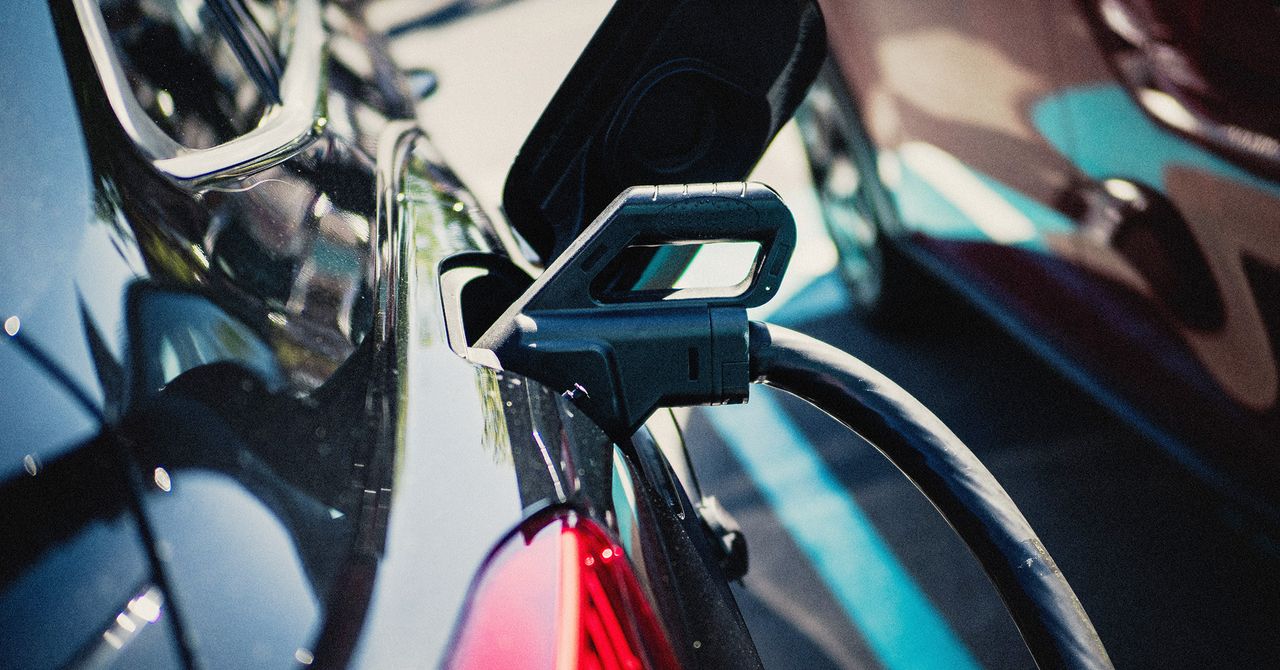
You’ve seen the headlines: This battery breakthrough is going to change the electric vehicle forever. And then … silence. You head to the local showroom, and the cars all kind of look and feel the same.
WIRED got annoyed about this phenomenon. So we talked to battery technology experts about what’s really going on in electric vehicle batteries. Which technologies are here? Which will be, probably, but aren’t yet, so don’t hold your breath? What’s probably not coming anytime soon?
“It’s easy to get excited about these things, because batteries are so complex,” says Pranav Jaswani, a technology analyst at IDTechEx, a market intelligence firm. “Many little things are going to have such a big effect.” That’s why so many companies, including automakers, their suppliers, and battery-makers, are experimenting with so many bit parts of the battery. Swap one electrical conductor material for another, and an electric vehicle battery’s range might increase by 50 miles. Rejigger how battery packs are put together, and an automaker might bring down manufacturing costs enough to give consumers a break on the sales lot.
Still, experts say, it can take a long time to get even small tweaks into production cars—sometimes 10 years or more. “Obviously, we want to make sure that whatever we put in an EV works well and it passes safety standards,” says Evelina Stoikou, who leads the battery technology and supply chain team at BloombergNEF, a research firm. Ensuring that means scientists coming up with new ideas, and suppliers figuring out how to execute them; the automakers, in turn, rigorously test each iteration. All the while, everyone’s asking the most important question: Does this improvement make financial sense?
So it’s only logical that not every breakthrough in the lab makes it to the road. Here are the ones that really count—and the ones that haven’t quite panned out, at least so far.
It’s Really Happening
The big deal battery breakthroughs all have something in common: They’re related to the lithium-ion battery. Other battery chemistries are out there—more on them later—but in the next decade, it’s going to be hard to catch up with the dominant battery form. “Lithium-ion is already very mature,” says Stoikou. Lots of players have invested big money in the technology, so “any new one is going to have to compete with the status quo.”
Lithium Iron Phosphate
Why it’s exciting: LFP batteries use iron and phosphate instead of pricier and harder-to-source nickel and cobalt, which are found in conventional lithium-ion batteries. They’re also more stable and slower to degrade after multiple charges. The upshot: LFP batteries can help bring down the cost of manufacturing an EV, an especially important data point while Western electrics struggle to compete, cost-wise, with conventional gas-powered cars. LFP batteries are already common in China, and they’re set to become more popular in European and American electric vehicles in the coming years.
Why it’s hard: LFP is less energy dense than alternatives, meaning you can’t pack as much charge—or range—into each battery.
More Nickel
Why it’s exciting: The increased nickel content in lithium nickel manganese cobalt batteries ups the energy density, meaning more range in a battery pack without much more size or weight. Also, more nickel can mean less cobalt, a metal that’s both expensive and ethically dubious to obtain.
Why it’s hard: Batteries with higher nickel content are potentially less stable, which means they carry a higher risk of cracking or thermal runaway—fires. This means battery-makers experimenting with different nickel content have to spend more time and energy on the careful design of their products. That extra fussiness means more expense. For this reason, expect to see more nickel use in batteries for higher-end EVs.
Dry Electrode Process
Why it’s exciting: Usually, battery electrodes are made by mixing materials into a solvent slurry, which then is applied to a metal current collector foil, dried, and pressed. The dry electrode process cuts down on the solvents by mixing the materials in dry powder form before application and lamination. Less solvent means fewer environmental and health and safety concerns. And getting rid of the drying process can save production time—and up efficiency—while reducing the physical footprint needed to manufacture batteries. This all can lead to cheaper manufacturing, “which should trickle down to make a cheaper car,” says Jaswani. Tesla has already incorporated a dry anode process into its battery-making. (The anode is the negative electrode that stores lithium ions while a battery is charging.) LG and Samsung SGI are also working on pilot production lines.
Why it’s hard: Using dry powders can be more technically complicated.
Cell-to-Pack
Why it’s exciting: In your standard electric vehicle battery, individual battery cells get grouped into modules, which are then assembled into packs. Not so in cell-to-pack, which puts cells directly into a pack structure without the middle module step. This lets battery-makers fit more battery into the same space, and can lead to some 50 additional miles of range and higher top speeds, says Jaswani. It also brings down manufacturing costs, savings that can be passed down to the car buyer. Big-time automakers including Tesla and BYD, plus Chinese battery giant CATL, are already using the tech.
Why it’s hard: Without modules, it can be harder to control thermal runaway and maintain the battery pack’s structure. Plus, cell-to-pack makes replacing a faulty battery cell much harder, which means smaller flaws can require opening or even replacing the entire pack.
Silicon Anodes
Why it’s exciting: Lithium-ion batteries have graphite anodes. Adding silicon to the mix, though, could have huge upsides: more energy storage (meaning longer driving ranges) and faster charging, potentially down to a blazing six to 10 minutes to top up. Tesla already mixes a bit of silicon into its graphite anodes, and other automakers—Mercedes-Benz, General Motors—say they’re getting close to mass production.
Why it’s hard: Silicon alloyed with lithium expands and contracts as it goes through the charging and discharging cycle, which can cause mechanical stress and even fracturing. Over time, this can lead to more dramatic battery capacity losses. For now, you’re more likely to find silicon anodes in smaller batteries, like those in phones or even motorcycles.
It’s Kind of Happening
The battery tech in the more speculative bucket has undergone plenty of testing. But it’s still not quite at a place where most manufacturers are building production lines and putting it into cars.
Sodium-Ion Batteries
Why it’s exciting: Sodium—it’s everywhere! Compared to lithium, the element is cheaper and easier to find and process, which means tracking down the materials to build sodium-ion batteries could give automakers a supply chain break. The batteries also seem to perform better in extreme temperatures, and are more stable. Chinese battery-maker CATL says it will start mass production of the batteries next year and that the batteries could eventually cover 40 percent of the Chinese passenger-vehicle market.
Why it’s hard: Sodium ions are heavier than their lithium counterparts, so they generally store less energy per battery pack. That could make them a better fit for battery storage than for vehicles. It’s also early days for this tech, which means fewer suppliers and fewer time-tested manufacturing processes.
Solid State Batteries
Why it’s exciting: Automakers have been promising for years that groundbreaking solid state batteries are right around the corner. That would be great, if true. This tech subs the liquid or gel electrolytes in a conventional li-ion battery for a solid electrolyte. These electrolytes should come in different chemistries, but they all have some big advantages: more energy density, faster charging, more durability, fewer safety risks (no liquid electrolyte means no leaks). Toyota says it will finally launch its first vehicles with solid state batteries in 2027 or 2028. BloombergNEF projects that by 2035, solid state batteries will account for 10 percent of EV and storage production.
Why it’s hard: Some solid electrolytes have a hard time at low temperatures. The biggest issues, however, have to do with manufacturing. Putting together these new batteries requires new equipment. It’s really hard to build defect-free layers of electrolyte. And the industry hasn’t come to an agreement about which solid electrolyte to use, which makes it hard to create supply chains.
Maybe It’ll Happen
Good ideas don’t always make a ton of sense in the real world.
Wireless Charging
Why it’s exciting: Park your car, get out, and have it charge up while you wait—no plugs required. Wireless charging could be the peak of convenience, and some automakers insist it’s coming. Porsche, for example, is showing off a prototype, with plans to roll out the real thing next year.
Why it’s hard: The issue, says Jaswani, is that the tech underlying the chargers we have right now works perfectly well and is much cheaper to install. He expects that eventually, wireless charging will show up in some restricted use cases—maybe in buses, for example, that could charge up throughout their routes if they stop on top of a charging pad. But this tech may never go truly mainstream, he says.













In addition to the rubber balls, there’s a nice physical interface on the side for adjusting volume and pairing multiple Mix speakers together if you have multiple on hand (I was only sent the single mono speaker). Setup involves installing the Soundboks app, pairing to the speaker via Bluetooth on your phone, and picking whatever you want to play. It’s all quick and painless, especially for my first-time pairing with a Samsung Galaxy S24 Ultra.
Otherwise, it’s all very pro audio. Everything reminds me very much of the Peavey PA system I have in my music rehearsal space. The top of the speaker features a built-in carrying handle and a place for a strap (an accessory you have to buy aftermarket, or you can fasten it with any strap you have that fits through the hole). There are also top-hat mounts for the speakers to slide onto traditional PA pole stands, if you wanted to use them in that way at a party or event.
The grill is replaceable, as is the massive internal battery, which means that these things are pretty much indestructible as long as the amp and speakers themselves still work—the battery is the weak point of most portable speakers in 2026.
I bounced it around my yard, dropped it off my patio, and generally beat the crap out of it during my two-week testing period, and the thing just needed a little wipe down and a charge when it ran out of juice. The claimed 40 hours of battery at reasonable volume is accurate, but you’ll get about eight hours at max volume (which is very good for the category). If you need to bring some walk-out music to your kid’s all-day Little League tournament, this a great way to go.
Big Sound
Photograph: Parker Hall
Soundboks calls this speaker midsize, but at 21.4 pounds and the size of a medium-size cooler, I’d still call it a large speaker. That said, the size doesn’t make it any less portable than competitors from JBL and others; you still need a car or cargo ebike to take one of these with you, so what’s a couple inches here or there? The fact that this is a rectangle actually makes it easier to strap down than many others, especially with the holes for the strap and the built-in handle to tie down through.
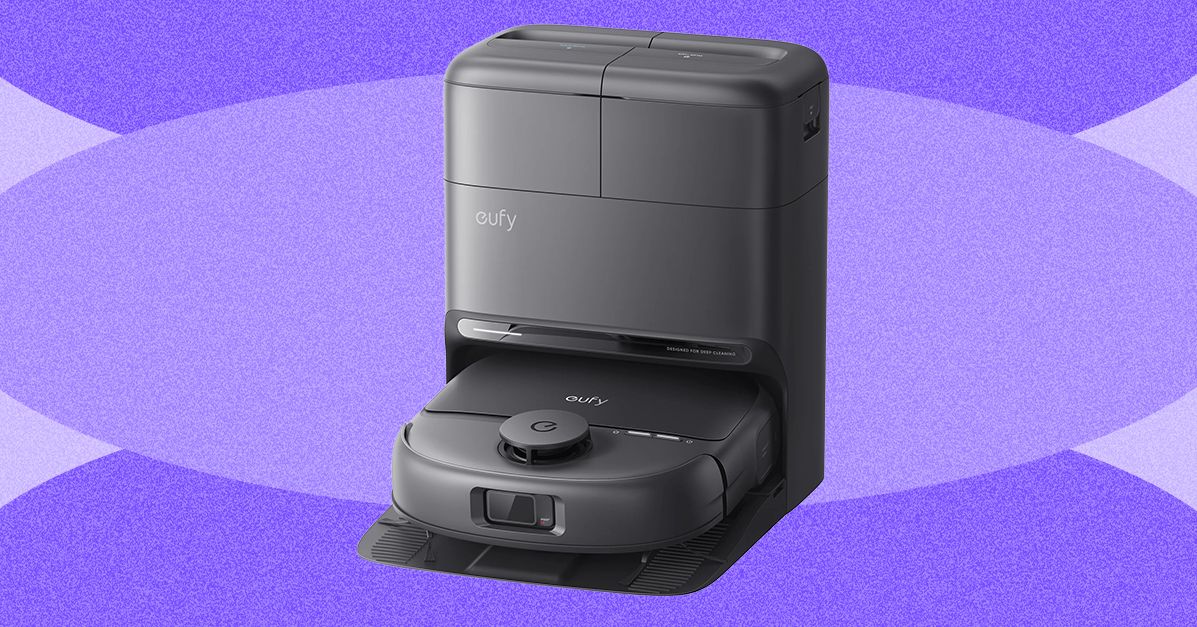
Where the X10 Pro Omni had rotating mop pads, the rolling mop pad on the Omni C28 continuously self-cleans to prevent spreading dirt or grime to other parts of the house. Both apply downward pressure, but neither can spot dirtier places on their own as pricier, AI-powered robot vacuums will. Still, I was happy to see that it was able to scrub away some of the large dirt smudges in my entryway, though it didn’t get all of them. It also didn’t manage to scrub away all of the cherry juice I intentionally spilled in my routine mess setup for robot vacuum testing, even after sending the vacuum to do a second mopping job on one of the spots.
Photograph: Nena Farrell
Still, the Omni C28 was able to raise its roller mop high enough when it switched from mopping my floors to vacuuming my living room rug that there was no hint of dampness anywhere. The older X10 did get my colleague Adrienne So’s carpet wet, but it didn’t get mine wet, though my carpet is a fairly low pile. It did a fine job vacuuming the carpet, though I could tell the difference in suction between this and more powerful vacuums I’ve tested.
The base station is nice and compact, and includes drying fans to dry off the roller mop. That does mean there’s a gentle fan noise in the background for a couple of hours after you use this robot vacuum, which was more annoying than I expected, but you could easily place this vacuum’s base station in a less central spot in your home so you don’t hear it. You could also set up a schedule for the vacuum to run in the morning and finish its drying job before you get home.
Multi-Floor Madness

Photograph: Nena Farrell
My favorite feature on the Omni C28 is that, even at this price point, it can still learn multiple maps. While it can’t climb up stairs, you can move it around your home and switch the maps in the app to the floor you’ve relocated to. This isn’t new for Eufy, as the older affordable model can do that too, but it’s nice to see the feature maintained when I’ve tried more expensive robot vacuums that don’t include it. It’s pretty simple to use; you’ll go to the maps, select “make a new map,” and then activate the robot to map. Once the map is made, you’ll switch to that map from the little map icon on the right side, which will label them with numbers in the order you created them.

Lisa Ann technically quit the porn business in 2019, but for $30 a month you can now dream up any X-rated scenario of her on your computer.
Ann, 53, was an adult performer for three decades starting in the mid 1990s and retired because she had reached her savings goal.
But last year she had a change of heart. Ann, who considers herself an AI fanatic, signed a contract with OhChat, a London-based AI companion company, to license her likeness on its platform, essentially creating an AI version of her in every way that can be used to make sex scenes for paying customers: same voice, same physique, and same pillowy brown hair.
As issues around deepfakes intensify and questions about the future of the adult industry become more dire with the passing of age-verification laws, several AI companion platforms want to create a new standard for consent-driven AI porn. More than sexting a faceless chatbot, digital twins—also called duplicates, doubles, clones, or replicas—draw on the exact likeness, including speech and mannerisms, of your favorite performers and creators.
Ann, now a self-help author and sports radio host, represents a growing faction in adult entertainment who not only believe AI is going to reshape the sex industry but who want a say in how that change materializes. She sees the decision to partner with OhChat as a way to tap into a fountain of youth—and stay at her peak forever.
“This keeps my name alive,” she says of her digital twin. “She’s never going to age.”
For Cherie Deville, a 47-year-old performer known for shooting MILF content, digital twins are just a smart business strategy to earn passive income while the opportunity is hot. “We can either let the makers of AI take the lion’s share of the money in the sex-work space, or creators and businesses can get on board and start creating their own revenue sources through AI.”
OhChat creators, who must submit 30 images and undergo voice training with a bot, sign an agreement stating the level of sexual content allowed for their digital twin. Ann is considered a “Level 4”—the highest on the platform—which means paying members can create scenarios and chats of her that include full nudity and sex. Per the company’s guidelines, clones can be deleted at any time.
“For guys that like to say good morning or good night, they now have that access. The fact that I’m not shooting scenes anymore also allows new scenes to be created,” Ann says.
Once described by CEO Nic Young as the “love child between OnlyFans and OpenAI,” OhChat launched in 2024 and has since scaled to over 400,000 users. According to data shared with WIRED, OhChat has 250 creators, 90 percent of which are female, and has contracts with celebrities Carmen Elektra and Joe Exotic. The platform runs on a tiered subscription model—$5 a month for on-demand texts or up to $30 for unlimited adult content—and the company, like OnlyFans, takes a 20 percent cut.
Other competitors in the space include My.Club, Joi AI and SinfulX AI, the platform that adult film actress Georgia Koneva partnered with this month, saying, in a press statement, that her avatar gave her a “new way to share my voice and personality with the people who follow me.” According to SinfulX AI, it also develops “original” synthetic characters using licensed source imagery from adult performers whose content it has the rights to use. In the same statement, the company said that those AI-generated “characters” are “designed not to replicate any single individual while still maintaining the realism for which its content is known.”


Major outgoing CEOs are citing AI as a factor in their decisions to step down

Camila Morrone talks new horror series and working with Duffer brothers

Cruz Beckham’s ‘fortunate’ statement hints at inside family drama

-

 Fashion1 week ago
Sales at US apparel, clothing accessories stores up 4% YoY in Jan 2026
-

 Tech1 week ago
Justice Department Says Anthropic Can’t Be Trusted With Warfighting Systems
-
 Business1 week ago
Stocks and pound rise as US rate call approaches
-

 Politics1 week ago
Iran strikes Tel Aviv with cluster-warhead missiles in retaliation of Larijani’s martyrdom
-

 Entertainment1 week ago
Val Kilmer revived 1 year after death through AI
-

 Sports1 week ago
March Madness 2026 – How to watch in SA, start time, schedule, TV channel for NCAA championship basketball tournament
-

 Fashion1 week ago
Spain’s Inditex FY25 sales rise 3.2% to $46.28 bn amid strong demand
-
 Business1 week ago
Brits cashing in jewellery as gold price hits record high