

Tech
The Internet’s Favorite Blanket Is 45 Percent Off


If you’ve spent more than five minutes on TikTok, you’ve probably heard someone rave about Lola Blankets. They’re draped over couches in Get Ready With Me videos, folded at the foot of perfectly made beds, and name-dropped in podcast ads.
I wanted to be skeptical, but the hype is sadly real; we tested the blankets at WIRED and have included them in multiple gift guides and roundups, from the Best Weighted Blankets to the Best Housewarming Gifts to the Best Gifts for Mom.
From February 14 through February 16, Lola Blankets are 45 percent off with code WINTER45. No exclusions. This is the kind of discount that makes the math very compelling. Buy two, one for yourself and one as a present for a loved one, or a furry loved one (see below).
-
Courtesy of Lola Blankets
-

Lola Blankets
The Original Lola
Lola Blankets come in two styles: the Original and the Weighted Blankets. WIRED reviewer Nena Farrell adores the Original (in Malibu Blue). It comes in an assortment of colors, patterns, and collaborations, plus five sizes: baby, medium, large, Lola XL, and travel. The double-sided fabric is an Oeko-Tex Standard 100-certified faux fur blend of 95 percent polyester and 5 percent spandex, with four-way stretch. It’s zero-shed, stain-resistant, and double-hemmed for durability. I can confirm that durability matters. Mine has survived everyday use and the affections of my cat, who has fully claimed it as her throne BTW.

Courtesy of Lola Blankets
Lola Blankets
Weighted Lola











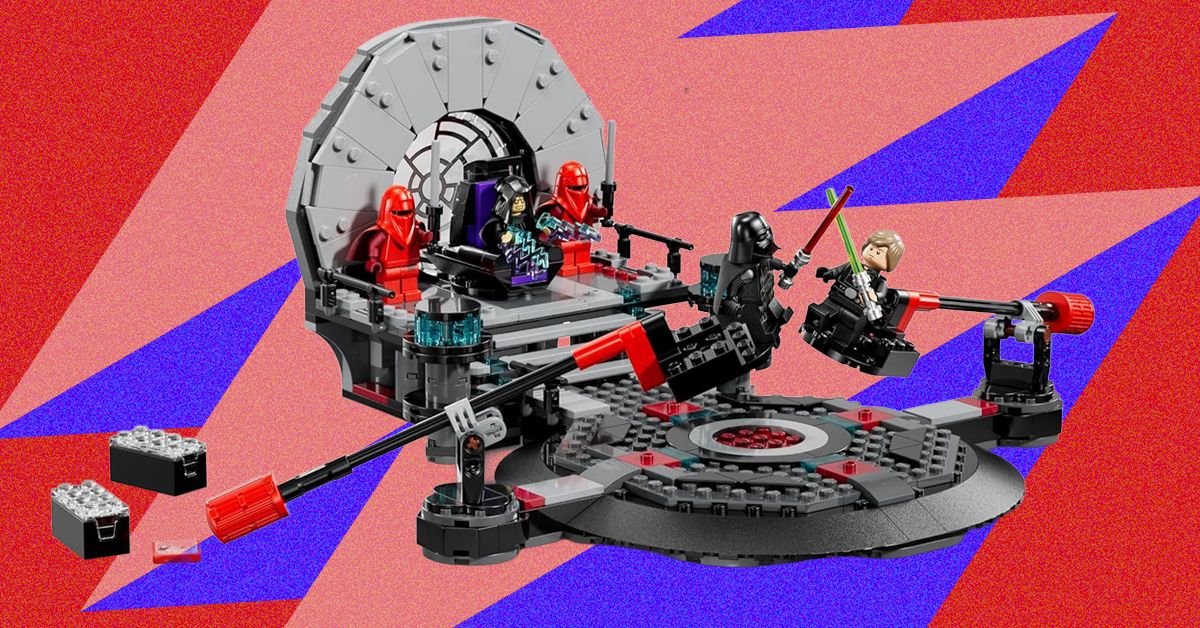
To address the elephant in the room: Yes, Lego bricks are made of plastic. The company makes billions of tiny bricks that proliferate all over the world and all over your living room, and they will not biodegrade and cannot be recycled.
With that said, Lego bricks are machined to incredibly tight tolerances. Unless your dog chews on them, the bricks retain what Lego refers to as their “clutch power” for decades. Like so many others, my family became obsessed with Lego sets during the Covid-19 pandemic, and we still love them today. Years on, I have found no better way to while away a rainy afternoon than making tiny tyrannosaurs and pterosaurs with your son.
If you and your loved ones are also obsessed with Lego sets, we have some great gift ideas for you. If not, don’t forget to check out our other gift guides; Mother’s Day and Father’s Day are coming up sooner than you think.
Updated April 2026: We added the Throne Room, added more information about smart bricks, and updated links and prices.

In a major collaboration that will see the two AI companies link to the GPU manufacturer’s AI factory and AI-radio access network (RAN) ecosystem, as well as investigate research into silicon photonics technology, Marvell Technology has joined the Nvidia AI ecosystem through the NVLink Fusion platform.
The primary objective of the strategic partnership is to connect Marvell to the Nvidia universe, offering customers building on Nvidia architectures greater choice and flexibility in developing next-generation infrastructure. As part of the development, Nvidia has invested $2bn in Marvell.
Operating for more than 30 years, Marvel’s stated mission is to move, store, process and secure data with semiconductor solutions. The company believes that through a process of “deep collaboration and transparency” it is ultimately changing the way tomorrow’s enterprise, cloud and carrier architectures transform for the better.
It recognised that as more of the world’s data flows through the cloud, each cloud is unique and uses its portfolio of data infrastructure semiconductor technology to optimise the best solution for customers’ needs. Working on-premise or in the cloud, it works with customers to look for “unexpected connections” that deliver a competitive edge.
The partnership builds on Nvidia NVLink Fusion, a rack-scale platform that enables customers to develop semi-custom AI infrastructure using the NVLink ecosystem. Under the terms of the partnership, Marvell will provide custom XPUs and NVLink Fusion-compatible scale-up networking, while Nvidia will provide the supporting technologies, including Vera CPU, ConnectX NICs, BlueField DPUs, NVLink interconnect and Spectrum-X switches, as well as rack-scale AI compute.
For customers developing custom XPUs, NVLink Fusion is designed to enable a heterogeneous AI infrastructure fully compatible with Nvidia systems, allowing “seamless” integration with Nvidia GPU, LPU, networking and storage platforms while using Nvidia’s technology stack global supply chain ecosystem.
The companies will also partner to transform the world’s telecommunication network into AI infrastructure with Nvidia Aerial AI-RAN for 5G/6G, and advance networking for AI. This will include advanced optical interconnect solutions and silicon photonics technology.
“Our expanded partnership with Nvidia reflects the growing importance of high-speed connectivity, optical interconnect and accelerated infrastructure in scaling AI,” said Matt Murphy, chairman and CEO of Marvell. “By connecting Marvell’s leadership in high-performance analogue, optical DSP, silicon photonics and custom silicon to Nvidia’s expanding AI ecosystem through NVLink Fusion, we are enabling customers to build scalable, efficient AI infrastructure.”
Jensen Huang, founder and CEO of Nvidia, added: “The inference inflection has arrived. Token generation demand is surging, and the world is racing to build AI factories. Together with Marvell, we are enabling customers to leverage Nvidia’s AI infrastructure ecosystem and scale to build specialised AI compute.”
The new strategic partnership follows a similar arrangement that Nvidia struck with Nokia in October 2025. In this, the companies have announced a partnership to add the former’s AI-powered RAN products to Nokia’s RAN portfolio, enabling communication service providers to launch AI-native 5G Advanced and 6G networks on Nvidia platforms.
The aim was to drive wireless innovation in performance and efficiency, ensuring consumers using generative, agentic and physical AI applications on their devices will have “seamless” network experiences. The companies said that by working together, they were laying the strategic infrastructure and opening up a high-growth frontier for telecom providers by delivering distributed edge AI inferencing at scale.
Something has shifted in the workshop. After years of DIY being sold as a weekend hobby for the mildly bored, home improvement has quietly become a serious cultural force. The global DIY market is forecast to hit nearly a trillion dollars this year. And while a third of you are apparently planning on starting a new DIY project in the next three months, the primary motivator for DIYers is, you guessed it, saving money. Not a bad thing right now, considering how the Iran war is spiking prices.
The tape measure and the drill you inherited from your folks will only take you so far. Fortunately, the tools driving this boom have never been smarter, and better hardware should mean, hopefully, better results. Whether you’re building furniture, finishing a deck, or just finally hanging that TV straight, the tools available right now are genuinely more precise than anything a generation ago could have imagined. From a miniaturized soldering station to a kid-safe desktop cardboard router, these are WIRED’s 15 picks worth making room for in your toolbox this year.
And no matter how good your tools are, never forget: measure twice, cut once.
A Multifunction Power Tool
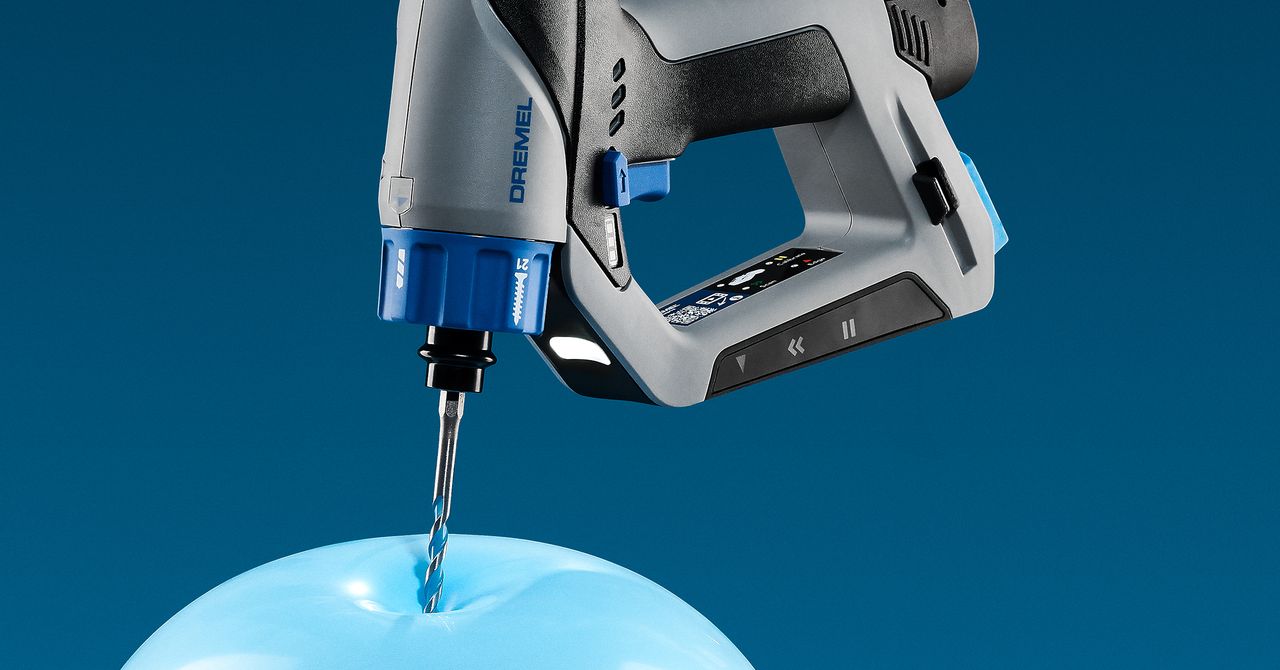
This intimidation-free power tool is perfect for people looking to conquer the multitude of household tasks that don’t require a massive hammer drill. Dremel’s neatly balanced 12-volt tool is made for fixing, tightening, and assembling. The detachable laser level and clever electronic stud finder hidden in the front of the handle make it ideal for hanging pictures, shelves, and 4K TVs. Comes with nine drivers and three drill bits, covering most household fixes without the need for a complete toolbox overhaul.
A Soldering Station

A compact, open-source soldering workstation that condenses a full electronics bench into a single portable unit. The battery-powered soldering iron offers precise temperature control from 212 to 842 degrees Fahrenheit (100 to 450 Celsius), making it suitable for delicate PCB work as well as more robust tasks. Integrated fume extraction pulls harmful vapors away at the source, while built-in magnification and adjustable LED lighting improve visibility. The clincher is that by being open-source, Soldr positively welcomes hardware tweaks and firmware upgrades, making it as appealing to hobbyists as it is to serious prototypers.
A Sander

Festool
DTSC 200 Basic Cordless Delta Sander
It is well known in the trades that if someone’s workshop is full of Festool gear, you can bet they take their craft seriously. And with its new 18 V cordless sander, the brand has made the possibility of achieving perfection just that bit faster. The triangular pad reaches deep into corners and tight edges, while variable speed control allows for fine-tuning between aggressive stock removal and ultrasmooth finishing. Weighing just over 2.4 lbs without the battery, the sander is designed for controlled, one-handed operation, while the integrated LED casts low-angle illumination across your work surface to highlight even the slightest imperfections. Connect it to a vacuum hose to keep the work table clean, or snap on the included dust collection bag and go fully mobile.
A Smarter Level

Put the trundle wheel down; this modular, stackable touch screen measuring system combines laser distance, level, and rolling scale modules in one, measuring up to 164 feet of distance at a 1/16-inch accuracy. The system captures measurements in real time and syncs instantly to the app, allowing users to generate floor plans or mark up dimensions without manual note-taking. Compact enough to fit in a pocket yet precise enough for professional use, it’s a seriously smart upgrade for anyone still juggling tape measures and spirit levels.
A Premium Sewing Machine

Husqvarna
Viking Designer Sapphire 85 Sewing & Embroidery Machine
While it might be overkill if you’ve not yet mastered the art of sewing buttons back on, this pro-grade smart sewing machine can do seriously impressive things with a needle and thread. It offers more than 680 stitch patterns through an 8-inch color touch screen for intuitive control, alongside automatic thread tension and sensor-based foot adjustments. The extended sewing surface allows for large quilting projects, while the powerful motor ensures consistent stitch quality across thick fabrics. Built-in connectivity and access to the mySewnet Library give you access to a continuously growing collection of embroidery designs, plus the ability to craft and implement your own.
A Box Cutter

Designed by noted knife maker Richard Rogers, the Box Key applies his clean, minimalist approach to a tiny everyday cutter. The 1.24-inch drop point blade is made from Sandvik 12C27 steel with a stone-wash finish, which helps disguise scuffs from daily use while improving corrosion resistance. The stainless steel handle with a hole keeps the profile slim enough to attach to a key ring, and at 1 ounce, it adds barely any weight to your daily carry. A smart, indispensable little tool for opening boxes, trimming cord, and other light-duty jobs.
A Toolbox

Japanese-inspired, UK-based Niwaki (translates as “garden tree”) produces seriously desirable and practical tools for home and garden. With the ST-Type Toolbox, however, the brand has created a vintage design that wouldn’t look out of place perched on a girder in the famous “Lunch Atop a Skyscraper” photo. Built from powder-coated steel with a traditional cantilever design, it measures 14.2 inches wide and opens to reveal tiered compartments that keep hand tools organized and visible. The metal dividers in the top trays can be rearranged to hold screws, nails, and bits, or removed entirely to fit even more tools.
Safety Glasses

Pit Viper
Rev-Loc Z87+ Safety Glasses
Pit Viper may be famous for its right-wing-baiting anarchic approach to eyewear, but we bet you didn’t know it also does a fantastic range of equally irreverent-looking, but highly practical safety glasses. (This model will launch on April 13.) Certified to ANSI Z87+ standards, they have impact-resistant lenses, 100 percent UV protection, antifog coatings, plus adjustable arms and nose pieces for a super-secure fit. Available with standard- or high-contrast polarized lenses, the side shields can be removed when not needed.
A Handy Saw

A good value, highly practical camp saw that folds small, but still cuts the mustard. The 12-inch blade is mounted on a four-pivot frame that maximizes usable cutting length and keeps tension consistent through each stroke. Then, when you’re done, it folds flat without disassembly, fully enclosing the blade for safe transport. Weighing 15.3 ounces, it is light enough for any expedition, but still feels reassuringly robust in use. That grippy rubberized textured handle works well in wet conditions, while thankfully, the design accepts standard 12-inch replacement blades.
A 3D Printer

This high-speed 3D printer is built for rapid prototyping, and so is aimed at designers who are tired of overnight prints for simple parts. It spits out building material at speeds of up to 1,200 millimeters per second, driven by a lightweight and accurate delta motion system. The enclosed cylindrical build chamber (12.6 x 16.9 inches) improves temperature stability for materials such as ABS and PETG, while auto-leveling and smart calibration should reduce setup time. A direct-drive extruder with an all-metal nozzle capable of reaching 350 Celsius supports a wide range of filaments. Wi-Fi, an onboard camera, and AI-assisted monitoring all help keep prints on track.
A DIY Stem Project

CircuitMess
NASA Mars Perseverance Rover
The 1972 NASA Moon Buggy is one of only a handful of “products” WIRED has ever awarded a coveted 10/10 score to. It’s a shame you’ll never be able to get your hands on one, but you can always scratch that interstellar itch with this fantastic build-it-yourself Mars Perseverance Rover electronics kit. Designed for STEM learning, it combines more than 200 parts with coding, robotics, and mechanical assembly into a single project. Users can program movement, sensors, and basic autonomy through an included microcontroller, gaining hands-on experience with real-world engineering concepts. As intricate and detailed as it is, the whole model is remarkably smaller than the family cat.
A Leaf Blower

Hoto
20V Cordless Leaf Blower
Bringing some much-needed sci-fi chic to yard work with this cordless 20-volt blower that pushes 720 cubic feet of air per minute at 120 mph from a lightweight body. The compact 3.7-pound design (without battery) makes it easy to use with one hand, even if you’re coping with trees post-leaf-peeping season. A brushless motor improves efficiency and extends the blower’s lifespan, while stepless speed control allows precise adjustment to give you just enough wind to clear light debris all the way up to a full-force clearing. The lithium-ion battery lasts up to 30 minutes, and it’s removable, so you can buy extra batteries to quickly swap in and keep on blowing.
A Charger and Radio

Milwaukee
M18 Packout Radio Charger
Stackable with Milwaukee storage systems, this sound system has a classic rock-ready 10-speaker array capable of blasting The Boss to every corner of a construction site. Built tough and powered either by plugging it in or using the standard M18 battery, it has Bluetooth connectivity and an AM-FM radio. It also doubles as a battery and USB charger for smartphones and power tools. A reinforced housing protects it against drops, dust, and moisture.
An Electric Cutter

A compact, battery-powered cutter designed to remove the effort and improve the precision of a host of cutting tasks. The motorized blade uses SK5 high-carbon steel slicers, delivering clean, controlled cuts through everything from cardboard and fabric to leather and even some plastics. Weighing 10.5 ounces, it is easy to guide with one hand, while the 4V rechargeable lithium battery should let you slice for hours on a single charge. A guarded cutting-edge and trigger activation improve control further, as well as keeping your fingers safe.
For the Kids

This kid-safe router-style cutter is a perfect antidote to the usual screen time. Using a digitally controlled blunt cutting head rather than exposed blades, it lets children (big and small) cut cardboard, card, foam, felt, thin fabrics, and light plastics at either 1,500 rpm for faster cuts or 800 rpm for more controlled work. The standard head can handle materials up to 3 mm thick, but an optional upgrade to a 5 mm “ProCut” head lets you go thicker. The compact 11.8 x 11.8-inch desktop unit comes in pink or green (go pink!) and connects over USB or Wi-Fi to bundled software that can generate cutting templates from simple project designs you upload. The Cutter 2 serves up fun and engaging activities for little ones as young as four.


UNC not in men’s Final Four but still looms large

Oil prices jump and shares drop after Trump threatens more Iran strikes

Swinton Business offers tailored policies to suit your needs

-

 Fashion1 week ago
Ho Chi Minh City bizs adjust production plans, seek new supply chains
-

 Fashion1 week ago
India’s Gen Z to drive half of fashion market by 2030: Reedseer
-

 Fashion1 week ago
Japan’s apparel imports rise 22.9% to $2 bn in February 2026
-

 Entertainment1 week ago
Andrew holds breath as King Charles plans bombshell move amid probe
-

 Entertainment1 week ago
Space company plans bold landing on fast-moving asteroid passing near Earth
-
 Business1 week ago
Co-op boss quits after ‘toxic culture’ claims reported by BBC
-
 Business6 days ago
How do you spot a fake online review?
-

 Fashion6 days ago
China rolls out tariff cuts on Congo imports from April 1