

Tech
The Last Mystery of Antarctica’s ‘Blood Falls’ Has Finally Been Solved

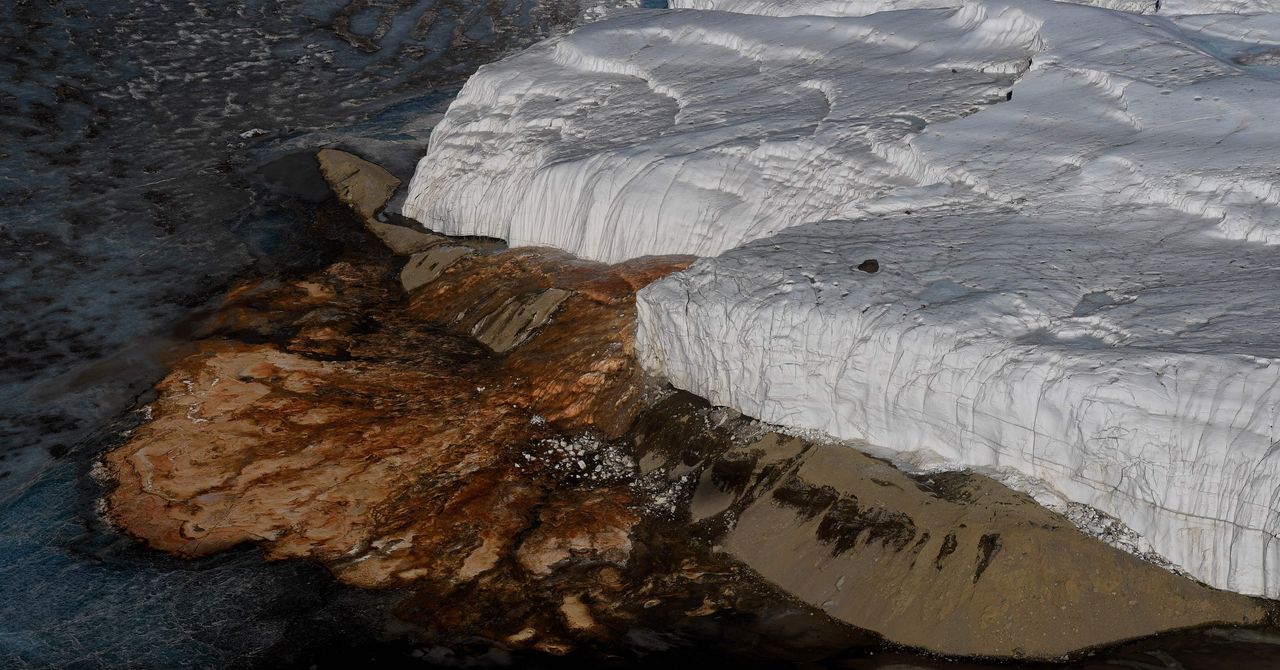
There is a corner of Antarctica that looks like something out of a David Cronenberg movie. It’s located in the dry valleys of McMurdo, an immense frozen desert where, periodically, a jet of crimson liquid suddenly gushes from the dazzling white of the Taylor Glacier. They’re called the Blood Falls, and since their discovery in 1911 by geologist Thomas Griffith Taylor, they’ve fueled a century of scientific speculation.
Recently, a series of observations conducted since 2018 have clarified several mysteries, such as the nature of their reddish color and what keeps them liquid at almost –20 degrees Celsius. New research published this week in the journal Antarctic Science adds the final piece to the puzzle, clarifying what phenomena drive the falls to gush from underground.
The Science Behind the Blood Falls
At the time of their discovery, Taylor attributed the color to the presence of red microalgae. More than a century later, scientists have determined that the red is due to iron particles trapped in nanospheres along with other elements such as silicon, calcium, aluminum, and sodium. These were likely produced by ancient bacteria trapped underground in the area: Once in contact with air, the iron oxidizes, giving the mixture its characteristic rust color.
As for the presence of liquid water, it is actually a hypersaline brine, formed about 2 million years ago when the waters of the Antarctic Ocean receded from the valleys. The very high salinity of this brine prevents the water from freezing, thus allowing it to gush out periodically.
The New Discovery
With the temperature puzzle solved, the question remained as to what physically drove the fluid to erupt. The answer came from cross-referencing GPS data, thermal sensors, and high-resolution images collected in 2018 during an eruption. The analysis demonstrated that the Blood Falls are the result of pressure variations affecting the brine deposits beneath the glacier.
As Taylor Glacier slides downstream, the overlying ice mass compresses the subglacial channels, building up tremendous pressure. When the strain becomes unbearable, the ice gives way: Pressurized brine seeps into the crevices and is shot out in short bursts. Curiously, this release acts as a hydraulic brake, temporarily slowing the glacier’s march. With this discovery, the mysteries of the Blood Falls should finally have been solved, at least for now. The impact of global warming on this complex system in the coming decades remains unknown.
This story originally appeared on WIRED Italia and has been translated from Italian.












Step into the shoes of the strongest, goodest boy in a game that is beautiful, baffling, and impossible to put down.
Source link
Tech
I Put My Dog, Friends, and Family Inside Bike Boxes and Rear Racks to Test All the Best Electric Cargo Bikes

Specialized’s proprietary, 700-watt motor feels natural—sometimes to an annoying extent, as the bike is designed for you to pedal and you won’t get faster than 10 mph just by using the throttle. Also, there’s no option for a dual battery. Still, the battery well exceeded Specialized’s estimated 60-mile range. Granted, I am a small person, but I was usually hauling at least one other person on the bike with me at all times, so I still found this remarkable.
It’s easily adjustable—both my 5’10” husband and my 5’2″ self were able to switch off riding, which is important if this is your family’s all-purpose hauler. The display is intuitive, and the buttons are well-spaced apart so you don’t get confused or end up button-mashing. Also, Specialized’s accessories go a long way toward making this bike so much more useful. Yes, you could jerry-rig some Home Depot buckets to the front of your bike and drill holes in the bottoms for them to drain, but the Coolcave panniers ($90) are so much more attractive, easy to use, and helpful for carting everything from kid dioramas to a dozen tiny soccer balls.
Best Value
The vast majority of people I know who buy a cargo ebike with their own money choose the Lectric XPedition2. There is just no better value for a dual-battery long-tail cargo ebike. Out of the box, Lectric has also gone above and beyond to make its bikes and accessories easy to assemble and use. You even pop the pedals in, instead of using regular screw-on pedals.
This bike’s specs are also wild for the price. It has a 1,310-watt rear hub motor, twice as powerful as the already-powerful Globe Haul. (It has a throttle and is a Class 2 ebike out of the box, though you can use the display to unlock its Class 3 capabilities and assist up to 28 mph.) It has hydraulic disc brakes, front suspension, an incredibly large and bright LCD color display, integrated lights, and fenders.
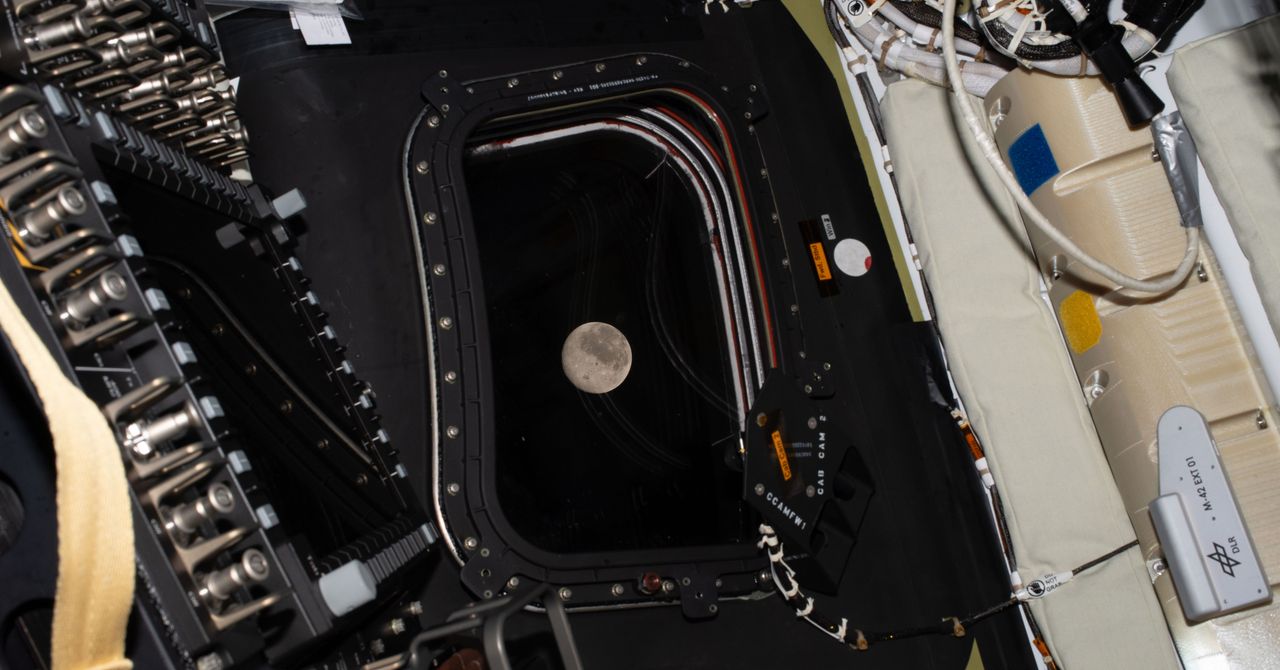
The farthest journey in human history concluded Friday evening when NASA’s Artemis II astronauts returned to Earth after a flight around the moon. The crew’s Orion space capsule named Integrity splashed down in the Pacific Ocean off the coast of San Diego shortly after 5 pm Pacific Time, marking the end of a 10-day, more than 695,000-mile voyage beyond the lunar far side and back.
The four-person crew of Artemis II—commander Reid Wiseman, pilot Victor Glover, mission specialist Christina Koch, and mission-specialist Jeremy Hansen—traveled a greater distance from Earth than ever before, reaching 252,756 miles from our home planet.
“We most importantly choose this moment to challenge this generation and the next to make sure this record is not long-lived,” said Canadian astronaut Hansen as the crew passed the previous record of 248,655 miles set during Apollo 13.
Integrity began its fiery descent when the spacecraft hit Earth’s atmosphere at about 24,000 miles per hour, entering a communication blackout and decelerating from friction as its heat shield reached temperatures of roughly 3,000 degrees Fahrenheit. The plan was for the capsule to deploy two drogue parachutes at an altitude of about 22,000 feet, slowing it to about 200 miles per hour, then deploy pilot chutes pulling the three main parachutes at roughly 6,000 feet. This would further slow the spacecraft to around 20 miles per hour before it splashed into the ocean.
During their mission, the Artemis II crew saw things that no human has seen before. Flying higher above the lunar surface than the Apollo missions, the astronauts were the first people to see the entire disk of the moon’s far side. They also witnessed a solar eclipse from the vicinity of the moon as the sun slipped behind the lunar disk and illuminated it from behind.
“Humans probably have not evolved to see what we are seeing,” said NASA astronaut Glover during the eclipse. He and the rest of the crew described a halo of light surrounding the moon while one side of the lunar surface was bathed in earthshine. Venus, Mars, and Saturn shone among the stars. “It is truly hard to describe. It is amazing.”
Artemis II began on April 1 when the crew launched from NASA’s Kennedy Space Center in Florida atop the 322-foot-tall Space Launch System rocket, the most powerful vehicle to ever carry humans. After conducting multiple altitude-raising engine burns and testing the manual controls of the spacecraft, the crew proceeded with the engine firing known as translunar injection on day two of the mission, which sent them on a trajectory to the moon.
For the next three days, the crew tested the Orion spacecraft’s systems, practiced putting on their spaceflight suits, conducted additional course correction burns, manually flew the Orion capsule again, and prepared for the lunar flyby around the far side of the moon. They also had trouble venting wastewater from the Orion capsule’s toilet into space.
“We definitely have to fix some of the plumbing,” NASA administrator Jared Isaacman said during a conversation with the crew.
At 12:41 am Eastern Time on April 6, Artemis II entered the lunar sphere of influence, where the moon’s gravity overcomes that of Earth. That day, the crew made their closest approach to the moon, flying to about 4,000 miles above the lunar surface. During the lunar flyby, the crew communicated with a team of scientists on the ground, both before and after a roughly 40-minute communication blackout on the far side, to describe geologic features such as craters and canyons.
Just after breaking the distance record, the crew proposed names for two young, unnamed craters on the moon. The first they called Integrity, after their spacecraft, and the second they named Carroll, in honor of commander Reid Wiseman’s wife, who died of cancer in 2020.


IRGC Navy warns military vessels of ‘firm response’ to attempts at crossing Strait of Hormuz
[CinePlex360] Please moderate: “Meta’s lat

Indian electronic firms seek PLI 2.0, eye 30–35% share in global mobile production by FY31 – The Times of India

-

 Entertainment1 week ago
Joe Jonas shares candid glimpse into parenthood with Sophie Turner
-

 Tech1 week ago
Our Favorite iPad Is $50 Off
-

 Sports1 week ago
UConn Final Four run could trigger a $50M furniture giveaway for Massachusetts-based Jordan’s Furniture
-

 Fashion5 days ago
India’s exports face reset as EU links trade to carbon metrics: EY
-

 Entertainment1 week ago
Blake Lively reacts to harassment claims dismissal against Justin Baldoni
-
 Business1 week ago
Video: Why Is the Labor Market Stuck?
-

 Politics1 week ago
Iran can sustain Strait of Hormuz closure for years, will cut US military logistics: Official
-

 Entertainment1 week ago
Barbie Ferreira reveals where she stands with ‘Euphoria’ girls after exit