

Tech
The Lovense Spinel Is the Mini Sex Machine to Get


It made the experience very realistic to my needs: start slow, work my way up, then, if I’m feeling it, go for turbo. Admittedly, when you have the Spinel on turbo, you’re likely to have flashbacks to when Carrie Bradshaw was subjected to such aggressive jack rabbit sex that she couldn’t stand up straight at Charlotte’s wedding. However, because the vaginal muscles create resistance when it’s inside, turbo mode was quite pleasurable, especially because I used a lot of lube. You absolutely want to lube up for Spinel.
What’s also great about this dildo is that you can slide on the clitoral stimulator, so while you’re enjoying proper thrusting, at the speed and intensity you like—there are three levels and four patterns—your clitoris is also getting its fair share of stimulation.
When you’re ready to swap out the heating dildo with its epic amount of thrusts per minute, you can then move on to the G-spot attachment. While some internal arms have a slight curve to stimulate the G-spot, this one has a far-reaching, deep curve to it, meaning if you’ve struggled to find your G-spot in the past, you can’t miss it with this attachment. You can also slide on the clitoral stimulator here, too, if you’re in the mood to hopefully score a blended orgasm.
Like all Lovense products, the Spinel comes with an app that isn’t difficult to use, but with all the options, including speed, intensity, and temperature, it became a little project to explore the different features each time I opened it. I don’t often use a sex toy’s app all that much, but for this toy, it makes sense. It would be uncomfortable to control it entirely by hand, so the app feels necessary. Just be prepared to take some time to learn how it all works.
Not a Quick Romp
The Spinel takes time to put together, figure out, and decide on not just attachments, but how you want to use them. It can be a handheld device, placed on a flat and secure surface to make use of the suction cup feature, or its handle can literally turn it into a gun-shaped dildo that you can use on yourself, although it’s not particularly comfortable to hold, so it’s best used with a partner.
Courtesy of Lovense
When you use the suction cup, you’ll want to explore different flat surfaces to ensure it’s super-secure, to avoid a precarious situation. If you have roommates and thin walls, and don’t want people hearing your sex toy doing its thing, that’s also something to consider. While there’s no shame here, you don’t want to make other people uncomfortable with the sounds that transpire.
If you love a sex toy that’s going to do the majority of the work for you, heats up, and has long battery life—it takes about 2.5 hours to charge, and offers about four hours of playtime—then the Spinel might be your next favorite toy. It’s not cheap, but it’s worth the splurge.












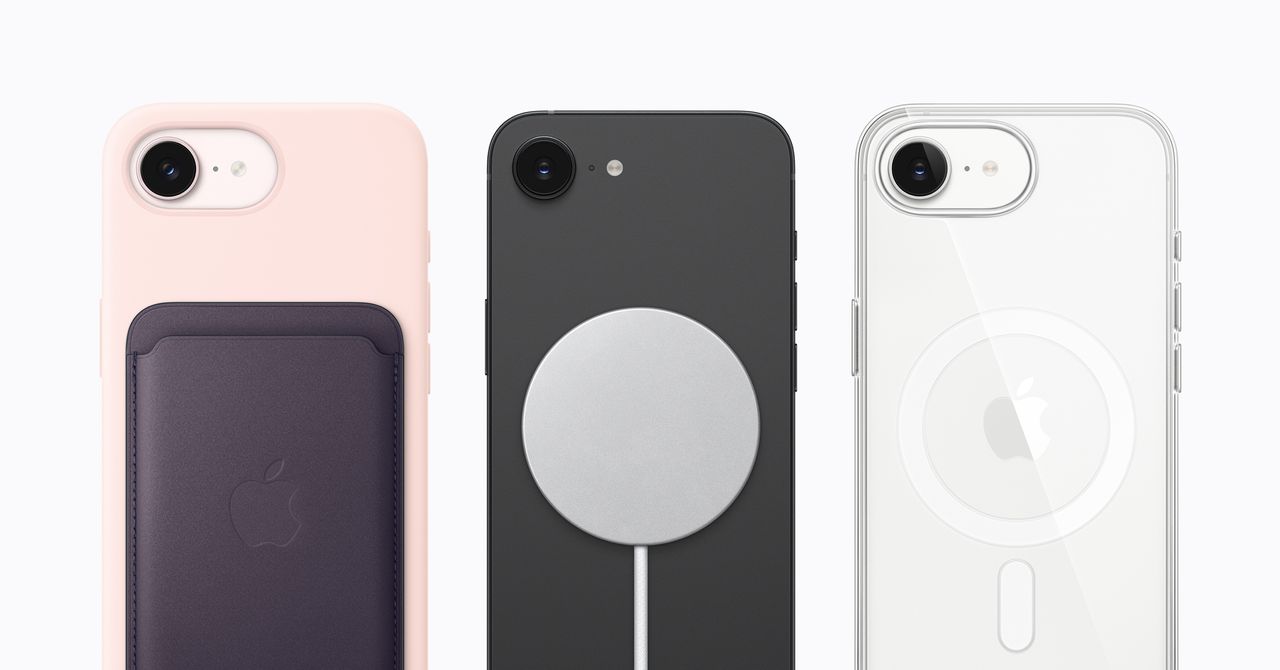
Predating the launch of Moto Mods in 2016, the first batch of Jolla The Other Half concepts included back covers with an extra E Ink display, an infrared camera, and an Angry Birds tie-in that activated themes and ringtones. But probably the most popular was a Blackberry/Nokia Communicator-style slider keyboard made and sold by two entrepreneurs from the original Jolla community. That trend is back in—at CES 2026, accessory company Clicks showed off a magnetic keyboard accessory you can slap on the back of any Qi2 or MagSafe smartphone, though it uses Bluetooth for connectivity.
Quite a bit has changed in what’s achievable, not least more bandwidth, more capability, and more accessible, high-quality 3D printing. “We have seven pogo pins [on the Jolla Phone] which give you the capability to get power out and power in,” says Jolla CEO Sami Pienimäki. “So you can do maybe wireless charging, and you can power external circuit boards.” Pienimäki imagines E Ink interfaces or low-bandwidth radios on the back of its upcoming phone—it has an I3C interface, which delivers bit rates up to 12 megabits per second, allowing data to flow between the phone and the mod, enabling new kinds of smarter modular accessories.
Jolla has promised to release the final phone specifications by the end of the month, with shipping due for the first preorder customers at the end of June. Pienimäki teases that it’s “tempting” for him to release one of Jolla’s own internal concepts for a TOH back cover even earlier as “a showcase of what you can actually do.” (The Jolla Phone doesn’t have FCC approval in the US, but the company is considering a US launch in the future.)
With more than 10,000 preorders since December 2025, Jolla is back in business but still far from mainstream. So why, despite plenty of internet hype over the years, did truly modular phones never quite take off?
“During the LTE days, there was thinking that these devices would morph into ‘cloud phones,’ where the rest of the phone could be cost-optimized,” Fieldhack says. “Swappable parts and lower costs, as most of the compute would be done in the cloud.”
But things changed as flagship phones went from costing $350 to around $1,000. Both the camera and media production and consumption became much more important: “Great displays, great cameras, multiple cameras, more memory, better sound and mics, as well as more elegant and thin devices—this is not easily done on a modular smartphone,” Fieldhack says. “There are huge compromises, and phones are thicker and heavier with less performance. Then, agentic AI, on-device for lower costs and better security, made modular design even less optimal.”
Repairable Modules
One strong and emerging argument for true hardware modularity is repairability. Another European smartphone maker, Fairphone, has been making that case for over a decade. “It’s about thinking about how do we group the actual phone itself into modules?” says Fairphone chief technology officer Chandler Hatton. The latest FairPhone Gen 6 smartphone is made up of 12 modules. A customer sitting at the kitchen table with a single T5 screwdriver (included) and a guitar pick can repair the phone quickly, easily, and cheaply.

BT has announced a 10-year deal worth up to £200m with Northern Ireland Electricity Networks (NIE Networks) to deliver enhanced connectivity, cyber security and IT to support critical services for homes and businesses across the country.
Established in 1993, when the business was privatised and employing over 1,500 people, NIE Networks is responsible for the safe, secure and reliable supply of electricity to 966,000 homes, farms and businesses across Northern Ireland, and is also the operator for its distribution network.
The business was acquired by Irish energy company ESB in December 2010, and operates as an independent organisation with its own board and management teams, and separate regulation via the Utility Regulator for Northern Ireland.
NIE also owns the electricity network across the province, consisting of approximately 2,300km of transmission network and 58,800km of distribution network with 340 major substations, investing around £100m in the network each year.
Electricity networks are part of the critical infrastructure that keeps Northern Ireland running, and they rely on technology that is secure, reliable and resilient by design. Fundamentally, the deal will support NIE Network’s digital transformation, which aims to modernise the key services and infrastructure that provide electricity across Northern Ireland.
Technologically, the partnership with BT is designed to provide the energy company with a suite of services including improved network infrastructure, strengthened connectivity and a team of dedicated professionals to guard against cyber security threats. BT will also be responsible for ensuring high-quality service and support across the business, day-to-day management of network infrastructure, and data hosting.
Initially, the contract will run for five years, with the option to extend by up to another 10 years. Another key component of the deal will be supporting local jobs, building digital skills and creating supply chain opportunities across Northern Ireland.
The deal is also intended to enable a move to more sustainable infrastructure and networks, supporting NIE Networks to reach their sustainability and net zero ambitions.
“This multi-year partnership is a win-win for Northern Ireland’s economy, supporting local jobs, skills development and supply-chain opportunities,” said Rohan Kapoor, chief information officer of NIE Networks.
“The collaboration will also help meet Northern Ireland’s energy needs, increasing our technological capabilities and enabling further electrification, renewables integration and emerging flexibility markets, all of which have a positive impact on the Northern Ireland economy and the NI Executive’s net zero targets.”
Chris Sims, chief commercial officer at BT Business, said: “Electricity networks are part of the critical infrastructure that keeps Northern Ireland running, and they rely on technology that is secure, reliable and resilient by design. That’s where BT comes in. With evolving cyber threats, protecting essential services is more important than ever, and organisations rely on digital connections they can trust.
“With our experience in supporting critical services and our long-standing presence in Northern Ireland, we are in a unique position to provide the secure, trusted connectivity and specialist expertise that will help strengthen the network for years to come.”
BT Group has a large presence in Northern Ireland, employing more than 3,400 people, and says that its work provides an economic boost of £630m in the country. In 2023, it officially unveiled a multimillion-pound refurbishment of its flagship Belfast Riverside office, boasting technology and collaboration spaces for colleagues from its EE, BT Business and Openreach units.

Design Within Reach carries some of the best and coolest home decor you can find, from modern couches to fantastic office chairs and fun designers like Herman Miller and Dusen Dusen. It’s not a cheap store to shop at, though, which is what makes these coupons something to jump on. Unlock online-exclusive discounts of up to 50%, free shipping, plus 20% off featured brands and 15% off office furniture bundles with Design Within Reach promo codes and Summer 2025 sale events. Save on hundreds of stylish items, including our favorite Design Within Reach office chairs, plus some other fantastic home gear we’ve earmarked for testing.
Extra 25% Off at Design Within Reach
Upgrade your digs to sleek Eames-esque mid-century modern design for up to 25% off furniture with Design Within Reach promo code EXTRA25. Head to Design Within Reach’s sale page for huge markdowns of live-proof, luxe furniture and household items like storage furniture, bar stools, chairs, couches, cabinetry, accessories, and more. And don’t forget to use that Design Within Reach promo code for even more savings.
Get 15% Off Furniture With Design Within Reach Promo Codes
On Design Within Reach’s website, you’ll see an expansive catalogue with a huge range of furniture to revamp any room—from couches and credenzas to coffee tables and bar stools for way less than normal designer prices. Flos lamps, known for mixing functionality and style, are now 20% off for a limited time. These colorful table lamps start at $255, with wall sconces, pendants, and more on sale.
Summer’s here, and it’s better late than never to get some great outdoor furniture. During Design Within Reach’s outdoor sale event, you can get up to 30% off great outdoor furniture essentials, like outdoor sectionals, chaise lounge chairs, benches, and outdoor tables. You can get bonus savings with sitewide Design Within Reach promo codes during this time. But you can still save thousands of dollars, on top of 50% off markdowns. If you’ve been eyeing the Eames Lounge Chair, Aeron Chair, or Noguchi table, this is your chance to save over $1,500.
One of the easiest ways to get a design within reach coupon is by signing up for their emails. When you sign up for DWR’s email list, you’ll get 15% off your first order, plus, you’ll be the first to know of flash sale events and discount codes when the updates are sent straight to your inbox.
You can ditch the delivery fees with Quick-Ship free shipping offers. You can save up to $699 and get complimentary shipping sitewide on orders of $2,000 or more. Explore the many items with quick-ship and free shipping offers, including sofas, storage pieces, coffee tables, and more iconic furniture. Check out their New to Sale deals too, with 40% off select bar stools, 20% off sectionals, and decor for 50% off. Design Within Reach’s end-of-season sales are some of the best times to save big on those pricier purchases, but you’ll be surprised to find that many new arrivals will go on sale too. While you’re browsing the Sale section, you can use the filter button to organize by category, specific designers, brands, and even price. Unleash your inner interior designer and go wild.
Shop up to 50% Off Design Within Reach Clearance Sale Deals
Buying furniture and other household items can be one of the biggest purchases one makes in their life. Luckily, Design Within Reach has some great furniture deals, with clearance deals that are even steeper than their usual sale discounts. These deals include last-chance furniture discounts, with up to 50% off on all home categories and decor—including light fixtures, tables, ottomans, furniture cushions, and more. Check out Design Within Reach clearance deals and take advantage of the final sale prices, where furniture items are at their lowest prices yet—before they go out of stock.
More Ways to Save on Design Within Reach Furniture
Design Within Reach is also here for small business owners and design industry professionals, to help them jumpstart and elevate their businesses in style. They can apply to the free DWR Trade program, where they will receive sitewide discounts every day, a dedicated Account Executive, exclusive promotions only available to Trade members, and exclusive and discounted Trade pricing across Design Within Reach’s 200 premium design brands in one place.
Our Favorite Design Within Reach Gear
Design Within Reach has a huge range of designers and home pieces, from massive couches to decor and chargers. They carry Herman Miller pieces we love from our guide to the Best Office Chairs, plus chargers from Courant that we recommend in our Best Wireless Chargers guide. We’ve also got our eye on couches and sheets from designers like Hay and Dusen Dusen to test too that you can find at Design Within Reach.


Egypt’s RMG exports up 11% YoY in January 2026: AECE

Prince William shares message as Meghan tests future King’s patience

Gold prices soar in Pakistan – SUCH TV

-

 Entertainment1 week ago
Strategic oil stocks to be released ‘immediately’ in Asia and Oceania: IEA
-
 Business1 week ago
UK looking at all options to secure Strait of Hormuz, says Ed Miliband
-

 Sports1 week ago
Men’s March Madness 2026 bracket: Get to know all 68 teams
-

 Tech1 week ago
Early Deals From the Amazon Spring Sale That Passed Our BS Test
-
 Business1 week ago
Stocks To Watch: Tata Motors, IndiGo, Jindal Stainless, GMR Airports, Hindalco, And Others
-

 Sports1 week ago
More Iran women’s soccer players decide to leave Australia
-

 Sports1 week ago
PCB files complaint over allowing Bangladesh to take review on penultimate ball – SUCH TV
-
 Business7 days ago
Stocks and pound rise as US rate call approaches