

Business
The ‘Net economy’ | The Express Tribune


KARACHI:
Pakistan’s economic discourse has long been dominated by familiar concerns: fiscal deficits, balance of payments pressures, and the performance of traditional export sectors such as textiles and agriculture. Yet, beneath these recurring challenges, a structural shift is quietly reshaping the economy.
The country’s digital or “net” economy – anchored in IT services, freelancing, and a rapidly expanding content creator ecosystem – is emerging as a credible and scalable engine of growth. In 2025, this transformation can no longer be dismissed as peripheral.
The most visible expression of this shift is the rise of Pakistani content creators on global digital platforms, particularly YouTube. What began as isolated experimentation has evolved into a structured ecosystem of digital enterprises that earn foreign exchange, create employment, and project Pakistan’s cultural identity to global audiences. Running parallel to this is the strong performance of Pakistan’s IT and IT-enabled services exports, which have reached record levels and now form a key pillar of services trade.
Recent platform data indicates that Pakistan hosts more than 95,000 YouTube channels with over 10,000 subscribers – a threshold generally associated with sustainable monetisation. More than 13,000 channels have crossed the 100,000-subscriber mark, while over 1,000 channels boast more than one million subscribers. These figures reflect not merely popularity, but the scale of a growing digital workforce embedded in global markets.
Each successful channel functions as a small enterprise. Beyond the creator, there are editors, scriptwriters, designers, animators, camera operators, and social media managers. This ecosystem is generating thousands of jobs, many of them flexible, skill-based, and location-independent – characteristics well aligned with Pakistan’s youthful labour force and constrained domestic job market.
One of the most striking aspects of Pakistan’s creator economy is its international reach. Industry analysis suggests that over 60% of watch time on Pakistani YouTube content originates from outside the country. This marks a decisive shift from domestic consumption to digital exports. Pakistani creators are increasingly producing content for global audiences while remaining physically based at home, earning revenue in foreign currency.
Certain genres have proven particularly effective. Food and culinary content attract global viewers seeking authenticity. Travel and rural-life vlogs showcase landscapes and lifestyles rarely visible in international media. Educational explainers, lifestyle programming, and family vlogs also perform strongly, especially on connected television platforms where long-form content thrives.
Channels such as Kitchen with Amna and Village Food Secrets illustrate how culturally rooted content can achieve global resonance. Their success highlights a key advantage of the digital economy: high export potential with relatively low capital requirements. Authenticity, consistency, and storytelling often matter more than production budgets.
The economic implications are significant. Conservative estimates suggest that a YouTube channel with over one million subscribers can earn between $50,000 and $200,000 annually, depending on niche, engagement, and audience geography. With more than 1,000 such channels, Pakistan’s YouTube economy alone could be generating $50-$200 million per year in foreign revenue. Much of this income flows directly into Pakistan, supporting household incomes and contributing to external account stability. Beyond earnings, creators contribute to Pakistan’s soft power. Through humour, food, travel, and social commentary, they present nuanced portrayals of Pakistani society that counter stereotypes and enhance international visibility in ways traditional diplomacy often cannot.
While the creator economy is highly visible, it represents only one layer of a broader digital export story. Pakistan’s IT and IT-enabled services sector has posted record performance in recent years. In fiscal year 2024-25, IT and ITeS exports crossed $3.8 billion, with monthly figures through 2025 repeatedly setting new records. This growth reflects sustained global demand rather than temporary spikes.
IT exports now account for a significant share of Pakistan’s services exports and have become one of the most reliable sources of foreign exchange. Pakistani firms provide software development, mobile and web applications, cloud services, cybersecurity solutions, and business process outsourcing to clients across North America, Europe, the Gulf, and Asia.
Freelancers form another critical pillar of this digital economy. Pakistan is among the world’s leading suppliers of freelance digital services, with professionals engaged in programming, design, content creation, and digital marketing. Freelancing contributes hundreds of millions of dollars annually in foreign exchange and continues to expand as global demand for remote work grows.
From a macroeconomic perspective, the significance of digital exports is substantial. IT and ICT services have consistently generated trade surpluses within the services account, helping offset chronic deficits in goods trade. At a time when external financing options are limited, digital exports offer a relatively stable and scalable source of foreign earnings.
Another dimension often overlooked in discussions on the net economy is its role in economic resilience and shock absorption. Unlike traditional export sectors, which are vulnerable to global commodity cycles, logistics disruptions, and geopolitical tensions, digital exports are inherently more agile. IT services, freelancing, and content creation depend primarily on human capital and connectivity rather than physical supply chains.
During periods of currency volatility or import compression, digital exporters can continue earning foreign exchange with minimal reliance on imported inputs. This structural advantage positions the net economy as a stabilising force in an otherwise fragile macroeconomic environment.
Equally important is the net economy’s potential to reduce brain drain without restricting mobility. For decades, Pakistan has exported talent while importing value, as skilled professionals migrated abroad in search of opportunity. Digital work offers an alternative: global income without physical migration. Software engineers, designers, educators, and creators can serve international markets while remaining rooted locally. This ensures that earnings circulate within the domestic economy, strengthens household resilience, and preserves human capital that would otherwise be lost.
Looking ahead, the potential scale of Pakistan’s net economy is considerable. If current trends persist, IT and IT-enabled services exports could reach $8-10 billion annually by the end of the decade. Digital services would then stand alongside textiles as one of Pakistan’s top export earners.
The creator economy is also poised for expansion. With continued platform growth and improved monetisation strategies, the number of Pakistani channels with over 100,000 subscribers could exceed 20,000 by 2030. Combined creator revenues – including sponsorships and merchandising – could approach $1 billion annually, with significant spillover effects for employment and allied services.
However, this potential will not be realised automatically. Regulatory clarity remains limited, particularly around taxation and income classification for freelancers and creators. Uncertainty discourages formalisation and full revenue repatriation.
Predictable, export-friendly policies are essential. Infrastructure gaps also persist. Reliable electricity, high-speed internet, and efficient digital payment systems are prerequisites for sustained growth. While urban centres have improved, many rural and semi-urban areas remain under-connected.
Skill development presents another constraint. Although Pakistan produces a large number of graduates, shortages persist in advanced areas such as artificial intelligence, cloud computing, cybersecurity, and data analytics. Content creators, meanwhile, often rely on self-taught skills that limit scalability. Structured training could significantly raise productivity and earnings. To fully harness the net economy, policymakers must treat digital exports as a strategic priority rather than a side activity. Stable tax regimes, simplified compliance, infrastructure investment, and targeted skill development can accelerate growth. Educational institutions must align curricula with global digital demand, while public-private partnerships can support incubation and international market access.
The writer is a Mechanical Engineer









The price of Brent crude oil to be delivered in May rose by a record 64% in March as the conflict disrupted energy supplies.
Source link
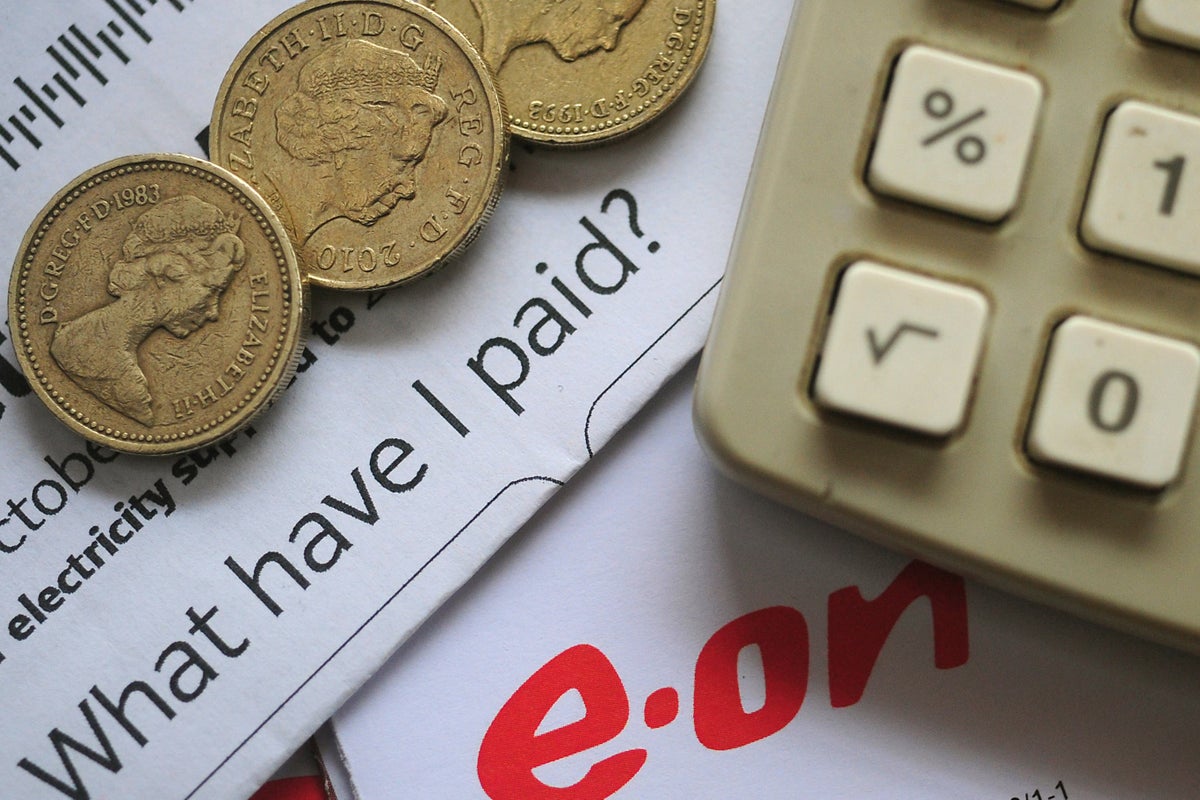
Household energy prices are falling by 7% from Wednesday in a “short-lived respite” for households already braced for a predicted 18% hike from July.
Ofgem’s price cap has dropped from £1,758 to £1,641 – a reduction of £117 or around £10 a month for the average household using both electricity and gas.
This is an 11% fall year on year, but still £600 more than bills were in the winter of 2020 to 2021.
The reduction is lower than the average £150 cut to bills pledged by the Chancellor in November, when she moved 75% of the cost of the renewables obligation from household bills onto general taxation and scrapped the energy company obligation (Eco) scheme.
And it comes amid increasing concern about the amount energy bills could rise by from July as a result of the Middle East conflict, with latest predictions from Cornwall Insight suggesting this could be 18% or £288 a year – to almost £900 above pre-crisis levels.
In the meantime, consumer groups have urged households to send in meter readings to ensure their energy usage is billed at the lowest possible rate, and investigate fixed rate deals if they remain on their firm’s standard variable rate.
A spokesman for Energy UK, which represents firms, said: “Suppliers are required to set direct debits as accurately as possible based on the best and most current information available.
“So – as well as factors like current balance, payment record and previous energy usage – this will also include the latest projection of energy costs over the coming months.
“Suppliers regularly review direct debt levels so any current assessment for price cap customers would likely take into account that bills look set to go up again in July. Customers on fixed deals however will not see any increase until their current deal comes to an end.”
Simon Francis, coordinator of the End Fuel Poverty Coalition, said: “The fall in bills from April 1 offers brief relief for households, but the respite will be short-lived.
“Given the ongoing profits made by the energy industry, households deserve more than a temporary reprieve before prices rise again.
“For the millions of households already in energy debt to their suppliers, this is a real concern and risks pushing more people into crisis.
“The Government must use the window between now and July to act. That means targeted support for those hit first and hardest, including households off the gas grid and those on heat networks, faster action on energy debt, and preparations to bring costs down if prices deteriorate further.”
National Energy Action chief executive Adam Scorer said: “Any price drop is good news, but everyone knows that it will be overtaken by events.
“It is likely to be a false dawn. And the people who know that the best are those already struggling to afford their energy bills and know the real cost of an energy crisis.
“Unfortunately, today’s good news is hugely overshadowed by the fear and dread of what may be to come.”
Which? energy editor Emily Seymour said: “April’s energy price cap fall will bring much needed relief for households. What you save will vary depending on how much you use.
“Despite this drop, many households are already concerned about the next price cap announcement in May, which will set rates from July and is currently predicted to rise by £288, or 18%, per year for the average household.
“It’s important to remember this isn’t confirmed yet, so don’t feel pressured into making quick decisions.
“If you’re currently paying variable rates, it’s worth checking the market to see what fixed deals are available. Fixing could offer protection against future increases, but only if the price is right.
“Options have reduced in the last few weeks, but some energy companies are still offering fixes with prices around those of the January-March price cap.
“If you’re worried about paying your energy bills, contact your supplier as soon as possible. Energy companies are obliged to help if you’re struggling to pay and won’t disconnect you for missing a payment. Request a review or break in payments, and access any available hardship funds.”

A Nike logo is displayed at a Nike store in Austin, Texas, Feb. 5, 2026.
Brandon Bell | Getty Images
Shares of Nike fell in extended trading Tuesday after the retailer warned sales will fall for the rest of the calendar year, led by an expected 20% decline in its key China market during the current quarter.
Chief Financial Officer Matt Friend said during the company’s earnings call that Nike expects sales for its current fiscal fourth quarter to drop between 2% and 4%, compared with Wall Street estimates of a 1.9% increase, according to LSEG.
For the duration of the calendar year, Friend said, the company expects sales to fall by a low single-digit percentage, led by growth in North America and offset by declines in China. That outlook wasn’t comparable to estimates.
Nike beat expectations across the business on both the top and bottom lines for its fiscal third quarter, but its guidance left investors with more questions about how long its turnaround will take. Friend also cautioned that Nike’s guidance was based off of where the global economic picture stands today — and it could change given recent geopolitical volatility.
“We also recognize that the environment around us has become increasingly dynamic, and we could experience unplanned volatility due to the disruption in the Middle East, rising oil prices and other factors that could impact either input costs or consumer behavior,” said Friend. “We are focused on what we can control.”
Shares fell more than 8% in extended trading.
Here’s how the world’s largest sneaker company did for its fiscal third quarter, compared with estimates from analysts polled by LSEG:
- Earnings per share: 35 cents vs. 28 cents expected
- Revenue: $11.28 billion vs. $11.24 billion expected
The company’s reported net income for the three-month period that ended Feb. 28 was $520 million, or 35 cents per share. That’s a 35% decline from $794 million, or 54 cents per share, a year earlier. That plunge came as Nike’s gross profit margin slid 1.3 percentage points to 40.2%, “primarily due to higher tariffs in North America,” the company said.
Sales were flat at $11.28 billion, compared to $11.27 billion last year.
While Nike beat expectations on the top and bottom lines, it posted a mixed picture regionally. Nike’s largest market of North America continued to show steady growth, as revenue climbed 3% to $5.03 billion, but that was just shy of Wall Street’s expectations of $5.04 billion, according to StreetAccount.
Meanwhile, Nike’s Greater China market continued to shrink, with revenue down 7% to $1.62 billion during the quarter. Still, that total beat analyst estimates of $1.50 billion, according to StreetAccount.
Nike is continuing to work through a colossal turnaround under CEO Elliott Hill. About a year and a half into his tenure, Hill has made strides in repairing parts of the business, but has been clear that it’ll take time for the entire company to improve given the retailer’s scale and complexity.
He reiterated that expectation on Tuesday, saying in a news release that “the pace of progress is different across the portfolio.”
“The areas we prioritized first continue to drive momentum,” Hill said. “The work is not finished, but the direction is clear, our teams are moving with focus and urgency, and our foundation is getting even stronger to build the future of NIKE.”
Friend said Nike’s turnaround efforts “will continue to impact results over the balance of the calendar year.”
Nike’s recovery was already coming at a tough time as a global trade war dented its efforts to improve profitability and drive sales from inflation-weary shoppers. But now the athletic company will have to contend with a new war in the Middle East that’s already led to rising gas prices and is expected to send consumer prices even higher, which could push shoppers to cut back on nice-to-haves like new clothes and shoes to save money elsewhere.
“We continue to be encouraged by the momentum in North America. We’ve got a strong order book for summer,” Friend said. “We’re seeing positive signs and sell through. We’re not seeing a consumer reaction to what’s going on in the Middle East at this point in time, in North America.”
Hill has focused in part on revitalizing Nike’s business with wholesale partners as opposed to direct sales on its website and in stores. Wholesale revenue climbed 5% to $6.5 billion.
Meanwhile, direct sales slid 4% to $4.5 billion.


EU-funded RegioGreenTex pushes 25 SME pilots to commercialisation
Iran war: Asia stocks jump after Trump suggests conflict could end in weeks

Italy miss out on third straight WC in shootout loss to Bosnia

-

 Politics1 week ago
Afghanistan announces release of detained US citizen
-

 Sports1 week ago
Broadcast industry CEO says consolidation is ‘essential’ to compete for NFL soaring media rights prices
-
 Business1 week ago
Property Play: Home flippers see smallest profits since the Great Recession, real estate data firm says
-

 Entertainment1 week ago
UN warns migratory freshwater fish numbers are spiralling
-

 Tech1 week ago
Can a Home Appliance Fix the Problem of Soft-Plastic Waste?
-
 Business1 week ago
Gold prices soar in Pakistan – SUCH TV
-

 Fashion1 week ago
ICE cotton slips on weaker crude, profit booking
-
 Business1 week ago
More women are entering wealth management, but few are in advisory roles, study finds