

Tech
The Razr Fold Adds a Book-Style Foldable to Motorola’s Lineup


Motorola does have another actual new phone: the Signature. It’s a new line of “premium” phones, but the catch is that these devices won’t be sold in the US. For its candy-bar phones, Motorola has dipped its toes into flagship territory every so often, only to dip back out as it struggles to compete with the likes of Apple and Samsung; it’s predominantly known for its Moto G budget phones, particularly in the US.
The Signature is just 6.99 millimeters thick—it’s no iPhone Air, but that’s thinner than your usual handset—and it has a fabric-like material on the back. It’s powered by the Snapdragon 8 Gen 5 chipset, has four 50-megapixel cameras on the back, and carries a 5,200-mAh silicon-carbon battery in tow. More importantly, Motorola is finally committing to seven years of blanket software updates for this phone. It’s a shame US customers won’t be able to enjoy that.
An AI Pendant
On the artificial intelligence front, Motorola and its parent company, Lenovo, are working together on a unified AI assistant called Qira. It’s the culmination of several AI features both companies have deployed over the years, just in one platform.
It’s powered by various large language models, from Copilot and Perplexity to Google’s Gemini, along with Motorola and Lenovo’s own in-house LLMs. The idea is that instead of reaching for these various services, you can just ask Qira, no matter if you’re on a Lenovo laptop or a Motorola phone. It’ll launch first on Lenovo PCs later this year, then select Razr, Edge, and Signature devices.
Qira also powers Project Maxwell, a concept AI pendant from Motorola’s 312 Labs. If you’re tired of pulling out your smartphone to snap a pic and search for something, well, this wearable solves exactly that. It has a camera and microphone, so just tap the touch-sensitive button on the front and ask a question about whatever you’re looking at—whether you want to know what kind of tree is in front of you, or if you want to add the date of a concert into your calendar if you’re staring at a poster.









Tech
Traces of Leonardo da Vinci’s DNA May Have Been Discovered on a Red Chalk Drawing Called ‘Holy Child’

Researchers from the Leonardo da Vinci DNA Project (LDVP) report that by analyzing the drawing of Holy Child and other Renaissance artifacts, such as letters written by a da Vinci relative, they have recovered some Y chromosome DNA sequences that appear to belong to a genetic group of people with common ancestors in Tuscany, where the genius and Renaissance master was born in 1452. The findings, first reported in Science, could be the first time scientists have identified DNA from da Vinci himself.
The DNA
Historical artifacts can accumulate DNA from the environment and potentially offer useful information about the people who created and handled them. Gathering that material on such precious objects without damaging or contaminating them, though, is a complex challenge. Today, decisions about the authorship of a work depend on expert opinion—for example, on how a brushstroke was created.
The LDVP researchers therefore used an extremely gentle swabbing method to attempt to collect biological material. They then extracted small amounts of DNA, which provided useful information. “We recovered heterogeneous mixtures of nonhuman DNA,“ states the study, published in the preprint journal bioRxiv, “and, in a subset of samples, sparse male-specific human DNA signals.”
The da Vinci Clue
From the analysis the researchers concluded that they found the closest match within the broad E1b1b lineage on the Y chromosome (whose sections are passed on almost unchanged from father to son) that is now commonly found in southern Europe, Africa, and parts of the Middle East. Some of the DNA, they say, may have come from Leonardo da Vinci himself.
“Across multiple independent swabs from Leonardo da Vinci–associated items, the obtained Y chromosome marker data suggested assignments within the broader E1b1/E1b1b clade,” the study reads. The results also indicate mixed DNA contributions associated with the source materials, though, consistent with modern handling.
“Together, these data demonstrate the feasibility as well as limitations of combining metagenomics and human DNA marker analysis for cultural heritage science,” the paper reads, “providing a baseline workflow for future conservation science studies and hypothesis-driven investigations of provenance, authentication and handling history.”
Further Investigation
While the researches have demonstrated an innovative approach, they acknowledge that they didn’t come back with conclusive evidence. Although the data suggest that the DNA could be da Vinci’s, asserting that any trace of DNA in the artifacts actually belongs to him is very complicated. “Establishing an unequivocal identity … is extremely complex,” David Caramelli, an anthropologist at the University of Florence and LDVP member, told Science.
This is because scientists cannot verify the genetic sequences of the artifacts by comparing them with DNA known to have been taken from Leonardo da Vinci himself; there are still no confirmed samples. Moreover, da Vinci had no known direct descendants, and his burial site was breached in the early 19th century. Encouraged by the first clue about da Vinci’s DNA, LDVP scientists now hope to convince the custodians of Leonardo’s works and notebooks to allow them further sampling that could solve the case.
This story originally appeared in WIRED Italia and has been translated from Italian.
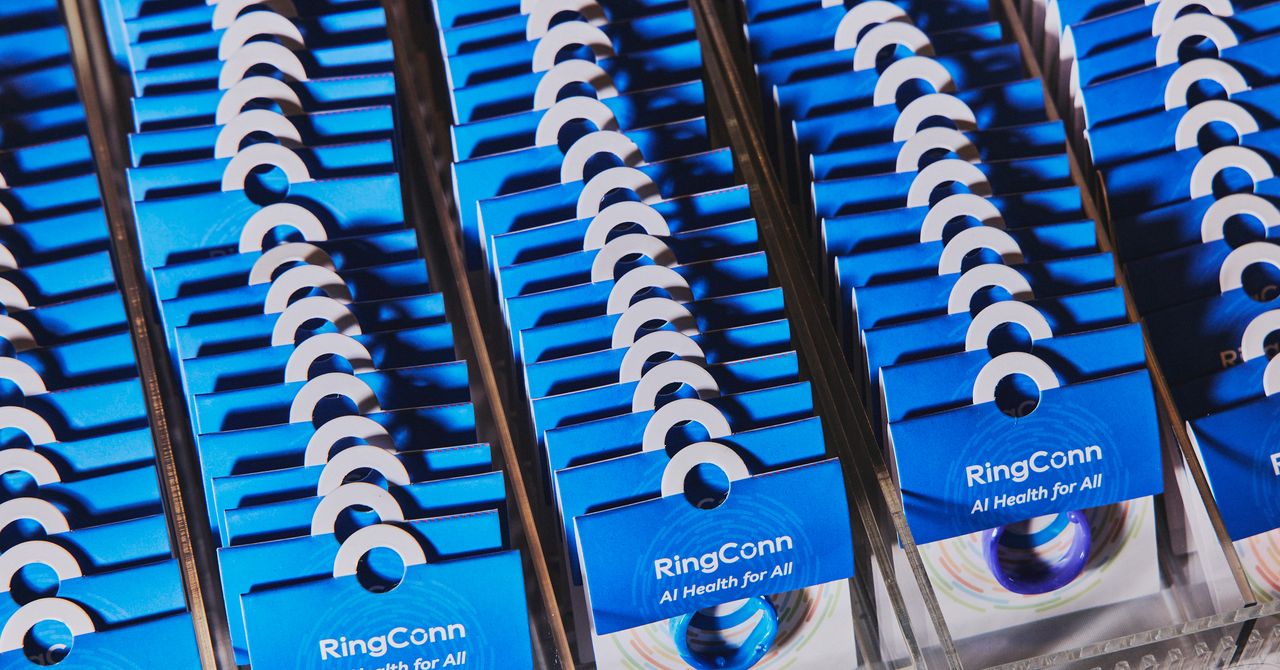
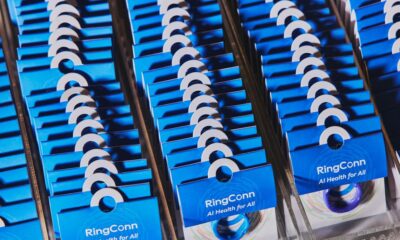
If you’ve been following last year’s smart ring drama, you may have seen that the number of health-tracking rings you can buy has shrunk since October 21, 2025.
As we reported in August, the US International Trade Commission ruled in favor of Oura in a patent case in which Oura alleged that its competitors RingConn and Ultrahuman had infringed on the company’s patent for a smart ring that tracks health and fitness stats. Oura’s victory subsequently led to RingConn and Ultrahuman being banned from importing new rings into the US.
The lawsuit was bad news for both Oura competitors, and especially Ultrahuman, which had planned to expand its US-based manufacturing facility to meet growing market demand (and ostensibly to also get around the new US tariffs). Ultrahuman is distinguished from Oura in that its smart ring does not have a subscription; Oura users pay $6 per month to use its rings.
I caught up briefly with Ultrahuman’s chief business officer, Bhuvan Srinivasan, to clarify the company’s next steps to address the US market, and find out more about the latest smart ring squabbles.
Why Were the Rings Banned?
The ITC ruled that RingConn and Ultrahuman had infringed on the 178 patent, which protects a specific ring hardware design—for example, if the ring has a layered arrangement with internal and external components housing interior electrical components.
If you think this is a surprisingly broad description that can cover … well, pretty much any smart ring, or a wide range of electronic devices in general, you are correct. Over the past few years, many smart ring manufacturers have been embroiled in legal disputes over this patent.
This has panned out in a few different ways. In 2024, Oura announced that it had reached a multi-year licensing agreement with Circular, the French smart ring manufacturer, that would allow Circular to continue selling new rings in the US. (This move looks a little less generous when you consider that my two-week testing period of the Circular Ring 2 was plagued with server and connection issues.)
Also in 2024, Samsung attempted to preemptively sue Oura against future patent infringement claims in a case which a judge dismissed. Samsung’s concerns were not unwarranted. In late 2025, Oura then filed another complaint against Samsung (the Galaxy Ring), Reebok (the Reebok smart ring), Zepp Health (Amazfit ring), and Nexxbase (the Luna Ring). Oura then reached a licensing agreement with RingConn and another competitor, Omate, that would allow the company to continue selling rings in the United States.
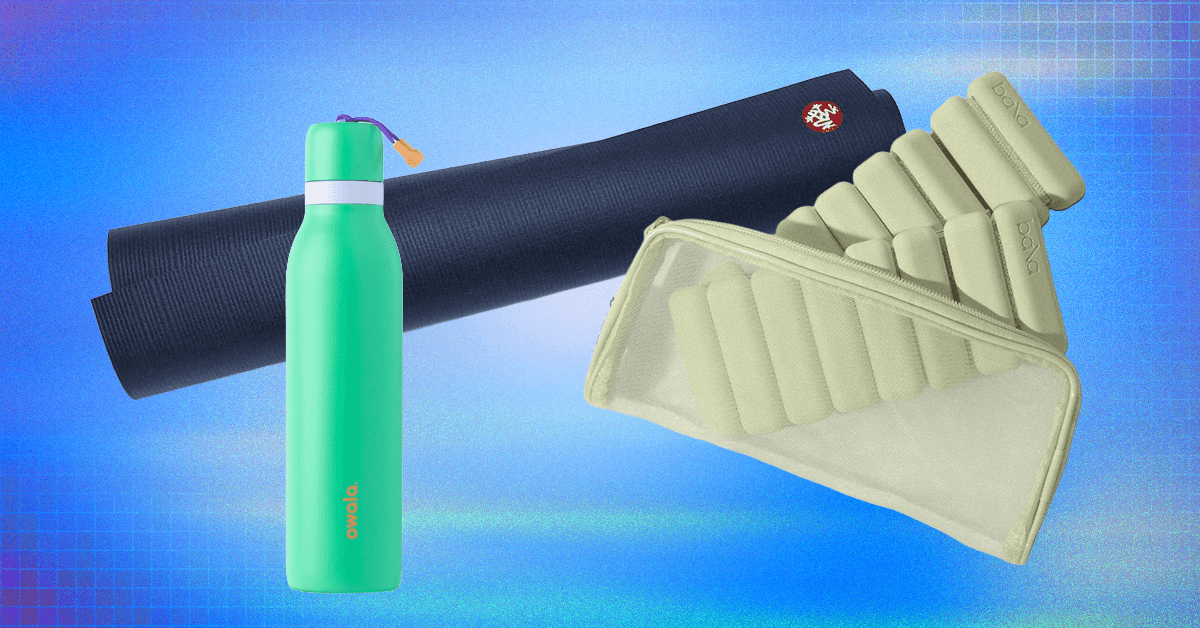
When Joseph Pilates developed what he first called Contrology in the early 20th century, there were no dedicated studios or intimidating contraptions. There wasn’t even a reformer yet. (That came later, improvised from leather straps and hospital bed frames.) The idea was simple then, and it still is now: Pilates asks you to work with what you already have. Your body does the work, and a mat just makes it more comfortable.
Pilates is about moving with intention. Total body exercises are rooted in precision and balance, favoring slow, controlled movements over momentum or strength. Full range of motion, emphasizing time under tension, deep core engagement, and uniformity of mind, body, and spirit are emphasized. It sounds peaceful, but it’s not exactly the easiest workout.
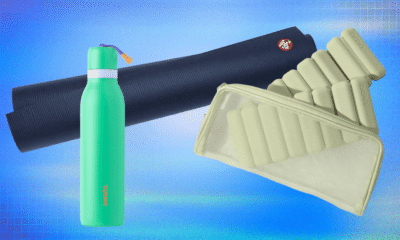
The right gear won’t do the workout for you, but it can make it more comfortable, more effective, and frankly, more fun. Below, we’ve gathered the best Pilates equipment worth having for home workouts, whether you’re a beginner or deep in your Pilates princess era. For more wellness recommendations, check out our other guides, including the Best Protein Powders, Best Massage Guns, and Yoga Mats, Props, and Everything Else You Need for Your Practice.
Featured In This Guide


-SOURCE-Forme.jpg)
Jump to
Pilates Clothes
Nothing motivates me to work out quite like a great Pilates outfit. You can technically wear just about anything, but I would stick to more fitted activewear, so your Pilates instructor can check your form. Avoid loose or oversized clothing, and prioritize stretchy fabrics that won’t restrict movement. This lineup of athleisure has been tried and tested in Pilates; they move well, feel comfortable, and hold up every session.
If you buy one thing, make it grippy socks. Whether you’re on a mat or a reformer machine, those rubberized soles help prevent slipping and sliding, giving you better traction and stability during movements. A good pair can also offer light cushioning and arch support. If you’re practicing in a shared studio or using communal equipment, breathable Pilates socks are a hygienic upgrade, too.
We want our bottoms to stay put through roll-ups, leg circles, and long pulses, without digging or losing shape. They also need to be squat-proof. High-waisted leggings (full-length or capri) made from a soft, stretchy fabric are ideal for Pilates and other low-impact workouts. Biker shorts also work, but in a heated class, an extra layer of fabric can help maintain grip on props during leg work.
These are the best leggings for Pilates based on our testing, including a Lululemon biker short we love. For more favorites, check out our Best Leggings guide.
For Pilates, look for low- to medium-impact styles that are typically supportive without feeling compressive. I gravitate toward wide bands with no underwires that won’t dig in during floor work, but I’m also aware that those features might not be supportive for bigger busts. These are our top favorites, including a posture-correcting bra if alignment or lower back pain is a concern. For more picks, check out our Best Sports Bras guide.
An all-in-one jumpsuit with a built-in bra takes the guesswork out of getting dressed for Pilates. Our favorites offer supportive, comfortable coverage that moves with you from warm-up to cooldown.
Pilates-Specific Gear
You can absolutely do Pilates with nothing but yourself, but if you want to turn up the intensity or vary your workout routines, here are a few must-haves.
Exercise mats are essential because they deliver much-needed padding to cushion your joints during floor work. The proper ones are designed with a grippy, textured surface for added traction. They keep you steady, supporting better control. And they serve as a protective barrier between your skin and the yucky floor.
I also always need a towel when working out, and if you’re taking a heated class, this is especially necessary to absorb sweat. Pro tip: You can also turn your towel into a resistance band by twisting it and pulling against it. For more picks, check out our Best Yoga Mats guide.
You don’t need to splurge on a $2,000 reformer to practice Pilates at home. I take heated mat Pilates at my local fitness studio twice a week, and we usually use a combination of props: an exercise ball, Pilates ring (aka. a magic circle), and light weights. I like to use 2- or 3-pound dumbbells, but wrist and ankle weights don’t require grip strength and still add extra intensity to your full-body Pilates workout. Core sliders, which go under your hands or feet, add resistance to your movements and are an affordable alternative to the springs of a reformer.
We’ve spotlighted a few of our favorites below, but you can find more tested picks in our Best Reusable Water Bottles guide.
Power up with unlimited access to WIRED. Get best-in-class reporting and exclusive subscriber content that’s too important to ignore. Subscribe Today.


Jennette McCurdy reflects on ‘creepy’ relationship at young age

Don’t Underestimate India: How The World’s Fastest-Rising Economy Left UK & Japan Behind

US seeks long-term control of Venezuelan oil sales

-

 Entertainment1 week ago
George Clooney, his wife Amal and their twins granted French citizenship
-

 Sports1 week ago
Morocco reach AFCON last 16 | The Express Tribune
-
 Business1 week ago
A major drop in the prices of petroleum products is likely with the arrival of the New Year. – SUCH TV
-

 Fashion1 week ago
UK year-end review 2025: Seeking new avenues
-
Sports1 week ago
Tom Wilson’s New Year’s Eve: Two goals, a fight, a win and an Olympic nod
-
 Entertainment1 week ago
France president ‘wants to ban under-15s from social media’
-

 Fashion1 week ago
Saat & Saat acquires Turkish apparel leader Aydinli Group
-
 Business1 week ago
Octopus Energy to spin off $8.65bn tech arm Kraken