

Fashion
The Textile Institute marks 100 years with a global expansion drive

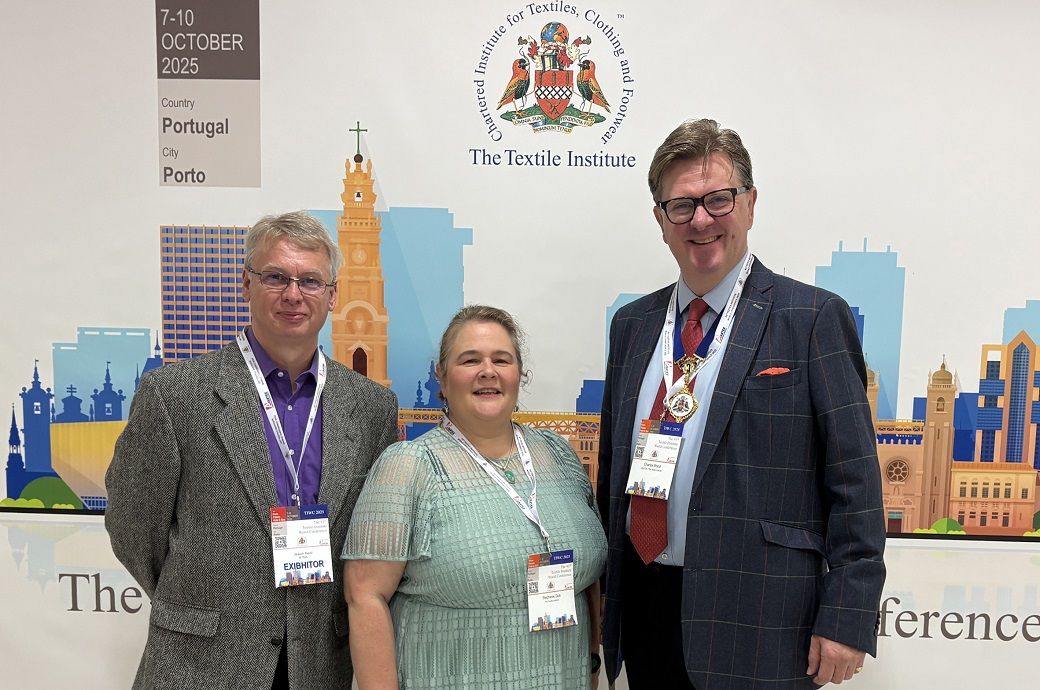
One hundred years ago, in 1925, TI was granted its Royal Charter by King George V, transforming it from a professional association into a globally recognised chartered body, and in Singapore from October 28-31, is seeking to strengthen its international partnerships while welcoming new Corporate Members to its expanding global network.
The Textile Institute (TI) is celebrating its centenary with a global expansion drive at ITMA Asia + CITME 2025 in Singapore from October 28–31.
Exhibiting with BTMA, TI aims to boost corporate membership and international partnerships.
With sections in over 60 countries, TI continues advancing professional training, research and collaboration across sectors like technical textiles and mobility.
Shared growth
At Stand B105 in Hall 8, TI will exhibit as a reciprocal member of the British Textile Machinery Association (BTMA), showcasing the power of collaboration and shared growth. The long-standing partnership between the two organisations has been further strengthened by the appointment of BTMA CEO Jason Kent as TI’s new Commercial Vice President, bringing fresh industry insight and influence to the role.
“Our joint presence in Singapore underlines how enduring partnerships strengthen the entire industry,” Kent says. “Corporate Membership of The Textile Institute gives organisations access to an international network of professionals, cutting-edge research and strategic benefits valued at over £10,000 a year.”
Advantages
Membership unlocks a host of advantages, including global promotion and visibility, invitations to high-level networking events and training, collaboration on industry-led research, professional recognition through chartered qualifications and access to TI’s publications, data and R&D resources.
“As the only global professional body in this sector with a Royal Charter, we are driving the industry forward through high-quality events and training courses that equip professionals for the future,” says TI CEO Stephanie Dick. “Together with our Corporate Members, we’re tackling skills gaps, developing practical training solutions and reaching international audiences.”
New industries
“This is an exciting time for the industry, especially with the major opportunities being opened up in new technical textiles for rising industries such as energy and data storage, future mobility and advanced infrastructure,” adds TI President Charles Wood. “Whether you’re a multinational manufacturer or a fast-growing SME, TI offers a neutral, not-for-profit platform where your voice is heard and your ambitions are supported. As we expand our influence across Asia and beyond, we’re inviting new Corporate Members to join us, benefit from our resources and help shape the Institute with their expertise.”
The Textile Institute is ideally positioned to help organisations stay competitive, connected and compliant. From its first foundation in Manchester in 1910, its approach has always been to be “not of Manchester, but international”, and with sections and special interest groups active across the globe, it now serves members in over 60 countries, empowering professionals across every link in the textile supply chain.
“We are looking forward to exploring new possibilities with as many forward-looking companies as possible at this year’s ITMA Asia + CITME,” concludes Jason Kent.
Note: The headline, insights, and image of this press release may have been refined by the Fibre2Fashion staff; the rest of the content remains unchanged.
Fibre2Fashion News Desk (KD)









CCPIT has approved 119 activities for Chinese enterprises to participate in US-based exhibitions this year; 30 are over by February, CCPIT spokesperson Wang Wenshuai told in a press conference.
It will also utilise its dedicated working group for foreign-funded enterprises, ensuring that the reasonable demands of US-funded enterprises are met, Wang was cited as saying by a state-controlled media outlet.
The China Council for the Promotion of International Trade will facilitate exchanges and collaboration between Chinese and US firms in investment, trade and technology.
It has approved 119 activities for Chinese enterprises to participate in US-based exhibitions this year; 30 are over by February.
It will also utilise its dedicated working group for foreign-funded enterprises to address US firms’ demand.
CCPIT will use events like the Asia-Pacific Economic Co-operation CEO Summit and the B20 business activities during the December G20 Leaders’ Summit as an opportunity to work with all parties, including the US business community, to build consensus, deepen co-operation and promote inclusive, strong and sustainable growth of the Asia-Pacific and global economies, Wang added.
Fibre2Fashion News Desk (DS)

The package establishes a modern framework for both sides, enabling frictionless access to a market of 460 million consumers in key sectors, delivering economic benefits to both parties.
European Commission President Ursula von der Leyen and Swiss President Guy Parmelin yesterday signed a broad package of agreements aimed at deepening and expanding EU-Switzerland ties.
By aligning standards and rules in closely integrated areas, it will provide legal certainty, simplify trade in goods like medical devices and food products, and ease cross-border supply for businesses on both sides.
By aligning standards and rules in closely integrated areas, it will provide legal certainty, simplify trade in goods like medical devices and food products, and ease cross-border supply for businesses on both sides of the border.
Additionally, it will ensure more consistent rules for individuals who live, work or study across the EU-Swiss border. Switzerland will contribute to the development of legislation in the areas covered by the package and will have the opportunity to influence these rules as they are being designed.
“By modernising and deepening our ties across key sectors, from trade and transport to health and energy—we are strengthening legal certainty, fostering innovation and creating new opportunities for our citizens and businesses,” von der Leyen said in a release from the Commission.
The package includes updates to four already existing agreements, which already give Switzerland access to the EU internal market, regarding air transport, land transport, the free movement of persons and mutual recognition of conformity assessment.
New agreements on food safety, electricity, health and Switzerland’s participation in the EU Agency for the Space Programme were signed. A new agreement introduced a permanent and fair financial contribution by Switzerland to economic and social cohesion within the EU.
Apart from a protocol on parliamentary cooperation, the package includes also a joint declaration on the establishment of a high-level dialogue on the broad bilateral package.
Fibre2Fashion News Desk (DS)


David Beckham supports Cruz at Manchester gig after emotional Brooklyn moment
Asian stocks today: Markets inch higher mirroring Wall Street gains; Kospi jumps 10%, Nikkei up 1,400 points – The Times of India

Emma Hayes’ USWNT vision for 2027 World Cup is becoming clear

India Us Trade Deal: Fresh look at India-US trade deal? May be ‘rebalanced’ if circumstances change, says Piyush Goyal – The Times of India

What are Iran’s ballistic missile capabilities?

US arrests ex-Air Force pilot for ‘training’ Chinese military

-
Business6 days ago
India Us Trade Deal: Fresh look at India-US trade deal? May be ‘rebalanced’ if circumstances change, says Piyush Goyal – The Times of India
-
 Politics7 days ago
What are Iran’s ballistic missile capabilities?
-
 Politics7 days ago
US arrests ex-Air Force pilot for ‘training’ Chinese military
-
 Business1 week ago
Households set for lower energy bills amid price cap shake-up
-
 Business6 days ago
Attock Cement’s acquisition approved | The Express Tribune
-
 Fashion1 week ago
OECD GDP growth slows to 0.3% in Q4 amid mixed trends
-

 Fashion6 days ago
Policy easing drives Argentina’s garment import surge in 2025
-
 Business6 days ago
Greggs to reveal trading amid pressure from cost of living and weight loss drugs