

Tech
These Are My Favorite Plant and Gardening Gifts From LetPot


I first encountered LetPot as a brand earlier this year while testing its LPH-SE Senior hydroponic growing system for my guide to the best indoor gardening systems. Positioned as alternatives to the long-beloved OG Aerogarden tabletop hydroponic systems, LetPot’s countertop gardens (which are popular enough to have their own subreddit) allow you to grow any seeds you’d like—no proprietary pods needed—using inexpensive baskets and sponges that are ubiquitous on Amazon and run about 20 cents each. (LetPot’s sets come with enough baskets and sponges to get you started, but no seeds.) I regularly recommend LetPot’s version as the best budget option for anyone looking to get into hydroponic gardening.
Since then, I’ve tried a variety of smart gardening devices from the brand, which has been established in Hong Kong since 2007 but expanded into the US in 2019. If you’re shopping for a plant lover or gardener this holiday season, these are the products I’ve had the best success with in my own home and gardening setups and would buy myself.
The 12-pod LPH-SE Senior, featured in my indoor gardening guide, has been a trusty tabletop companion for several months now, producing organic baby chard that can be clipped every few days for fresh salads. (Food doesn’t get more local than greens grown inches away from your dinner plate!)
The LetPot app is kind of funky, but it’s not needed once you’ve set the timer for the 24-watt LED lamp, which both raises and lowers and flips up for easy harvesting access. A pop-up gauge tells you at a glance what level the water is, the pump runs every 30 minutes on its own, and instructions on when and how to add nutrients are right on the bottle. (Two bottles with dehydrated nutrients are included.)
I’ve also tested a couple of Aerogardens alongside the LetPot, and while the Aerogardens’ app, design, and interfaces are a bit slicker than LetPot’s, the end result is the same. LetPot’s LPH-SE is not only less expensive than the comparable Aerogarden Bounty, it has spaces for three more plants.


LetPot
100-Watt Grow Light
Second on my list of LetPot hits is the brand’s grow light for houseplants. (Though it would also be perfect for seedling trays.) It also works with the LetPot app, but like the LPH-SE, the app’s not totally necessary once you’ve set the timer, and if you don’t want to deal with the app at all, there’s a corded remote that also lets you turn the light on and off and adjust the light intensity.
The powerful 100-watt light can either hang from the ceiling or sit on its telescoping stand, rotating around 360 degrees to shine where you need it. (Keep in mind 100 watts is pretty hot—you won’t want it too close to any leaves.) I appreciate that the light itself is large (2 x 3 feet), so it keeps plants from becoming too leggy. One downside to note: While the description says the stand can extend to 72 inches, it really only goes to about 60 inches, so if you have tall plants, you’ll want to keep this in mind—or use the hanging feature.
LetPot’s SS Pro seed starter is brand-new, but promising. It’s still in preorder right now, but I’ve been using it for the past couple of months to grow onion, carrot, and parsnip starts. A full-coverage, 24-watt light (12 x 7 inches) sits over a plastic vented dome, which rests atop a seed tray. The tray is set into a shallow container, underneath which sits a 24-watt heating pad. Fill the container with water, pour whatever medium you’d like into the tray (you’ll need to purchase this separately; I used expandable seed starting soil, $12), and plant your seeds.
The LetPot app’s auto mode will recommend a temperature range and light duration based on what you’re growing and turn the system on/off accordingly, or you can choose your settings manually. A temperature and EC sensor (electrical conductivity, which measures dissolved solids—essentially, the amount of nutrients in your soil available to the plants) goes in the soil, and a digital screen on the front tells you all you need to know at a glance: current temperature, EC level, and how many days it’s been since the seeds were planted. LetPot boasts a 99 percent germination rate, and while mine wasn’t quite that high, I appreciated that the finished seedlings were noticeably healthier and less leggy than those grown with only a small grow light. The power adapter makes a high-pitched sound when the lights are on, the temperature and EC sensor give some occasionally buggy readings, and auto-mode erases whenever it’s unplugged, but if those minor foibles don’t bother you, the SS-Pro is unique in this space and worth a look.
Power up with unlimited access to WIRED. Get best-in-class reporting and exclusive subscriber content that’s too important to ignore. Subscribe Today.












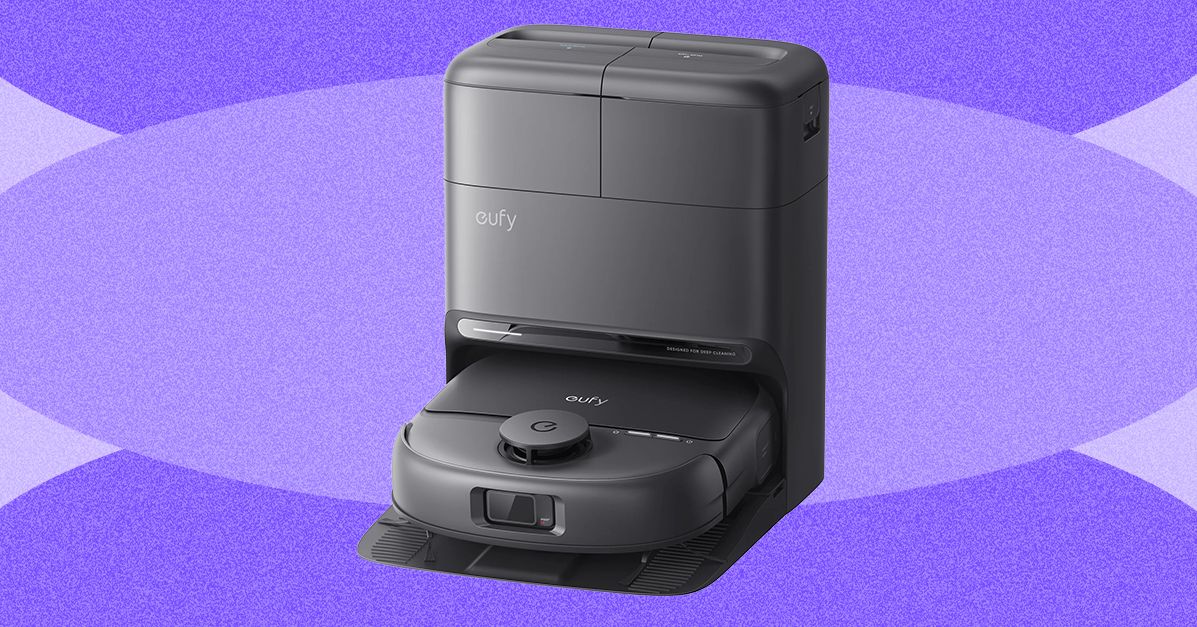
Where the X10 Pro Omni had rotating mop pads, the rolling mop pad on the Omni C28 continuously self-cleans to prevent spreading dirt or grime to other parts of the house. Both apply downward pressure, but neither can spot dirtier places on their own as pricier, AI-powered robot vacuums will. Still, I was happy to see that it was able to scrub away some of the large dirt smudges in my entryway, though it didn’t get all of them. It also didn’t manage to scrub away all of the cherry juice I intentionally spilled in my routine mess setup for robot vacuum testing, even after sending the vacuum to do a second mopping job on one of the spots.
Photograph: Nena Farrell
Still, the Omni C28 was able to raise its roller mop high enough when it switched from mopping my floors to vacuuming my living room rug that there was no hint of dampness anywhere. The older X10 did get my colleague Adrienne So’s carpet wet, but it didn’t get mine wet, though my carpet is a fairly low pile. It did a fine job vacuuming the carpet, though I could tell the difference in suction between this and more powerful vacuums I’ve tested.
The base station is nice and compact, and includes drying fans to dry off the roller mop. That does mean there’s a gentle fan noise in the background for a couple of hours after you use this robot vacuum, which was more annoying than I expected, but you could easily place this vacuum’s base station in a less central spot in your home so you don’t hear it. You could also set up a schedule for the vacuum to run in the morning and finish its drying job before you get home.
Multi-Floor Madness

Photograph: Nena Farrell
My favorite feature on the Omni C28 is that, even at this price point, it can still learn multiple maps. While it can’t climb up stairs, you can move it around your home and switch the maps in the app to the floor you’ve relocated to. This isn’t new for Eufy, as the older affordable model can do that too, but it’s nice to see the feature maintained when I’ve tried more expensive robot vacuums that don’t include it. It’s pretty simple to use; you’ll go to the maps, select “make a new map,” and then activate the robot to map. Once the map is made, you’ll switch to that map from the little map icon on the right side, which will label them with numbers in the order you created them.

Lisa Ann technically quit the porn business in 2019, but for $30 a month you can now dream up any X-rated scenario of her on your computer.
Ann, 53, was an adult performer for three decades starting in the mid 1990s and retired because she had reached her savings goal.
But last year she had a change of heart. Ann, who considers herself an AI fanatic, signed a contract with OhChat, a London-based AI companion company, to license her likeness on its platform, essentially creating an AI version of her in every way that can be used to make sex scenes for paying customers: same voice, same physique, and same pillowy brown hair.
As issues around deepfakes intensify and questions about the future of the adult industry become more dire with the passing of age-verification laws, several AI companion platforms want to create a new standard for consent-driven AI porn. More than sexting a faceless chatbot, digital twins—also called duplicates, doubles, clones, or replicas—draw on the exact likeness, including speech and mannerisms, of your favorite performers and creators.
Ann, now a self-help author and sports radio host, represents a growing faction in adult entertainment who not only believe AI is going to reshape the sex industry but who want a say in how that change materializes. She sees the decision to partner with OhChat as a way to tap into a fountain of youth—and stay at her peak forever.
“This keeps my name alive,” she says of her digital twin. “She’s never going to age.”
For Cherie Deville, a 47-year-old performer known for shooting MILF content, digital twins are just a smart business strategy to earn passive income while the opportunity is hot. “We can either let the makers of AI take the lion’s share of the money in the sex-work space, or creators and businesses can get on board and start creating their own revenue sources through AI.”
OhChat creators, who must submit 30 images and undergo voice training with a bot, sign an agreement stating the level of sexual content allowed for their digital twin. Ann is considered a “Level 4”—the highest on the platform—which means paying members can create scenarios and chats of her that include full nudity and sex. Per the company’s guidelines, clones can be deleted at any time.
“For guys that like to say good morning or good night, they now have that access. The fact that I’m not shooting scenes anymore also allows new scenes to be created,” Ann says.
Once described by CEO Nic Young as the “love child between OnlyFans and OpenAI,” OhChat launched in 2024 and has since scaled to over 400,000 users. According to data shared with WIRED, OhChat has 250 creators, 90 percent of which are female, and has contracts with celebrities Carmen Elektra and Joe Exotic. The platform runs on a tiered subscription model—$5 a month for on-demand texts or up to $30 for unlimited adult content—and the company, like OnlyFans, takes a 20 percent cut.
Other competitors in the space include My.Club, Joi AI and SinfulX AI, the platform that adult film actress Georgia Koneva partnered with this month, saying, in a press statement, that her avatar gave her a “new way to share my voice and personality with the people who follow me.” According to SinfulX AI, it also develops “original” synthetic characters using licensed source imagery from adult performers whose content it has the rights to use. In the same statement, the company said that those AI-generated “characters” are “designed not to replicate any single individual while still maintaining the realism for which its content is known.”
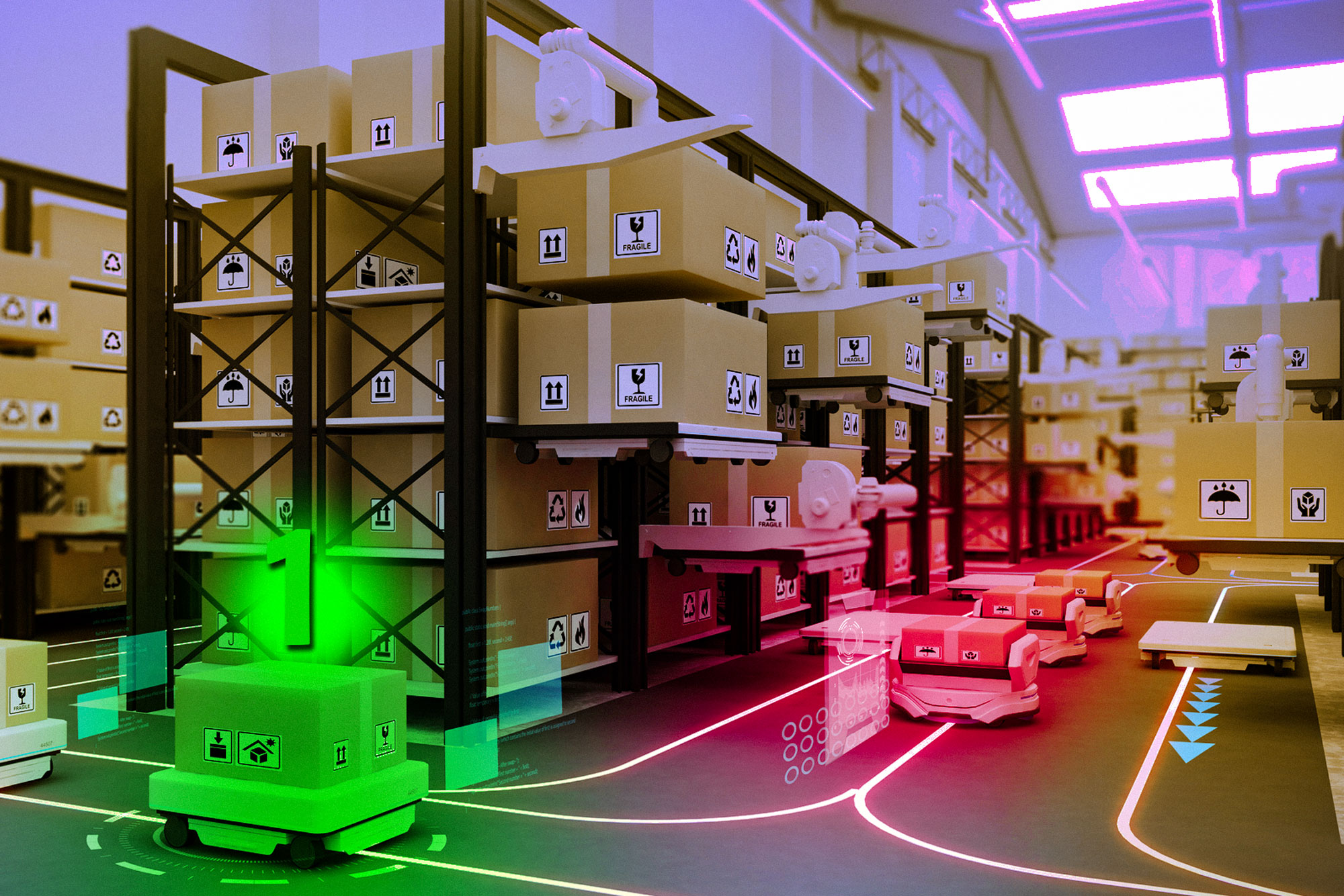
Inside a giant autonomous warehouse, hundreds of robots dart down aisles as they collect and distribute items to fulfill a steady stream of customer orders. In this busy environment, even small traffic jams or minor collisions can snowball into massive slowdowns.
To avoid such an avalanche of inefficiencies, researchers from MIT and the tech firm Symbotic developed a new method that automatically keeps a fleet of robots moving smoothly. Their method learns which robots should go first at each moment, based on how congestion is forming, and adapts to prioritize robots that are about to get stuck. In this way, the system can reroute robots in advance to avoid bottlenecks.
The hybrid system utilizes deep reinforcement learning, a powerful artificial intelligence method for solving complex problems, to figure out which robots should be prioritized. Then, a fast and reliable planning algorithm feeds instructions to the robots, enabling them to respond rapidly in constantly changing conditions.
In simulations inspired by actual e-commerce warehouse layouts, this new approach achieved about a 25 percent gain in throughput over other methods. Importantly, the system can quickly adapt to new environments with different quantities of robots or varied warehouse layouts.
“There are a lot of decision-making problems in manufacturing and logistics where companies rely on algorithms designed by human experts. But we have shown that, with the power of deep reinforcement learning, we can achieve super-human performance. This is a very promising approach, because in these giant warehouses even a 2 or 3 percent increase in throughput can have a huge impact,” says Han Zheng, a graduate student in the Laboratory for Information and Decision Systems (LIDS) at MIT and lead author of a paper on this new approach.
Zheng is joined on the paper by Yining Ma, a LIDS postdoc; Brandon Araki and Jingkai Chen of Symbotic; and senior author Cathy Wu, the Class of 1954 Career Development Associate Professor in Civil and Environmental Engineering (CEE) and the Institute for Data, Systems, and Society (IDSS) at MIT, and a member of LIDS. The research appears today in the Journal of Artificial Intelligence Research.
Rerouting robots
Coordinating hundreds of robots in an e-commerce warehouse simultaneously is no easy task.
The problem is especially complicated because the warehouse is a dynamic environment, and robots continually receive new tasks after reaching their goals. They need to be rapidly redirected as they leave and enter the warehouse floor.
Companies often leverage algorithms written by human experts to determine where and when robots should move to maximize the number of packages they can handle.
But if there is congestion or a collision, a firm may have no choice but to shut down the entire warehouse for hours to manually sort the problem out.
“In this setting, we don’t have an exact prediction of the future. We only know what the future might hold, in terms of the packages that come in or the distribution of future orders. The planning system needs to be adaptive to these changes as the warehouse operations go on,” Zheng says.
The MIT researchers achieved this adaptability using machine learning. They began by designing a neural network model to take observations of the warehouse environment and decide how to prioritize the robots. They train this model using deep reinforcement learning, a trial-and-error method in which the model learns to control robots in simulations that mimic actual warehouses. The model is rewarded for making decisions that increase overall throughput while avoiding conflicts.
Over time, the neural network learns to coordinate many robots efficiently.
“By interacting with simulations inspired by real warehouse layouts, our system receives feedback that we use to make its decision-making more intelligent. The trained neural network can then adapt to warehouses with different layouts,” Zheng explains.
It is designed to capture the long-term constraints and obstacles in each robot’s path, while also considering dynamic interactions between robots as they move through the warehouse.
By predicting current and future robot interactions, the model plans to avoid congestion before it happens.
After the neural network decides which robots should receive priority, the system employs a tried-and-true planning algorithm to tell each robot how to move from one point to another. This efficient algorithm helps the robots react quickly in the changing warehouse environment.
This combination of methods is key.
“This hybrid approach builds on my group’s work on how to achieve the best of both worlds between machine learning and classical optimization methods. Pure machine-learning methods still struggle to solve complex optimization problems, and yet it is extremely time- and labor-intensive for human experts to design effective methods. But together, using expert-designed methods the right way can tremendously simplify the machine learning task,” says Wu.
Overcoming complexity
Once the researchers trained the neural network, they tested the system in simulated warehouses that were different than those it had seen during training. Since industrial simulations were too inefficient for this complex problem, the researchers designed their own environments to mimic what happens in actual warehouses.
On average, their hybrid learning-based approach achieved 25 percent greater throughput than traditional algorithms as well as a random search method, in terms of number of packages delivered per robot. Their approach could also generate feasible robot path plans that overcame congestion caused by traditional methods.
“Especially when the density of robots in the warehouse goes up, the complexity scales exponentially, and these traditional methods quickly start to break down. In these environments, our method is much more efficient,” Zheng says.
While their system is still far away from real-world deployment, these demonstrations highlight the feasibility and benefits of using a machine learning-guided approach in warehouse automation.
In the future, the researchers want to include task assignments in the problem formulation, since determining which robot will complete each task impacts congestion. They also plan to scale up their system to larger warehouses with thousands of robots.
This research was funded by Symbotic.


2026 NFL draft team needs: Depth chart holes, prospect fits

China’s coal-to-chemicals: Winning the Iran war energy crisis

King Charles hopes for peace in new message as US tour hangs in balance

-

 Fashion1 week ago
Sales at US apparel, clothing accessories stores up 4% YoY in Jan 2026
-

 Tech1 week ago
Justice Department Says Anthropic Can’t Be Trusted With Warfighting Systems
-

 Entertainment1 week ago
Val Kilmer revived 1 year after death through AI
-

 Sports1 week ago
March Madness 2026 – How to watch in SA, start time, schedule, TV channel for NCAA championship basketball tournament
-
 Business1 week ago
Brits cashing in jewellery as gold price hits record high
-
 Business1 week ago
Stocks and pound rise as US rate call approaches
-

 Politics1 week ago
Iran strikes Tel Aviv with cluster-warhead missiles in retaliation of Larijani’s martyrdom
-

 Fashion1 week ago
Spain’s Inditex FY25 sales rise 3.2% to $46.28 bn amid strong demand