

Tech
These Are the Best Alternatives to Google’s Android Operating System

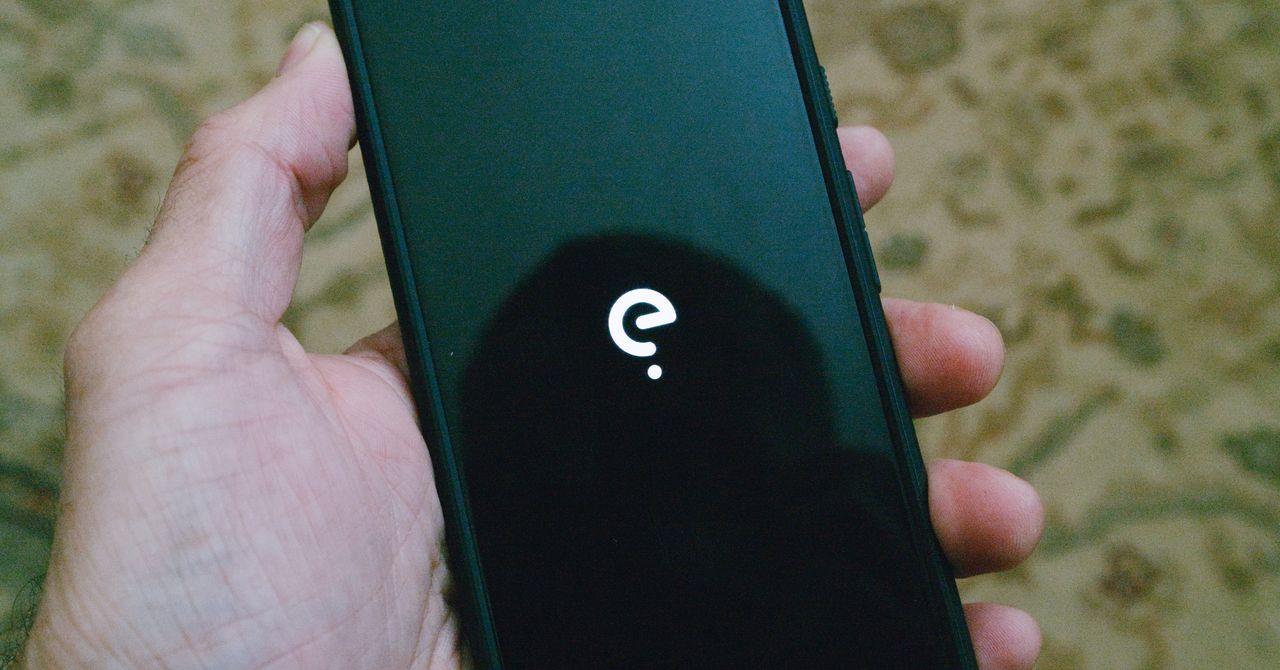
Want Google out of your life? It’s pretty easy to find alternative search, email, and photo storage providers, but it’s much harder to come up with a mobile operating system that’s free of Google. The obvious answer is an iPhone, but if you want Google out of your life, you probably don’t want to immediately replace it with Apple. While a little better from a privacy standpoint, Apple is still not great.
Fear not, privacy-conscious WIRED reader, there are alternatives to Android. Technically speaking, most alternative mobile operating systems are based on Android, not alternatives to it, but these various projects all remove Google and Google-related services (to varying degrees) from the system. Typically that means all the Google services are stripped out and replaced with some alternative code (usually the micro g project), which is then sandboxed in some way to isolate it and restrict what it has access to. The result is a phone that is less dependent on Google, pries less into your privacy, and sometimes might offer a more secure experience. However, at their core, these are all still based on Android.
If you want a true alternative to Android, there are a few. I am sorry to say, free software fans, the best and most functional alternative to Android is still iOS. Most people looking for Android alternatives are not, however, looking to switch to an Apple device. There are a couple of Linux-based phone systems out there, most notably SailfishOS, which can run Android apps (I will be testing this next), but in my testing, none of the Linux-based operating systems are ready to be your everyday device.
Jump To:
Why De-Google Your Phone?
First off, you don’t have to remove Google. There are plenty of people happily running Google Services on LineageOS just because they want to tinker with the system and expand the capabilities of their phones. That’s a fine reason to dive into the world of Android alternatives.
Still, you don’t have to have a nice tinfoil hat to know that Google’s privacy record is laughable. De-Googling your phone is a way of enjoying the convenience of having a smartphone without sharing everything you do with Google and every app that takes advantage of its APIs. Should you be able to participate in the technological world without trading your privacy to do so? I think so, and that’s why I’ve used an Android alternative, GrapheneOS, for more than five years.
What Is the Android Open Source Project?
Google’s Android mobile operating system is open source, which means anyone can, in theory, build their own mobile operating system based on the Android Open Source Project (AOSP). The AOSP just provides a base, though. There is much more to a mobile operating system than just the underlying code.
Android’s operating system may be open source, but it runs device-specific drivers and Google’s various Play Services application programming interfaces (APIs) with a suite of built-in apps for basic functionality. All of this stuff is another layer atop the Android operating system, and it’s this layer that’s very difficult for other projects to reproduce. It’s not hard for projects to get the AOSP code running, but it’s difficult to create a great mobile user experience on top, which is why the list of good de-Googled Android alternatives is short.
What Is the Bootloader and Why Is It Locked?
The bootloader is a piece of code that allows you to change which software boots up on your phone. The manufacturer of your phone puts a cryptographic key on the phone, the public read-only key. When an update is released, the manufacturer signs the update, and when the phone gets the update, it checks to make sure the signature matches the key. If it does, it applies the update, and if it doesn’t match it doesn’t. This is basic security and protects your device, but it also prevents you from loading another operating system, so one of the first things you’ll do when installing one of these de-Googled operating systems is unlock the bootloader.
Then you install the OS you want to install and then … you probably don’t relock the bootloader because most of the time that won’t work. This is why Pixel phones are popular with people who like to tinker and customize, because you can relock the bootloader on Pixels (and a handful of others), but by and large most people using alternative OSes just live with an unlocked bootloader. It’s not ideal, it’s a security vulnerability, but there’s also not a good solution aside from saying, get a Pixel.
Apple’s iOS does offer more privacy features than stock Android. In my experience, it’s a fine operating system, but it is still very tightly coupled to Apple. Sure, you can avoid iCloud, run your own syncing software, and not use Apple’s various tools, but to do that you’ll be fighting the phone every step of the way. If iOS works for you, that’s great, but for a lot of us, a de-Googled Android phone is just easier to use and more convenient.
Best Preinstalled Phone: Fairphone 6 With /e/OS
-
Photograph: Scott Gilbertson
-
Photograph: Scott Gilbertson

Fairphone
Fairphone (6th Gen, /e/OS)
The best de-Googled phone experience for most people is going to be Murena’s /e/OS version of the Fairphone 6. Not only does it offer the full /e/OS experience out of the box, with a strong focus on privacy and blocking apps from tracking you, but the Fairphone hardware is repairable, the battery replaceable, and the bootloader is locked. The catch, if you’re in the United States, is that the Fairphone 6 only works with T-Mobile and its MVNOs. Somewhat ironically, it worked great on GoogleFi when editor Julian Chokkattu tested it last year. I tested it using T-Mobile’s prepaid plan, as well as RedPocket’s T-Mobile-based service, and had no issues with either.
The Fairphone 6 gets even better when you put /e/OS on it. Thanks to the privacy-first design of /e/OS, apps no longer track you, but they do still work 99 percent of the time, which is often not the case with some apps on alternate OSes (looking at you, banking apps).
The core of the privacy features in /e/OS revolve around the Advanced Privacy app and widget. Here you can block (or chose to allow) in-app trackers, and there are other features such as hiding your IP address or geolocation when you feel like it. The IP and geo-spoofing are nice for limited-use cases, but the main privacy feature for most of us is the ability to block trackers in apps—and it turns out there are a lot of those.
Murena also ships /e/OS with a very nice custom app store, the App Lounge. It’s similar to the Play Store, but with extras like privacy information about each app. Under each listing in the App Lounge you’ll see a grade from 1 to 10, where 1 is horrible for privacy and 10 generally means no trackers. The App Lounge also grades apps according to which permissions they require. The fewer permissions (like access to your photos or geodata), the higher the rating.











Cursor announced Thursday the launch of Cursor 3, a new product interface that allows users to spin up AI coding agents to complete tasks on their behalf. The product, which was developed under the code name Glass, is Cursor’s response to agentic coding tools like Anthropic’s Claude Code and OpenAI’s Codex, which have taken off with millions of developers in recent months.
“In the last few months, our profession has completely changed,” said Jonas Nelle, one of Cursor’s heads of engineering, in an interview with WIRED. “A lot of the product that got Cursor here is not as important going forward anymore.”
Cursor increasingly finds itself in competition with leading AI labs for developers and enterprise customers. The company pioneered one of the first and most popular ways for developers to code with AI models from OpenAI, Anthropic, and Google—making Cursor one of these companies’ biggest AI customers. But in the last 18 months, OpenAI and Anthropic have launched agentic coding products of their own, and started offering them through highly subsidized subscriptions that have put pressure on Cursor’s business.
While Cursor’s core product lets developers code in an integrated development environment (IDE) and tap an AI model for help, new products like Claude Code and Codex center around allowing developers to off-load entire tasks to an AI agent—sometimes spinning up multiple agents at the same time. Cursor 3 is the startup’s version of an “agent-first” coding product. According to Nelle, the product is optimized for a world where developers spend their days “conversing with different agents, checking in on them, and seeing the work that they did,” rather than writing code themselves.
Cursor is launching its new agentic coding interface inside its existing desktop app, where it will live alongside the IDE. At the center of a new window in Cursor, there’s a text box where users can type, in natural language, a task they’d like an AI agent to complete—it looks more like a chatbot than a coding environment. Press enter, the AI agent sets to work without requiring the developer to write a single line of code. In a sidebar on the left, developers can view and manage all of the AI agents they have running in Cursor.
What’s unique about Cursor 3, compared to desktop apps for Claude Code and Codex, is that it integrates an agent-first product with Cursor’s AI-powered development environment. In a demo, Cursor’s other cohead of engineering for Cursor 3, Alexi Robbins, showed WIRED how users can prompt an agent in the cloud to spin up a feature, and then review the code it generated locally on their computer.
Nelle and Robbins argue it doesn’t matter which interface developers are spending their time in—they just want people using Cursor.
Competing With the AI Labs
I visited Cursor’s office in San Francisco’s North Beach neighborhood last week. The startup is reportedly raising fresh capital at a $50 billion valuation—nearly double what it was valued in a funding round last fall—and has expanded into an old movie theater. Cursor employees used to toss their shoes in a pile by the door upon entry, but now there’s a row of large shoe racks, signaling one way in which the company is growing up.
Yet Cursor still feels like a startup. Employees tell me that’s part of the appeal of working there; the company can ship quickly and doesn’t feel too corporate. But as it finds itself racing to catch up to Anthropic and OpenAI in the agentic coding race, that scrappiness may not be enough. This battle—the one to create the best AI coding agent—may be Cursor’s most capital-intensive chapter yet.
Tech
Wilson Connectivity, Autonomous Systems team for in-building wireless service | Computer Weekly

Wireless communication technology provider Wilson Connectivity has announced a joint development partnership with Autonomous Systems to bring automated, digitally transformed capabilities to phases of in-building wireless infrastructure spanning initial deployment through ongoing optimisation.
The full network lifecycle management offering combines Wilson’s 30-year track record in distributed antenna systems (DAS), private 5G and Citizens Broadband Radio Service (CBRS) with Autonomous Systems’ cloud-based, artificial intelligence (AI)-ready monitoring platform to give enterprises real-time, automated visibility into their networks from day one of deployment through to ongoing optimisation.
The combined service is said to have the “genuinely interesting” quality of flipping the traditional models currently used by enterprises running DAS or private networks.
Most organisations that operate in-building wireless systems rely on reactive, manual processes to resolve connectivity issues. Technicians are dispatched only after problems are reported, leading to prolonged disruptions and higher operational costs.
Wilson’s product replaces that model with continuous, automated monitoring and active testing that measures actual quality of experience for voice, messaging, over-the-top and streaming. The system is designed to scale across healthcare, manufacturing, logistics, higher education and hospitality. It’s also multi-operator and works across active, hybrid and passive DAS, as well as private 5G and CBRS.
It is also optimised for multi-operator environments and scales across healthcare facilities, manufacturing floors, logistics centres, datacentres, K-12 schools, higher education campuses and hospitality venues where reliable connectivity is essential for operations and public safety communications.
Wilson’s Hybrid DAS is said to be built to be installed quickly to improve in-building wireless signal through multi-channel amplification for the most simultaneous bandwidth. This is said to result in users gaining more control and a lower total cost of ownership through remote network scanning and monitoring, and energy-efficient space-saving design.
Cell signals for all devices on all carriers can be enhanced up to 5G speeds with the Hybrid DAS service, which also delivers the precision of Bi-Directional Antenna amplification using enterprise-grade quality with fibre-optic transport. This is said to offer “the greatest” versatility, coverage and capacity.
“This is a major step forward for Wilson and for the customers who depend on us,” said Payam Maveddat, general manager for enterprise at Wilson Connectivity. “We’re no longer just providing coverage. We’re giving enterprises and their partners a complete, integrated solution that manages the entire network lifecycle with real-time intelligence. That means fewer truck rolls, faster problem resolution and a better experience for the people who rely on these networks every day.”
Said to be built to unify automated monitoring and management, the Autonomous Systems platform combines zero-touch visibility sensors with fully cloud-integrated workflow automation to streamline operations and accelerate decision-making. By transforming network and service data into actionable intelligence, Autonomous Systems says it can empower organisations to enhance efficiency, strengthen network resilience and optimise performance at scale.
“Wilson saw where the market was heading and made a strategic decision to lead their industry enabling full network life-cycle automation,” said Autonomous Systems CEO Steve Urvik. “Working together on this joint development, we’ve built something that gives Wilson’s customers and partners a level of integrated network visibility and control that simply wasn’t available in the market before.”
The service will be available globally in the second quarter of 2026. Pricing will be based on a combination of intelligent probe hardware and subscription-based remote monitoring.
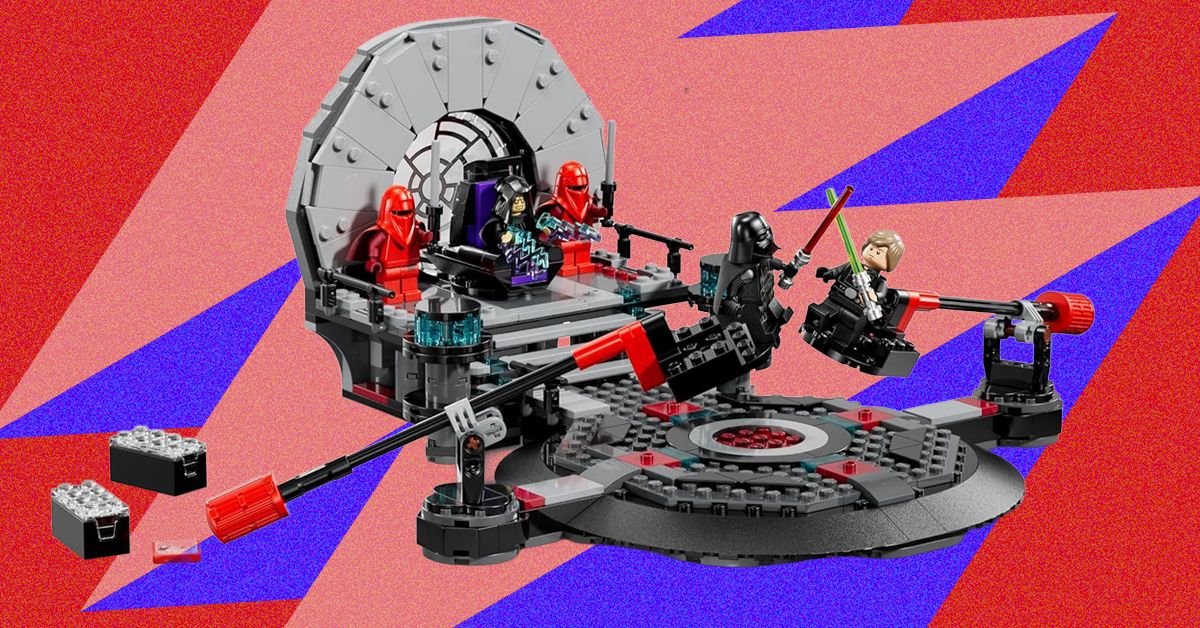
To address the elephant in the room: Yes, Lego bricks are made of plastic. The company makes billions of tiny bricks that proliferate all over the world and all over your living room, and they will not biodegrade and cannot be recycled.
With that said, Lego bricks are machined to incredibly tight tolerances. Unless your dog chews on them, the bricks retain what Lego refers to as their “clutch power” for decades. Like so many others, my family became obsessed with Lego sets during the Covid-19 pandemic, and we still love them today. Years on, I have found no better way to while away a rainy afternoon than making tiny tyrannosaurs and pterosaurs with your son.
If you and your loved ones are also obsessed with Lego sets, we have some great gift ideas for you. If not, don’t forget to check out our other gift guides; Mother’s Day and Father’s Day are coming up sooner than you think.
Updated April 2026: We added the Throne Room, added more information about smart bricks, and updated links and prices.


Regional sports networks are faltering even as ratings soar

India’s textile sector to gain from petrochemical duty easing

King Charles won’t speak this year, Palace announces

-

 Fashion1 week ago
Ho Chi Minh City bizs adjust production plans, seek new supply chains
-

 Fashion1 week ago
India’s Gen Z to drive half of fashion market by 2030: Reedseer
-

 Entertainment1 week ago
Andrew holds breath as King Charles plans bombshell move amid probe
-

 Entertainment1 week ago
Space company plans bold landing on fast-moving asteroid passing near Earth
-

 Fashion1 week ago
Japan’s apparel imports rise 22.9% to $2 bn in February 2026
-
 Business6 days ago
How do you spot a fake online review?
-
 Business1 week ago
Co-op boss quits after ‘toxic culture’ claims reported by BBC
-

 Sports1 week ago
2026 NBA draft stock watch: Which NCAA prospects are rising?