

Business
TikTok-fueled K-beauty boom triggers a retail race in the U.S.


Carly Xie looks over facial mask items at the Face Shop, which specializes in Korean cosmetics, in San Francisco, April 15, 2015.
Avila Gonzalez | San Francisco Chronicle | Hearst Newspapers | Getty Images
On a recent Saturday at an Ulta Beauty store in midtown Manhattan, Denise McCarthy, a mother in her 40s, stood in front of a wall of tiny pastel bottles, tubes and compacts. Her phone buzzed — another TikTok from her 15-year-old daughter.
“My kids text me the TikToks,” she told CNBC, scooping Korean lip tints and sunscreens into her basket, destined for Christmas stockings. “I don’t even know what half of this does. I just buy the ones they send me.”
Two aisles over, a group of college students compared swatches of Korean cushion foundations. A dad asked a store associate whether a viral Korean sunscreen was the one “from the girl who does the ‘get ready with me’ videos.” Near the checkout, a display of Korean sheet mask mini-packs was nearly empty.
Scenes like this are playing out across the country.
Once a niche reserved for beauty obsessives, Korean cosmetics — known as K-beauty — are breaking fully into the American mainstream, fueled by TikTok virality, younger and more diverse shoppers, and aggressive expansion from retailers such as Ulta, Sephora, Walmart and Costco.
K-beauty sales in the United States are expected to top $2 billion in 2025, up more than 37% from last year, according to market research firm NielsenIQ, far outpacing the broader beauty market’s single-digit growth.
And even as trade tensions complicate supply chains, brands and retailers told CNBC the momentum is strong.
“We have no plans of slowing down and see more opportunities to penetrate the market,” said Janet Kim, vice president at K-beauty brand Neogen.
In the first half of 2025, South Korea shipped a record $5.5 billion worth of cosmetics, up nearly 15% year over year, and has become the leading exporter of cosmetics to the U.S., surpassing France, according to data from the South Korean government.
“The growth has been remarkable,” said Therese-Ann D’Ambrosia, vice president of beauty and personal care at NielsenIQ. “When you compare that to the broader beauty market, which is growing at single digits, K-beauty is clearly operating in a different gear right now.”
Facial skin care remains the biggest K-beauty revenue driver in the U.S., NielsenIQ reported. Hair care is growing fastest, and hybrid items such as tinted serums and skin care-infused cushion compacts — sponge cushions soaked with an SPF foundation — continue to surge, the firm said.
Big business
Retailers are racing to take advantage of the cosmetics boom, and a turf war is underway.
Ulta, which has over 1,400 U.S. stores, launched “K-beauty World” in July, to spotlight Korean brands and tech devices. It’s the only major U.S. retailer carrying products from Medicube, a beauty-tech company touted by celebrities such as Hailey Bieber.
Ulta’s first quarter 2025 report cited a 38% increase in Korean skin care sales, and executives said in August that new K-beauty partnerships contributed to the company beating Wall Street expectations for earnings in the second quarter.
Sephora is leaning in as well. Its Times Square flagship location now features an entire wall of Korean skin care and cosmetics, and the retailer secured exclusive U.S. launches for Korean heritage brand Hanyul and sensitive-skin label Aestura.
Big-box players are piling in too. Costco and Walmart have also expanded their assortments, adding essences, serums and sheet masks as demand accelerates.
“It’s an arms race to see who can capitalize on the market for Korean products,” Delphine Horvath, professor of cosmetics and fragrance marketing at the Fashion Institute of Technology, told CNBC. “These products are now seen as a top driver of growth for cosmetic brands, and it seems it will keep booming.”
The competition is heating up just as Olive Young, often called the “Sephora of Seoul,” prepares to open its first U.S. store in Los Angeles next year. Asian beauty retailer Sukoshi is also expanding, planning 20 new stores in the coming year across cities such as Seattle, Miami, and Austin, Texas.
“Meeting customers where they can touch, feel and try what they see on TikTok is key,” Sukoshi CEO Linda Dang told CNBC. “Across the industry, companies are looking to expand partly because people really don’t want to have to wait for shipping or travel all the way to Korea to get products.”
The boom arrives in the middle of the ongoing trade war.
This spring, U.S. shoppers rushed to stock up on K-beauty favorites, bracing for price hikes from tariffs, Dang said. However, prices ultimately stayed relatively stable as Korean brands have temporarily absorbed the duties, Dang said, though many are now exploring alternative manufacturing or shipping methods.
South Korea finalized a deal with President Donald Trump last month, settling on a 15% tariff rate instead of the initial 25% levy the president announced in April.
“The system of easy trading isn’t what it was before tariffs,” Dang told CNBC. “That being said, a lot of companies have worked with advertisers and internally to do their best to offset and prevent passing those costs on to customers in the U.S.”
A visitor tries Korean-made cosmetics during the 2022 Korea Tourism Organization’s Discover Your Korea, in Vanderbilt Hall of Grand Central Terminal, New York.
Lev Radin | Pacific Press | Lightrocket | Getty Images
The ‘second wave’
Over the past decade, there’s also been a rise in Korean entertainment in the U.S. — from pop groups such as BTS and Blackpink to this year’s Netflix hit “KPop Demon Hunters” —which has helped push South Korea’s cultural exports to unprecedented popularity.
“Korean culture has exploded on every front, and that has really shown up when it comes to K-beauty,” Dang said.
K-beauty’s “first wave,” which hit the U.S. in the mid-2010s, was defined by “glass skin,” 10-step routines, snail mucin, cushion compacts and beauty blemish creams. Most products catered to lighter skin tones, and distribution was limited to small boutiques, Amazon sellers and early test placements at Ulta and Sephora, beauty experts said.
“The first wave had some penetration, but nothing like today,” Horvath said. “It was mostly people in the know.”
The second wave has been bigger, faster and far more inclusive. It has spanned color cosmetics, hair and scalp care, body care, fragrances and high-tech devices.
TikTok is the central engine of discovery, especially for Gen Z and millennial shoppers, who account for roughly three-fourths of K-beauty consumers, according to a Personal Care Insights market analyst report. Posts tagged “K-beauty” or “Korean skin care” draw 250 million views per week, according to consumer data firm Spate. And viral products with sleek packaging often vanish from shelves faster than retailers can restock — particularly those that combine gentle formulas and low prices, Dang said.
“TikTok has changed the game,” Horvath said. “It’s easier to educate consumers on innovation and get the word out. Brands are deeply invested in paying influencers, and TikTokers talk about textures, formulas and efficacy.”
Virality has also pushed brands to be more inclusive for younger and more diverse shoppers. After TikTok creators criticized Korean brand Tirtir for offering only three foundation shades, the company expanded to 40 shades within months and many other companies followed suit.
The trend is visible across the Americas: 61% of consumers in Mexico and nearly half in Brazil say K-beauty is popular in their country, compared with about 45% in the U.S., according to Statista.
“Traditional retail and e-commerce remain important, but TikTok Shop is the standout disruptor,” said Nielsen’s D’Ambrosia. “It’s not just about the direct sales on that one platform; it’s about how it’s changing the entire discovery and purchase journey.”
But the second wave brings its own risks. A heavy dependence on virality could expose brands to sudden algorithm changes or regulatory scrutiny, D’Ambrosia said.
“When you have so much growth concentrated on one platform [such as TikTok], algorithm changes could significantly impact discoverability overnight,” D’Ambrosia said. “We’ve seen what happens when platforms tweak their recommendation engines. … There are definitely some caution flags we’re watching.”
Collagen eye patches and face masks at the Face Shop, which specializes in Korean beauty items, in San Francisco, April 15, 2015.
Avila Gonzalez | San Francisco Chronicle | Hearst Newspapers | Getty Images
Rapid innovation
K-beauty’s staying power, Dang said, is rooted in an intensely competitive domestic Korean market. Trends move at breakneck speed and consumers spend more per capita on beauty than in any other country, according to South Korean research firm KOISRA.
South Korea had more than 28,000 licensed cosmetics sellers in 2024 — nearly double that of five years ago — creating a pressure-cooker environment that forces constant experimentation, said Neogen’s Kim.
“We develop about hundreds of formulas each day,” Kim told CNBC. “We build the library and we test results with clinical individual tests. … Everything that’s very unique and works really well for skin care, we develop.”
Korean consumers churn through trends quickly, fueling a pipeline of upstart brands that can go viral and, in some cases, get acquired. For example, when gooey snail mucin, a gel used to protect and repair people’s skin, took off globally, skin care brand Amorepacific acquired COSRX, the small Korean brand that helped popularize the ingredient, for roughly $700 million.
The next wave of products, analysts predict, are likely to be even more experimental.
Brands are betting on buzzy ingredients such as DNA extracted from salmon or trout sperm that early research suggests may help calm or repair skin. They are also expanding into biotechnology.
“K-beauty is very data-driven. [Artificial intelligence] helps us get fast results for content, formula development, and advertising,” Kim said. “In Korea, they started talking about delivery systems. They’re very good with biotechnology.”








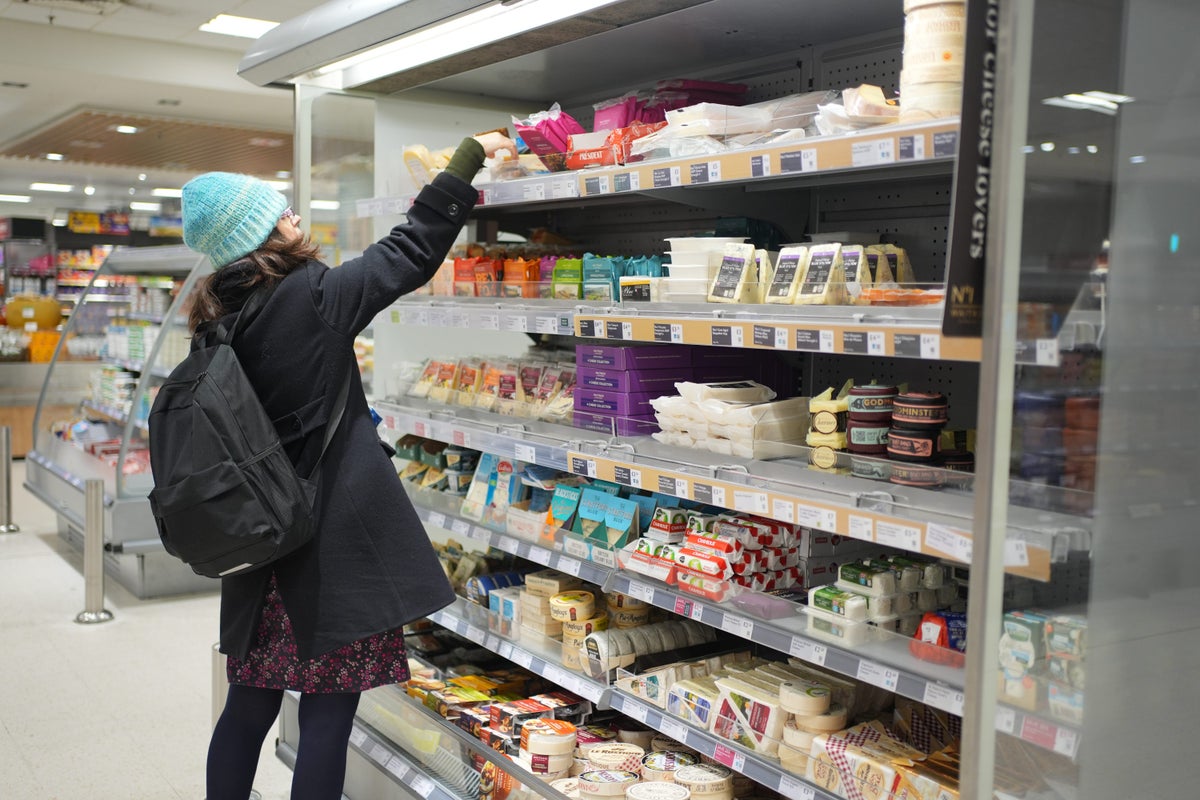
One in five UK grocery trips involves at least one missing item, adding up to roughly £2.1 billion in “displaced” sales, according to a report.
As a result, 44% of consumers say they have switched to another supermarket or added in a visit to an alternative grocer in the past year to find an item they need – rising to almost two thirds of shoppers under 45, a study by DHL Supply Chain and the consultancy Retail Economics found.
Almost six in 10 shoppers (59%) said availability is a main reason they shop across multiple stores, and one in three now prioritised availability over price, a survey of 2,000 UK households suggests.
Meanwhile, convenience stores accounted for around one fifth of grocery sales but made up almost half of all displaced spending because of gaps on shelves.
Some 63% of shoppers believe availability is worse in convenience stores.
Nick Archer, managing director of convenience and consumer at DHL Supply Chain, said: “The research shows that even small stock gaps can have a significant impact on how shoppers feel about a retailer.
“Despite the pressure on shoppers’ wallets, loyalty is being driven by more than price.
“In a market where customers can switch stores with ease, availability is much more than an operational metric. Being competitive in today’s market requires precision.”
Retail Economics chief executive Richard Lim said: “In today’s environment of busy lifestyles, hybrid working and smaller, more frequent shopping trips, customers expect to find what they need quickly and easily.
“This is not only limited to grocery, but in all retail sectors, from fashion to beauty.
“Convenience comes down to having products there when the customer needs them, and availability has become the clearest sign of reliability.
“Retailers who get it right will be the ones who earn trust and lasting loyalty.”
Business
Shree Ram Twistex IPO Lists At 30% Discount, Clean Max Falls 20% In Debut Trade: Should You Buy, Sell Or Hold?

Last Updated:
Shares of Shree Ram Twistex Ltd and Clean Max Enviro Energy Solutions Ltd make lacklustre stock market debuts on March 2.




IPO Listings of Shree Ram Twistex Ltd and Clean Max Enviro Energy Solutions Ltd.
Shares of Shree Ram Twistex Ltd and Clean Max Enviro Energy Solutions Ltd made lacklustre stock market debuts on March 2, listing at steep discounts to their issue prices amid a sharp broader market sell-off triggered by escalating geopolitical tensions in the Middle East.
At 01:57 pm, the Sensex tumbled over 1,800 points, slipping below the 79,500 level; meanwhile, Nifty dropped below the 24,650 level.
Shree Ram Twistex lists at sharp discount
Shree Ram Twistex opened at Rs 68 on NSE, down 34.61% from its issue price of Rs 104, and at Rs 70 on BSE, marking a decline of 32.69%. The company’s market capitalisation stood at Rs 275.83 crore after listing.
Despite the weak debut, the IPO had seen strong investor demand, receiving 43.66 times subscription. The Rs 110.24-crore issue was entirely a fresh issue of up to 1.06 crore shares priced in the Rs 95-104 band.
Shivani Nyati, Head of Wealth at Swastika Investmart Ltd, said, “The muted listing reflects cautious sentiment and possible profit booking, even though the IPO was subscribed 43.66 times, with very strong demand in the retail and NII categories.”
She added that proceeds will be used for captive solar and wind power plants, debt repayment, and working capital support, which could lower energy costs over time.
“Volatility may persist in the short term. High-risk investors can consider holding with a strict stop loss at Rs 60. Fresh entry is advisable only after the stock shows signs of stability and buying support,” she said.
Clean Max falls sharply after listing
Clean Max Enviro Energy Solutions listed at Rs 960 on NSE, an 8.83% discount to its upper price band of Rs 1,053, and at Rs 952.20 on BSE, down 9.57%. During the session, the stock dropped as much as about 20% from its opening levels. The firm’s market valuation stood at Rs 10,111.54 crore.
The Rs 3,100-crore IPO saw moderate demand, getting subscribed 94%. The issue comprised a fresh issue worth Rs 1,200 crore and an offer-for-sale of Rs 1,900 crore.
Nyati said, “While the long term business outlook remains structurally positive, the weak listing indicates near term caution and limited immediate upside visibility.”
She advised caution for investors: “Allottees may hold if risk appetite is high but should maintain a strict stop loss at Rs 900. Fresh investors are advised to wait for price stability and strong demand support before considering new positions.”
Business fundamentals vs listing sentiment
Shree Ram Twistex manufactures cotton yarn, while Clean Max operates in the renewable energy solutions space, providing solar, wind, hybrid power and carbon credit services for commercial and industrial clients.
Analysts note that weak listing performance does not necessarily reflect long-term fundamentals, particularly when broader market sentiment is risk-averse. However, steep listing discounts often indicate either aggressive IPO pricing or short-term liquidity pressure.
Should investors buy, sell or hold?
For Shree Ram Twistex, experts suggest only high-risk investors consider holding with tight risk management, while new investors should wait for price discovery. For Clean Max, the recommendation is similar: hold only if risk appetite is high and avoid fresh positions until stability returns.
In both cases, analysts stress that listing day performance should not be the sole investment metric; sustained earnings visibility, balance-sheet strength and institutional participation over the coming quarters will determine whether these stocks recover or continue to lag.
 Click here to add News18 as your preferred news source on Google.
Follow News18 on Google. Join the fun, play games on News18. Stay updated with all the latest business news, including market trends, stock updates, tax, IPO, banking finance, real estate, savings and investments. To Get in-depth analysis, expert opinions, and real-time updates. Also Download the News18 App to stay updated.
March 02, 2026, 14:42 IST
Read More
The company brought in consultants AlixPartners last month, after failing to make a profit in recent years.
Source link

One in five UK grocery trips involves at least one missing item – report

USA 2-0 Argentina (Mar 1, 2026) Game Analysis – ESPN
Shree Ram Twistex IPO Lists At 30% Discount, Clean Max Falls 20% In Debut Trade: Should You Buy, Sell Or Hold?

Pakistan carries out precision strikes on seven militant hideouts in Afghanistan

Eye-popping rise in one year: Betting on just gold and silver for long-term wealth creation? Think again! – The Times of India

These Cheap Noise-Cancelling Sony Headphones Are Even Cheaper Right Now

-
Business1 week ago
Eye-popping rise in one year: Betting on just gold and silver for long-term wealth creation? Think again! – The Times of India
-
 Politics1 week ago
Pakistan carries out precision strikes on seven militant hideouts in Afghanistan
-
 Tech1 week ago
These Cheap Noise-Cancelling Sony Headphones Are Even Cheaper Right Now
-

 Sports1 week ago
Kansas’ Darryn Peterson misses most of 2nd half with cramping
-

 Sports1 week ago
How James Milner broke Premier League’s appearances record
-

 Entertainment1 week ago
Viral monkey Punch makes IKEA toy global sensation: Here’s what it costs
-

 Entertainment1 week ago
Saturday Sessions: Say She She performs "Under the Sun"
-
Sports1 week ago
Mike Eruzione and the ‘Miracle on Ice’ team are looking for some company