

Tech
Tinder Launches Mandatory Facial Verification to Weed Out Bots and Scammers


On Wednesday, Tinder announced that it is rolling out a mandatory facial verification tool for new users in the US to help combat the spread of fake profiles and weed out “bad actors.”
Tinder claims its mandatory facial integration feature, called Face Check, is a first for a major dating app. During the sign-up process, new members complete a “liveness check” by taking a short video selfie within the app. The procedure collects and stores an encrypted map of information about the shape of the user’s face. “We don’t store a picture of your face, it’s not photo recognition, it’s data points about the shape of your face that are turned into a mathematical hash,” says Yoel Roth, head of Trust and Safety for Match Group, which owns Tinder. Tinder then uses that “hash” to check whether a new sign-up matches an account that already exists on Tinder.
Face Check is currently available to users in California, which will be followed by Texas and other states.
In a news release, Roth said the measure “sets a new benchmark for trust and safety across the dating industry” and “it helps tackle one of the hardest problems online, knowing whether someone is real … while adding meaningful obstacles that are difficult for bad actors to circumvent.”
The company defines “bad actors” as accounts that engage in deceptive behavior, including spamming, scamming, and bots. Currently 98 percent of the content moderation actions on Tinder address fake accounts, scamming, and spam. “There is a significant volume of the overall trust and safety work we do on Tinder that is focused on this challenge.”
Roth says it is a “meaningful improvement in our ability to address scaled abuse. You can get new phone numbers, new email addresses, new devices, you can’t really get a new face.”
The company is aware that asking new members to scan their faces might be seen as a privacy issue, but “theoretically, if somebody were to get access to every single one of these hashes that’s been created, there isn’t really anything they could do.”
The app’s previous verification methods were voluntary. Members, depending on their jurisdiction, could opt to verify their profiles through a selfie or ID process. Other dating apps like Bumble also use facial recognition software to let daters verify their authenticity, but on a voluntary basis.
When asked what the app plans to do about the fake profiles that already exist, given Face Check applies only to new users, Roth says the tech is most effective in curbing “the biggest issue that we’re concerned with, which is the bulk creation of new accounts.”













Tired of the stale, fetid air looming over your apartment like a cloud? Check out the Coway Airmega Mighty, an already wallet-friendly home air purifier that’s even cheaper right now as part of the Amazon Big Spring Sale. It’s currently marked down to just $154, a $76 discount from its typical price, but you’ll want to move quickly if you’re interested, as the deal is only available for a limited time.
Despite its low price tag and squat stature, the Airmega Mighty is capable of cleaning a substantial amount of space. At full bore, it can handle a 361-square-foot space, although you’ll get the best performance, and save your ears, if you’re closer to a 200-square-foot room. If you don’t want it running constantly, there are built-in timers to automatically shut off after 1, 4, or 8 hours, or you can use Eco Mode, which will run until the Might doesn’t sense any dirty air for half an hour.
That’s right, the Airmega Mighty has a built-in air quality sensor, and it reflects the current state of the air quality using a colored light with three levels. It uses those readings to automatically adjust the fan speed and timing settings on the fly, as well as giving you a peak into how bad the air you’re breathing right now is for you. While it lacks integration with smart home setups like Google Home, it makes up for it by handling all of its own business without Wi-Fi or extra apps on your phone.
While the Coway Airmega Mighty is available in three colors, only the black and silver model is currently discounted, so you’ll have to pay full price if it doesn’t match your living room’s color scheme. We’ve put in the work testing every air purifier we could get our hands on, so make sure to check out the full guide if you’re trying to clean up your space. The Coway is discounted as part of Amazon’s Big Spring Sale, and we’ve got the best deals from products we’ve tested gathered in one place if you want to save some bucks.
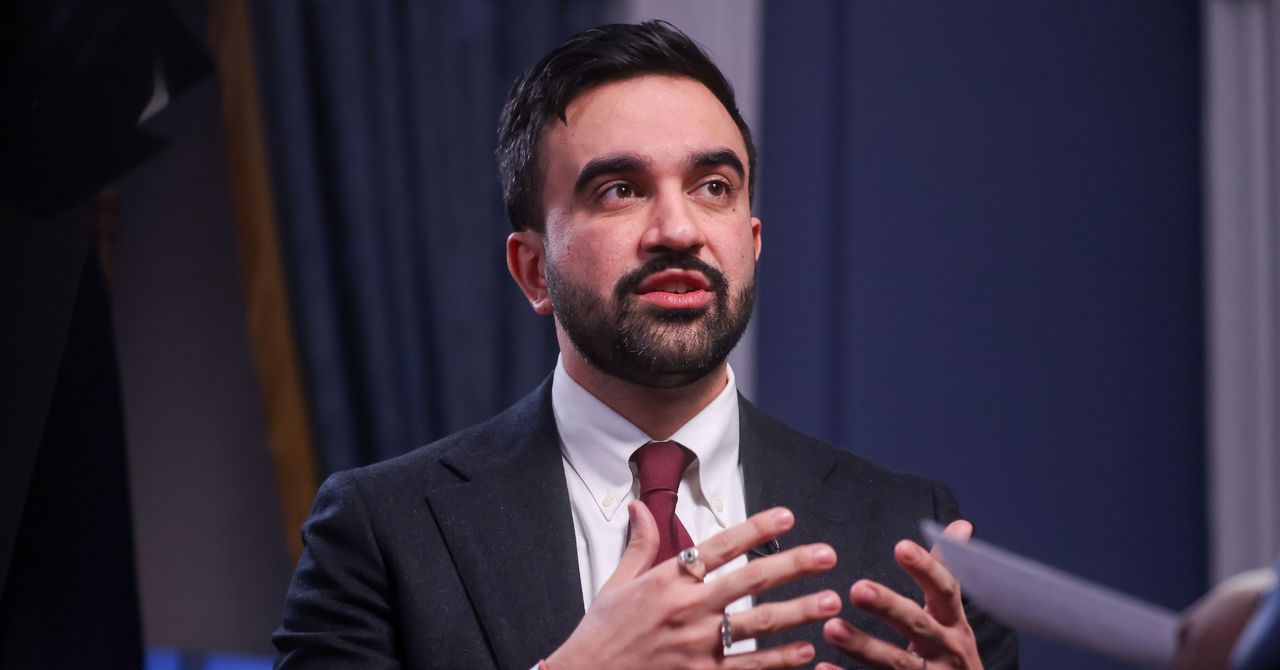
New York City mayor Zohran Mamdani, who rode a social media-fueled campaign to Gracie Mansion, is reversing an Eric Adams–era directive barring TikTok from government-owned devices. Local agencies will now be able to post about their projects on the app, though with new guardrails to protect city networks.
“The Mamdani administration is committed to using every tool in our toolbox to communicate with New Yorkers,” says the email to agencies, obtained by WIRED. “At a moment when people are turning to city government for information about free services, emergency situations, upcoming events, and more, we want to open up new avenues of communication with the public and help deliver the information New Yorkers need.”
In August 2023, then-mayor Adams barred the use of TikTok on government devices, joining the ranks of other state and federal agencies that at the time deemed the app a major security risk. Adams spokesperson Jonah Allon said then that the city’s Cyber Command office had decided that TikTok, which was owned by the Chinese-based company ByteDance, “posed a security threat to the city’s technical networks and directed its removal from city-owned devices.”
The directive resulted in a number of popular city-run accounts shutting down, including accounts for the NYC Departments of Sanitation and Parks and Recreation. As of Tuesday morning, the accounts’ bios read, “This account was operated by NYC until August 2023. It’s no longer monitored.”
Now, these TikTok accounts will be allowed to reopen with a few new rules aimed at protecting the security of NYC’s networks and devices while allowing agencies to communicate with citizens on the popular app. In order to use TikTok, agencies will be required to use separate, government-issued devices for the app that “cannot contain sensitive or restricted data, and they cannot be used for email, internal systems, or privileged access,” according to the email to agencies. Agencies will designate specific staff from media and press offices to run the TikTok accounts with city government emails, not personal ones.
“In a fragmented media landscape, more and more people—especially younger people—are looking beyond the four corners of their television screen to stay informed,” Mamdani said in a statement to WIRED. “Our responsibility is simple: Meet people where they are. That means stepping outside our comfort zones and communicating in ways that reflect how New Yorkers actually live, work, and connect.”
Mamdani’s rule reversal comes after his November election that relied heavily on social media to conduct voter outreach. Mamdani leveraged TikTok to recruit volunteers and amplify his policy platform. Over his first few months in office, Mamdani has continued to leverage social media platforms, publishing a variety of public-service announcements related to city-run programs.
Ahead of dangerous winter weather in January, Mamdani published a video to the official @nycmayor account on Instagram asking New Yorkers to sign up for the city’s free emergency communications program, NotifyNYC. The program netted more than 32,000 new subscribers in the four days after the video was released, according to stats provided by Mamdani’s office. Last year, New York City Emergency Management ran a $240,000 advertising round for NotifyNYC, acquiring around 48,000 new subscribers. Mamdani also created a handful of videos asking New Yorkers to join a Department of Sanitation snow-shoveling program. Around 5,000 people signed up, tripling the number previously enrolled in the program.
The situation has also changed for the app. In January 2026, TikTok finalized a deal with the Trump administration to form a new US-based version of the company run by American investors, including Oracle. The consortium of American investors staved off a nationwide ban of the app.

Yes, it’s a supercar, but it’s also sold very much as a track and road car, one that accommodates a passenger, all of which means road trips and weekend-away stays are very much possible. Well, they would be if there were anywhere at all to store luggage. Lamborghini managed to find some luggage space in its Revuelto design, so there’s no excuse here, really.
The design department otherwise has had a field day. Top-mounted exhausts, dihedral doors, and even an F1-style roof snorkel to accompany that air-braking rear wing deliver an exterior that is nothing short of arresting. Somehow, none of this looks garish or out of place on the Valhalla in person. Everything has a purpose, and nothing seems to scream as flexing or showing off. There’s a cohesion to the Valhalla aesthetic that others might not manage.
Inside, it is much more comfortable than you would imagine. The one-piece carbon-fiber seats look like they are going to be tricky, but on my two-hour road drive, they were supportive and, yes, comfortable. Visibility is surprisingly good, but a camera system is required for the rear view mirror because there’s no rear window. The rest of the interior is minimal, but the steering wheel is excellent (which, as Jony Ive will tell you, is no mean feat) and neatly signals some motorsport cool.
Photograph: Jeremy White
The one gripe for the interior is the dash and center screens, which are clear and responsive, and offer up the usual smartphone mirroring options, but they aren’t luxurious. We’re seeing a lot more effort these days with screen design from Ferrari’s new Luce as well as BMW in the iX3 and i3, but here, Aston has decidedly functional, off-the-shelf-looking displays. If I were parting with a million dollars, I might want more consideration here.
Odin’s Beard
On the road and track is where the Valhalla excels. Impressive doesn’t come close, and, despite the delays, the patience shown by Aston has clearly paid dividends. The ride is superb, as well as being ridiculously quick. The chassis is exceptionally agile, making the car feel alert and light. There are enormous reserves of grip to match the formidable braking and acceleration, and as a result, this is a car that flatters you; it effortlessly seduces you into driving much harder and better than you think you can, all while giving you levels of confidence you wouldn’t think possible.
I’ve driven the Lamborghini Revuelto, and yes, it’s exciting, but also there’s a part of you that is wary—the part that knows that if you don’t keep your wits about you 100 percent of the time, things will go bad very quickly. The Valhalla offers up all of that fun and excitement, but almost none of the trepidation. It is gratifying and intuitive to drive. Anyone can fully enjoy this car, not merely those used to track days. Some will say the engine note is not as full-throated as might be expected in such a car, but others will be having so much fun they won’t care. Nor should they.


Wrigley Field to host Big Ten/SEC volleyball doubleheader

Tech giant Oracle makes ‘significant’ job cuts

Romelu Lukaku facing disciplinary action after missing Napoli training

-

 Politics1 week ago
Afghanistan announces release of detained US citizen
-

 Sports1 week ago
Broadcast industry CEO says consolidation is ‘essential’ to compete for NFL soaring media rights prices
-

 Entertainment1 week ago
UN warns migratory freshwater fish numbers are spiralling
-

 Tech1 week ago
Can a Home Appliance Fix the Problem of Soft-Plastic Waste?
-
 Business1 week ago
Property Play: Home flippers see smallest profits since the Great Recession, real estate data firm says
-
 Business1 week ago
Gold prices soar in Pakistan – SUCH TV
-

 Fashion1 week ago
ICE cotton slips on weaker crude, profit booking
-
 Business1 week ago
More women are entering wealth management, but few are in advisory roles, study finds