

Fashion
Tiruppur exporters struggle as 50% US tariffs hit orders

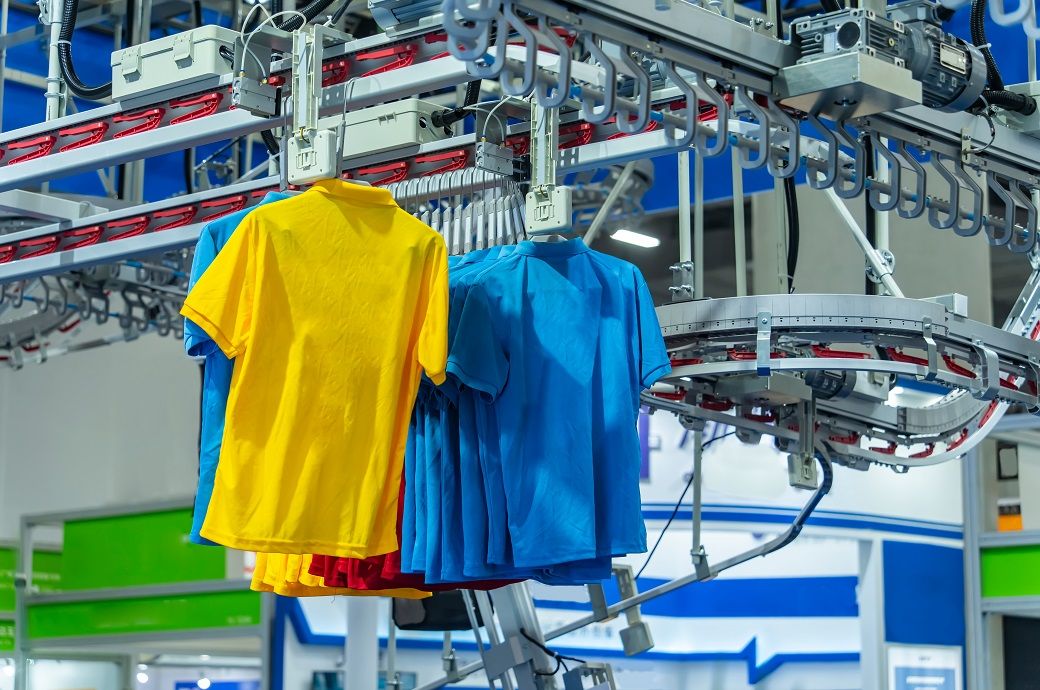
The US accounts for around 30 per cent of Tiruppur’s total exports and nearly 55 per cent of India’s knitwear exports, making it the cluster’s single most critical overseas market. As orders from US buyers have declined sharply following the tariff hike, exporters are being forced to offer discounts of 25–30 per cent to retain long-standing customers. These price cuts are directly eroding margins and pushing many units into losses, exporters from the cluster said.
Tiruppur’s knitwear exporters are facing severe pressure after 50 per cent US tariffs sharply reduced orders from their largest market.
With the US accounting for nearly one-third of the cluster’s exports, firms are forced to offer deep discounts, eroding margins and pushing many MSMEs into losses.
Exporters are urging government support to offset tariff impacts and prevent long-term damage.
The Tiruppur Exporters Association (TEA) warned that the impact is particularly severe for MSME exporters, who typically operate on thin margins and lack the financial resilience to absorb sustained price reductions. Several exporters have reported order cancellations, shorter production runs and significantly lower capacity utilisation, with some units operating well below optimal levels. Given the cluster’s labour-intensive nature, the downturn is also raising concerns over job security and employment stability.
Exporters argue that replacing the US market is not a realistic short-term option. Although exploratory efforts are under way in regions such as the Middle East, Africa and parts of Europe, these markets are smaller, fragmented and often demand different product mixes, compliance standards and pricing structures. This dispersal of volumes across multiple destinations increases logistics costs, working capital requirements and operational complexity. MSMEs are also facing intensified competition from larger Indian garment exporters. With access to the US constrained, larger players are aggressively targeting Europe, undercutting prices and pushing smaller MSMEs closer to the brink.
Against this backdrop, Tiruppur exporters have urged the government to introduce direct relief measures similar to those provided during COVID. They are seeking support that would help absorb part of the tariff burden, retain US buyers and prevent a permanent erosion of market share. Industry bodies caution that without timely intervention, prolonged losses could weaken the export base, disrupt supply chains and undermine India’s standing in the global knitwear market.
KM Subramanian, president of TEA, told Fibre2Fashion, “The central government has assured exporters of relief on bank loans and is actively working on it. However, the situation is far more severe for Tiruppur exporters. We need direct financial support so that exporters can remain competitive despite the 50 per cent US tariffs.”
TEA added that the current crisis is, in some ways, worse than the pandemic, as business activity has nearly come to a standstill. The association has urgently sought government intervention, specifically requesting a 20 per cent EXIM scrip or targeted subsidies to bridge the tariff gap and help exporters retain global buyers.
Fibre2Fashion News Desk (KUL)












Methanol prices in India have surged nearly 150 per cent from pre-Iran–US tension levels, tracking a sharp rise in crude oil and tightening global energy markets.
Hormuz disruption risks, limited rerouting capacity, rising freight and insurance costs, and constrained imports are fuelling volatility, with prices seen approaching ₹90 per kg.
Source link
The easing in the rate of decline reflects moderating downward pressure from energy markets, particularly crude oil prices, which continue to influence industrial pricing trends, CBS said in a press release.
Manufacturing output prices in the Netherlands fell 2.3 per cent YoY in February 2026, a smaller decline than January’s 2.5 per cent, according to CBS.
The drop was driven by lower crude oil prices, though the pace of decline eased.
Petroleum prices remained subdued.
On a monthly basis, prices rose 0.3 per cent, signalling mild recovery in domestic and export markets.
In February, the average price of a barrel of crude oil stood at nearly €59, down by over 18 per cent YoY. This compares with January, when Brent crude averaged around €55 per barrel, registering a sharper annual decline of more than 27 per cent.
Petroleum-derived product prices also showed a narrower contraction, falling by 9.1 per cent YoY in February compared to a steeper 15.6 per cent drop in January.
On a month-on-month (MoM) basis, however, manufacturing output prices edged higher by 0.3 per cent in February. Export prices rose by 0.4 per cent, while domestic market prices increased by 0.3 per cent, indicating a modest recovery in short-term pricing momentum.
Fibre2Fashion News Desk (SG)
Booth No.: T1001
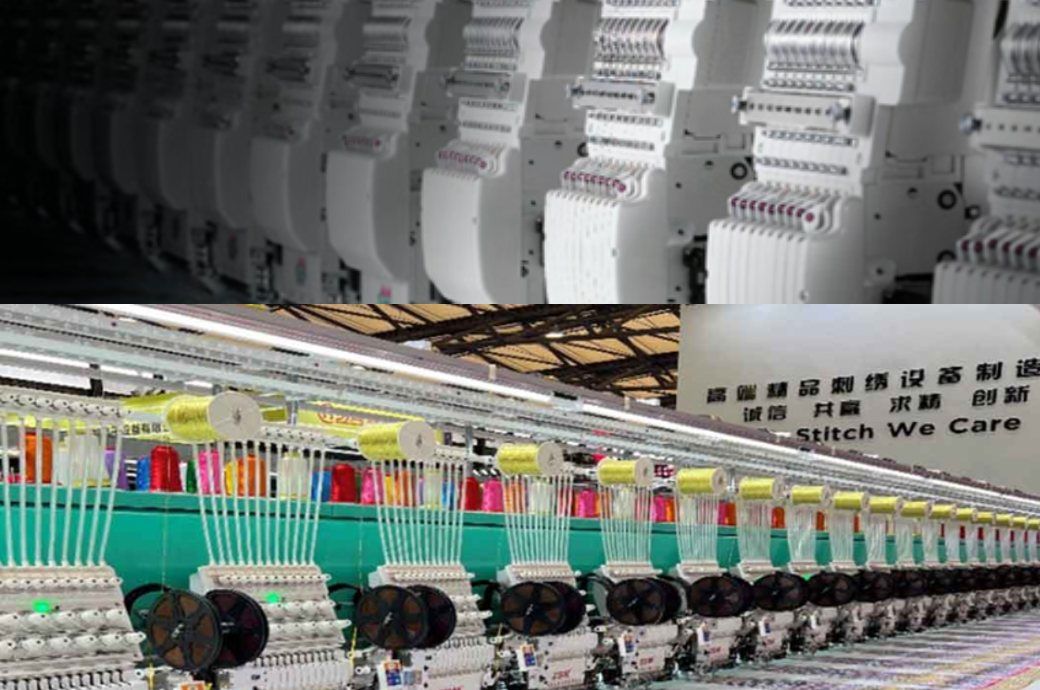
At ITCPE Guangzhou 2026, leading embroidery machine manufacturers including Xinsheng, Tajima, Zhaoshan, Baolun and others will showcase advanced, high-speed, and intelligent solutions.
These companies will focus on strong R&D capabilities, global market reach, and patented technologies, while focusing on automation, precision, and diversified applications.
Zhejiang Xinsheng Technology Co, Ltd is one of the largest, most dynamic and competitive leading enterprises in the global embroidery machine industry. Founded in 2002, the company has four subsidiaries, covers a total area of 160,000 square meters, with annual operating revenue exceeding 1 billion yuan.
With more than 20 years of heritage and innovation, the company has successively become a national standard setter in the embroidery machine industry, a national manufacturing champion product enterprise, a key national-level “Specialized, Sophisticated, Unique and New” little giant enterprise by the Ministry of Industry and Information Technology, and ranked first in China’s light industry embroidery machine sector.
Xinsheng Technology is committed to developing intelligent and diversified computerized embroidery machines. Its SINSIM brand products are sold to nearly 80 countries and regions around the world, serving apparel, home textiles, automotive, shoemaking, toys, luggage, healthcare, automotive interiors, outdoor products and other industries.
The company has built provincial-level technology centers, R&D centers and foreign expert stations. It actively participates in cross-industry, cross-field and cross-region scientific and technological innovation cooperation, and many projects have won provincial science and technology awards. It owns more than 400 national patents, including 39 invention patents, leading the development and breakthroughs in the embroidery machine industry.
Upholding the principle of “Winning trust with integrity, succeeding with quality”, Xinsheng keeps pace with the times and strives for continuous self-improvement. In the future, the company will continue to deepen intelligent and green transformation, promote the upgrading of the embroidery equipment industry, and strive to become a global high-tech benchmark enterprise.
Tajima Embroidery Machines (China) Co., Ltd.
Booth No.: T1009
Established in 1944, Japan-based Tokai Industrial Sewing Machine Co., Ltd. (Tajima Group) has long been dedicated to the R&D and manufacturing of world-class computerized embroidery machines. With over 80 years of production experience and cutting-edge embroidery technologies, Tajima has earned high recognition and trust from the industry and customers worldwide, adhering to the philosophy of serving clients with excellence and superior technology.
Founded in 1984, Tajima Embroidery Machines Co., Ltd. was appointed by Tajima Industries Ltd., Japan as the general agent in China for “Tajima Multi-head Electronic Embroidery Machines”. It maintains an office in Hong Kong and has set up branches, factories, R&D centers and technical support centers across mainland China, aiming to provide customers with advanced, high-quality and efficient fully automatic computerized embroidery machines.
With complete technology transfer from Japan Tajima, Tajima Embroidery Machines (China) Co., Ltd. was founded in 2001 in Jieyang, Guangdong Province, serving as the China-based assembly and production base for TAJIMA embroidery machines.
To support national business expansion, Huizhou Shentian Precision Machinery Co., Ltd. was established in 2006 in Huizhou, Guangdong Province, acting as the China operation and development headquarters of Tajima. It provides customers with professional and high-quality pre-sales and after-sales services, including R&D, technical support and training.
With exquisite technology, high-quality products and premium services, Tajima has been leading the development of the embroidery industry since its establishment. Committed to delivering one-stop embroidery solutions to customers with advanced technologies, Tajima continues to innovate and explore diversified development paths in the global embroidery market.
Zhejiang Zhaoshan Mechanism-Electricity Co.,Ltd.
Booth No.: T2011
Zhejiang Zhaoshan Electromechanical Co., Ltd., a subsidiary of Zhaoshan Group, is a national high-tech enterprise specializing in the design, R&D, manufacturing and sales of computerized embroidery machines. Founded in 2005, the company has long adhered to the policy of “Technology as the guide, brand driving development”. It has successively obtained ISO9001 Quality Management System Certification, ISO14001 Environmental Management System Certification, CE Certification, and Intellectual Property Management System Certification, and has won honors including Municipal Civilized Unit and Zhejiang Famous Brand Product.
Covering an area of 150 mu, the company has an annual output of more than 3,000 sets of computerized embroidery machines. Its “Zhaoshan” and “ZSM” brand computerized embroidery machines feature low thread breakage rate, low noise and exquisite embroidery quality, with product quality leading the industry.
The sales network covers more than 50 countries and regions worldwide, including China, the United States, the United Kingdom, India, Pakistan, South America, Eastern Europe and North Africa.The company is committed to providing one-stop embroidery solutions for every customer, and has won unanimous praise from clients.
Zhaoshan has always followed the philosophy of “Integrity, Win-win, Excellence, Innovation” in its operation and to repay the trust of customers.
Dongguan Baolun Computerized Embroidery Machinery CO., Ltd.
Booth No.: T1008
Dongguan Baolun Computerized Embroidery Machinery Co., Ltd. is located in Dongguan, Guangdong Province, a renowned manufacturing hub in China. Since its founding in 2003, the company has focused on the R&D and manufacturing of high-end computerized embroidery machines.In 2015, it was recognized as a High-Tech Enterprise of Guangdong Province and a “Contract-abiding and Credit-worthy Enterprise” of Guangdong Province. It is currently among the Top 10 Enterprises in China’s Light Industry Embroidery Machine Sector.The company persists in continuous innovation in products and services to meet customers’ demands for high quality, high standard and high efficiency.
Baolun owns two independent brands: CBL and ZXB. Its embroidery machines have been granted more than 20 national patents and obtained EU CE certification.
Against the rapid development of global economic integration, Baolun has developed a full series of highly competitive models:
· CBL Fenghuang Kunlun High-Speed Flat Embroidery Machine (PKL Series)
· Fenghuang Ultra-high-speed Flat Embroidery Machine (CHP Series)
· Fenghuang Premium High-speed Flat Embroidery Machine (JP Series)
· Fenghuang Heavy-thread High-speed Flat Embroidery Machine (CP Series)
· Exquisite Thick-material High-speed Flat Embroidery Machine (JM Series)
· High-speed 3-bead & Sequin Flat Embroidery Machine (JP-MBS Series)
· Qilin Cord Embroidery & Fenghuang Premium Flat Embroidery Machine (CKP Series)
· High-speed Flat Embroidery & Laser Embroidery Machine (JPJ Series)
· Fenghuang Premium High-speed Cap & Finished Garment Embroidery Machine (PC Series)
· Jinlong High-speed Towel Embroidery & Fenghuang Premium Flat Embroidery Machine (CDP Series)
CBL high-speed machines deliver outstanding performance for high-end brand logos, small letter embroidery, badges, embroidery on shoes, hats and thick materials, home textiles, bed linens, lace, water-soluble knitting, toys, handbags, curtains, apparel, luggage, wall cloth and artistic paintings.
CBL high-speed machines have completely changed the traditional impression of low-quality, low-price Chinese embroidery machines, serving as a genuine alternative to imported embroidery machines — a truly national brand embroidery machine made by the Chinese for the world.
Each Baolun machine undergoes strict inspection through 18 procedures:material inspection, machining accuracy, finish, salt spray test, aging test, wear resistance, hardness, parallelism, verticality, symmetry, thread trimming, thread hooking, thread pressing, noise, laser function, color changing, vibration and leakage test, ensuring all indexes meet international standards.
Every machine must pass practical embroidery tests for at least 2 days before delivery.
Foshan Shuangxin Electromechanical Manufacturing Co., Ltd
Booth No.: T1010
Foshan Shuangxin Electromechanical Manufacturing Co., Ltd. is a high-tech machinery enterprise integrating R&D, production and sales. Led by special and high-quality embroidery machinery, the company specializes in the production of high-end computerized embroidery machines under the “Sanxin” brand. Founded in August 2005, the company is located in the High-Tech Industrial Zone, Sanshui District, Foshan City, Guangdong Province—a famous textile city with superior geographical location and convenient transportation.
After years of development and technological accumulation, driven by the strong “Sanxin” brand, the company has an efficient management team, professional R&D staff, skilled business personnel and exquisite production technicians. Committed to high-tech innovation and manufacturing of special and high-quality “Sanxin” embroidery machines, we strive to meet the demands of domestic and overseas customers with quality products and comprehensive, efficient services.
Adhering to the business philosophy of “Professional Credibility, Quality Credibility and Service Credibility”, the company has established a modern enterprise management system and an efficient sales and service system, winning high praise from customers at home and abroad. It has obtained a number of national patents in technological innovation and process improvement, enjoying a high reputation in the industry. The company has built a stable sales network and reliable after-sales service system in major domestic cities, Southeast Asia, Europe and the United States.
“Trust builds the world, integrity forges the future” is the persistent service tenet of all Shuangxin staff. Upholding exquisite craftsmanship and quality after-sales service, we strive to create a high-tech platform for high-end embroidery machines, and work hand in hand with domestic and foreign customers for win-win cooperation and brilliant achievements!
Zhuji Hongfang Machinery Manufacturing Co., Ltd.
Booth No.:T2026
Zhuji Hongfang Machinery Manufacturing Co., Ltd., formerly known as Zhengda Electrical and Mechanical Factory, was founded in August 2007. It is located at No. 525 Jidong Road, Huandong Street, Zhuji City, Zhejiang Province. It is a technology-oriented small and medium-sized enterprise and a high-tech enterprise specializing in the R&D, design, production, sales and service of computerized embroidery machines. The company belongs to the special equipment manufacturing industry.
Adhering to the corporate spirit of “Taking technology as the guide, seeking development through innovation, surviving by quality, and treating customers with integrity”, and the business philosophy of “Abiding by integrity, continuous innovation, ensuring quality, and providing excellent service”, the company follows the country’s strong support for the industrialization of the industrial computerized embroidery industry. It takes breaking the external dependence of the computerized embroidery industry chain as its mission, and aims to achieve both economic and social benefits. All staff are diligent, dedicated and enterprising.
Zhuji Leye Electromechanical Co., Ltd.
Booth No.: T1018
Zhuji Leye Electromechanical Co., Ltd. was founded in 2000. It is a high-tech enterprise independently engaged in the R&D and production of computerized embroidery machines. It has grown into a national high-tech enterprise with an annual output of 3,000 sets and an output value of over 300 million yuan. The company has 2 production bases covering an area of 50,000 square meters, more than 300 employees and over 50 highly educated technical personnel.
The high-speed embroidery machines produced by Leye Electromechanical are mainly exported to Europe, South America, Southeast Asia and other regions. In 2016, the newly developed high-speed intelligent and ultra-multi-head embroidery machines have become high-end products in China.
Leye has always adhered to the corporate tenet of “survive by quality, develop by innovation, build image by integrity, and expand market by service”, providing customers with the best service and optimal products, and winning the trust and recommendation of numerous new and old customers.
Foshan Yueshun Computer Embroidery Equipment Co., Ltd
Booth No.: T2018
Foshan Yueshun Computer Embroidery Equipment Co., Ltd. (referred to as “Yueshun Embroidery Machine”) is located at No. 56 Huanzhen Road, Nanhai District, Foshan City, Guangdong Province. It is a high-tech enterprise specializing in the R&D, design, production, sales and service of computer embroidery equipment. We are committed to providing customers with advanced and stable embroidery equipment to meet diverse market demands.
Our product range includes high-speed flat embroidery, towel embroidery, mixed embroidery and other series, which are widely used in apparel, home textiles, accessories and other fields. Yueshun Embroidery Machine has won wide recognition in the market for its excellent performance and wide applicability.
Adhering to the core values of “Innovation, Quality, Customer, Team”, the company continuously promotes technological innovation, improves product quality and optimizes customer service. Our goal is to become a global leader in the field of computer embroidery equipment, broaden the application of embroidery art through intelligent embroidery technology, and inherit and promote embroidery culture.
Yueshun Embroidery Machine will work hand in hand with customers to create a better future with innovative spirit and excellent quality.
ZHUJI HAOBANG TECHNOLOGY CO.,LTD
Booth No.: T1027
Zhuji Haobang Technology Co., Ltd. was founded in 2024 and is located in Zhuji City, Zhejiang Province, China. It is a rapidly growing embroidery machine manufacturer with strong technical strength. The company is a professional embroidery machine producer integrating R&D, spare parts production, frame manufacturing and embroidery machine assembly, and is now one of the member enterprises of China Embroidery Machine Industrial Base.
After years of development, Zhuji Haobang Technology Co., Ltd. produces a full range of embroidery machines, including:Ultra-high speed embroidery machines with fully independent motor presser feet (1800 rpm),Latest chenille / chain stitch embroidery machines with stable operation at 1200 rpm,corded mixed embroidery machines,finished garment / cap embroidery machines,and various single-head embroidery machines.Our products are widely recognized and praised by the global market.
With precision parts, strong technical force, advanced production equipment, professional talents, practical management mode and comprehensive after-sales service, the company actively explores the international market.
After years of efforts, our embroidery machines have been exported to India, Pakistan, Bangladesh, Brazil, Egypt, Turkey, Morocco, Dubai, Vietnam, South Africa and other countries and regions, thanks to their leading technology, stable performance and high-quality sales and service.
We are now sincerely seeking long-term global partners to work together with customers aspiring to be industry leaders, and create a brilliant future for the embroidery machine industry.
Zhuji Hongtian Sewing Equipment Co., Ltd.
Booth No.: T2034a
Zhuji Hongtian Sewing Equipment Co., Ltd. is a professional company dedicated to the design, R&D, production and sales of embroidery machinery. “Integrity, Gratitude, Harmony, Innovation” is our corporate culture and development philosophy. With sincere pre-sales and after-sales service, as well as years of technical accumulation and practice, we have built a large base of loyal users in the embroidery machine market.
We regard innovation as a pleasure. In the R&D process, we listen to market feedback, address user pain points, and continuously improve our products to make embroidery operations more convenient and efficient. “Never Mediocre, Never Give Up, Never Be Satisfied” is our development tenet. Facing new challenges, we will continue to uphold the spirit of hard work, unity and progress, strive to expand market space, take continuous innovation as the engine and edge for self-development, and create more value for users with high-quality equipment and services.
Our main products include:
· High-speed flat embroidery + corded embroidery machine series
· Sequin / corded embroidery machine series
· Towel / chain stitch embroidery machine series
· High-speed flat embroidery machine series
· 1500 rpm ultra-high speed embroidery machine series
· Multi-color high-speed flat embroidery machine series
We can also equip these machines with optional devices to meet your diverse embroidery needs, such as sequin embroidery device, simple cord embroidery device, bead embroidery device, simple towel embroidery device, perforation device, and laser cutting device.
Zhuji Chengyu Sewing Equipment Co., Ltd.
Booth No.: T2038
Zhuji Chengyu Sewing Equipment Co., Ltd. is a comprehensive enterprise focusing on the R&D and production of modern embroidery equipment. Over the years, with a stable and reliable product reputation and continuous R&D and innovation, the company has established a good reputation in the market and won a large number of loyal users.
Chengyu Sewing Equipment Co., Ltd. is good at summing up experience from production, listening to user feedback from the market, continuously improving process details in practice, and striving to improve machine quality in production. It uses high-precision laser equipment to complete cutting and welding, and ultra-large turning and milling machines to improve frame manufacturing accuracy, further enhancing product consistency and stability. This effectively reduces vibration and noise during the operation of embroidery equipment, improves the precision of embroidery works, and effectively extends the service life of the equipment.
Adhering to the business philosophy of “Focus, Pragmatism, Progress and Innovation”, the company has accumulated a large number of loyal users in the market with excellent product quality and a serious and responsible business attitude. The company’s main products include: high-speed embroidery machines, multi-functional sequin machines, bead embroidery machines, towel machines, corded machines, laser machines and other popular models. With multi-function, stability and high efficiency, these machines meet the production needs of different customers and have been widely praised in domestic and foreign markets.
In the future, the company will continue to adhere to the work spirit of “taking quality as the cornerstone and innovation as the driving force”, win market space with high-quality products, drive self-development with innovation, repay the market with high-quality products and services, and grow and progress together with users.
Note: The headline, insights, and image of this press release may have been refined by the Fibre2Fashion staff; the rest of the content remains unchanged.
Fibre2Fashion News Desk (SG)


Methanol jumps nearly 150% as oil surge disrupts markets

Could oil hit $200 a barrel? Experts warn of risks if Iran war drags on – The Times of India

2026 World Cup playoffs: Who will claim the final six spots?

-

 Politics7 days ago
Afghanistan announces release of detained US citizen
-

 Sports7 days ago
Broadcast industry CEO says consolidation is ‘essential’ to compete for NFL soaring media rights prices
-

 Entertainment7 days ago
UN warns migratory freshwater fish numbers are spiralling
-

 Tech7 days ago
Can a Home Appliance Fix the Problem of Soft-Plastic Waste?
-
 Business7 days ago
Property Play: Home flippers see smallest profits since the Great Recession, real estate data firm says
-
 Business7 days ago
Gold prices soar in Pakistan – SUCH TV
-

 Fashion7 days ago
ICE cotton slips on weaker crude, profit booking
-
 Business7 days ago
More women are entering wealth management, but few are in advisory roles, study finds