

Business
Toothbrush packs to go to ‘most vulnerable’ in North Northants

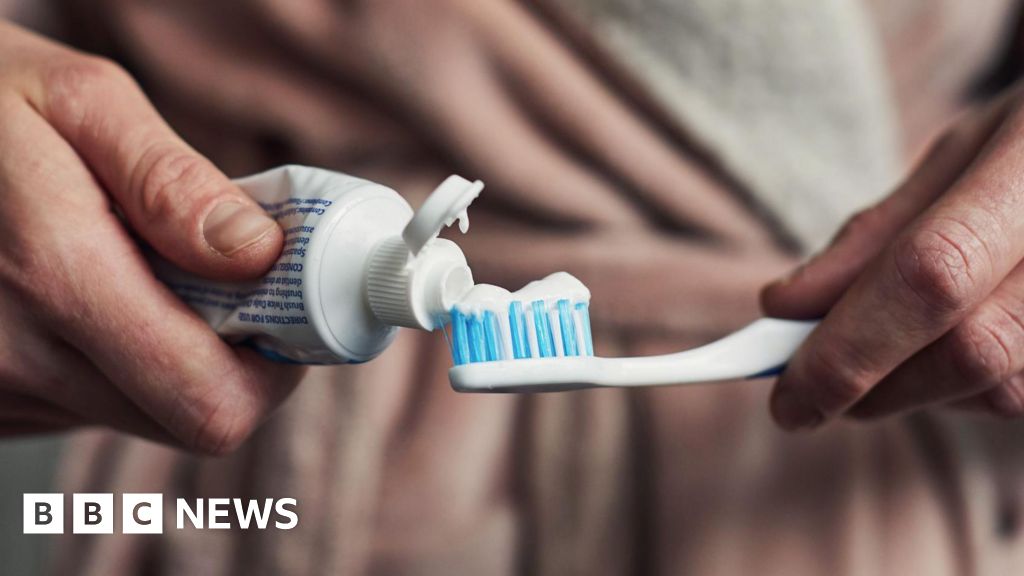
Toothbrush and toothpaste packs worth a combined £20,000 are to be given to foodbanks and other organisations for distribution to vulnerable people.
North Northamptonshire Council said the funding from Northamptonshire NHS Integrated Care Board would help people “who need it the most” fight tooth decay.
Martin Langford, Corby Foodbank’s manager, said the packs would “make a real difference to how people look and feel”.
Brian Benneyworth, the Reform UK council’s executive member for health and leisure, said: “These toothbrushing packs are a simple but powerful way to help those who are most vulnerable, providing not just the tools but the dignity of self-care.”
Mr Langford said: “Access to basic hygiene items, such as toothbrush packs, is often underestimated but they make a real difference to how people look and feel.
“It strengthens our ability to reach those most in need and ensures we can continue making a positive impact within the community.”
Jane Bethea, director of public health, communities and leisure at the council, said: “Poor oral health is a major public health concern and can have a negative impact on our overall health and wellbeing and affect what we eat, how we communicate and our self-confidence.”
Guidelines recommend that people brush their teeth twice at day. Poor dental hygiene can led to tooth decay and gum infections, which can lead to tooth loss and gum disease.
Mr Benneyworth said: “Under current financial pressures, due to the cost of living crisis, some households are having to make very difficult choices about what they can and cannot buy.
“In these situations, items such as new toothbrushes and toothpaste could be seen as less important than essentials such food and heating.”

Last Updated:
Angel One sets Feb 26 as record date for 1:10 stock split. Shareholders will get 10 shares for each held.




Angel One Stock Split 2026
Angel One Stock Split Record Date: Domestic brokerage firm Angel One has fixed February 26 as the record date for its previously approved 1:10 stock split, moving ahead with a proposal cleared by its Board last month.
The company had earlier informed stock exchanges on Jan. 15 that its Board of Directors approved the sub-division of equity shares in a 1:10 ratio.
Board Approval For Share Sub-Division
Under the approved proposal, each fully paid-up equity share with a face value of Rs 10 will be split into 10 fully paid-up equity shares with a face value of Re 1 each.
In its Jan. 15 stock exchange filing, the company stated that the Board had approved the sub-division of one existing equity share of face value Rs 10, fully paid-up, into 10 equity shares of face value Re 1 each, fully paid-up. The move is aimed at increasing the number of outstanding shares and improving liquidity in the counter.
Stock splits typically make shares more affordable for retail investors by reducing the market price per share, although the overall market capitalization of the company remains unchanged.
Feb 26 Fixed As Record Date
In a subsequent filing dated Feb. 18, Angel One confirmed that its executive committee has fixed Thursday, Feb. 26, as the record date to determine eligible shareholders for the stock split.
The record date serves as the cut-off to identify shareholders who will be entitled to receive the additional shares. Investors holding the stock on or before Feb. 26 will qualify for the sub-division benefit.
What The Stock Split Means For Investors
Shareholders will receive 10 equity shares for every one share currently held. While the face value per share will reduce from Rs 10 to Re 1, the total value of an investor’s holdings will remain unchanged, as the split does not alter ownership percentage or overall wealth.
Angel One Q3 FY26: Profit Dips Amid Higher Costs
For the quarter ended Dec. 31, 2025, Angel One reported a 4.5% year-on-year decline in consolidated profit after tax to Rs 269 crore, compared with Rs 281.5 crore in the same quarter last year.
However, total income rose 5.8% to Rs 1,338 crore from Rs 1,264 crore in Q3 FY25. Total expenses increased to Rs 964.2 crore from Rs 876.5 crore, primarily due to higher employee benefit costs, elevated ESOP expenses, and increased operating expenditure.
 Click here to add News18 as your preferred news source on Google.
Check JEE Mains Result 2026 Link Here
February 25, 2026, 07:20 IST
Read More

A Lucid Gravity coming off the line at the company’s factory in Casa Grande, Arizona.
Lucid Group reported mixed fourth-quarter results Tuesday as the electric vehicle maker continues to face challenging market conditions and internal struggles.
The company widely missed Wall Street’s quarterly earnings expectations, while beating average revenue estimates by roughly 12%. It also revised its 2025 production results due to internal validation issues, but guided for a notable increase in vehicle production this year.
Here’s how the company performed in the fourth quarter compared with average estimates compiled by LSEG:
- Loss per share: $3.62 vs. a loss of $2.62 cents expected
- Revenue: $523 million vs. $468 million expected
Lucid’s results come days after the company laid off 12% of its U.S. salaried workforce in an effort to streamline operations and “operate with greater efficiency and deliver on our commitments to gross margin improvement and long term growth,” according to a statement from the company.
Interim Lucid CEO Marc Winterhoff described the cuts Tuesday to CNBC as a needed realignment of the company’s workforce amid broader market and economic concerns as well as needed gains in efficiency.
“We are adjusting and going to a level where we think we want to be and need to be,” he said. “But it’s nothing that will continue in the future.”
For 2026, the company announced a vehicle production target of between 25,000 and 27,000 units. That would mark an increase of roughly 40% to 51% compared with the year-end figures the company released Tuesday.
Lucid said the revision for the year — from 18,378 units to 17,840 units — came as “538 vehicles had not completed certain internal procedures required under its final validation process to be classified as produced.”
The company said the vehicles are expected to be completed this year, with the change not affecting its previously reported financial results.
Winterhoff described the expected growth as “healthy,” but not “outrageous” given the current slowdown in overall vehicle sales, including EVs.
“Our initial plans were higher, but we wanted to really be conservative and make sure that we are hitting the numbers that we are projecting,” he told CNBC.
Lucid is expected to begin production of a new, less expensive midsize vehicle at the end of this year, but Winterhoff said it will not be material to its 2026 production plans. He said the automaker’s Gravity SUV is expected to account for the majority of its production and sales this year, followed by the Air sedan. The company also plans to launch its first Lucid robotaxis with previously announced partners.
Winterhoff said the company’s main priorities this year are achieving its production target, growing sales, continuing efficiency gains and preparing for production of the midsize vehicle and robotaxis.
“We really want to make sure that we [are] on our path to profitability, make sure that we’re not spending money that we don’t have to. That’s very, very important,” he told CNBC.
Lucid has yet to say when the company expects to be profitable. It is scheduled to host an investor day on March 12 in New York.
Lucid said it ended last year with approximately $4.6 billion in total liquidity, which Lucid CFO Taoufiq Boussaid said was “strong” and would provide flexibility “to execute near-term objectives while investing in future growth.”
Lucid reported a net loss of $2.7 billion in 2025, in line with a $2.71 billion loss a year earlier. That includes more than doubling its year-over-year losses during the fourth quarter to $814 million. It reported a loss of $12.09 per share for the year.
The company’s 2025 revenue was up 68% to $1.35 billion, including more than doubling year-over-year results during the fourth quarter.

NEW DELHI: The Times of India Gadgets Now Awards 2025 celebrated last year’s standout gadgets at an event on Monday where technology met glamour. The event drew an eclectic gathering of distinguished guests who came together to recognise technological excellence across key categories, including smartphones, smartwatches, audio products, televisions and more.This year, the Awards that are in its 6th edition went a step further and also recognised India’s leading influencers and creators who are redefining the tech content landscape.

The winners included Samsung Galaxy S25 Ultra, which scored a double win as the Best Smartphone Editor’s Choice and Popular Choice.Apple iPhone 17 was adjudged the Best Premium Smartphone Editor’s Choice, while Samsung Galaxy S 25 won the Popular Choice in the same category.Samsung once again picked up 2 awards as Galaxy Z Fold 7 was crowned the Editor’s Choice and Popular Choice winner in the Best Foldable Smartphone category.Samsung Galaxy Book 5 Pro won the Editor’s Choice Best AI-powered gadget, while Neosapien Neo 1 was the Popular Choice winner.

Angel One 1:10 Stock Split 2026: Broking Stock Fixes Record Date

Katherine Short had help amid ‘mental illness’ before death
Lucid widely misses earnings expectations, forecasts continued EV growth in 2026

-

 Entertainment1 week ago
Queen Camilla reveals her sister’s connection to Princess Diana
-

 Tech1 week ago
Rakuten Mobile proposal selected for Jaxa space strategy | Computer Weekly
-

 Politics1 week ago
Ramadan moon sighted in Saudi Arabia, other Gulf countries
-

 Entertainment1 week ago
Robert Duvall, known for his roles in "The Godfather" and "Apocalypse Now," dies at 95
-
 Business1 week ago
Tax Saving FD: This Simple Investment Can Help You Earn And Save More
-

 Politics1 week ago
Tarique Rahman Takes Oath as Bangladesh’s Prime Minister Following Decisive BNP Triumph
-

 Tech1 week ago
Businesses may be caught by government proposals to restrict VPN use | Computer Weekly
-

 Sports1 week ago
Usman Tariq backs Babar and Shaheen ahead of do-or-die Namibia clash