

Tech
Top 10 police technology stories of 2025 | Computer Weekly


In 2025, Computer Weekly’s police technology coverage focused extensively on developments in the use of data-driven technologies such as facial recognition and predictive policing.
This included stories on the Met’s decision to deploy permanent live facial recognition (LFR) cameras in Croydon and the Home Office launching a formal consultation on laws to regulate its use, as well as reports highlighting the lawfulness, necessity and proportionality of how UK police are using the technology.
Further stories continued Computer Weekly’s ongoing coverage of police hyperscale cloud use, after documents obtained from Scottish policing bodies revealed that Microsoft is refusing to hand them critical information about its data flows.
Computer Weekly also reported on efforts to change police data protection rules, which essentially legalise previously unlawful practices and pose a risk to the UK’s law enforcement data adequacy with the European Union (EU).
One investigation by freelance journalists Apostolis Fotiadis, Giacomo Zandonini and Luděk Stavinoha also revealed how the EU’s law enforcement agency has been quietly amassing data to feed an ambitious-but-secretive artificial intelligence (AI) development programme.
The Home Office formally opened a consultation on the use of facial recognition by UK police at the start of December 2025, saying the government is committed to introducing a legal framework that sets out clear rules for the technology.
The move – initially announced by policing minister Sarah Jones in early October 2025 after then home secretary Yvette Cooper told a Lords Committee in July that the UK government will create “a proper, clear governance framework” to regulate police use of the tech – marks a distinct shift in Home Office policy, which for years has claimed there is already “comprehensive” legal framework in place.
The Home Office has now said that although a “patchwork” legal framework for police facial recognition exists (including for the increasing use of the retrospective and “operator-initiated” versions of the technology), it does not give police themselves the confidence to “use it at significantly greater scale … nor does it consistently give the public the confidence that it will be used responsibly”.
It added that the current rules governing police LFR use are “complicated and difficult to understand”, and that an ordinary member of the public would be required to read four pieces of legislation, police national guidance documents and a range of detailed legal or data protection documentation from individual forces to fully understand the basis for LFR use on their high streets.
While the use of LFR by police – beginning with the Met’s deployment at Notting Hill Carnival in August 2016 – has ramped up massively in recent years, there has so far been minimal public debate or consultation.
UK police forces are “supercharging racism” through their use of automated “predictive policing” systems, as they are based on profiling people or groups before they have committed a crime, according to a 120-page report published by Amnesty International.
While proponents claim these systems can help more efficiently direct resources, Amnesty highlighted how predictive policing tools are used to repeatedly target poor and racialised communities, as these groups have historically been “over-policed” and are therefore massively over-represented in police data sets.
This then creates a negative feedback loop, where these so-called “predictions” lead to further over-policing of certain groups and areas; reinforcing and exacerbating the pre-existing discrimination as increasing amounts of data are collected.
“The use of predictive policing tools violates human rights. The evidence that this technology keeps us safe just isn’t there, the evidence that it violates our fundamental rights is clear as day. We are all much more than computer-generated risk scores,” said Sacha Deshmukh, chief executive at Amnesty International UK, adding that these systems are deciding who is a criminal based “purely” on the colour of their skin or their socio-economic background.
In June 2025, Green Party MP Siân Berry argued in the Commons that “predictive” policing technologies infringe human rights “at their heart” and should be prohibited in the UK, after tabling an amendment to the government’s forthcoming Crime and Policing Bill.
Highlighting the dangers of using predictive policing technologies to assess the likelihood of individuals or groups committing criminal offences in the future, Berry said that “such technologies, however cleverly sold, will always need to be built on existing, flawed police data … That means that communities that have historically been over-policed will be more likely to be identified as being ‘at risk’ of future criminal behaviour.”
Berry’s amendment would also prohibit the use of certain information by UK police to “predict” people’s behaviour: “Police forces in England and Wales shall be prohibited from … Predicting the occurrence or reoccurrence of an actual or potential criminal offence based on profiling of a natural person or on assessing personality traits and characteristics, including the person’s location, or past criminal behaviour of natural persons or groups of natural persons.”
In April, the Met Police announced it was planning to install the UK’s first permanent LFR cameras in Croydon, but critics raised concerns that this continues the force’s pattern of deploying the technology in areas where the Black population is much higher than the London average.
Local councillors also complained that the decision to set up facial recognition cameras permanently has taken place without any community engagement from the force with local residents, echoing situations that have happened in boroughs such as Newham and Lewisham.
According to data gathered by Green Party London Assembly member Zoë Garbett, over half of the 180 LFR deployments that took place during 2024 were in areas where the proportion of Black residents is higher than the city’s average, including Lewisham and Haringey.
While Black people comprise 13.5% of London’s total population, the proportion is much higher in the Met’s deployment areas, with Black people making up 36% of the Haringey population, 34% of the Lewisham population, and 40.1% of the Croydon population.
“The Met’s decision to roll out facial recognition in areas of London with higher Black populations reinforces the troubling assumption that certain communities … are more likely to be criminals,” she said, adding that while nearly two million people in total had their faces scanned across the Met’s 2024 deployments, only 804 arrests were made – a rate of just 0.04%.
In March 2025, Computer Weekly reported that proposed reforms to police data protection rules could undermine law enforcement data adequacy with the European Union (EU).
During the committee stage of Parliamentary scrutiny, the government’s Data Use and Access Bill (DUAB) – now an act – sought to amend the UK’s implementation of the EU Law Enforcement Directive (LED), which is transposed into UK law via the current Data Protection Act (DPA) 2018 and represented in Part Three of the DPA, specifically.
In combination with the current data handling practices of UK law enforcement bodies, the bill’s proposed amendments to Part Three – which include allowing the routine transfer of data to offshore cloud providers, removing the need for police to log justifications when accessing data, and enabling police and intelligence services to share data outside of the LED rules – could present a challenge for UK data adequacy.
In June 2021, the European Commission granted “data adequacy” to the UK following its exit from the EU, allowing the free flow of personal data to and from the bloc to continue, but warned the decision may yet be revoked if future data protection laws diverge significantly from those in Europe.
While Computer Weekly’s previous reporting on police hyperscale cloud use has identified major problems with the ability of these services to comply with Part Three, the government’s DUAB changes are seeking to solve the issue by simply removing the requirements that are not being complied with.
To circumvent the lack of compliance with these transfer requirements, the government has simply dropped them from the DUAB, meaning policing bodies will no longer be required to assess the suitability of the transfer or report it to the data regulator.
In August, Computer Weekly reported on documents obtained from the Scottish Police Authority (SPA), which showed that Microsoft is refusing to tell Scottish policing bodies where and how the sensitive law enforcement data uploaded to its cloud services will be processed.
Citing “commercial confidentiality”, the tech giant’s refusal to hand over crucial information about its international data flows to the SPA and Police Scotland means the policing bodies are unable to satisfy the law enforcement-specific data protection rules laid out in Part Three of the Data Protection Act 2018 (DPA18), which places strict limits on the transfer of policing data outside the UK.
“MS is unable to specify what data originating from SPA will be processed outside the UK for support functions,” said the SPA in a detailed data protection impact assessment (DPIA) created for its use of O365. “To try and mitigate this risk, SPA asked to see … [the transfer risk assessments] for the countries used by MS where there is no [data] adequacy. MS declined to provide the assessments.”
The SPA DPIA also confirms that, on top of refusing to provide key information, Microsoft itself has told the police watchdog it is unable to guarantee the sovereignty of policing data held and processed within its O365 infrastructure.
Further revelations published by Computer Weekly a month later showed that policing data hosted in Microsoft’s hyperscale cloud infrastructure could be processed in more than 100 countries.
This information was not provided to the policing bodies by Microsoft, and only came to light because of an analysis conducted by independent security consultant Owen Sayers, who identified from the tech giant’s own distributed online documentation that Microsoft personnel or contractors can remotely access the data from 105 different countries, using 148 different sub-processors.
Although the documentation – which is buried in non-indexed, difficult-to-find web pages – has come to light in the context of Computer Weekly investigating police cloud use, the issue of routine data transfers in Microsoft’s cloud architecture affects the whole of the UK government and public sector, which are obliged by the G-Cloud and Tepas frameworks to ensure data remains in the UK by default.
According to multiple data protection litigation experts, the reality of Microsoft’s global data processing here, on top of its failure to meet key Part Three obligations, means data subjects could have grounds to successfully claim compensation from Police Scotland or any other force using hyperscale cloud infrastructure.
In November 2025, freelance journalists Apostolis Fotiadis, Giacomo Zandonini and Luděk Stavinoha published an extensive investigation into how the EU’s law enforcement agency has been quietly amassing data to feed an ambitious-but-secretive AI development programme.
Based on internal documents obtained from Europol, and analysed by data protection and AI experts, the investigation raised serious questions about the implications of the agency’s AI programme for people’s privacy across the bloc.
It also raised questions about the impact of integrating automated technologies into everyday policing across Europe without adequate oversight.
In May 2025, Computer Weekly reported on an equality impact assessment that Essex Police had created for its use of live facial recognition, but the document itself – obtained under Freedom of Information rules by privacy group Big Brother Watch and shared exclusively with Computer Weekly – was plagued with inconsistencies and poor methodology.
The campaigners told Computer Weekly that, given the issues with the document, the force had likely failed to fulfil its public sector equality duty (PSED) to consider how its policies and practices could be discriminatory.
They also highlighted how the force is relying on false comparisons to other algorithms and “parroting misleading claims” from the supplier about the LFR system’s lack of bias.
Other experts noted the assessment was “clearly inadequate”, failed to look at the systemic equalities impacts of the technology, and relied exclusively on testing of entirely different software algorithms used by other police forces trained on different populations to justify its conclusions.
After being granted permission to intervene in a judicial review of the Met’s LFR use – brought by anti-knife campaigner Shaun Thompson, wrongly stopped by officers after a false LFR identification – the UK’s equality watchdog said the forces’ use of the tech is unlawful.
Highlighting how the Met is failing to meet key legal standards with its deployments – particularly around Articles 8 (right to privacy), 10 (freedom of expression) and 11 (freedom of assembly and association) of the European Convention on Human Rights – the UK’s the Equality and Human Rights Commission (EHRC) said LFR should only be used where necessary, proportionate and constrained by appropriate safeguards.
“We believe that the Metropolitan Police’s current policy falls short of this standard,” said EHRC chief John Kirkpatrick.
The EHRC further highlighted how, when used on a large scale, even low-error rates can affect a significant number of people by brining unnecessary and unwanted police attention, and warned that its use at protests could have a “chilling effect” on people’s freedom of expression and assembly.
Senior police officers from both the Met and South Wales Police have previously argued that a major benefit of facial-recognition technology is its “deterrence effect.”
A comparative study of LFR trials by law enforcement agencies in London, Wales, Berlin and Nice found that although “in-the-wild” testing is an important opportunity to collect information about how AI-based systems like LFR perform in real-world deployment environments, the police trials conducted so far have failed to take into account the socio-technical impacts of the systems in use, or to generate clear evidence of the operational benefits.
Highlighting how real-world testing of LFR systems by UK and European police is a largely ungoverned “Wild West”, the authors expressed concern that “such tests will be little more than ‘show trials’ – public performances used to legitimise the use of powerful and invasive digital technologies in support of controversial political agendas for which public debate and deliberation is lacking, while deepening governmental reliance on commercially developed technologies which fall far short of the legal and constitutional standards which public authorities are required to uphold”.
Given the scope for interference with people’s rights, the authors – Karen Yeung, an interdisciplinary professorial fellow in law, ethics and informatics at Birmingham Law School, and Wenlong Li, a research professor at Guanghua Law School, Zhejiang University – said that evidence of the technology’s effectiveness in producing its desired benefits “must pass an exceptionally high threshold” if police want to justify its use.
They added that without a rigorous and full accounting of the technology’s effects – which is currently not taking place in either the UK or Europe – it could lead to the “incremental and insidious removal” of the conditions that underpin our rights and freedoms.

OpenAI has announced plans to turn its London office into its largest research hub outside of the United States.
The company—which established a UK office in 2023—says it will expand its London-based research team, scooping up talent emerging from leading British universities. It has not indicated how many researchers it will hire.
“The UK brings together world-class talent and leading scientific institutions and universities, making it an ideal place to deliver the important research which will ensure our AI is safe, useful, and benefits everyone,” said Mark Chen, chief research officer at OpenAI, in a statement.
The plans bring OpenAI into direct competition for top research talent with Google DeepMind, the AI lab run by British researcher Demis Hassabis, which is headquartered in London. DeepMind has long-running partnerships with Oxford University and the University of Cambridge, where it sponsors professorships, funds research, and works alongside researchers.
At the latest careers fair at Oxford University, the floor was packed with undergraduates looking for technical roles and recruiters hiring for AI-related positions. “The demand and supply is increasing on both sides, even within a year,” says Jonathan Black, director of the careers service at Oxford University. “To have something like this turn up is a really positive sign.”
OpenAI’s expansion in London could have a sort-of flywheel effect, whereby the researchers it hires early in their careers go on to start new labs in the UK, says Tom Wilson, partner at venture capital firm Seedcamp. “We’ve seen many examples over the years,” he says. “That’s where these kinds of announcements can have even more impact than the initial hires … the second-order effects can be great.”
OpenAI’s team in London will continue to contribute to products like Codex and GPT-5.2, the company says, but will now “own” certain aspects of model development relating to safety, reliability, and performance evaluation.
In a statement, the UK’s science and technology secretary, Liz Kendall, described the announcement as “a huge vote of confidence in the UK’s world-leading position at the cutting edge of AI research.”
The announcement coincides with a push in the UK to scale the nation’s data center and power infrastructure to meet the voracious demand for compute among AI companies, including OpenAI.

Honorable Mentions
During the winter, a whole WIRED crew tests ski clothes almost constantly. Here are a few other items that we like.
Courtesy of REI
Hestra Fall Line 3-Finger Gloves for $190: I’ve long admired Hestra gloves from across the lift line, impressed by the Swedish company’s elegant stitchwork and thoughtful design touches. This was the year I finally got to try a pair for myself, and the Fall Line are exactly what they look like. There are six sizes available so you can get the perfect fit in this glove. The cowhide is buttery smooth and has already broken in a bit with five days’ use. The wrist strap means you never have to fret about dropping your glove from the lift when checking your phone, and they’re very warm without making me sweat. If you do sweat, the lining is removable so you can wash it without damaging the leather. —Martin Cizmar

Courtesy of Crab Grab
Crab Grab Snuggler Mitts for $89: These mini sleeping bags for your fingers are packed full of Primaloft insulation and benefitting from a sherpa fleece lining, they are toasty warm, and with a 15K membrane, impressively waterproof too. All-season mittens with durable construction for under $100? Yes Please!

Courtesy of Mons Royale
Mons Royale Yotei Merino Classic Long Sleeve for $98: As I type this, I’m nowhere near a mountain, but I’m still wearing the Mons Royale Yotei long sleeve top. It is ridiculously comfortable, made from 190-gsm-weight, 100 percent merino wool, and has a mercifully relaxed cut, so I remain warm, but don’t feel like a sausage. On the mountain however, the merino wool works its magic, wicking away sweat—especially on a hike up to some fresh powder—and keeping me comfortable. Paired with a shell and the Patagonia R1 Thermal Hoodie, I’m warm enough during a bitter arctic blast.

Seniq Powder Puff Down Jacket for $498 and Bib for $398: Seniq is another all-women’s outdoor brand that launched in 2024. It’s styled a little more Gen Z, leaning into fun color blocking over the monochromatic look. The Seniq Powder Puff Down Jacket has a dry-touch finish. It’s meant for drier days on the mountain, but a PFC-free DWR coating and YKK AquaGuard zippers do provide water resistance. The asymmetric front zipper helps you avoid chin rub when you have the jacket fully zipped. It also features cool asymmetrical quilting lines, side pockets-in-pockets that provide access to your bib (their bibs have a pocket on the front, so you can get in there without unzipping your jacket), an oversized removable hood, a forearm pass pocket, soft and stretchy wrist gaiters, and a large internal pocket that can absolutely handle a sandwich. This jacket was warm, pillowy, and comforting, like a super-soft hug.
The silky shell bibs are slightly barrel cut, which gives them a flattering shape without being fitted. The adjustable racer back-style straps and low back (with a stretchy waist) also provide a nice shape and breathability. There are two pockets on the front chest, pockets on either leg, two-way zip thigh vents, and a butt zipper for bathroom breaks. These fit easily over my boots, and the instep guards were a nice touch. With a durable three-layer membrane and a 20,000-mm waterproof rating, these will hold up against any and all weather the mountain throws at you. When I wore them on a wet snowy day, they beaded and sloughed off moisture well. —Kristin Canning
-Reviewer-Photo-SOURCE-Kristin-Canning.jpg)
Mammut Sender In Hooded Jacket for $259: This puffy hoodie is a great mid-layer for under a shell jacket. The insulation is made from recycled rope scraps, and the outer is coated in wind-resistant PFC-free DWR coating. The hem falls at the hips, and the high collar and tight hood keep most of the face covered. I like wearing this piece under shells for snowboarding, but I know it’ll pull double duty as a comfy hiking and camping jacket, too, so it’s a solid multipurpose investment. It’s exceptionally lightweight and warm, though from a volume standpoint, it is on the bulkier side for a mid-layer and isn’t the most packable piece. —Kristin Canning
Helly Hansen Evolved Air Half Zip for $112: This fleece pullover has a waffle-like texture that traps heat and wicks moisture. With a high zippered collar and cinchable hem, you can adjust the fit to make it more air-tight or breathable. This mid-layer felt wonderfully lightweight while still keeping my toasty. It’s not bulky at all, only a little thicker than a base layer, laid comfortably under my jackets, and moved with me on the mountain. —Kristin Canning
Helly Hansen Lifa Base Layer Long-Sleeve Crew for $115 and Pants for $115: These base layers hit the weight sweet spot; they’re not too thick or thin, but just right. They’re slightly looser than other options on this list, so if you prefer something that isn’t so fitted, these are a great pick (but note that they run long too). These combine merino wool with Helly Hansen’s LIFA fibers, which add more moisture-wicking capabilities. They’re soft, lightweight, warm, and don’t hold onto smells. I love the cute designs and how well they regulate my temperature under insulated jackets and pants. The waist digs in a bit but doesn’t roll, and they stay in place and move well. —Kristin Canning
We have a full guide on how to layer, but here are your essentials.
Base layer: A good set of thermals is essential in the fight against cold, especially when you’re working hard. The best fabrics wick away sweat as you heat up, which helps regulate your temperature. Merino wool is the best at this, but also the most expensive. Synthetic fabrics are getting better, though, and please avoid cotton at all costs, as it gets wet and stays that way, making you cold and uncomfortable.
Mid layer: Whether you choose a hooded fleece or puffer-style jacket, this layer does the bulk of the work in cold conditions. Combined with the base layer, it traps warm air in, while also allowing moisture to be expelled. Synthetic insulation such as Primaloft Gold is brilliant and doesn’t lose its properties if it gets wet. Down jackets offer the best warmth-to-weight ratio, but they don’t pack down as small, and should never get wet. A fleece with an insulated vest is a great option if you really feel the cold.
Jacket: While ski jackets with insulation offer bonus warmth in Arctic-like conditions, for most people a waterproof shell will be enough, as it offers protection from both the snow and the wind. A cold wind will chill you to your bones faster than a bit of wet snow. Ideally choose a jacket with a waterproof membrane such as Gore-Tex (make sure it is free from PFAS, or forever chemicals), but also check for taped seams for added waterproofing, plus plenty of pockets for snacks and lift passes, and wrist cuffs and ski skirts to help keep out the snow.
Socks: As with your base layer, socks keep you warm and maintain your temperature when you’re building up a sweat. Natural fabrics work well, but a blend of merino wool with synthetic stretchy fibers is the way to go, as they stay up better and can be used for more than a day. Avoid cotton again, and never wear two pairs, as you’ll almost certainly get colder feet.
Gloves: You’ll be surprised by how wet ski gloves get when it’s snowing, even if you don’t fall very often. As a result, waterproof options work best in most cases, although well-made leather designs can be almost as waterproof as a pair with Gore-Tex. Mittens are generally warmer than gloves, but what you gain in toasty fingers you lose in dexterity. Check out our Best Ski Gloves and Mittens guide for more information.
Waterproofing and breathability ratings: Waterproofing is measured with a hydrostatic head rating, or HH. That means if you put a 1-inch, endlessly long square tube on top of the fabric, you could pour 20,000 millimeters of water before it would seep through. Breathability is rated in how many grams of vapor per square meter can can pass through the fabric in 24 hours.
I’ve been reviewing winter sports gear for more than 15 years. In that time, I have worn an untold number of jackets, pants, mid-layers, thermals, gloves, and mittens. I called on industry experts and professional skiers, and solicited opinions from fellow winter sport enthusiasts on the WIRED team. While a basic fit check can be done in the office, nothing replaces on-mountain testing in variable conditions. We put in the time on various trips to the French Alps, as well as in resorts in Vermont, Colorado, Arizona, and Oregon.
Power up with unlimited access to WIRED. Get best-in-class reporting and exclusive subscriber content that’s too important to ignore. Subscribe Today.
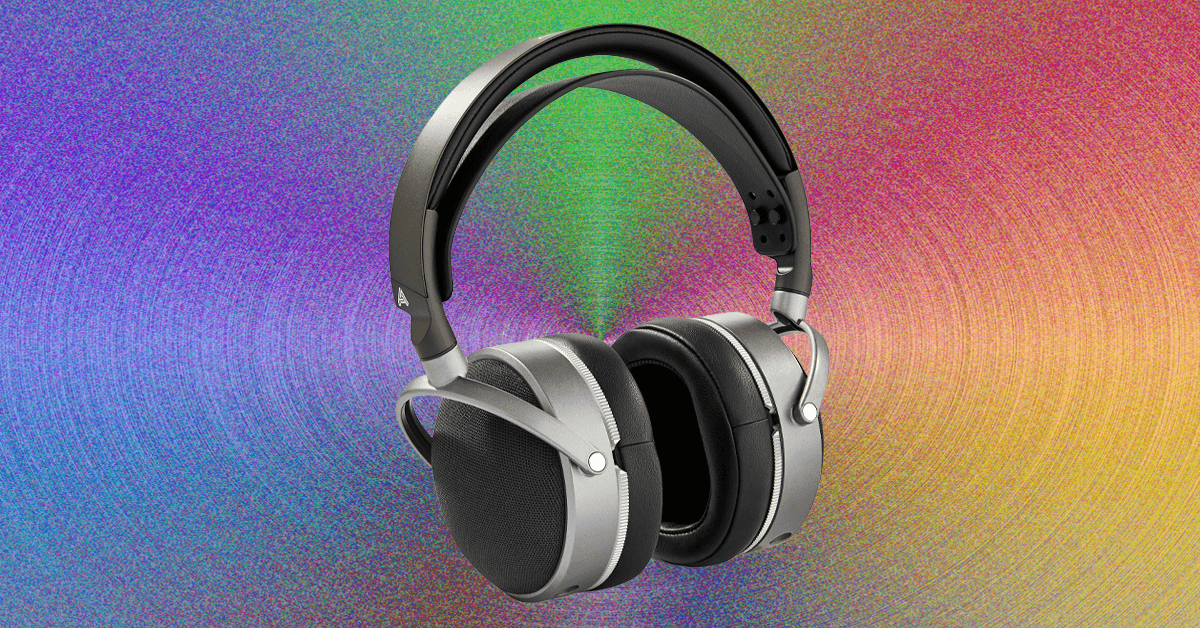
You might think you’ve got enough headphones. Most of us have accrued at least two or three pairs over the years, and might have a few more half-working pairs stuck in a drawer somewhere. But I’m here to tell you, if you haven’t fully explored the fabulous world of specialized headphones that has exploded in the past decade, from open earbuds to sports and travel cans, you’re not maximizing your sonic potential. The best headphones are now so varied that they often depend entirely on what you intend to use them for. That means the best headphones for you probably come in many shapes and sizes, and you might actually want more than one pair.
Balling out on lots of headphones for every one of life’s situations doesn’t necessarily mean spending a lot of money. Unless you’re successfully riding the “boomcession,” there’s a fair chance spare cash is tight right now. Luckily, there’s a veritable explosion of impressive budget brands making great stuff, alongside household brands pitching to the cheap seats.
As an audio reviewer for well over a decade, I’ve tried hundreds of models across every color in the headphone rainbow. Here’s how to shop right so you can get the most out of any and all of them, as well as the best headphones I can think of in every category right now.
Noise-Canceling Earbuds: The 2026 Baseline
-
-
Review: Apple AirPods Pro 3
-
Review: Apple AirPods Pro 3


Let’s start with the modern one-and-done choice: Noise-canceling earbuds are the ultimate jack-of-all-trades. If you only want to own one pair, this is it. The best noise-canceling earbuds sound great, fit neatly in your pocket, and are equally adept at letting in or blocking out environmental sounds to adapt to any situation.
It’s probably no surprise that the wildly popular AirPods Pro are the best headphones for iPhone owners, thanks to impressive performance, loads of features, and seamless integration with all things Apple. They’re a massive step up from the standard AirPods, which offer similar Apple-friendly features and a touch of noise canceling, but don’t perform nearly as well as even most budget earbuds.

For more phone-agnostic options, Bose’s QuietComfort Ultra 2 are the ultimate noise killers, while Sony’s new WF-1000XM6 offer great sound and utterly natural transparency mode. Technics’ EAH AZ100 are among my favorites for sound quality.
If those are too pricey, fear not! Budget earbud options are varied and plentiful, from Android-optimized midrangers like the Google Pixel Buds 2a to the stylish Nothing Ear (a) or highly affordable Soundcore Space A40. If you’re keeping to one pair, I’d put in all your chips for better performance, but there’s no shortage of great affordable options, and new pairs at all prices keep rolling in.
Noise-Canceling Over-Ears: Comfort Meets Performance

Anyone who’s taken a long flight can probably relate to the fact that sticking something in your ears for five hours-plus isn’t an exercise in comfort. Enter travel headphones like the best noise-canceling over-ears, which have adapted from early models like Bose’s stalwart QC 25 to become among the most advanced and downright luxurious audio products for your money. They’re great for other tasks too, from working in a busy office to commuting or simply chilling at home in tranquil reverie.

The latest and greatest, like Sony’s WH-1000XM6 and Bose’s QuietComfort Ultra, apply uncompromising noise cancellation, plush comfort for long listening, and a pile of advanced features like pausing when you speak or automatic sleeping and waking. The Ultra are my favorite for sheer comfort, but there are plenty of rivals like Sonos’ equally comfy Ace, the iconic (and heavy) AirPods Max, or the utterly immersive B&W Px7 S3. Cheaper options abound, but some of my favorites include Sony’s high-punching WH-CH720, the crazy-affordable Soundcore Life Q30, or its newer cousin, the Space One. These won’t bring the same level of performance or tranquility, but they still work great for long flights and beyond.
Open Earbuds: For Keeping Alert

Soundcore by Anker
Aeroclip
Here’s where things get really fun: Open earbuds have exploded faster than any other audio segment in recent memory, with a kaleidoscope of options from virtually every audio brand. Designed to keep your ears open while delivering satisfying sound, the best open earbuds aren’t ideal for everything you do, but they’re fantastic for specialized activities like ebike riding, where wind resistance renders artificial transparency modes useless. Over time, I’ve found tons of other cool use cases, from walking the dog to sneaking in some Olympics at the bar.
Open Earbuds come in various design types, from wacky bone-conductors to wraparound models and—my personal favorite—clip-ons. Their light and ergonomic housings aim to essentially disappear on your ears for all-day listening, and it works better than you might think.
You could spend a lot on pairs like Bose’s excellent Open Ultra, but you really don’t have to, since even the best models are limited in performance. Soundcore’s Aeroclip are my favorite value-to-performance pair, but plenty of cheaper options get the job done, like Acefast’s nearly free Acefit Air or Soundpeat’s Pearclip Pro. Open earbuds are easily my favorite new audio trend.
Workout Headphones: Keep Moving
-Reviewer-Photo-SOURCE-Ryan-Waniata.jpg)
There’s an obvious Venn diagram overlap between open earbuds and workout headphones, but if you don’t like the idea of keeping your ears open, traditional sports models are a great alternative. My favorite is the revamped Beats Powerbeats Pro 2, which offer tons of features in a wraparound design that’s nearly unshakeable. I like that they’re optimized for Apple devices, but still work well for Android, and they come with great noise canceling and transparency mode, but also a high price.

Like open earbuds, there are plenty of cheap options, including the similarly unshakeable (but much more basic) Jlab Go Air Sport, which run a mere $30 or less on sale. If you’re not into the minimalist thing, WIRED editor Adrienne So swears by the BlueAnt Pump X over-ear headphones for weightlifting, in large part due to their cooling-gel earpads that go in the fridge overnight to keep sweat at bay. They’ve also got noise canceling and plenty of battery life at over 50 hours per charge. For jogging or cycling, open earbuds are likely a better fit, while some folks simply use the AirPods Pro, but it can be nice to just have a dedicated pair in your gym bag.
Wired Headphones: Plug It In

The youth delight in resurrecting old tech that the more seasoned among us have long left for dead (cassette tapes?!). In the case of wired headphones, there’s good reason to plug in, starting with improved performance for your dollars. If you’re a content creator, musician, or simply a cash-savvy sound connoisseur, you can get an impressive return from wired options that avoid the sound degradation of many wireless options.
Some of our favorite affordable options include affordable and classic-looking earbuds like Shure’s iconic SE-112 and Sennheiser’s impressive IE200, and studio-friendly over-ears like Audio-Technica’s ATH-M20x, If you’re willing to spend a bit more, the fantastic Sennheiser HD6XX offer the best sound for the money I’ve heard in any headphone segment. Based on the much pricier HD 650, these are open-back headphones that let in exterior sounds, but the performance is incredible. If you want even better sound and design, there are tons of options, but they’ll cost you.
Fancy Headphones: The Audiophile Angle
If you really want to optimize the wired connection, there’s a whole segment of audiophile headphones made with high-quality materials, innovative speaker technologies, elevated designs, and accordingly elevated pricing. There are a whole bunch of varieties, but for the sake of levity I’ll break them down into two categories: in-ear monitors (IEMs), the fancy version of in-ear headphones, and over-ears.
IEMs generally use dynamic drivers, the traditional driver type in most headphones and speakers, balanced armatures, much smaller and more accurate speakers, or a mix of both. My favorite pairs come from Ultimate Ears, like the UE 18+ Pro, which are customized for your ears using 3D printing and other techniques. (You’ve likely seen these on TV for musicians and broadcasters.) Other IEMs we like include Sennheiser’s IE 900 and models from Campfire Audio.

For over-ear headphones, Audeze’s planar magnetic headphones are among my favorites, starting as low as $500 (yeah, I know) in the excellent LCD-S20 closed-back headphones. Another incredible pair I recently tested are Meze’s Poet, which are not only the most gorgeous-looking pair I’ve reviewed, but also offer among the clearest and most articulate sound I’ve laid ears on. There are dozens more to try, as audiophilia is its own journey, but this is a good starting point. We recently reviewed the Grado Signature S750, which have an effortlessly expansive sound that feels like it can’t possibly be coming from mere centimeters away from your eardrums.
Other Headphone Types and Upcoming Features


SteelSeries
Arctis Nova 3P Wireless
As I’m sure some of you have already noted, there are still more types of specialty headphones, including Gaming Headsets, which are another animal altogether, and even TV Headphones, which quickly transition from the screen’s internal speakers to let you listen in silence without latency. I’m currently testing a new TV headphones bundle from Sennheiser, the RS 275, which includes a dedicated pair of headphones in the HDR 275 and Sennheiser’s new BTA1 Auracast transmitter (verdict to come).
Speaking of Auracast, it’s an increasingly cool new type of Bluetooth protocol that allows connection of an infinite number of devices at up to 100 meters, like an FM radio signal. Its implementation is still in its early stages, but it’s a good feature to look for in new headphones. Other features to consider include an app with an EQ and presets (which the majority of my recommendations include), multipoint pairing to connect to two or more devices at once (again, pretty ubiquitous), and spatial audio features for video formats like Dolby Atmos.


“Heated Rivalry” Season 2 is coming “as soon as humanly possible,” says creator Jacob Tierney

Third victim dies from injuries in Rhode Island rink shooting

The NBA doesn’t just want to build a European basketball league — it wants to revolutionize the international pro game

-

 Tech7 days ago
A $10K Bounty Awaits Anyone Who Can Hack Ring Cameras to Stop Sharing Data With Amazon
-

 Fashion6 days ago
ICE cotton ticks higher on crude oil rally
-
 Business6 days ago
US Top Court Blocks Trump’s Tariff Orders: Does It Mean Zero Duties For Indian Goods?
-
 Business5 days ago
Eye-popping rise in one year: Betting on just gold and silver for long-term wealth creation? Think again! – The Times of India
-

 Entertainment5 days ago
Viral monkey Punch makes IKEA toy global sensation: Here’s what it costs
-

 Sports6 days ago
Brett Favre blasts NFL for no longer appealing to ‘true’ fans: ‘There’s been a slight shift’
-

 Entertainment6 days ago
The White Lotus” creator Mike White reflects on his time on “Survivor
-

 Tech7 days ago
Donald Trump Jr.’s Private DC Club Has Mysterious Ties to an Ex-Cop With a Controversial Past