

Business
Top stocks to buy today: Stock recommendations for December 12, 2025 – check list – The Times of India

Stock market recommendations: According to Bajaj Broking Research, the top stock picks for December 12, 2025 are Eternal, and Divi’s Laboratories. Here’s its view on Nifty and Bank Nifty:Index View: NiftyBenchmark indices traded in a range with corrective bias and is currently placed around 25,900 levels as domestic markets tracked the global risk-off tone, pressured by persistent FII selling, a softer rupee, and ongoing uncertainty around US–India trade talks. In the short term, market direction will hinge on central bank commentary and clarity on trade-related developments. In the near term, market trajectory is likely to be dictated by currency stabilization dynamics, especially whether the rupee can find a durable floor. Moreover, clarity on evolving India–US trade negotiations could influence sector-specific outlooks, particularly in export-linked and tariff-sensitive industries. Nifty has key support placed at 25,700–25,800, which aligns with the bullish gap from November 12, the 50-day EMA, and a key retracement zone of the prior uptrend. Sustaining this band will be crucial for continuing the positive momentum of the last 3 months.We expect the Nifty to consolidate in the range of 25,700–26,200. A clear breakout or breakdown will determine the next directional move.A close below the key support area of 25,700 will signal extension of the corrective decline towards the 100 days EMA placed around 25400 levels. On the higher side, a move above the recent swing high of 26,200 will signal extension of the rally towards 26,500 levels in the coming weeks. Nifty BankBank Nifty traded in a range, digesting its recent strong gains. The index consolidated in a 700-points range oscillating in a positive and negative territory.We expect the index to extend consolidation and form a base in the range of 58500-60100 in the coming sessions. A follow-through strength above recent high 60,100 will open further upside towards 61,000 levels in the coming weeks.The entire up move of the last 2 months is well channelled signaling sustained demand at elevated levels. Key support is placed at 58,300-58,600 levels being the confluence of the last two weeks lows and recent breakout area. Holding above the support area will keep the short-term bias positive.
Stock Recommendations:
EternalBuy in the range of ₹ 285-292
Eternal has been in a corrective phase over the past two to three months and is now consolidating around a major demand zone. This technical setup points to a favorable risk-reward profile, suggesting the potential for a bullish reversal and a rebound from its current oversold levels.The current corrective phase seems to be losing momentum, with price action hinting at a possible rebound toward the ₹323 area in the coming months. This zone aligns with the 50% Fibonacci retracement of the entire drop from ₹368 to ₹280 and also matches the November 2025 high, strengthening its significance as a major resistance level.Divi’s LaboratoriesBuy in the range of 6350-6450
The stock is at the cusp of generating a breakout above a falling channel signaling resumption of up move thus offers fresh entry opportunity.The stock has already taken 6 weeks to retrace just 50% of its preceding 5 weeks rally (5636-6904). A shallow retracement signals a higher base formation and an overall positive structure.We expect the stock to head towards 6850 levels being the trendline resistance joining the highs of July and November 2025.(Disclaimer: Recommendations and views on the stock market, other asset classes or personal finance management tips given by experts are their own. These opinions do not represent the views of The Times of India)


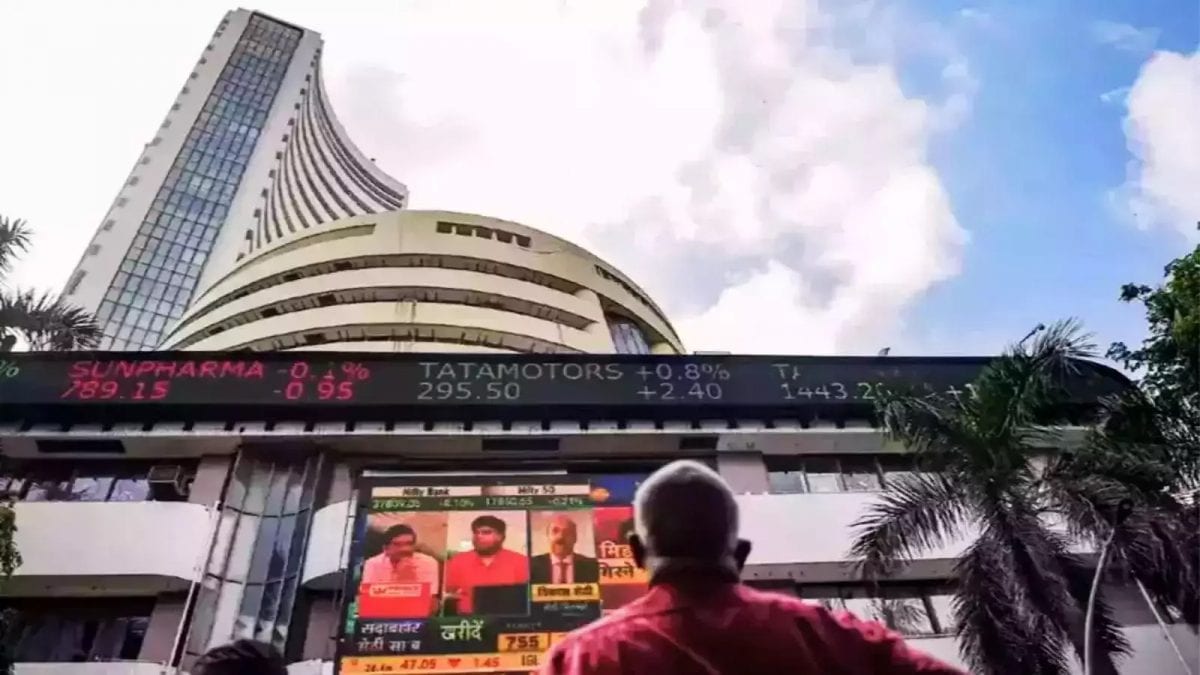


The FTSE 100 has entered what’s known as correction territory on Monday, after another fall of 2 per cent for the day made it more than a 10 per cent drop from recent highs.
A market index or share falling past that point is known as correcting – which can often happen after being overbought or, in the case of this situation, when external events change suddenly. The ongoing situation with the Middle East war is now into its fourth week and investors have left global markets in their droves over fears for how much longer matters could continue to unravel.
London’s prime benchmark, the FTSE 100, was within touching distance of 11,000 points at the end of February. The points mark is a representation of the total weight or performance of the 100 companies within the index. Fast forward to last week and it dropped below 10,000 on Friday for the first time since reaching the milestone level in early January.
And a 2 per cent drop in the first two hours of trading this week has seen that plummet to 9,710 points – representing an 11 per cent drop-off from its high point since the first strikes on Iran were launched. The index is also now down for the whole of 2026 for the first time, after outperforming the main US index, the S&P 500, across 2025.
A stock, sector or index dropping 20 per cent from recent high points is known as a bear market, or crash territory.
Elsewhere in Europe, the Dax in Germany was 1.8 per cent lower and France’s Cac 40 fell 1.4 per cent.
It follows heavy falls overnight in Asia as the rhetoric from the US and Iran suggested little sign of a resolution to the conflict, with the Nikkei in Japan ending down more than 3 per cent.
Brent crude lifted 1 per cent to nearly 114 US dollars a barrel after Iran warned it will strike electrical plants across the Middle East if US president Donald Trump follows through on his threat to bomb power stations in the Islamic Republic.
Prime Minister Sir Keir Starmer is heading an emergency Cobra meeting on Monday after a call on Sunday with US president Donald Trump to discuss reopening the Strait of Hormuz shipping route after they both agreed it was “essential” to stabilising global energy markets.
Mr Trump has set a 48-hour deadline that ends just before midnight UK time on Tuesday, warning Iran that the US would attack its power stations unless the country releases its grip on the Strait of Hormuz.
But Iran has said it will retaliate by striking electrical plants across the Middle East if Mr Trump follows through on his threat.
Chris Beauchamp, chief analyst at IG, said: “Investors who have spent the weekend watching fresh strikes in the Middle East are now waiting to see what will happen when Trump’s 48-hour deadline expires tonight.
“But they are in no mood to hang around, and have continued to sell stocks and precious metals.
“Each day that the war goes does more damage to the global economy and drives inflation higher, with recession chances rising by the hour.”
Business
‘Crisis worse than two 1970s oil shocks put together’: IEA chief’s big warning on Strait of Hormuz – The Times of India
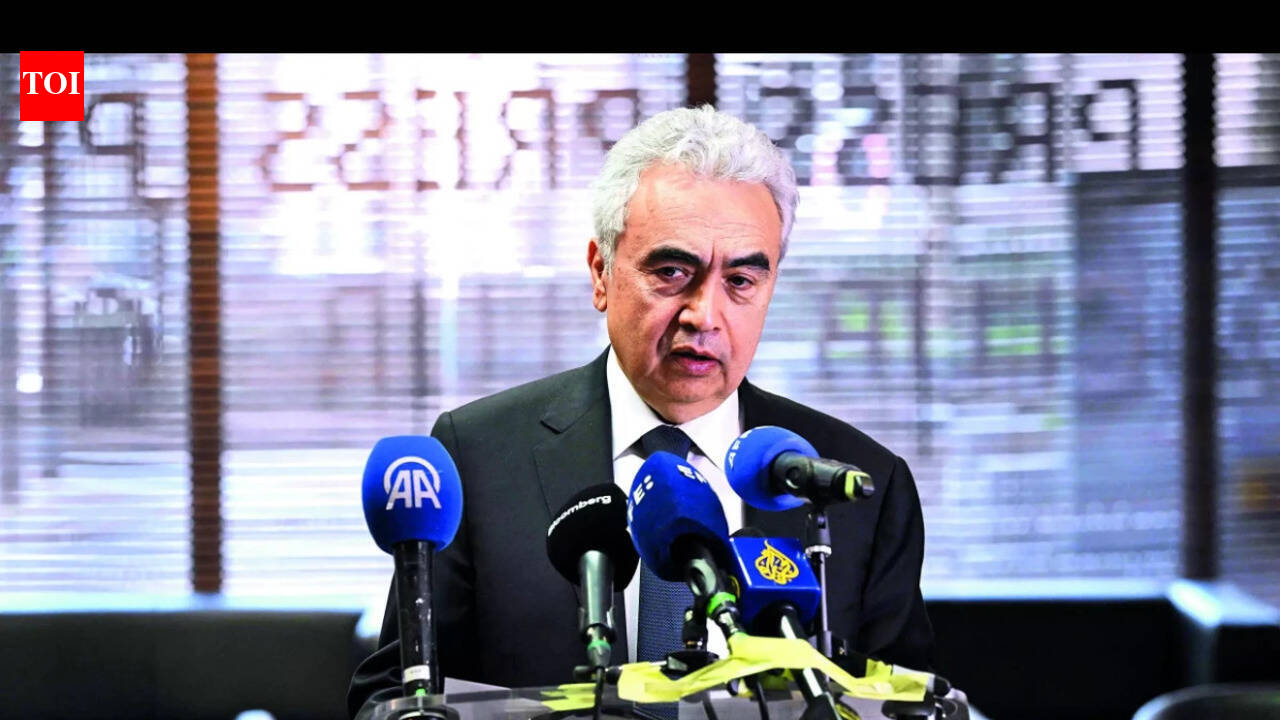
The ongoing war in the Middle East has triggered an energy crisis for the world and “no country is immune” to its shockwaves, the International Energy Agency (IEA) warned on Monday. Addressing the National Press Club in Australia’s capital, Birol said the current situation has evolved into an unprecedented disruption, combining multiple shocks to oil and gas supplies.“This crisis as things stand is now two oil crises and one gas crash put all together,” he said. He also drew comparisons with the oil shocks of the 1970s and the fallout from Russia’s 2022 invasion of Ukraine.Highlighting the broader economic risks, Birol said, “The global economy is facing a major, major threat today, and I very much hope that this issue will be resolved as soon as possible.”Commenting on the fallout of the energy crisis, Fatih Birol said, “no country will be immune to the effects of this crisis if it continues to go in this direction,” adding, “so there is a need for global efforts.”The conflict has already caused extensive damage to energy infrastructure, with Birol noting that at least forty facilities across nine countries in the region have been “severely or very severely damaged”.“At least forty… energy assets in the region are severely or very severely damaged across nine countries,” he said.The disruption was intensified by the near shutdown of the Strait of Hormuz, a key transit route for roughly one-fifth of global oil and gas shipments. The standoff has deepened as the war entered its fourth week, with Donald Trump and Tehran issuing repeated threats, including Washington’s demand for the reopening of the waterway.Birol identified the reopening of the Strait of Hormuz as the most critical step towards stabilising the situation, while also flagging rising fuel shortages in Asia as a growing concern. Oil markets reflected the strain, with US benchmark crude briefly touching the $100-per-barrel mark early on Monday. As fuel prices continue to rise, he added that there would not be any specific crude level to trigger another release.He added that the agency is currently consulting governments worldwide and remains prepared to release additional oil from emergency reserves if needed, though he clarified that no specific price level would automatically trigger such a move. Meanwhile, US President Donald Trump issued an ultimatum to Iran to reopen the strategically critical Strait of Hormuz within 48 hours, warning of military consequences if it failed to comply. He said, “If Iran doesn’t fully open, without threat, the Strait of Hormuz, within 48 hours from this exact point in time, the United States of America will hit and obliterate their various power plants, starting with the biggest one first! Thank you for your attention to this matter.” In response, Tehran warned, signalling that any attack on its energy infrastructure would prompt retaliation beyond conventional military targets. The message was conveyed by Ebrahim Zolfaghari and carried by Islamic Republic of Iran Broadcasting. He said any strike on Iran’s fuel and energy sector would trigger action against a broader range of targets linked to the United States and its regional allies.Earlier this month, 32 member nations of the IEA agreed to release 400 million barrels of oil from their emergency reserves to the market, to deal with the ongoing energy supply disruption.
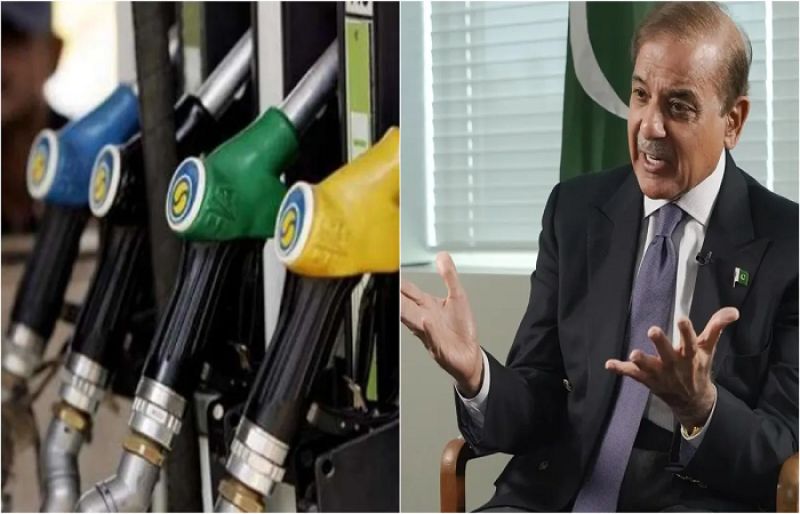
Prime Minister Shehbaz Sharif on Sunday approved an increase of Rs200 per litre levy on high-octane fuel used in luxury vehicles, a move expected to generate Rs9 billion in monthly savings for the government.
According to a notification issued by the Prime Minister’s Office, the levy on high octane blending component (HOBC) has been raised by Rs200 per litre, taking it to Rs305.37 per litre. Previously, the levy stood at Rs105.37 per litre.
The development emerged in a meeting virtually chaired by the premier, who had taken notice of the Rs100 per litre levy on high-octane fuel, read a statement issued by the Prime Minister’s Office.
During the meeting, PM Shehbaz stressed raising the high-octane fuel levy and approved an increase of Rs200 per litre, said the statement.
Following the revision, the price of HOBC has climbed to Rs535 per litre. The new rate has come into effect immediately, according to the notification.
The move comes days after the government had opted to hold the petroleum levy unchanged on petrol and high-speed diesel (HSD), as global fuel markets remained under pressure due to the ongoing conflict involving the United States, Israel and Iran.
As of March 15, petrol continued to carry a levy of Rs105.37 per litre, while HSD remained at Rs55.24 per litre, with prices kept unchanged to avoid passing further burden onto consumers.
Earlier this month, the government had increased the levy on petrol by 25%, from Rs84.40 to Rs105.37 per litre, following the outbreak of hostilities in the region.
This pushed the ex-depot petrol price up from Rs266.17 on March 1 to Rs321.17 per litre by March 7, with the levy accounting for nearly one-third of the total price.
In contrast, the levy on HSD was reduced from Rs76.21 to Rs55.24 per litre on March 7, although its ex-depot price rose to Rs335.86 per litre.
The government has increased the levy only on the fuel used in luxury vehicles, with no hike on fuel for ordinary or mid-range vehicles, said the statement.
It added that PM Shehbaz directed that the anticipated Rs9 billion in savings from the levy hike be used to provide relief to the public.
The statement further emphasised that fares for public transport and airlines will not be affected, and that the measure ensures the country’s wealthiest segment bears a proportionate economic burden, easing pressure on the national economy.
The decision follows a directive by PM Shehbaz, who instructed relevant ministries to draft an implementation plan for the pricing of high-octane fuel.
Finance Minister Muhammad Aurangzeb, Information Minister Attaullah Tarar, Petroleum Minister Ali Pervaiz Malik, and other senior government officials attended the meeting.
The announcement to raise the levy on high-octane fuel comes two days after the government decided to keep petrol and diesel prices unchanged.
The rates have been held steady for two weeks following a 20% hike earlier this month, prompted by global oil supply disruptions triggered by the war in the Middle East.
On March 6, the government raised petrol and diesel prices by Rs55 per litre each as global oil prices surged amid the US-Israel conflict with Iran.
Following the increase, Pakistan unveiled a wide-ranging austerity and fuel-conservation plan to mitigate the impact of rising global oil prices.

FTSE 100 in 11% fall since Iran war started as stock markets tumble

US’ economic index dips 0.1% in January amid easing headwinds: TCB

What Happens When You Can’t Get a Death Certificate in Gaza

Tips and Advice for Buying Used or Refurbished Electronics

UAE savings strategies 2026 explained: Best apps, tools, budget rules and smart money hacks to beat rising cost of living in emirates – The Times of India

Strategic oil stocks to be released ‘immediately’ in Asia and Oceania: IEA

-
 Tech1 week ago
Tips and Advice for Buying Used or Refurbished Electronics
-
Business1 week ago
UAE savings strategies 2026 explained: Best apps, tools, budget rules and smart money hacks to beat rising cost of living in emirates – The Times of India
-

 Sports1 week ago
College Basketball Invitational abruptly cancels 2026 tournament
-

 Sports1 week ago
Japan suffers shocking collapse to Venezuela in World Baseball Classic
-

 Entertainment1 week ago
Meet one of the last true paparazzi
-
 Entertainment1 week ago
Strategic oil stocks to be released ‘immediately’ in Asia and Oceania: IEA
-
 Entertainment1 week ago
Iran at war
-
 Business1 week ago
‘Gruesome’ war bets fuel calls for Kalshi Polymarket crackdown