

Business
Train timetable revamp takes effect with more services promised

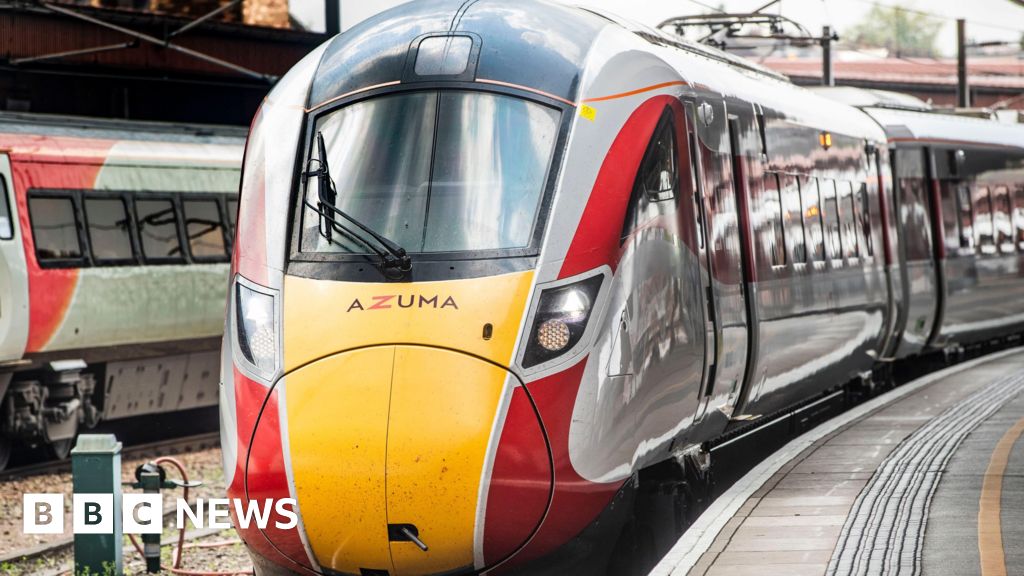
A revamp of train timetables has come into effect across the country, involving some of the most significant changes for more than seven years.
Rail operators are promising more services across the network and faster journeys on some routes as a result of the changes, with the East Coast Main Line to benefit the most.
Passengers are being advised to check the new timetables before travelling.
The level of change has not been seen since May 2018 when an update sparked major disruption and cancellations on some routes.
Rail timetables are changed every May and December, but rarely to this degree.
Network Rail is promising quicker journeys and thousands of extra seats every day, following a £4bn investment over the past decade.
The changes promise a cut of 15 minutes to journey times between London King’s Cross and Edinburgh, and 10 minutes between Edinburgh and York.
Network Rail says the rail line, which is used by several operators, will have improved connectivity between Scotland, North East England, Yorkshire and London.
One of the companies using the line, LNER, called the changes “transformational” and said it expected to run 10,000 additional services per year.
Ellie Burrows, Eastern regional managing director for Network Rail, said: “The industry has been preparing for many years for the new timetable.
“Our priority now is to continue working together to deliver the long-term benefits of this timetable change, the biggest in over a decade, for our passengers and the communities we serve.”
The changes will also see Northern launch a new hourly fast service between Leeds and Sheffield.
Transport for Wales is introducing more services for Chester, Wrexham and Swansea.
Another operator, Avanti, says there will be more trains between London and Liverpool.
However, there will be cuts to some routes as well. Avanti is cutting the number of services between Blackpool and London from four to two.
The changes are the biggest since May 2018 when a timetable update led to weeks of chaos on the Govia Thameslink Railway (GTR) and Northern networks.
The number of trains cancelled each day by GTR and Northern hit up to 470 and 310 respectively.
That led to a full review and eventually the Labour government’s decision to create Great British Railways and bring the industry under state control.
Travel expert Simon Calder said he was “pretty confident we won’t see the complete collapse of a network, as we did when the Thameslink line had its timetable completely reconfigured in 2018 – that was an absolute shambles”.
“There has been an awful lot of thought and time that has gone into this and the whole idea is to extract the maximum possible capacity from Britain’s Victorian rail network without jeopardising reliability.”
Rail industry expert Tony Miles told the BBC’s Broadcasting House programme that the changes in May 2018 had been based on “using every available slot for a train on the network, and that was the mistake”.
“You need to have some wriggle room” for when things go wrong, he added.
However, Monday morning would be the “real challenge” for the new system, Mr Miles said.
“Obviously Sunday morning services aren’t quite as stressful for the system as a peak time on a weekday.”

Tiger Woods of Jupiter Links Golf Club looks on before the match against the Los Angeles Golf Club at SoFi Center in Palm Beach Gardens, Florida, March 24, 2026.
Adam Glanzman | TGL Golf | Getty Images
Tiger Woods’ future in professional golf remains unclear as he seeks treatment after a rollover car crash last week.
Woods was arrested for a DUI after the accident in Jupiter Island, Florida, his second rollover in five years, and said in a statement on X that he would be stepping back from golf “to return to a healthier stronger, and more focused place.”
Woods did not provide a timeline for his return, only that he would be stepping away for a “period of time.”
On Wednesday, the PGA of America announced that Woods will no longer serve as captain of the 2027 U.S. Ryder Cup Team.
“We support his decision,” the PGA of America said in a statement on X. “We commend Tiger for prioritizing his long-term health and deeply respect the courage it takes to make such a personal decision.”
The latest developments leave Woods at least temporarily at the fringes of the sport that made him a household name. The golf community has rallied around the sport’s biggest star as he vows to “focus on his health,” and the PGA Tour said in a statement that Woods has the organization’s full support.
“Tiger Woods is a legend of our sport whose impact extends far beyond his achievements on the course. But above all else, Tiger is a person, and our focus is on his health and well‑being,” the tour said.
Off the course, Woods has been serving as chairman of the PGA Tour’s Future Competition Committee since August. That group has been responsible for creating a vision for the future of professional golf.
A PGA Tour spokesperson said that Woods will return to that role when he is ready to do so.
Golf Channel analyst and former tour pro Brandel Chamblee suggested it could be time for Woods to consider retirement following his latest accident. Woods, 50, has been recovering from various injuries sustained in his car crash in 2021.
“Why would he need to play golf anymore?” Chamblee asked Friday on the Golf Channel’s “Golf Central.” “I think he should probably ask himself that. Consider not playing golf anymore.”
Until Friday’s accident, Woods held onto hope that he would compete in the upcoming Masters Tournament this month.
Augusta National Golf Club Chairman Fred Ridley confirmed this week that Woods would not play.
“Although Tiger will not be joining us in person next week, his presence will be felt here in Augusta,” Ridley said. “Augusta National Golf Club and the Masters Tournament fully support Tiger Woods as he focuses on his well-being.”
TGR, Woods’ education foundation, said it remains committed to serving its students and communities.
“Our thoughts are with our founder as he takes the time needed to focus on his health,” its CEO Hrag Hamalian said in a statement.
Woods’ apparel brand, Sun Day Red, also voiced its support this week.
“He is not just our partner, he is our friend. We are here for him and we remain focused on the work we are building together,” the company said in a post on the Meta-owned Threads platform.
TGL, the indoor golf league founded by Woods and Rory McIlroy, declined to comment about Woods’ hiatus and potential return.
Woods made his first TGL playing appearance of the season for the Jupiter Links team last week in front of a notable audience. ESPN said nearly 1 million viewers tuned in to watch Woods’ return, making it the largest audience this season.

A Sam’s Club in Miami, July 7, 2025.
Joe Raedle | Getty Images
Walmart-owned Sam’s Club said Wednesday it will raise its annual membership fee by $10.
Starting on May 1, the warehouse club — which directly competes with Costco and BJ’s Wholesale Club — will charge $60 per year for basic membership and $120 for its higher-tier option. It currently charges $50 for club members and $110 for Plus members and last raised annual fees in October 2022.
In a statement, Sam’s Club said it has “adjusted our membership pricing to support the things our members love,” citing perks including its assortment, expanded hours and better curbside pickup and delivery options.
Still, those new fees will be below those of rival Costco, which charges $65 per year for its basic membership and $130 per year for its higher-tier option. Costco hiked its fees in 2024. The fees bring Sam’s Club in line with BJ’s, which charges $60 per year for its basic membership and $120 per year for its higher-tier membership.
Sam’s Club is hiking membership fees as its annual sales and membership grow. Net sales for Sam’s Club in the U.S. grew by about 3.1% to $93 billion last fiscal year, according to Walmart’s fourth-quarter earnings report. That growth has come in part from an expanding digital business: In the holiday quarter, the warehouse club’s e-commerce sales increased by 23% year over year. Store and website visits increased, too, with transactions rising 5.3% year over year in the same quarter.
Higher gas prices, driven by the Iran war, have drawn more attention to one of warehouse clubs’ key perks: cheaper prices at the pump. Gas prices hit a nationwide average of $4.018 this week, according to travel association AAA. That’s the highest price since August 2022, when the Russia-Ukraine war drove up energy prices.
Sam’s Club does not disclose its membership count, but said that it hit a record high in the three-month quarter that ended Jan. 31. Membership for the retailer is estimated to be more than 30 million, with a similar proportion of members opting into the higher-tier level as at Costco, according to David Bellinger, a retail analyst for Mizuho Securities.
Based on the equity research firm’s estimate, the membership fee increase could bump up annual income from the subscriptions by more than $200 million. That would translate to a 2 cent annual earnings per share lift for parent company Walmart.
Membership fee increases for current members will take effect when they renew at the end of their billing cycle. Sam’s Club said it emailed members about the fee increase on Tuesday.
As part of the fee change, Sam’s Club said members of its higher-tier level, called “Plus,” will be able to earn up to $750 per year in Sam’s Cash rewards on eligible purchases, up from $500 per year.

Nike Inc. signage on the floor of the New York Stock Exchange, Dec. 31, 2025.
Michael Nagle | Bloomberg | Getty Images
When Nike reported fiscal third-quarter earnings on Tuesday night, investors were looking for evidence its recovery is on track.
Instead, they learned that the retailer’s turnaround is far from over, sending shares tumbling more than 15% on Wednesday.
During a call with analysts, finance chief Matt Friend warned sales would slide by a low single-digit percentage through the end of this calendar year, as a decline in China is expected to offset growing strength in North America.
The company anticipates sales will fall between 2% and 4% in the current quarter, worse than the 1.9% growth analysts had expected, while it expects China sales will plunge 20% — even with a 2 percentage point benefit from foreign exchange rates. Efforts to clean up Nike’s assortment in China and drive full-price sales are expected to continue — and remain a drag on revenue growth — through fiscal 2027, slated to end next spring.
The company expects to begin lapping the period when it started to get hit by higher tariffs in the first quarter of fiscal 2027, slated for this summer, which could give it easier year-over-year profit comparisons. Executives expect gross margins could begin expanding by the end of the year during the retailer’s fiscal 2027 second quarter — if they do at all.
Nike’s gross margin has declined year over year for seven straight quarters, and it may be harder to boost the metric now because product input costs could rise due to the war in the Middle East.
“The environment around us has become increasingly dynamic, and we could experience unplanned volatility due to the disruption in the Middle East, rising oil prices, and other factors that could impact either input costs or consumer behavior,” said Friend. “We are focused on what we can control, and these assumptions reflect the macro environment as it stands today.”
The lagging turnaround, the persistent bad news and the number of business arms Nike needs to fix to stabilize the entire enterprise left investors soured. The few pockets of good news — better-than-expected sales in China, growing wholesale revenues, continued growth in North America — weren’t enough to boost the stock.
On Wednesday morning, three of Wall Street’s biggest banks, Goldman Sachs, JPMorgan and Bank of America, all downgraded the stock, citing the dragging turnaround, growing headwinds and dwindling patience.
“We thought improved performance product innovation and lapping Win Now actions would result in a return to growth in 1Q27; instead, management has initiated guidance for sales to remain negative into 3Q27,” Bank of America analyst Lorraine Hutchinson said in a Wednesday note to clients. “Strong results in running and NA were the reasons for our patience but with the sales inflection now nine months away, we see little room for multiple expansion, leading to our downgrade.”
Throughout Nike’s call with analysts on Tuesday, Friend and CEO Elliott Hill kept predicting a return to sustained growth, but were once again vague about the timeline.
“We are increasingly confident we are on track to return to balanced growth in North America across both Nike Direct and wholesale channels in the near term,” Friend said.
In his remarks, Hill said again that recovery is taking more time than he expected.
“This is complex work, and parts of it are taking longer than I’d like, but the direction is clear,” said Hill. “The urgency is real, and the foundation is getting stronger.”


Karachi sees widespread rain with thunderstorms

US remains high-value market for China apparel exports

Former Iran foreign minister seriously wounded in US-Israeli strike

-

 Politics1 week ago
Afghanistan announces release of detained US citizen
-

 Sports1 week ago
Broadcast industry CEO says consolidation is ‘essential’ to compete for NFL soaring media rights prices
-

 Tech1 week ago
Can a Home Appliance Fix the Problem of Soft-Plastic Waste?
-

 Entertainment1 week ago
UN warns migratory freshwater fish numbers are spiralling
-
 Business1 week ago
Property Play: Home flippers see smallest profits since the Great Recession, real estate data firm says
-
 Business1 week ago
Gold prices soar in Pakistan – SUCH TV
-
 Business1 week ago
More women are entering wealth management, but few are in advisory roles, study finds
-

 Fashion1 week ago
ICE cotton slips on weaker crude, profit booking