

Business
Trump administration finalizes better-than-feared Medicare Advantage payment rate in boost to health insurers


Administrator for the Centers for Medicare & Medicaid Services Mehmet Oz speaks during an event sponsored by the Action for Progress Coalition, at the National Press Club in Washington, D.C., U.S., Feb. 2, 2026.
Al Drago | Reuters
The Trump administration on Monday finalized a 2027 payment rate increase to privately run Medicare plans that was far bigger than initially proposed, a boost to health insurer stocks.
The government will increase average Medicare Advantage payments by 2.48%, or more than $13 billion, in 2027, according to a release from the Centers for Medicare & Medicaid Services. The Trump administration in January proposed a payment rate hike of 0.09%, which pummeled shares of insurers that run those plans.
Shares of UnitedHealth and CVS Health rose more than 9% in after-hours trading on Monday. Meanwhile, Humana‘s stock jumped around 12%.
“Medicare Advantage and Part D should work for the people who rely on them,” said CMS Administrator Dr. Mehmet Oz in a release. “These updates keep coverage affordable and ensure patients get real value from their plans.”
The closely watched government payment rate determines how much insurers can charge for monthly premiums and plan benefits they offer and, ultimately, their profits.
Medicare Advantage is a privately run health insurance plan contracted by Medicare. More than half of Medicare beneficiaries are enrolled in such plans, enticed by lower monthly premiums and extra benefits not covered by traditional Medicare, according to health policy research firm KFF.










Greggs is launching a chicken version of its customer favourite sausage and vegan rolls in a permanent addition to its menu.
The Chicken Roll – described by the high street baker as “seasoned chicken wrapped in layers of crisp, golden, glazed puff pastry” contains 305 calories and will cost £1.35 when it goes on sale on Thursday.
It follows the Sausage Roll and the pork free Vegan Roll.
To celebrate the final launch of the “trilogy”, Greggs is allowing customers the chance to be among the first to taste the new roll with a 20-minute slot between 3.30pm and 9pm on Wednesday (April 8) at a pop-up location at 15 Bateman Street, in London’s Soho.
Places will be given on a first-come first-served basis but, in a nod to the trilogy theme, guests must arrive as part of a trio of friends or family.
Visitors will be able to pair their three complimentary rolls with a free chicken-themed cocktail or mocktail.
A Greggs spokeswoman said: “They say the best things come in threes, and our iconic roll trilogy is no exception.
“We can’t wait for our customers to experience the Chicken Roll as the ultimate headline act of our flaky franchise.”
Over the past year, Greggs has come under pressure from cautious shoppers affected by the rising cost of living, higher tax and labour costs, and the growing use of weight-loss treatments.
Last month, the Newcastle-based firm reported that statutory pre-tax profits fell by 17.9% to £167.4 million for the year to December 27, compared with a year earlier.
It also told shareholders that total sales grew by 6.8% to £2.15 billion over the year, with like-for-like growth buoyed by its continued store opening programme.
Greggs said it had 121 net store openings in 2025, expanding its shop estate to 2,739 locations by the end of the year.
It is targeting around 120 further openings this year as it highlighted ambitions to grow to “significantly more than 3,000 UK shops over longer term”.
Business
New norms for NH & bridge works: Longer timelines, realistic deadlines – The Times of India
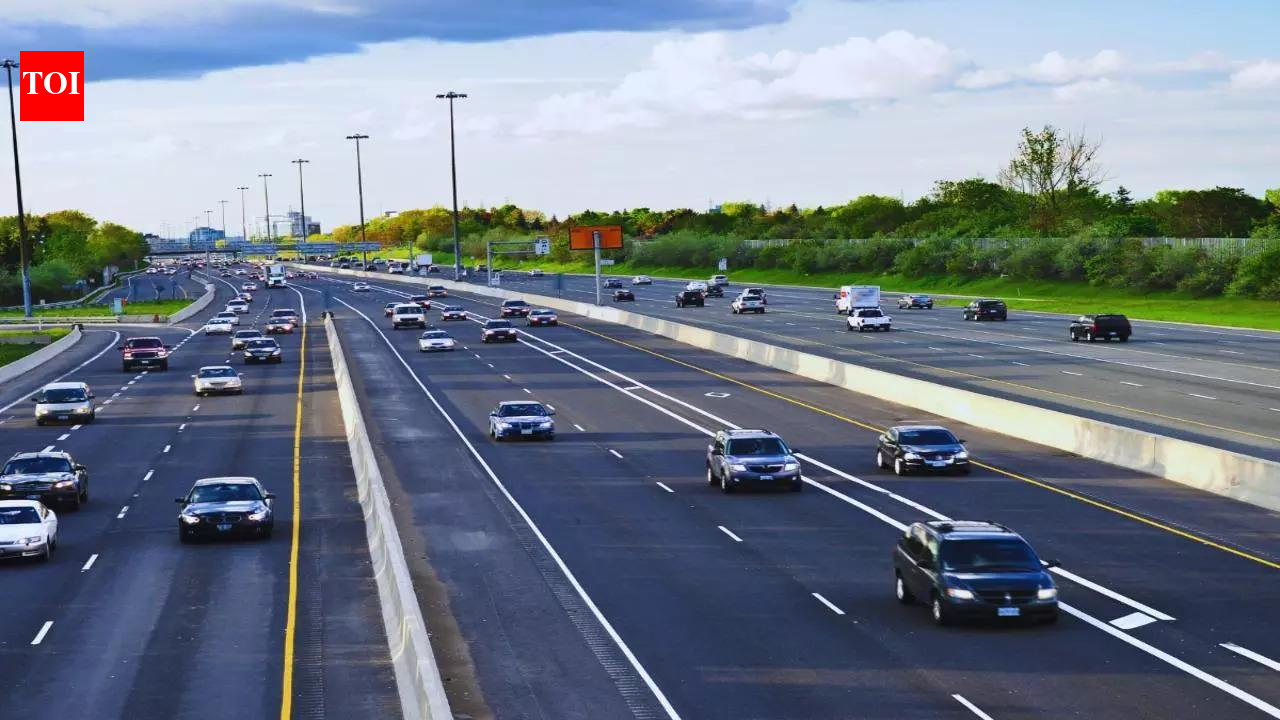
New Delhi: In a major change in policy, govt has increased the time allowed for construction of 6-10 km-long bridges across rivers such as Ganga and Brahmaputra to six years and for 2.5-6 km-long bridges on Mahanadi and Godavari to five years. The timelines have been revised from the current 24-30 months.Similarly, the construction period has been fixed at two years for national highway projects costing up to Rs 500 crore, 30 months for Rs 500-1,500 crore projects, and three years for works costing over Rs 1,500 crore.The change in the ‘normative construction period’ has been made after a gap of 13 years, learning from past experience of how the average time taken for completion of NH projects has been over four years against the standard timeline of 2.5-3 years. The revised timeline for construction will be applicable for all NH projects to be bid out from May 6.In a circular, the road transport ministry said present guidelines — issued in 2013 — are derived from a legacy linear model that does not explicitly account for voluminous earthwork, leading to unrealistic construction period and resulting in additional cost and risk.“Therefore, a need was felt to revise the existing guidelines based on scientific analysis, understanding of completed projects, and prescribe a realistic construction period for civil works at DPR and bid invitation stage,” the ministry said. It added that the new norm will improve predictability in completion of projects, reduce disputes, enhance value and quality of NHs, for realistic and bankable bids, better quality outcomes and improved investor confidence.An additional six months time has been provisioned in the new norms for critical projects which involve multiple flyovers, tunnels or elevated structures. Similarly, an addition of 12 months has been provisioned for projects that involve cutting and slope stabilisation in hilly states.
Business
GCC demand surges: Foreign firms lease record 9.1 mn sq ft office space in Jan-Mar; India cements global hub status – The Times of India
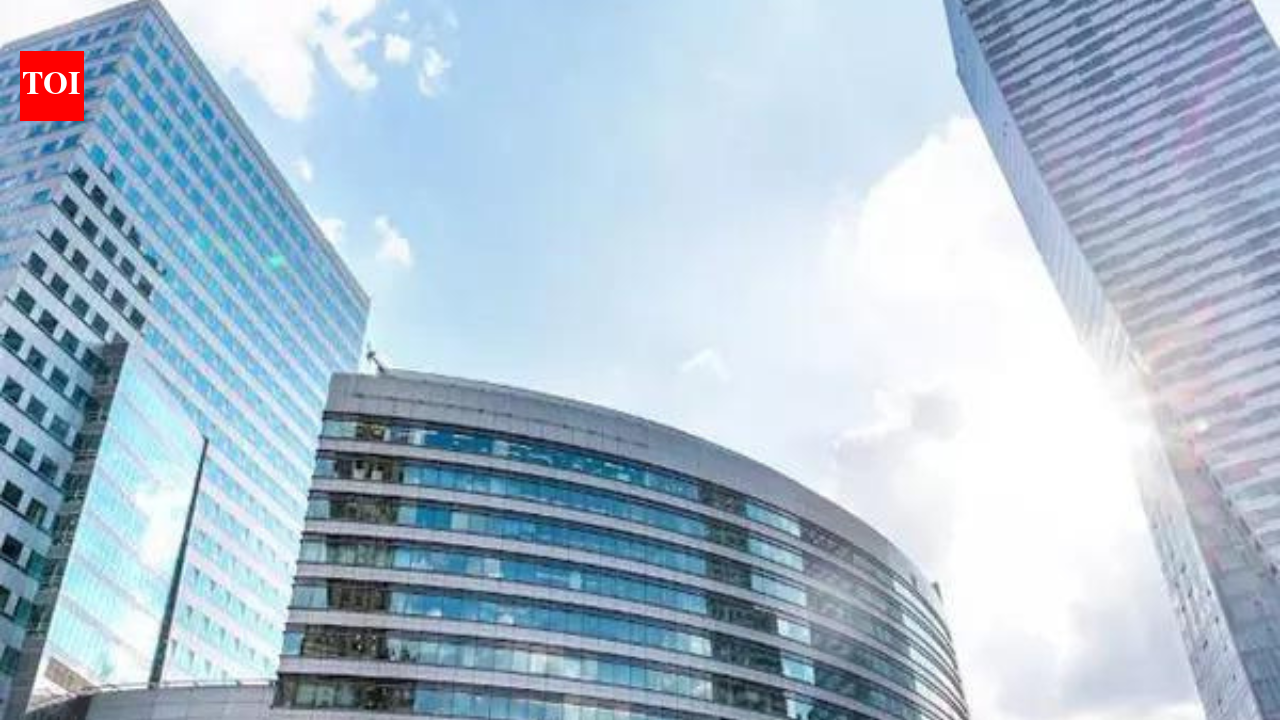
Foreign firms leased a record 9.1 million square feet of office space across India’s top nine cities during the January-March quarter to set up Global Capability Centres (GCCs), highlighting strong demand for workspaces, PTI reported citing CBRE data.Real estate consultant CBRE said total gross leasing of office space rose 5% to 20.7 million square feet in the quarter, compared with 19.7 million square feet in the year-ago period.The nine cities covered in the report include Mumbai, Delhi-NCR, Bengaluru, Hyderabad, Chennai, Pune, Kolkata, Ahmedabad and Kochi.Leasing for GCCs stood at a record 9.1 million square feet in the March quarter, the highest ever for any quarter.“The record GCC leasing activity is a definitive signal of India’s position as the global destination of choice for high-complexity capability functions,” said Anshuman Magazine, Chairman & CEO, India, South-East Asia, Middle East & Africa, CBRE.He added that demand is broad-based across sectors such as e-commerce, technology and BFSI.“The demand is increasingly being driven by mid-market and nano GCCs alongside established Fortune 500 occupiers,” Magazine said.According to CBRE, American firms accounted for 73% of the total GCC leasing during the quarter.Ram Chandnani, Managing Director, Leasing Services, India, CBRE, said occupiers are increasingly preferring green-certified and amenity-rich office spaces.“As occupiers adopt AI-ready workspace strategies and GCCs evolve into multi-functional innovation hubs, we expect leasing momentum to remain healthy through 2026,” he said.Bengaluru led office leasing activity with a 29% share, followed by Delhi-NCR at 22% and Mumbai at 16%.Together, these three cities accounted for around 67% of the total office leasing across the nine cities during the January-March period, the consultant said.

Greggs launches chicken version of sausage and vegan rolls in ‘iconic trilogy’

Golfers react to Tiger Woods’ absence at Augusta National during Masters week: ‘It’s unfortunate’

Lil Nas X provided kind options by Judge assault case

-

 Sports1 week ago
USMNT handed reality check by Doku, Belgium ahead of World Cup
-

 Sports1 week ago
2026 NCAA men’s hockey tournament: Schedule, results
-
Uncategorized4 days ago
[CinePlex360] Please moderate: “Trump signals p
-
Uncategorized1 week ago
[CinePlex360] Please moderate: “Further tariff
-

 Tech3 days ago
Our Favorite iPad Is $50 Off
-

 Entertainment3 days ago
Joe Jonas shares candid glimpse into parenthood with Sophie Turner
-

 Politics7 days ago
Trump considers asking Arab allies to help to pay for Iran war
-
 Sports1 week ago
Fakhar Zaman denies ball-tampering charge in PSL match | The Express Tribune