

Politics
Trump says Muslim lawmakers Omar, Tlaib should be removed from US after speech clash

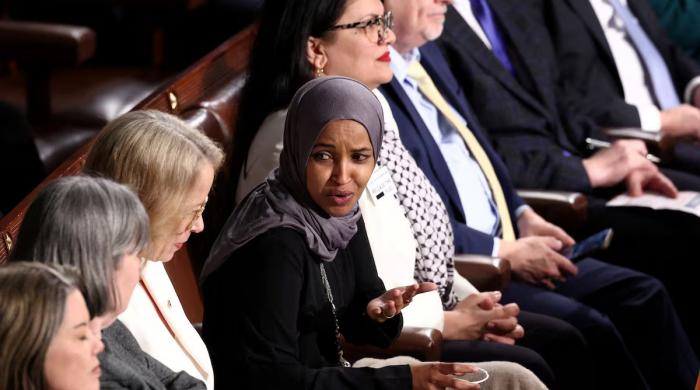
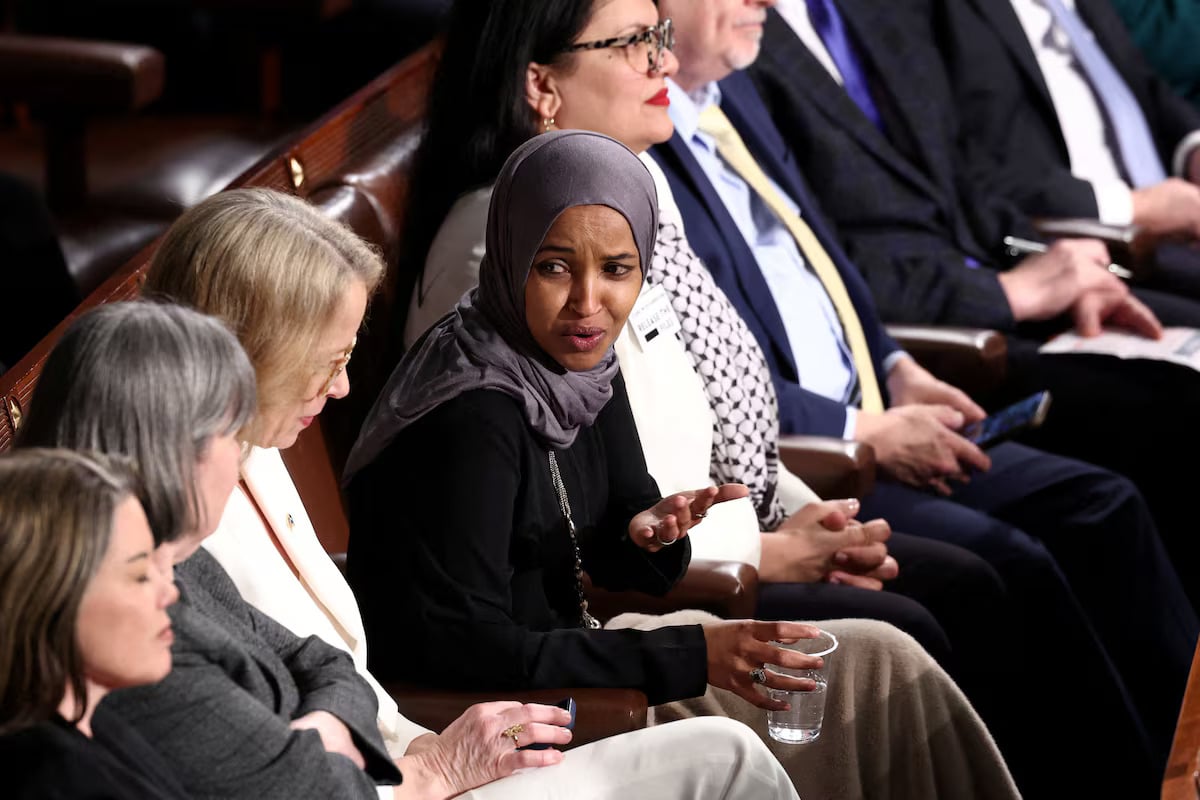
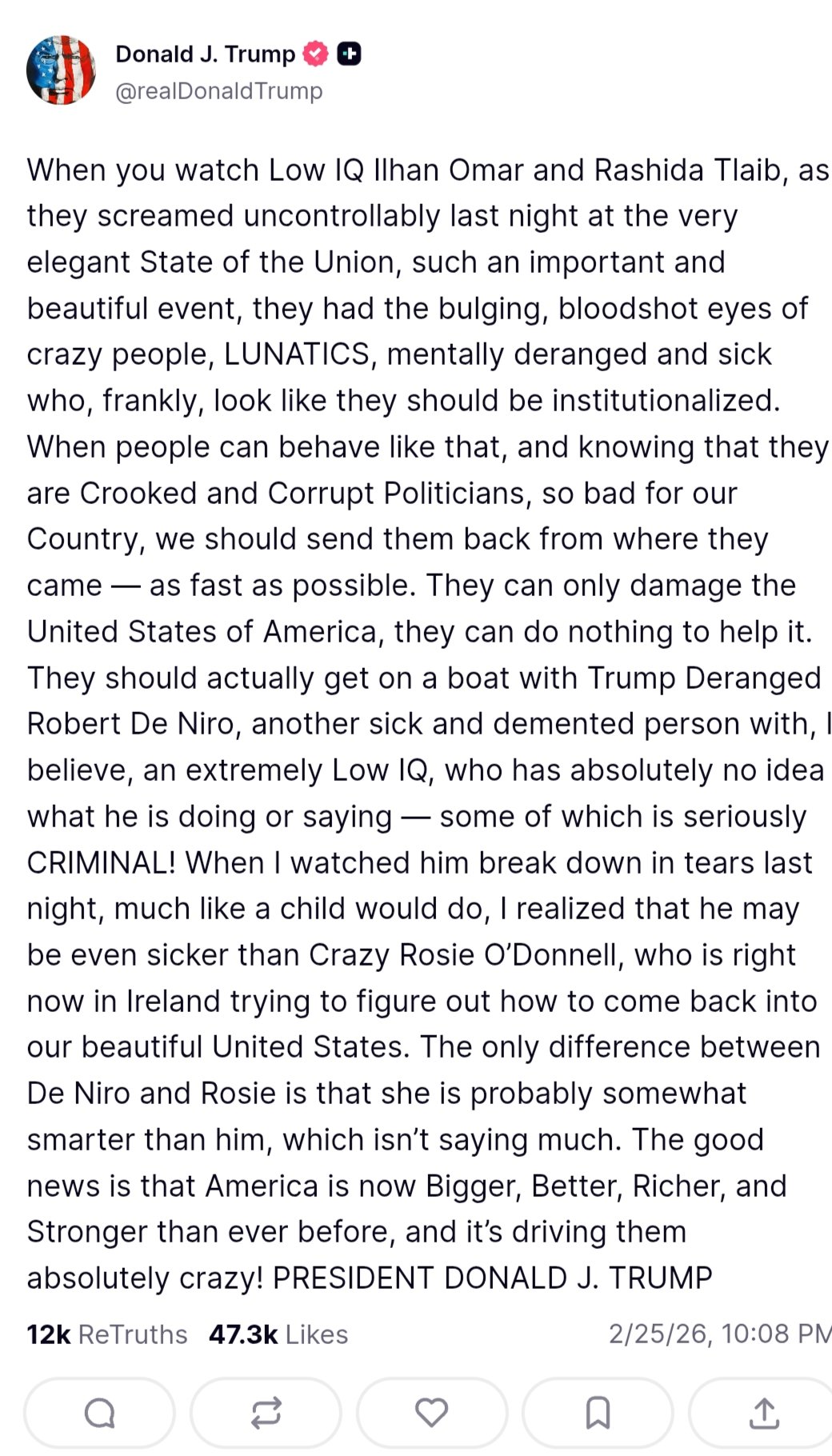
President Donald Trump said that two Muslim Democratic US Representatives, Ilhan Omar of Minnesota and Rashida Tlaib of Michigan, should be “institutionalised” and sent back to “where they came from,” a day after they had a heated exchange with him during his State of the Union address.
Both Omar and Tlaib shouted “you’re killing Americans” at Trump during his speech, with Omar also calling him a “liar.”
In a Truth Social post on Wednesday, Trump said the two lawmakers “had the bulging, bloodshot eyes of crazy people, LUNATICS, mentally deranged and sick who, frankly, look like they should be institutionalized.”
“We should send them back from where they came — as fast as possible,” Trump added. Both Omar and Tlaib are U.S. citizens.
House of Representatives Minority Leader Hakeem Jeffries cast Trump’s rhetoric against Tlaib and Omar as “xenophobic” and “disgraceful.” Tlaib said on X that Trump’s comments showed “he is crashing out.”
Muslim advocacy group Council on American-Islamic Relations also said Trump’s comments were racist.
“It’s racist and bigoted to say two Muslim US lawmakers should be sent to the country they were born in or where their ancestors came from based on their criticism of the gunning down of Americans by ICE,” CAIR National Deputy Director Edward Ahmed Mitchell said.
The White House did not immediately respond to a request for comment. White House press secretary Karoline Leavitt said last week that members of the media have “smeared” the president as a racist.
Trump’s immigration enforcement actions were criticised following two separate January fatal shootings of US citizens by federal agents in Minnesota. At least eight people have died in US Immigration and Customs Enforcement detention centres since the start of 2026, following at least 31 deaths last year.
During his Tuesday speech, Trump reiterated his accusation that Somali communities in the US have engaged in fraud and claimed that “Somali pirates” had ransacked Minnesota. His administration had used fraud allegations to deploy armed federal immigration agents in Minnesota.
Trump has cast his actions as aiming to tackle fraud and improve domestic security.
Rights groups say the crackdown has created a fearful environment and that Trump has used isolated fraud cases as an excuse to target immigrants. They also dismiss Trump’s ability to tackle fraud, citing pardons from him to those who have faced fraud convictions in the past.
Trump also recently faced criticism after his social media account posted a video that contained a racist depiction of former President Barack Obama and his wife Michelle Obama.
- Vote puts end to conservative Orban’s 16-year rule.
- Election outcome significant for EU, US, Russia, Ukraine.
- Election officials estimate turnout at 79% or more, a record.
Hungary’s veteran nationalist leader Viktor Orban lost power to the upstart centre-right Tisza party in Sunday’s national election after 16 years in office, marking a setback for his allies in Russia and US President Donald Trump’s White House.
Orban, 62, was celebrated by conservatives across Europe and the United States as the mastermind of the “illiberal” model of democracy, but lost favour at home with voters who grew weary of economic stagnation, international isolation and oligarchs amassing wealth.
His landslide defeat handed Tisza’s Peter Magyar, 45, a comfortable majority in Hungary’s 199-seat legislature, opening the door for meaningful reforms of a system critics in the European Union said subverted democratic norms.
With nearly all ballots counted, Tisza was set to win 138 seats, more than the two-thirds majority Magyar would need to undo Orban’s constitutional overhaul and combat corruption.
Record turnout on Sunday underscored how many Hungarians saw the election as a watershed moment for their country.
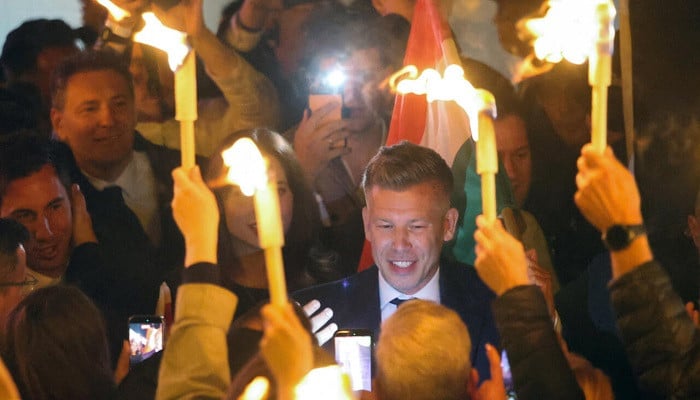
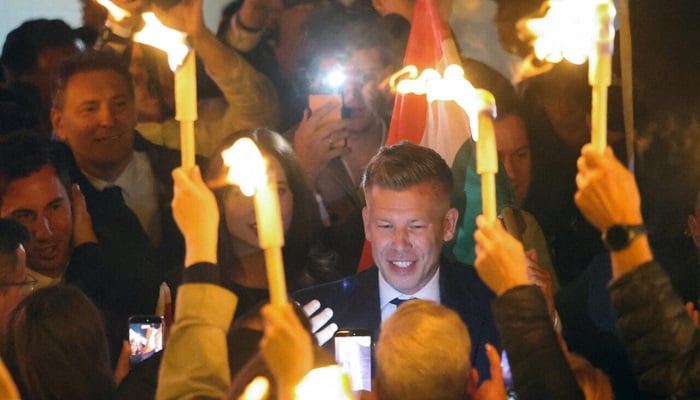
“We have done it. Tisza and Hungary have won this election,” Magyar told tens of thousands of supporters who danced and cheered alongside the elegant Danube River embankment in central Budapest.
Many held candles while loudspeakers blasted Frank Sinatra’s “My Way” as Magyar walked towards the stage. “Together, we have replaced Orban’s system, and together we liberated Hungary, we have reclaimed our country,” he said.
Magyar had cast the election as a choice between “East and West”, warning voters that Orban and his confrontational stance towards Brussels would take the country further away from the European mainstream. Orban countered that Tisza would drag Hungary into an unwanted war with Russia, a charge Magyar denied.
“The election result is painful for us, but clear,” Orban said at the Fidesz campaign offices. Some of his supporters who had gathered outside cried while watching his speech on TV screens.
Shockwaves for EU and beyond
The end of Orban’s 16-year rule will have significant implications not only for Hungary, but for the European Union, Ukraine and beyond.
Many European leaders are hoping for an end to Hungary’s adversarial role inside the EU, possibly opening the way for a 90 billion euro ($105 billion) loan to war-battered Ukraine that was blocked by Orban.
Mujtaba Rahman, a managing director at Eurasia Group, said Magyar will be able to deliver on his promises to clean out corruption and remove Fidesz loyalists from key positions.
“Regarding Ukraine, Magyar will agree to pave the way for 90 billion euros to flow to Ukraine. He was extremely cautious pre-election, but without the need now to try to appease Fidesz voters, we think Hungary will cautiously move more into the European mainstream on most subjects.”
Some diplomats in Brussels cautioned that issues such as migration may remain thorny. “Hungary will continue to be a challenging partner, but a partner with whom the other member states can work,” one said.
Ukrainian President Volodymyr Zelenskiy congratulated Magyar on Sunday and pledged to work with him to strengthen Europe and uphold peace and security. “It is important when a constructive approach is victorious,” Zelenskiy wrote on Telegram.
Defeat for Orban could also mean the eventual release of EU funds to Hungary, suspended over reforms that Brussels said undermined democratic standards, something closely watched by financial markets.
“Hungary has chosen Europe. Europe has always chosen Hungary,” European Commission President Ursula von der Leyen, the top EU executive, said after partial results were released.
Orban’s exit would also deprive Russian President Vladimir Putin of his main ally in the EU and send shockwaves through the West’s right-wing circles, including the White House.
Orban had won public endorsements from the Trump administration, culminating in a visit to Budapest by Vice President JD Vance last week, as well as from the Kremlin and far-right leaders in Europe.
But his campaign was shaken by media reports alleging his government colluded with Moscow on diplomatic and political matters.
Orban, who denied any wrongdoing, said his goal was to protect Hungary’s national identity and traditional Christian values within the EU and its security in a dangerous world.
“It’s incredibly exciting,” said 24-year-old Dorina Nyul, who attended the Tisza election night event. “It feels like this is our first and last chance in a really long time to actually change the system. And it’s, I can’t even describe the feeling.”
- Trump announces naval blockade of Strait of Hormuz.
- Democratic senator questions US president’s strategy.
- Trump’s approval rating slump since war on Iran began.
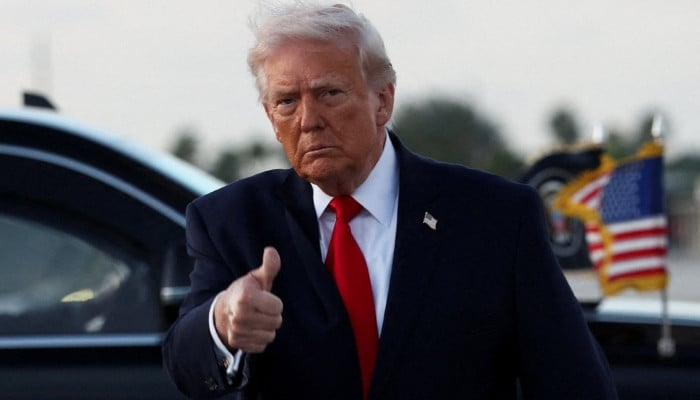
US President Donald Trump on Sunday said that the price of oil and gasoline may remain high through November’s midterm elections, a rare acknowledgement of the potential political fallout from his decision to attack Iran six weeks ago.
“It could be, or the same, or maybe a little bit higher, but it should be around the same,” Trump, who is in Miami for the weekend, told Fox News‘ “Sunday Morning Futures With Maria Bartiromo” when asked whether the cost of oil and gas would be lower by the fall.
The average price for regular gas at US service stations has exceeded $4 per gallon for most of April, according to data from GasBuddy. Trump’s comments on Sunday came after weeks of asserting that the spike in prices is a short-term phenomenon, though his top advisers are cognisant of the war’s economic impacts, officials have said.
Earlier on Sunday, Trump announced on social media that the US Navy would blockade the Strait of Hormuz and intercept any ship that paid a crossing fee to Iran, after marathon talks between the US and Iran in Pakistan over the weekend did not yield a peace deal.
“No one who pays an illegal toll will have safe passage on the high seas,” he wrote on Truth Social.
Any US blockade is likely to add more uncertainty to the eventual resolution of the conflict, which is currently subject to a tenuous two-week ceasefire. The new tactic is in response to Iran’s own closure of the strait’s critical shipping lanes, which has caused global oil prices to skyrocket about 50%.
Unpopular war hits Trump’s approval
The war began on February 28, when the US launched a joint bombing campaign with Israel against Iran. The scope quickly expanded as Iran and its allies attacked nearby countries, while Israel targeted Hezbollah with massive strikes in Lebanon.
The war has buffeted global financial markets and caused thousands of civilian deaths, mostly in Iran and Lebanon.
Trump’s political standing at home has suffered, with polls showing the war is unpopular among most Americans, who are frustrated by rising gasoline prices.
The president’s approval rating has hit the lowest levels of his second term in office, raising concern among Republicans that his party is poised to lose control of Congress in the midterm elections. A Democratic majority in either chamber could launch investigations into the Trump administration while blocking much of his legislative agenda.
US Senator Mark Warner of Virginia, the ranking Democrat on the Senate Intelligence Committee, questioned the strategy behind Trump’s planned blockade.
“I don’t understand how blockading the strait is going to somehow push the Iranians into opening it,” he told CNN’s “State of the Union” on Sunday.
In a separate appearance on CBS’s “Face the Nation,” Warner said the blockade would not undermine Iranian control of the waterway.
“The Iranians have hundreds of speedboats where they can still mine the strait or put bombs against tankers in closing the strait,” he said. “How is that going to ever bring down gas prices?”
Although Trump has repeatedly said that the war would be over soon, Republican US Senator Ron Johnson of Wisconsin told ABC News‘ “This Week” on Sunday that achieving US aims in Iran “could take a long time.”
“It’s going to be a long-term project,” said Johnson, who was not asked about Trump’s proposed blockade. “I never thought this would be easy.”
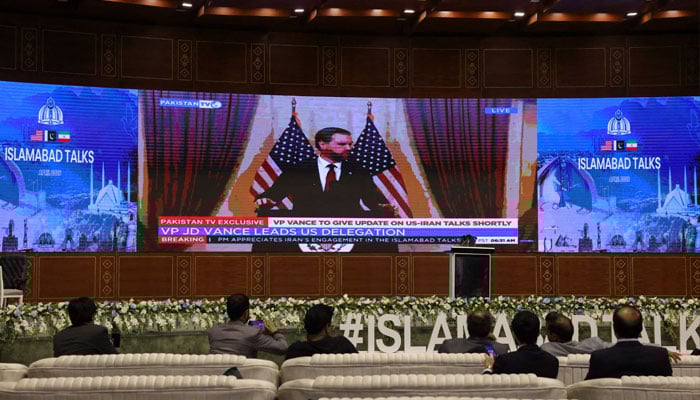
- Iran, US fail to reach deal in Islamabad peace talks.
- JD Vance says US makes “final and best offer” to Iran.
- Dispute over Hormuz control stalls US-Iran agreement.
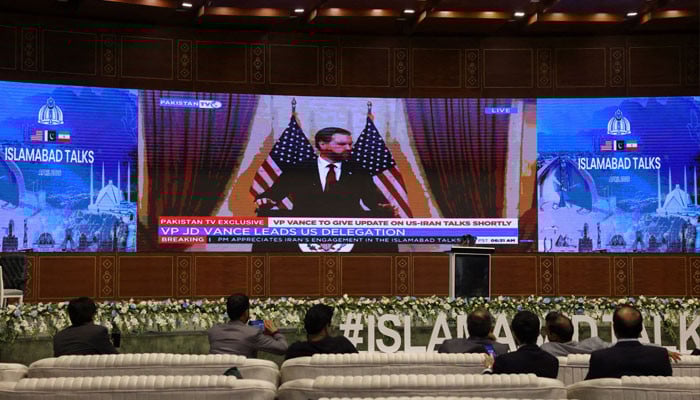
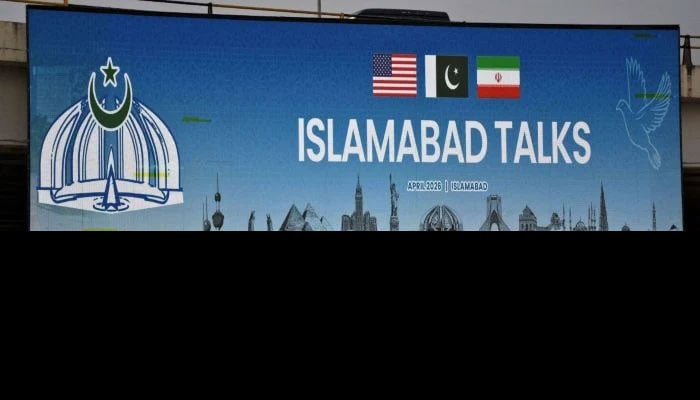
Iran and the United States failed to strike a deal Sunday to end the war in the Middle East, but there was no immediate return to hostilities, and world leaders quickly urged both sides to pursue the diplomatic route to peace.
US Vice President JD Vance left Pakistan after the talks — the highest-level meeting between the two sides since 1979 — and warned that Washington had made Tehran its “final and best offer” for a deal.
“We leave here with a very simple proposal,” he said. “We’ll see if the Iranians accept it.”
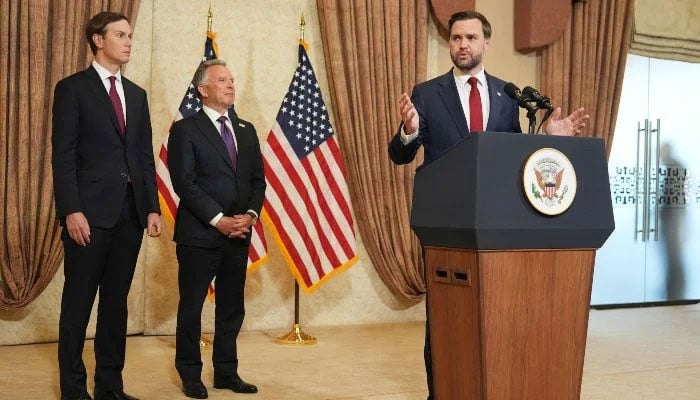
Iran’s parliamentary speaker, Mohammad Bagher Ghalibaf, said his negotiating team had “put forward constructive initiatives but ultimately the other side was unable to gain the trust of the Iranian delegation in this round of negotiations”.
Iranian and US reports said the two sides were unable to agree on who would control the Strait of Hormuz skipping lane, nor whether Tehran would have the right to enrich uranium under any deal.
As talks ended without a deal in Islamabad, world figures urged the United States and Iran to keep negotiating to end the war in the Middle East.
Pakistan’s Foreign Minister Ishaq Dar, whose government hosted the talks and acted as a mediator, said that it is imperative that the parties continue to uphold their commitment to the ceasefire.
“Pakistan has been and will continue to play its role to facilitate engagement and dialogue between the Islamic Republic of Iran and the United States of America in the days to come,” he said in a brief statement broadcast by state media.
Diplomacy is “essential” to resolve the war in the Middle East, a European Union spokesman said.
Noting failed US-Iranian talks hosted by Pakistan, EU foreign affairs spokesman Anouar El Anouni said “we salute Pakistan for its mediation efforts” and added Brussels would contribute to further efforts to reach a settlement in coordination with its partners.
Russian President Vladimir Putin told his Iranian counterpart Masoud Pezeshkian that he was ready to help mediate efforts to achieve peace in the Middle East, the Kremlin said.
“Vladimir Putin emphasised his readiness to further facilitate the search for a political and diplomatic settlement to the conflict, and to mediate efforts to achieve a just and lasting peace in the Middle East,” the Kremlin said in its readout of the call.
UK health minister Wes Streeting said: “It’s obviously disappointing that we haven’t yet seen a breakthrough in negotiations and an end to this war in Iran that is a sustainable one.”
“As ever in diplomacy, you´re failing until you succeed. So while these talks may not have ended in success, [it] doesn’t mean there isn´t merit in continuing to try,” he added.
Australian Foreign Minister Penny Wong said that the “priority now must be to continue the ceasefire and return to negotiations,” adding it was “disappointing that the Islamabad talks between the United States and Iran have ended without agreement”.


Tanzania eyes textile transformation to unlock untapped potentials
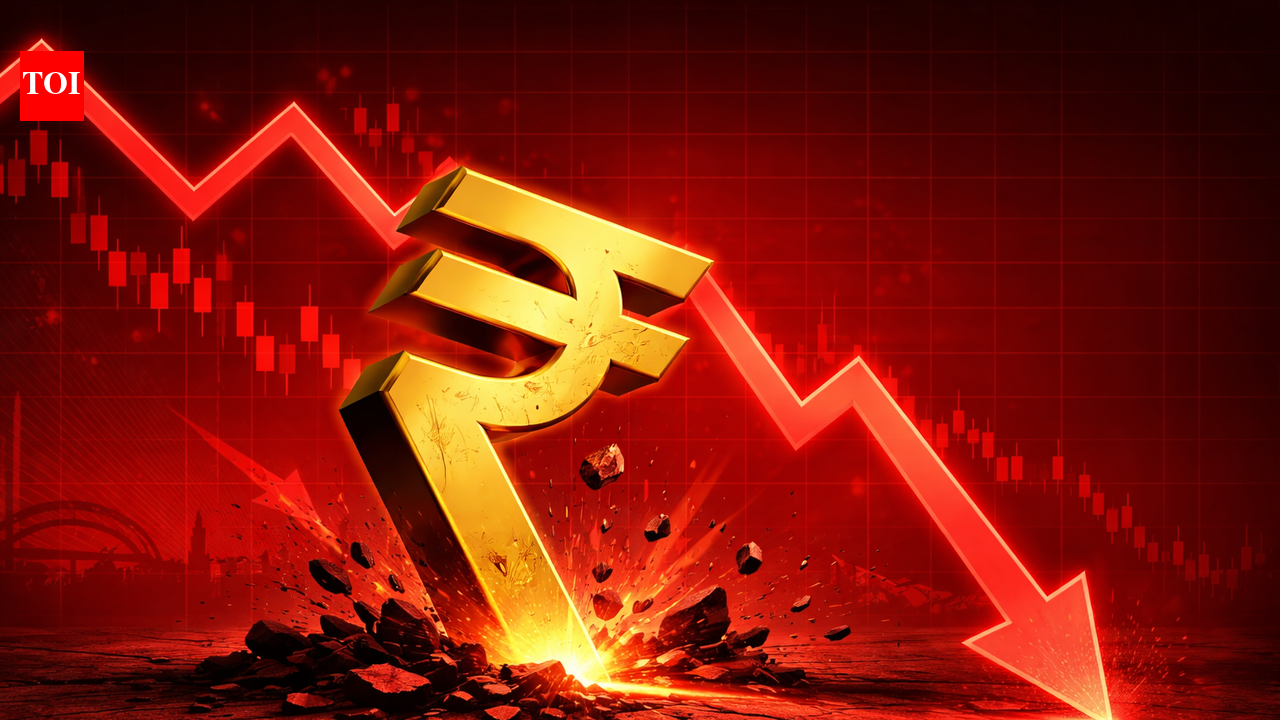
Rupee falls 48 paise to 93.31 against dollar as US-Iran peace talks fail – The Times of India

Dusty May agrees to new deal, Michigan’s Warde Manuel says

-

 Fashion6 days ago
India’s exports face reset as EU links trade to carbon metrics: EY
-

 Politics1 week ago
Trump confirms rescue of airman whose F-15 was downed in Iran
-

 Entertainment5 days ago
Queen Elizabeth II emotional message for Archie, Lilibet sparks speculation
-

 Tech6 days ago
A Single Strike Won’t Shut Off the Gulf’s Desalination System
-

 Tech4 days ago
This AI Button Wearable From Ex-Apple Engineers Looks Like an iPod Shuffle
-

 Tech5 days ago
Azure customers up in arms over ‘full’ UK South region | Computer Weekly
-

 Fashion6 days ago
ICE cotton hits 11-month high on drought concerns, demand boost
-

 Entertainment6 days ago
Lamar Odom shocking response to Khloé Kardashian account of his overdose