

Politics
Trump says second Venezuela strike possible if interim govt does not cooperate


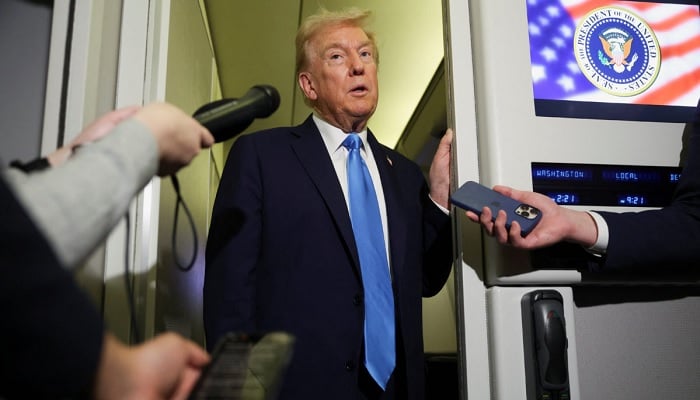
- Trump suggests military action on Colombia, Mexico also possible.
- Says Venezuelan immigrants in the US were also a factor in raid.
- Caracas streets quiet amid anxiety over next developments.
US President Donald Trump said on Sunday that the United States might launch a second military strike on Venezuela following the capture of President Nicolas Maduro if remaining members of the administration do not cooperate with his efforts to get the country “fixed.”
Trump’s comments to reporters aboard Air Force One raised the possibility of further US military interventions in Latin America and suggested Colombia and Mexico could also face military action if they do not reduce the flow of illicit drugs to the United States.
“Operation Colombia sounds good to me,” Trump said. He also said that Cuba, a close ally of Venezuela, “looks like it’s ready to fall” on its own without US military action.
Maduro is in a New York detention centre awaiting a Monday court appearance on drug charges. His capture by the United States has sparked deep uncertainty about what is next for the oil-rich South American nation.
Trump said his administration will work with remaining members of the Maduro regime to clamp down on drug trafficking and overhaul its oil industry, rather than push for immediate elections to install a new government.
Top officials in Maduro’s government are still in charge and have called the detentions of Maduro and his wife Cilia Flores a kidnapping.
“Here, there is only one president, whose name is Nicolas Maduro Moros. Let no one fall for the enemy’s provocations,” Interior Minister Diosdado Cabello said in an audio recording released by the ruling PSUV socialist party.
Images of the 63-year-old Maduro, blindfolded and handcuffed, stunned Venezuelans. The operation was Washington’s most controversial intervention in Latin America since the invasion of Panama 37 years ago.
Defence Minister General Vladimir Padrino said on state television the US attack killed soldiers, civilians and a “large part” of Maduro’s security detail “in cold blood.” Venezuela’s armed forces have been activated to guarantee sovereignty, he said.
The Cuban government said 32 of its citizens were killed during the raid.
Vice President Delcy Rodriguez — who also serves as oil minister — has taken over as interim leader with the blessing of Venezuela’s top court and has said Maduro remains president.
Rodriguez has long been considered the most pragmatic member of Maduro’s inner circle. But she has publicly contradicted Trump’s claim that she is willing to work with the United States.
Trump said Rodriguez may pay a higher price than Maduro “if she doesn’t do what’s right,” according to an interview with The Atlantic magazine on Sunday.
The Venezuelan communications ministry did not immediately respond to a request for comment on that remark.
‘A quarantine on their oil’
Trump’s administration has described Maduro’s capture as a law-enforcement mission to force him to face US criminal charges filed in 2020, including narco-terrorism conspiracy. Maduro has denied criminal involvement.
But Trump also said US oil companies need “total access” to the country’s vast reserves and suggested that an influx of Venezuelan emigrants to the United States also factored into the decision to capture Maduro.
“What really played (into the decision to capture Maduro) is the fact that he sent millions of people into our country from prisons and from mental institutions, drug dealers, every drug addict in his country was sent into our country,” Trump said.
The Venezuelan government has said for months that Trump was seeking to take the country’s natural resources, especially its oil, and officials made much of a previous Trump comment that major US oil companies would move in.
“We are outraged because in the end everything was revealed — it was revealed that they only want our oil,” Cabello said.
Once one of the most prosperous nations in Latin America, Venezuela’s economy tanked in the 2000s under President Hugo Chavez and nosedived further under Maduro, sending about one in five Venezuelans abroad in one of the world’s biggest exoduses.
US Secretary of State Marco Rubio said Venezuela’s next leader should keep Venezuela’s oil industry out of the hands of US adversaries and stop drug trafficking, and cited an ongoing US blockade on tankers.
“That means their economy will not be able to move forward until the conditions that are in the national interest of the United States and the interest of the Venezuelan people are met,” he said on ABC’s “This Week.”
Muted streets
Some Maduro supporters gathered at a government-sponsored protest march on Sunday afternoon in Caracas.
Once ruled by Spain, Venezuela’s “people must not surrender, nor should we ever become a colony of anyone again,” said demonstrator Reinaldo Mijares. “This country is not a country of the defeated.”
Maduro opponents in Venezuela have been wary of celebrating his seizure, and the presence of security forces seemed, if anything, lighter than usual on Sunday.
Despite a nervous mood, some bakeries and coffee shops were open and joggers and cyclists were out as usual. Some citizens were stocking up on essentials.
“Yesterday I was very afraid to go out, but today I had to. This situation caught me without food, and I need to figure things out. After all, Venezuelans are used to enduring fear,” said a single mother in oil city Maracaibo who bought rice, vegetables and tuna.
To the disappointment of Venezuela’s opposition, Trump has given short shrift to the idea of 58-year-old opposition leader and Nobel Peace Prize winner Maria Corina Machado taking over, saying she lacked support.
Machado was banned from standing in the 2024 election but has said her ally Edmundo Gonzalez, 76, who the opposition and some international observers say overwhelmingly won that vote, has a democratic mandate to take the presidency.
Looming questions
US Senate Democratic leader Chuck Schumer said the White House has failed to say how long the US intends to be in Venezuela and how many American troops might be required.
“The American people are worried that this is creating an endless war — the very thing that Donald Trump campaigned against,” Schumer said on ABC’s “This Week.” He said lawmakers would weigh a measure to constrain further Trump administration action in Venezuela, though its prospects could be uncertain given that Congress is controlled by Trump’s Republicans.
While many Western nations oppose Maduro, there were many calls for the US to respect international law, and questions arose over the legality of seizing a foreign head of state.
The UN Security Council planned to meet on Monday to discuss the attack. Russia and China, both major backers of Venezuela, have criticised the US.
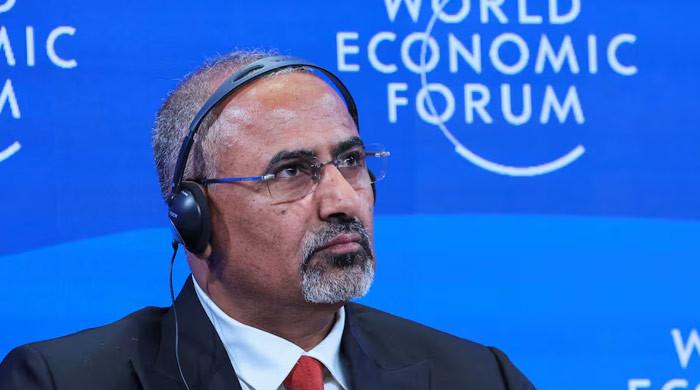
- STC leader Zubaidi skips flight to Riyadh, flees unknown.
- Presidential council strips Zubaidi of membership over treason.
- STC and Yemen government feud deepens amid armed clashes.
The leader of Yemen’s Southern Transitional Council (STC), Aidarous al-Zubaidi, failed to board a plane set to take him to Riyadh and fled instead to an unknown destination, the Saudi-backed coalition in the country said on Wednesday.
The remarks came amid efforts to end fighting that erupted last month between the STC and Yemen’s internationally recognised government.
Zubaidi was set to travel to Saudi Arabia days after Yemen’s government said it had asked Riyadh to host a forum on the southern issue.
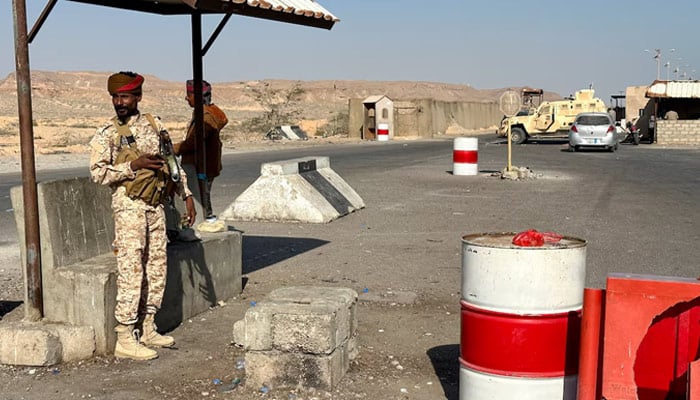
In a statement, coalition spokesperson Turki al-Maliki said a flight carrying a large number of senior leaders of the separatist group departed after a delay of more than three hours without Zubaidi, and with no information on his whereabouts.
During the delay, “information became available indicating that he had moved large forces,” Maliki added, citing “calls for mobilisation and the movement and arming of factions with light and medium weapons”.
The Houthis seized the Yemeni capital of Sanaa in 2014 and Gulf countries intervened the following year in support of the internationally recognised government, splitting Yemen into rival zones of control.
The coalition also said it carried out limited pre-emptive airstrikes in Yemen’s southern province of al-Dhalea after monitoring the movements of armed forces that had left their camps.
Domestic sources and sources within the STC reported more than 15 strikes in the province, the birthplace of Zubaidi.
Following the developments, the presidential council stripped Zubaidi of his membership and referred him to the public prosecutor on charges including high treason, state news agency SABA said.
The decision, issued by council chairman Rashad al-Alimi, accused Zubaidi of inciting armed rebellion, attacking constitutional authorities and committing abuses against civilians in southern Yemen.
For years, the STC has been part of Yemen’s internationally recognised government.
- Trump says agreed volume to supply is 30-50 million barrels.
- Exports expected to stem further cuts to Venezuelan output.
- US interior secretary says US Gulf refiners would take advantage.
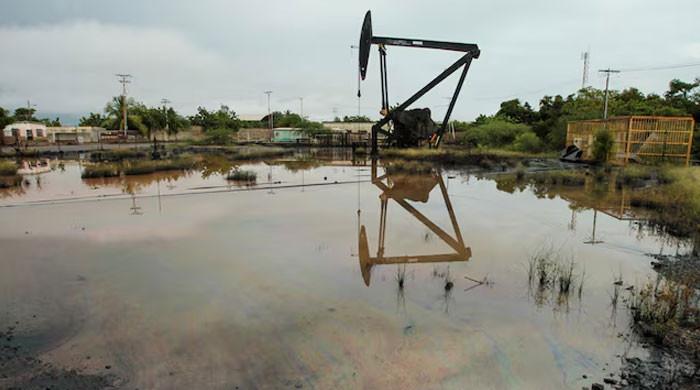
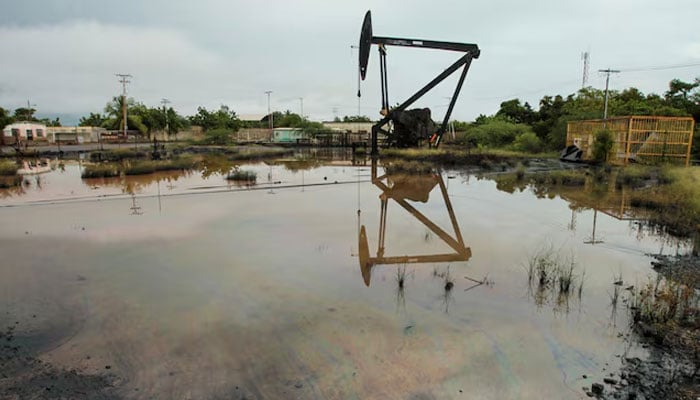
HOUSTON/WASHINGTON: Caracas and Washington have reached a deal to export up to $2 billion worth of Venezuelan crude to the United States, US President Donald Trump said on Tuesday, a flagship negotiation that would divert supplies from China while helping Venezuela avoid deeper oil production cuts.
The agreement is a strong sign that the Venezuelan government is responding to Trump’s demand that they open up to US oil companies or risk more military intervention. Trump has said he wants interim President Delcy Rodriguez to give the US and private companies “total access” to Venezuela’s oil industry.
Venezuela has millions of barrels of oil loaded on tankers and in storage tanks that it has been unable to ship due to a blockade on exports imposed by Trump since mid-December.
The blockade was part of rising US pressure on the government of Venezuelan President Nicolas Maduro that culminated in US forces capturing him this weekend. Top Venezuelan officials have called Maduro’s capture a kidnapping and accused the US of trying to steal the country’s vast oil reserves.
Venezuela will be “turning over” between 30 and 50 million barrels of “sanctioned oil” to the US, Trump said in a social media post.
“This Oil will be sold at its Market Price, and that money will be controlled by me, as President of the United States of America, to ensure it is used to benefit the people of Venezuela and the United States!,” he added.
US Energy Secretary Chris Wright is in charge of executing the deal, Trump said, adding that the oil will be taken from ships and sent directly to US ports.
Supplying the trapped crude to the US could initially require reallocating cargoes originally bound for China, two sources had told Reuters earlier on Tuesday. The Asian country has been Venezuela’s top buyer in the last decade, and especially since the United States imposed sanctions on companies involved in oil trade with Venezuela in 2020.
“Trump wants this to happen early so he can say it is a big win,” an oil industry source said.
Venezuelan government officials and PDVSA did not provide comment.
Chevron in control of Venezuelan oil flows to US
US crude prices fell more than 1.5% after Trump’s announcement, with the agreement expected to increase the volume of Venezuelan oil exported to the US.
That flow of oil is currently controlled entirely by Chevron, PDVSA’s main joint venture partner, under a US authorisation.
Chevron, which has been exporting between 100,000 and 150,000 barrels per day (bpd) of Venezuelan oil to the US, is the only company that has been loading and shipping crude without interruption from the South American country in recent weeks under the blockade.
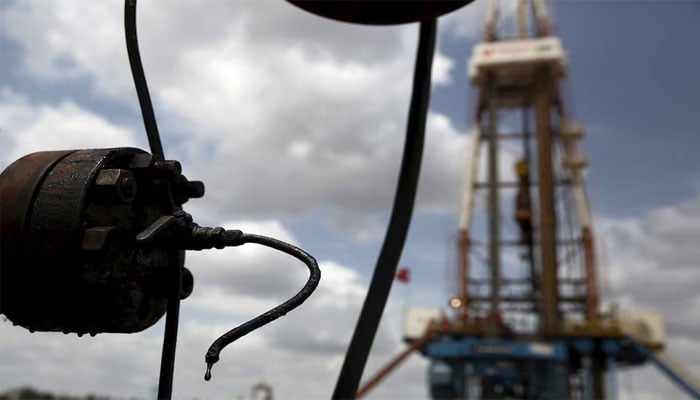
It was not immediately clear if Venezuela would have any access to proceeds from the supply. Sanctions mean PDVSA is excluded from the global financial system, its bank accounts are frozen, and it is blocked from executing transactions in US dollars.
Venezuela has been selling its flagship crude grade, Merey, at around $22 per barrel below Brent for delivery at Venezuelan ports, giving a value for the deal at up to $1.9 billion.
Rodriguez, sworn in as interim president on Monday, is herself under US sanctions imposed in 2018 for undermining democracy.
Talks involve possible auctions with US buyers
Venezuelan and US officials this week discussed possible sales mechanisms, including auctions to allow interested US buyers to bid for cargoes, and issuing US licenses to PDVSA’s business partners that could lead to supply contracts, two sources told Reuters.
Those licenses have in the past allowed PDVSA’s joint venture partners and customers, including Chevron, India’s Reliance, China National Petroleum Corporation (CNPC), and European Eni and Repsol, to have access to Venezuelan oil to refine or to resell to third parties.
This week, some of those companies have begun making preparations for receiving Venezuelan cargoes again, two separate sources said.
The US and Venezuela have also discussed whether Venezuelan oil can be used in the US Strategic Petroleum Reserve in the future, one of the sources said. Trump did not refer to this possibility.
Increased oil flows would be ‘great news’
US Interior Secretary Doug Burgum said on Tuesday that an increased flow of Venezuelan heavy oil to the US Gulf would be “great news” for job security, future gasoline prices in the US and for Venezuela.
“Venezuela has an opportunity now to actually have capital come in and rebuild their economy and take advantage,” he told Fox News, when asked about talks between the governments on oil exports. “With American technology, American partnership, Venezuela can be transformed.”
US refineries on the Gulf Coast can process Venezuela’s heavy crude grades and were importing some 500,000 barrels per day (bpd) before Washington first imposed energy sanctions on Venezuela.
PDVSA has already had to cut production due to the embargo, because it is running out of storage for the oil. Without a way to export oil soon, it would have to cut production more, one of the sources said.
Oil traders reacted to news of the deal talks on Tuesday. Differentials for some heavy oil grades in the US Gulf slipped around 50 cents per barrel on Tuesday on the prospect of more Venezuelan supplies.
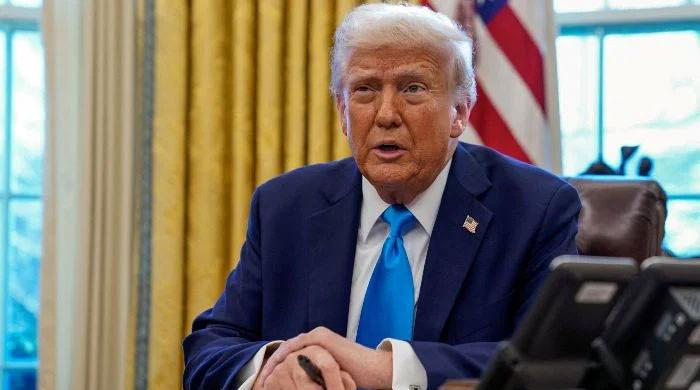
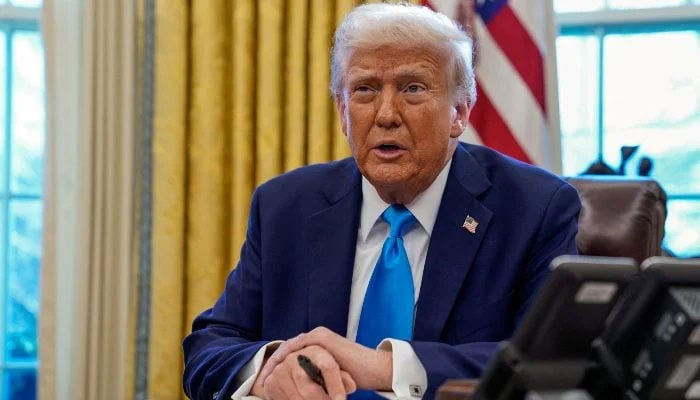
WASHINGTON: The White House said on Tuesday that President Donald Trump is discussing options for acquiring Greenland, including potential use of the US military, in a revival of his ambition to control the strategic island despite European objections.
Trump sees acquiring Greenland as a US national security priority necessary to “deter our adversaries in the Arctic region,” the White House said in a statement.
“The president and his team are discussing a range of options to pursue this important foreign policy goal, and of course, utilising the US military is always an option at the commander-in-chief’s disposal,” the White House said.
Greenland has repeatedly said it does not want to be part of the United States. Leaders from major European powers and Canada rallied behind the Arctic territory on Tuesday, saying it belongs to its people.
A US military seizure of Greenland from a longtime ally, Denmark, would send shock waves through the NATO alliance and deepen the divide between Trump and European leaders.
The strong opposition has not deterred Trump from reviewing how to make Greenland a US hub in an area where there is growing interest from Russia and China. Trump’s interest, initially voiced in 2019 during his first term in office, has been rekindled in recent days in the wake of the US arrest of Venezuelan President Nicolas Maduro.
Emboldened by Maduro’s capture last weekend, Trump has voiced his belief that “American dominance in the Western Hemisphere will never be questioned again,” and has put pressure on both Colombia and Cuba.
He has also started talking about Greenland again after putting it on the back burner for months.
A senior US official, speaking on condition of anonymity to discuss internal deliberations, said Trump and his advisers are discussing a variety of ways to acquire Greenland.
Greenland for sale?
Those options include the outright US purchase of Greenland or forming a Compact of Free Association with the territory, the official said. A COFA agreement would stop short of Trump’s ambition to make the island of 57,000 people a part of the United States.
The official did not provide a potential purchase price.
“Diplomacy is always the president’s first option with anything, and dealmaking. He loves deals. So if a good deal can be struck to acquire Greenland, that would definitely be his first instinct,” the official said.
Secretary of State Marco Rubio told lawmakers that recent administration threats against Greenland did not signal an imminent invasion and that the goal is to buy the island from Denmark during a classified briefing late on Monday for congressional leaders, two sources familiar with the briefing said.
The Wall Street Journal first reported Rubio’s comment.
Members of Congress, including some of Trump’s fellow Republicans, pushed back against the administration’s comments on Greenland, noting that NATO member Denmark has been a loyal US ally.
“When Denmark and Greenland make it clear that Greenland is not for sale, the United States must honour its treaty obligations and respect the sovereignty and territorial integrity of the Kingdom of Denmark,” Democratic Senator Jeanne Shaheen of New Hampshire and Republican Senator Thom Tillis of North Carolina, the co-chairs of the Senate NATO Observer Group, said in a statement.
Administration officials say the island is crucial to the US due to its deposits of minerals important for high-tech and military applications. These resources remain untapped due to labour shortages, scarce infrastructure and other challenges.
“It’s not going away,” the official said about the president’s drive to acquire Greenland during his remaining three years in office.


South India cotton yarn seen rising on fibre price uptrend

Let’s play myth-busters for the NFL playoffs: 14 teams, 14 things that aren’t quite right

Yemen separatist leader flees, avoids Riyadh talks to tackle southern crisis

-

 Entertainment1 week ago
George Clooney, his wife Amal and their twins granted French citizenship
-
 Sports1 week ago
Morocco reach AFCON last 16 | The Express Tribune
-

 Politics1 week ago
Three Turkish police officers, six Daesh militants killed in clash, amid national crackdown
-
 Business1 week ago
A major drop in the prices of petroleum products is likely with the arrival of the New Year. – SUCH TV
-
 Entertainment1 week ago
Prince George to shine as key royal figure in 2026
-

 Entertainment1 week ago
Beyoncé is now a billionaire, according to Forbes
-
 Fashion1 week ago
UK year-end review 2025: Seeking new avenues
-

 Sports1 week ago
The best of Indiana sports history: stars, teams, and moments